If there’s one way to get people’s attention in the world of consumer electronics, it’s boasting a really long battery life, and in smart glasses, lofty battery life claims are doubly as impressive. The form factor is small, and it’s something you wear on your face, so adding battery (and weight) isn’t easy.
So, given that challenge, my eyebrows raised when I saw Rogbid’s $70 VisionW smart glasses. On the surface, the pair looks fairly similar to others I’ve seen. They don’t have a screen or a camera, but they do have audio and access to ChatGPT as well as Grok, and a few different styles. The frames appear to be interchangeable, too, with Rogbid boasting that its smart glasses are “3-in-1,” with different frames for exercise, “daily life,” and the office.
Feature and hardware-wise, they’re probably closer to Even Realities’ Even G2 smart glasses than Ray-Ban Meta AI glasses. The Even G2, for context, lack speakers and audio, but make up for it with a display and productivity-focused AI.
What really stands out, though, isn’t the features or the look; it’s the battery life, which Rogbid lists as (and I’m not joking) 39 whole days. That’s a lot of battery life, and the claim gets even more ridiculous when you consider the size of the battery itself, which the company lists as 200mAh—a hair smaller than pairs like the Ray-Ban Meta Gen 2 AI glasses. The Ray-Ban Meta Gen 2 AI glasses get about eight hours of battery life with general use, by the way.
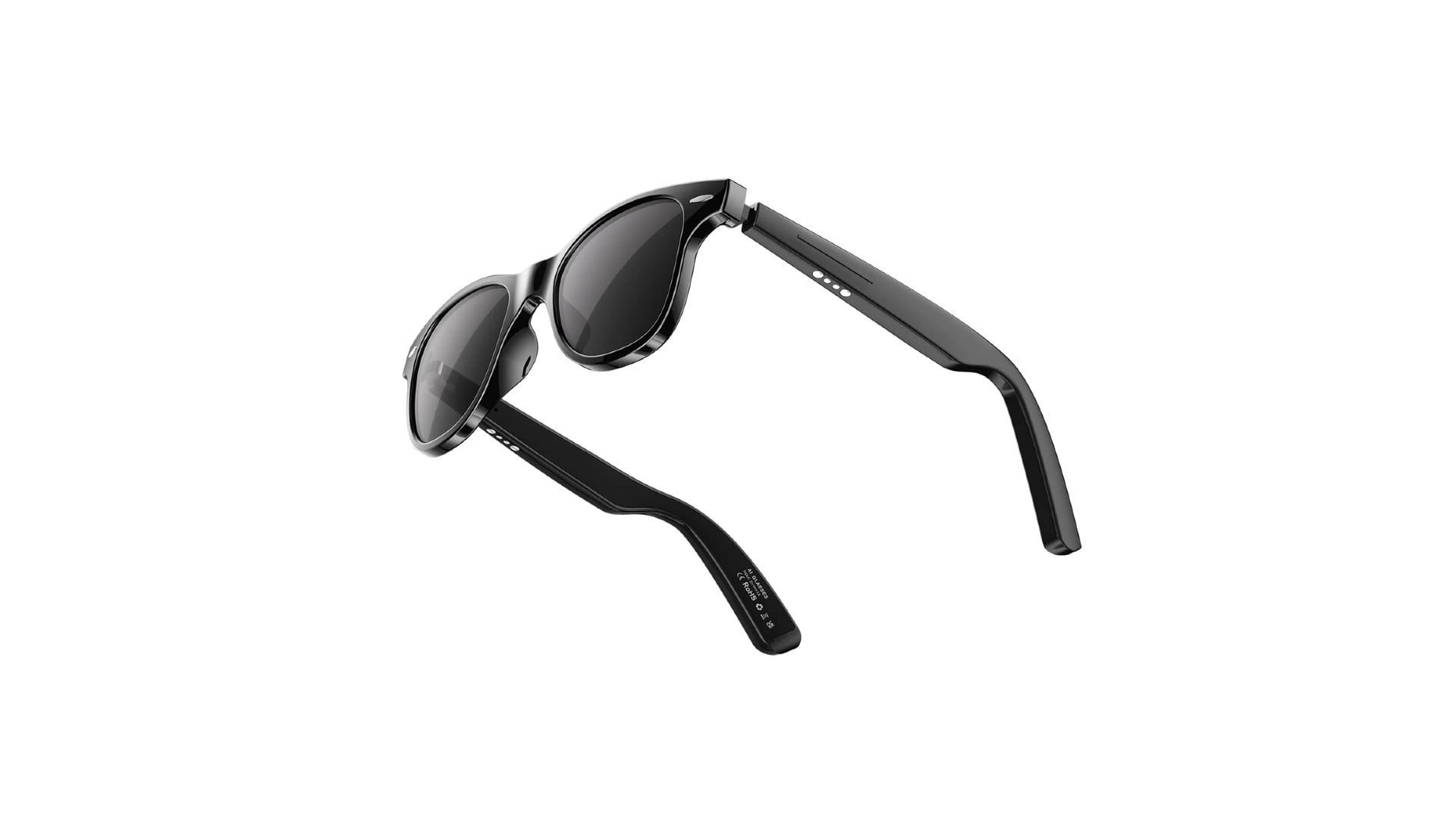
To be fair, the VisionW does lack some of the battery-intensive stuff on other pairs of smart glasses, including a camera, which is a major drain on juice, as well as a screen, which requires a lot of power to force light through waveguides. But still, well over a month of battery feels hyperbolic at best, and how Rogbid comes to that conclusion isn’t clear. Do they mean standby time? Or light use? If you’re listening to lots of Bluetooth audio, I’m going to assume that figure plummets drastically.
I’m open to being wrong here, but given the alarmingly affordable price point, lack of familiarity with this company, and the fact that 39 days of battery life is just a wacky claim to begin with, you may be disappointed. I’m not into gambling, but I’m betting that, if you were to buy these smart glasses right now, you’d need to charge them before (checks calendar) Sept. 22.