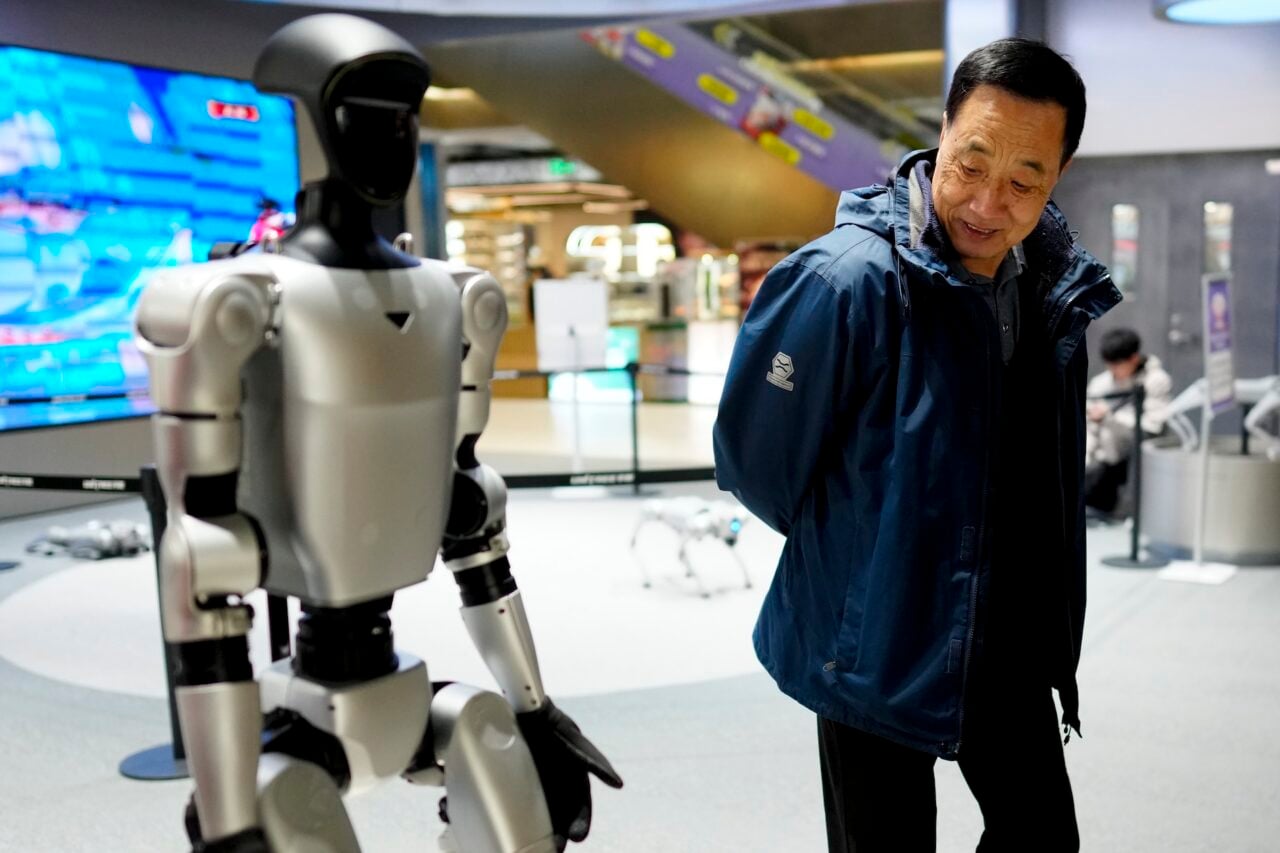
Earlier this month, Beijing played host to the unusual spectacle of humanoid robots running a half-marathon. The robots ran alongside the 12,000 or so human runners who slogged their way around southern Beijing, although they were confined to a separate lane for everyone’s safety. And boy, did they go fast.
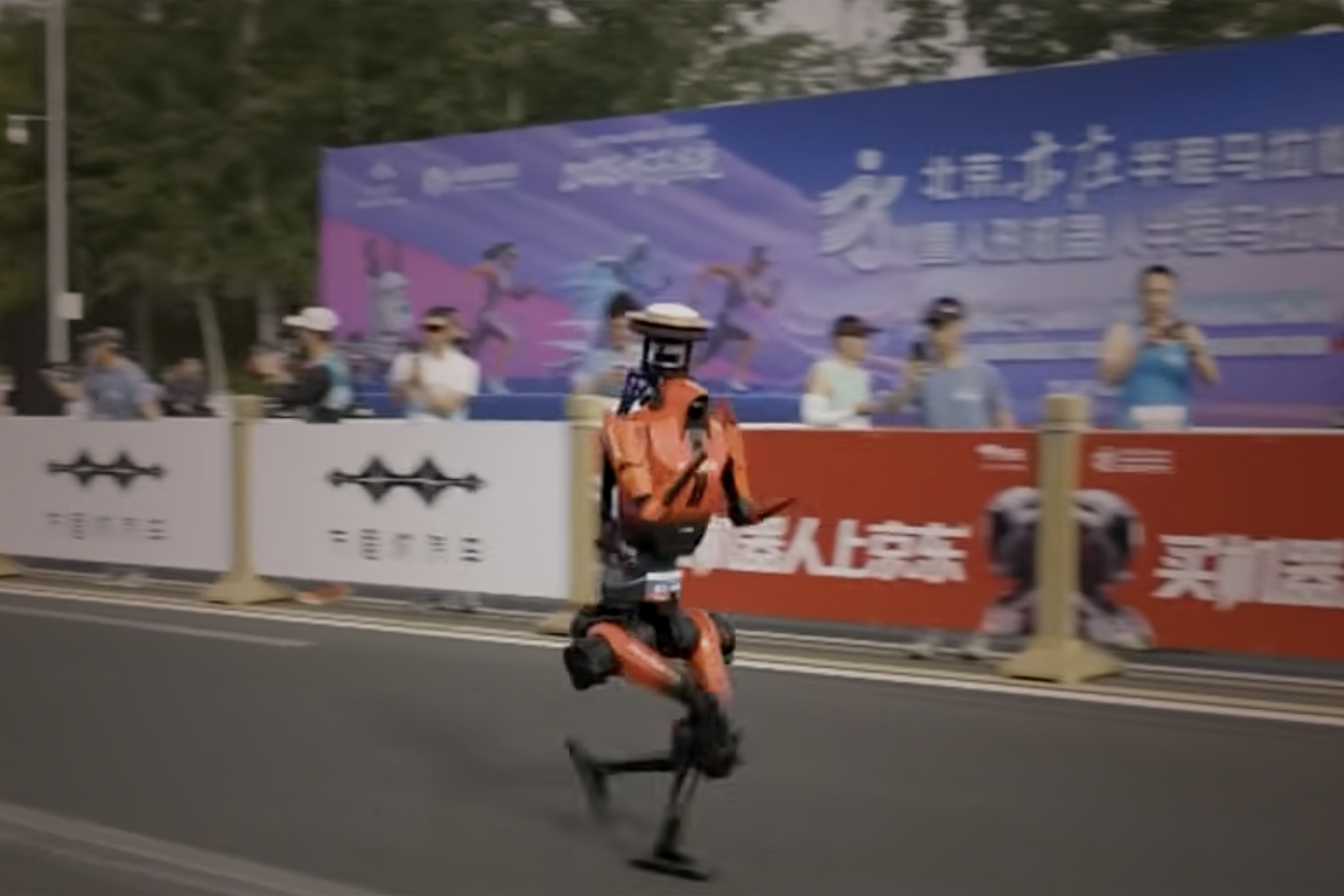
The winner—a robot called “Lightning,” which was built by Honor, the same folks who make the smartphones—ran the 13.1-mile course in 50 minutes and 26 seconds. If you are at all interested in athletics, you may well have noted that this is significantly faster than the actual world record for a half-marathon, which is currently 57 minutes and 20 seconds. (The first human to cross the line in this race, Zhao Haijie of China, arrived over a quarter of an hour after Lightning, finishing with a time of 1 hour, 7 minutes, and 47 seconds.)
Confusingly, another almost identical robot from the same manufacturer finished even faster, in 48 minutes and 19 seconds, but it was remote-controlled, rather than fully autonomous (a term that comes with an asterisk, which we’ll discuss shortly). Amusingly, the remote-controlled version managed to do a very human thing: As the video below shows, it fell at the final hurdle, its glorious victory transformed to tragicomedy within sight of the finish line.
(Also, to be clear: the robot shown crashing finished in 48:19, despite the caption.)
This Chinese humanoid robot just shattered the world record for a half marathon, finishing in 50 min 26 sec.
This video shows its crash just meters before the finish line where it had to be picked up by a team of humans. The robot is from Honor, the smartphone maker and Huawei… pic.twitter.com/HflDC0rInX
— Kyle Chan (@kyleichan) April 19, 2026
Just as it’s coming into the final straight, the robot veers inexplicably toward the side of the road, plows straight into the advertising hoardings lining the route, does a full 360º spin in the air, and lies there in a crumpled heap. It’s unclear what happened—did whoever was directing the thing drop their controller? Anyway, the air of absurdity is heightened by the commentator intoning solemnly, “It’s OK,” as a chiron reading “Technology redefines speed and passion” flits across the bottom of the screen and several men in vests run out to assist the fallen machine. One of them, inexplicably, is carrying a stretcher.
“Let’s see if the robot can get on its feet on its own,” continues the announcer. The answer to this is a resounding “no.” Once the thing is hoisted back onto its feet, though, it seems desperate to make up for lost time, running on the spot in a manner that’s awfully reminiscent of the relentless dancing robot we covered a couple of weeks ago.
It feels kinda significant that the fully autonomous robot had no such problems. Of course, it’s worth noting exactly what “fully autonomous” means in this context. There doesn’t seem to be any rules published on the web, but it appears that the robot’s battery was allowed to be swapped out, and it’s probably safe to assume that the robot had been familiarized with the course.
In any case, the race also raises another key issue: We need a new word for robots that are both goofy and terrifying. I mean, look at the way Lightning runs, it’s weird little T. rex arms pistoning up and down, its legs whirring like rotor blades, its lidar system looking for all the world like a ridiculous straw hat. It’s kinda comical until you start thinking about it chasing you, at which point the whole thing seems less amusing and more like a vision of a dystopian future where absurd law enforcement robots chase people down for jaywalking.
NPR’s report on the race quotes one Wang Wen, a Beijing resident who came down to watch the race with his family. “The robots’ speed far exceeds that of humans,” he marvels. “This may signal the arrival of sort of a new era.” Yes, Wang Wen. Indeed, it might.