As we saw with Artemis 2’s toilet debacle, astronauts deal with lots of inconveniences in space. One particularly icky situation is doing—or, really, not doing—laundry. According to NASA, astronauts bring two small suitcases’ worth of clothes and sometimes wear the same underwear for up to a week—after which they get loaded onto a ship meant to burn up in the atmosphere. Not ideal.
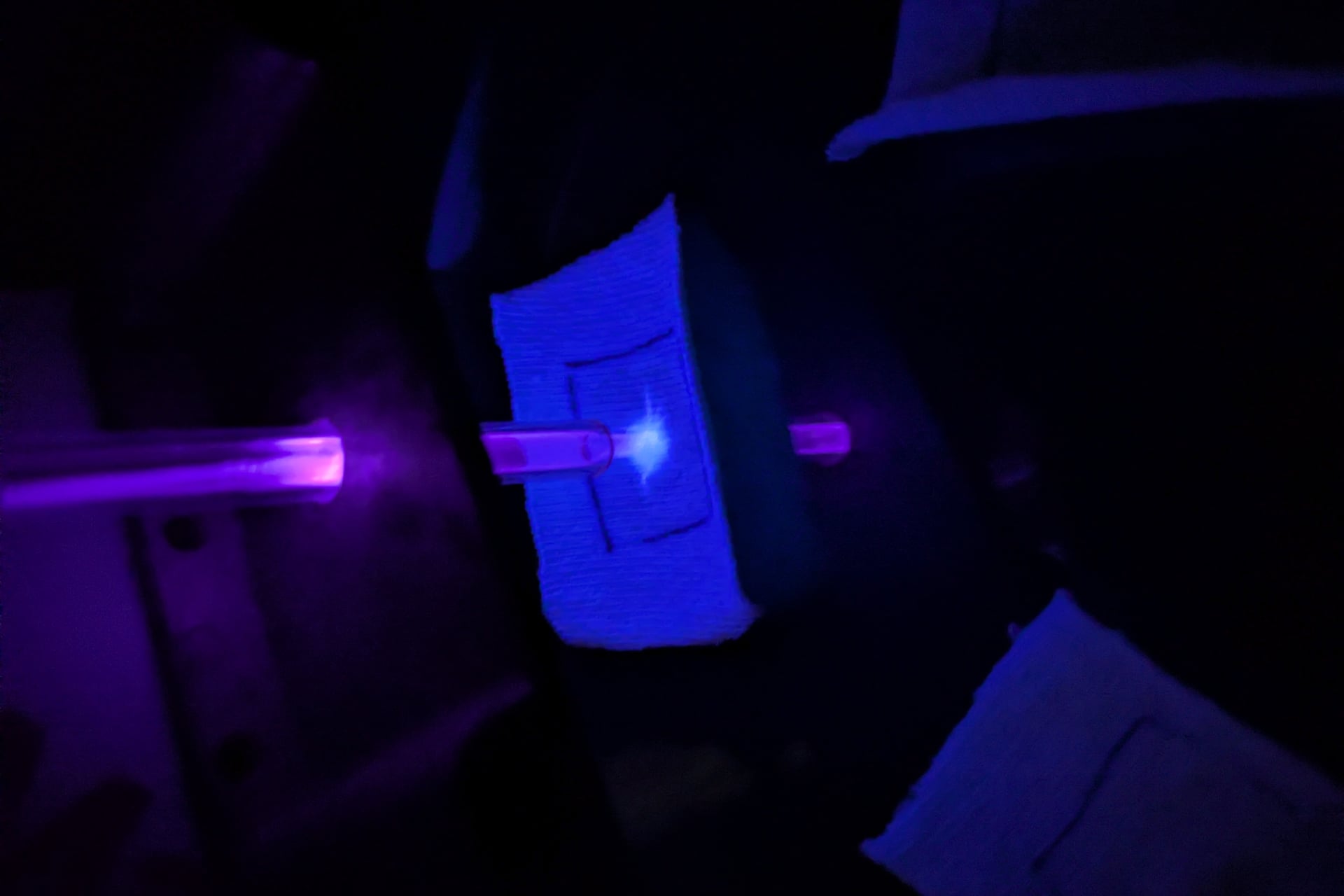
But if a new invention can live up to its promises, astronauts may no longer have to worry about running out of clean underwear. This new “laundry gun” blasts cold plasma comprised of helium, air, and water vapor, and the plasma beam caused electron-induced reactions that kill bacteria that make fabrics smelly and unsanitary. The device is still a proof-of-concept, so the plasma comes out about the size of a pencil, Gabe Xu, an aerospace engineer at the University of Alabama in Huntsville, told Gizmodo. If scaled up, however, it could even help astronauts sterilize spacesuits and tools before exploring extraterrestrial territories, like Mars, he said.
The experiments demonstrated that the technology can “keep clothes and soft surfaces clean, at least microbially, for astronaut health,” said Xu, who presented his team’s creation at the Astrobiology Science Conference held last week.
… Burn it up
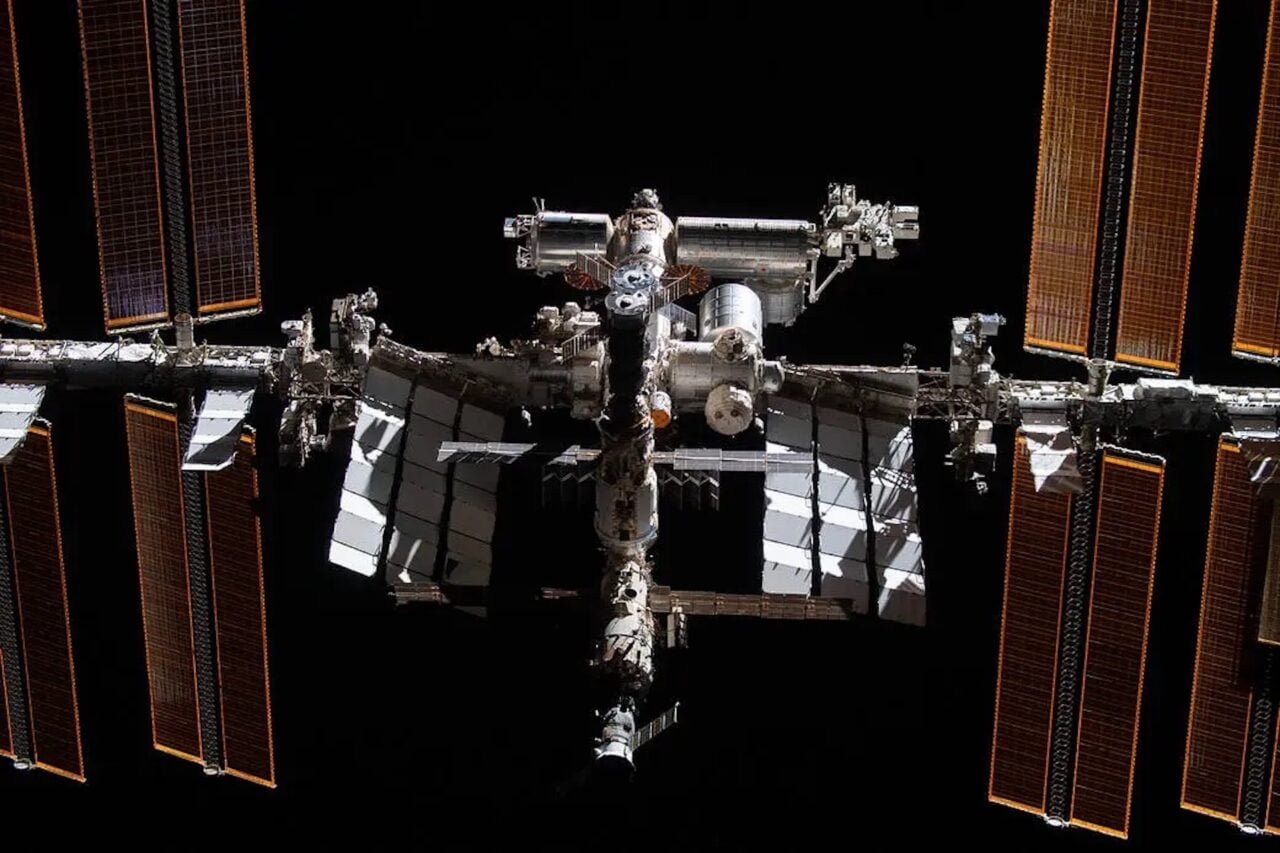
Our astronauts aren’t necessarily stinking up the International Space Station (ISS) with dirty underwear and greasy hair. The interiors of spacecraft and the ISS are highly controlled, near-sterile environments. Although astronauts do regularly exercise to prevent muscle loss, they won’t get as dirty as we normally would back on Earth, according to BBC Sky at Night Magazine.
Water is also a complicated thing in space, explained Elisca Hicks, crew operations instructor at NASA, in a NASA podcast. Notwithstanding the influence of microgravity on liquids, flowing water is out of the equation in these spaces, since we “don’t want loose water flying out everywhere and then getting behind electronics or, you know, other stowage, and then it gets moist and moldy,” Hicks said.
There is some sense in which astronauts choose functional clothing that doesn’t require frequent cleaning. But “after you can’t use it anymore, you’re going to be throwing it away” when “your crew member makes a funny look at you going, ‘I think it’s time,” Hicks explained—that is, throw it out to burn up in the atmosphere.
Beyond ‘good enough’?
For all practical purposes, the status quo might be good enough if you can get past underwear fireballs in the atmosphere. But why stop at good enough? For instance, maybe astronauts headed for long-duration Mars missions want “like a nice couch to sit on or a comfortable bed to sleep in, since there’s gravity now,” Xu told Gizmodo.
“Humans constantly shed bacteria and dust and skin cells,” Xu added. On the other hand, “fabrics are breeding grounds for microbes,” he explained. Unlike the metals and plastic making up the ISS, fabrics are also layered, and these layers can hide or shelter bacteria. On Earth, we can simply open a window to air out any chemicals produced from cleaning agents. Obviously, we wouldn’t really do that in space or Mars.
The plasma treatment
The main motivation behind the “laundry gun” was to create a low-temperature method to sanitize fabrics. Previous experiments had taught Xu and colleagues that cold plasma efficiently killed most microbial species, although they weren’t certain if results would be the same on fabrics.
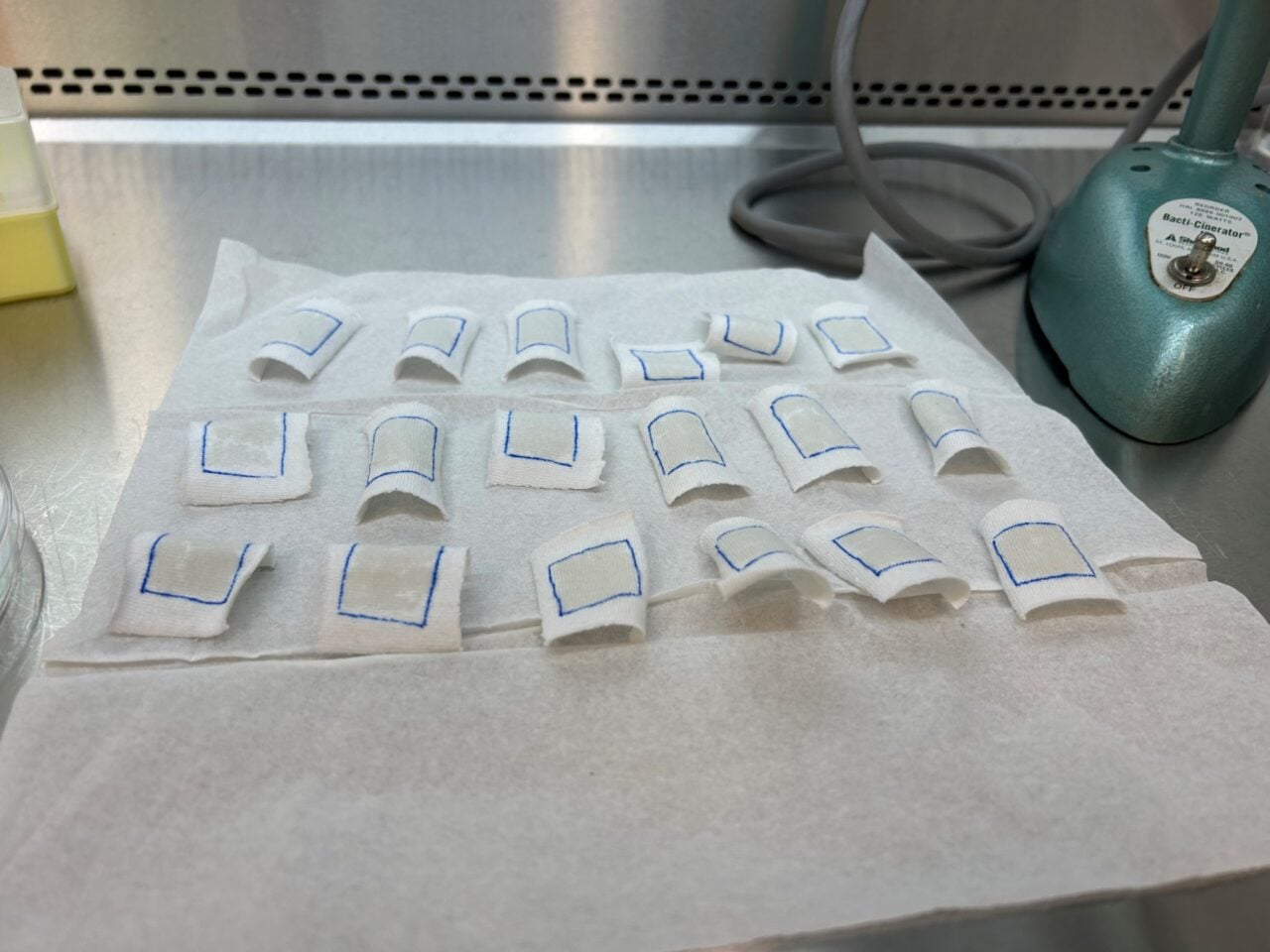
For the latest experiment, the team used a mixture of helium, air, and water vapor. A high-voltage power source generates a room-temperature plasma jet that forms reactive oxygen species like ozone onto the fabric, which in this case were small cotton coupons. These compounds cause “oxidative stress” that’s fatal enough to the bacteria, Xu explained.
Out-of-this-world laundry
While promising, Xu told Gizmodo there are several hurdles to overcome before astronauts can take laundry guns to space. The experiment used the standard plasma jet used in labs, so it’s not terribly difficult to source. However, it treats a very small area with a pencil-sized beam. The byproduct, ozone, kills bacteria but can also harm humans in higher concentrations.
Going forward, the team plans to bump up the gun’s size to about that of a soda can and install an innate filtration system to prevent ozone release. That may take some time, but the development certainly comes at a good time, as humanity’s exploration of space becomes longer and more consistent. And when humans are out there, keeping them alive and healthy will be a different challenge, especially for places like Mars, Xu said.
“For this project in particular, I think it’s important to understand that getting humans to Mars and to live for months is going to be hard,” he concluded. “It will take many people and a multitude of solutions.”