After years of carmakers ditching physical controls, one CEO is now saying they’re a must-have.
Volkswagen CEO Thomas Schäfer told Top Gear recently that the shift away from buttons and toward touchscreens was largely driven by the rise of smartphones.
“There was a spirit of iPhone-ish kind of design and utilisation that you could see coming through in many companies,” Schäfer said. “It was a little bit difficult to get the designers off that idea.”
Tesla also helped spark this decade-long trend with its iPad-like central infotainment system, an approach much of the industry later embraced but left many consumers frustrated.
Volkswagen is reversing course. Schäfer, who was named CEO of the German automaker in 2022, says the company is bringing back more traditional controls.
“I said, ‘listen, there’s two things that are absolutely non-negotiable for me: door handles and buttons,’” he told Top Gear. “I don’t understand why anybody would have [touch-sensitive] sliders.”
He added that door handles need to be intuitive and easy to use, even when your hands are full of shopping bags.
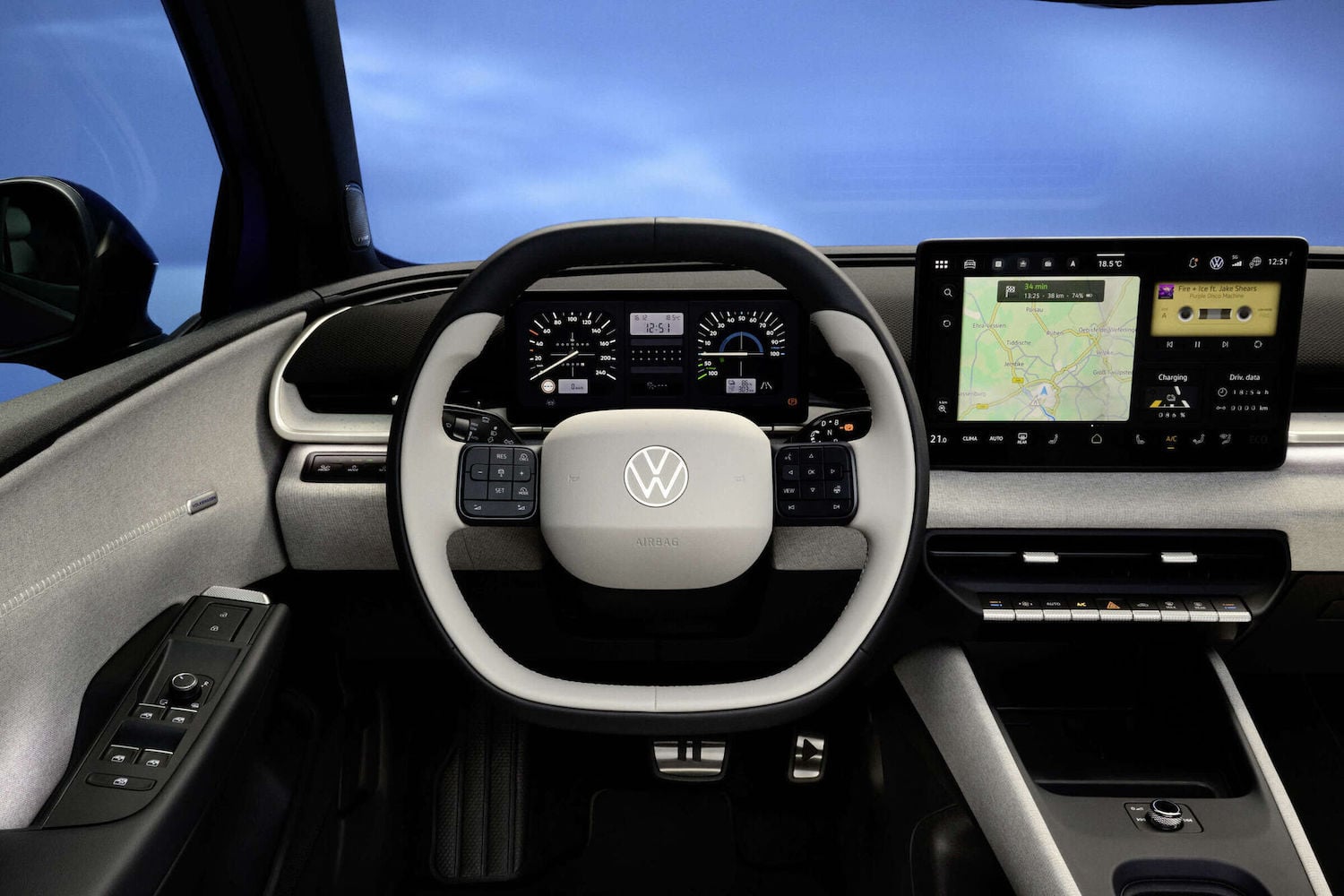
Volkswagen acknowledged criticism of its touchscreen-heavy interiors back in 2023, when it said it would bring back more physical controls in future models. And new photos released in January of a small budget EV suggest the company is following through, showing physical controls for things like hazard lights, temperature, and volume.
Volkswagen isn’t alone. It joins a growing list of automakers, including Subaru and Mercedes-Benz, that are backtracking on the move away from physical buttons and knobs. In 2024, Hyundai also said it was bringing back physical controls after finding that American drivers didn’t love touchscreen-heavy interiors.
“When we tested with our focus group, we realized that people get stressed, annoyed and steamed when they want to control something in a pinch but are unable to do so,” Hyundai Design North America Vice President Hak Soo Ha told Korea JoongAng Daily at the time.
The shift is also a matter of safety.
A 2023 study found that physical controls outperform touchscreens, with drivers taking significantly longer to complete simple tasks like changing the radio station or adjusting the temperature when using screens. That added time can keep drivers distracted for longer and reduce reaction times.
Swedish car magazine Vi Bilägare tested how long it took drivers to perform simple tasks in 11 modern cars and a 2005 Volvo without a touchscreen while driving at about 68 mph. All the tasks took just 10 seconds in the Volvo. Conversely, the MG Marvel R, a Chinese electric car, took the longest at 44.6 seconds to do the same.