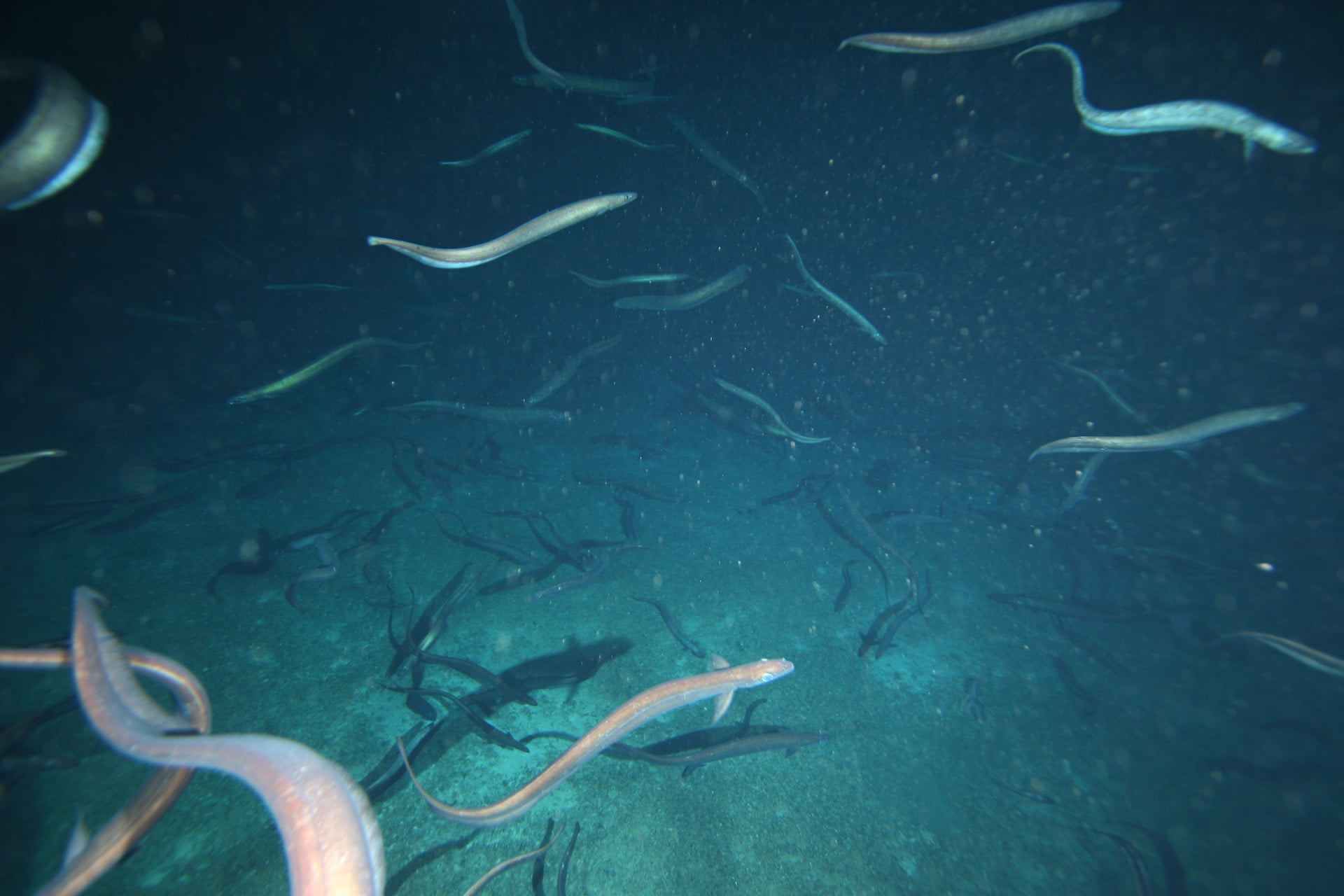
The deep sea remains one of the most underexplored regions of our planet. So, naturally, that’s where you’d expect to find some very bizarre things happening—like three thousand metric tons of pure eel.
Researchers with Australia’s Commonwealth Scientific and Industrial Research Organisation (CSIRO) got wind (or wave?) of the eel aggregation in 2007, during underwater surveys to map the seabed and biodiversity in southern Tasmania. Follow-up surveys in 2015 and 2018 found that, indeed, an unusually high number of basketwork eels liked to gather at Patience Seamount within Australia’s Huon Marine Park. And in a recent study published in Royal Society Open Science, CSIRO researchers for the first time properly quantified the eel aggregation. But they’re still unsure why the eels are there, although one likely hypothesis is that they’ve gathered to mate.
According to the study, at its peak the eel aggregation increased to approximately 2.8 million individuals, or between 3,547 and 3,557 metric tons… of eel. This “block” of eel spans roughly 3 kilometers (1.8 miles) long and 2 kilometers (1.2 miles) wide and extends several hundred meters up into the water column.
“In the densest parts, the seafloor appears carpeted with eels, with individuals often less than an arm’s reach from one another,” Ben Scoulding, the study’s corresponding author and a researcher at CSIRO, told Gizmodo. “For someone viewing the imagery, the scene is unlike anything you would normally expect to see in the deep sea, where fish are typically scattered across vast areas of the seafloor.”
From eels and mountains
As the team explained in the study, the Huon Marine Park was established in 2007, and its many seamounts—large underwater mountains rising from the seafloor—were always of great interest to marine biologists and oceanographers. This included Patience Seamount, which has a base area of roughly 1.2 square miles (3 square kilometers), rising to a peak depth of 2,812 feet (857 meters) from a base of 4,101 feet (1,250 meters).
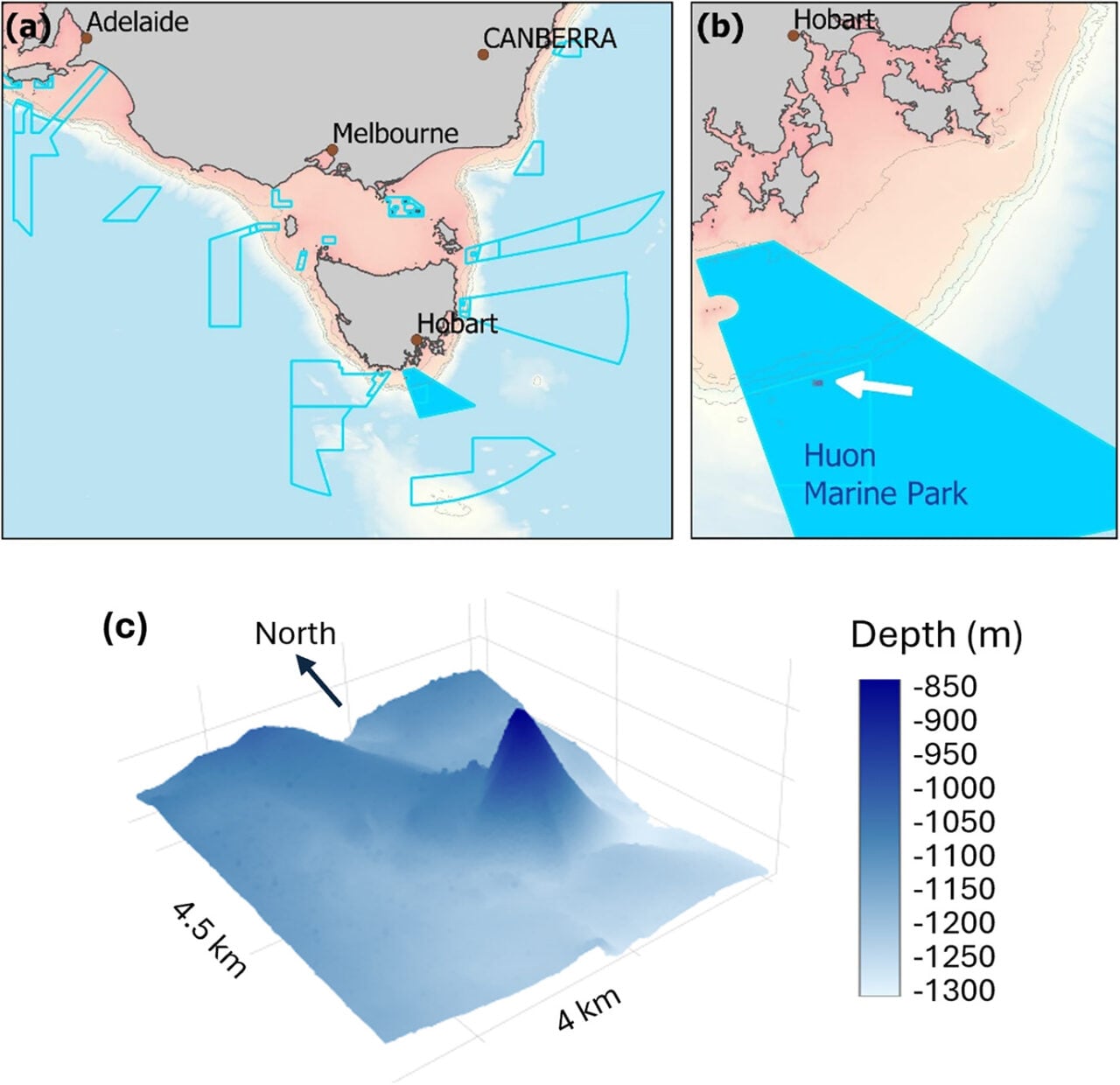
But people had known that Patience Seamount was a hotspot for basketwork eels since the 1980s, according to a report on the study by ABC News in Australia. Scoulding told ABC News that fishers even nicknamed the site “Eel Hill,” although it was in the mid-2000s that researchers with CSIRO properly confirmed their presence via underwater cameras.
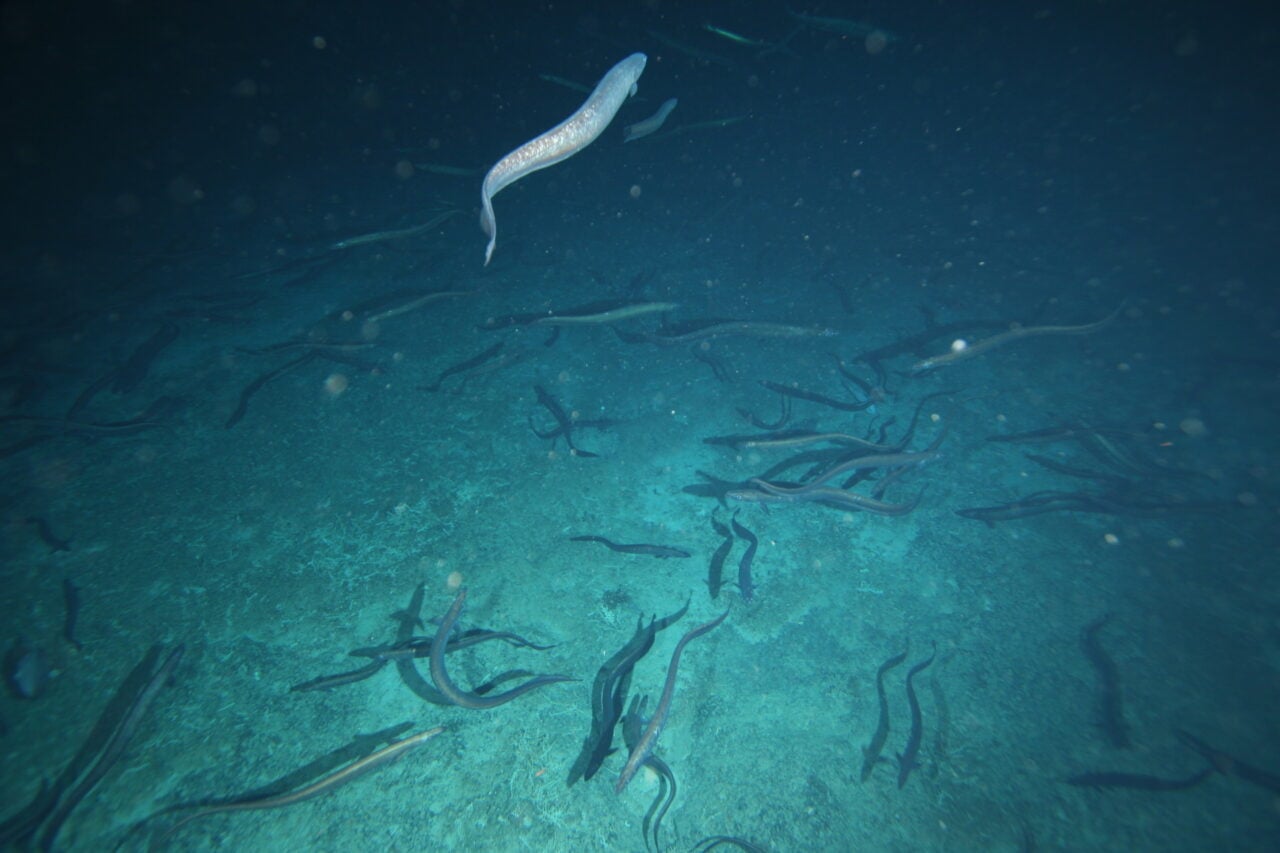
“[S]eeing the imagery for the first time was still incredible and had a real ‘wow’ factor,” Scoulding explained to Gizmodo. “Some of the best footage we have of the aggregation was collected during scientific voyages [by CSIRO’s marine research vessels] in the 2000s and 2010s.”
Sifting through the (non-eel) noise
The latest project involved nine surveys between May 2023 and April 2025 and included hydroacoustic data, camera imagery, and physical sampling. Hydroacoustic studies coupled with video analysis and historical fishery records allowed the team to distinguish between basketwork eels and orange roughy. In the past, the general abundance of these fish around Patience Seamount had been somewhat of a nuisance for studies on basketwork eel distribution.
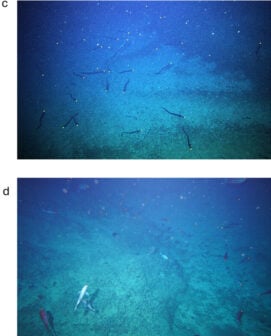
Fortunately, the analysis suggested the eels and the roughy had separate periods of “dominance,” as well as different spawning levels. Basketwork eels favored flatter terrain at depths greater than 3,445 feet (1,050 meters), whereas orange roughy stayed near the peak and along the steep slopes at a depth of roughly 3,280 feet (1,000 meters).
“We’ve observed the [eel] aggregation during surveys conducted from December through to August, but numbers appear to increase substantially between March and May,” Scoulding explained to Gizmodo. “Exactly when the aggregation forms and disperses remains unknown.”
Important questions
The team wasn’t able to catch too many eels for sampling, although the reproductive condition of the eels they did reel up was “consistent with a spawning aggregation,” according to the paper. Low catch rates could either mean a gear issue or that eels reduce feeding activity during spawning, the researchers added. The eels probably did notice the bait, since the empty lines came up with some mucus.
“We suspect this is because the eels are focused on reproduction rather than feeding, making them less likely to take bait,” Scoulding said. “Sampling animals at these depths can sometimes feel a bit like dropping a fishing line into the middle of the Grand Canyon and hoping it lands beside the animal you’re trying to study.”
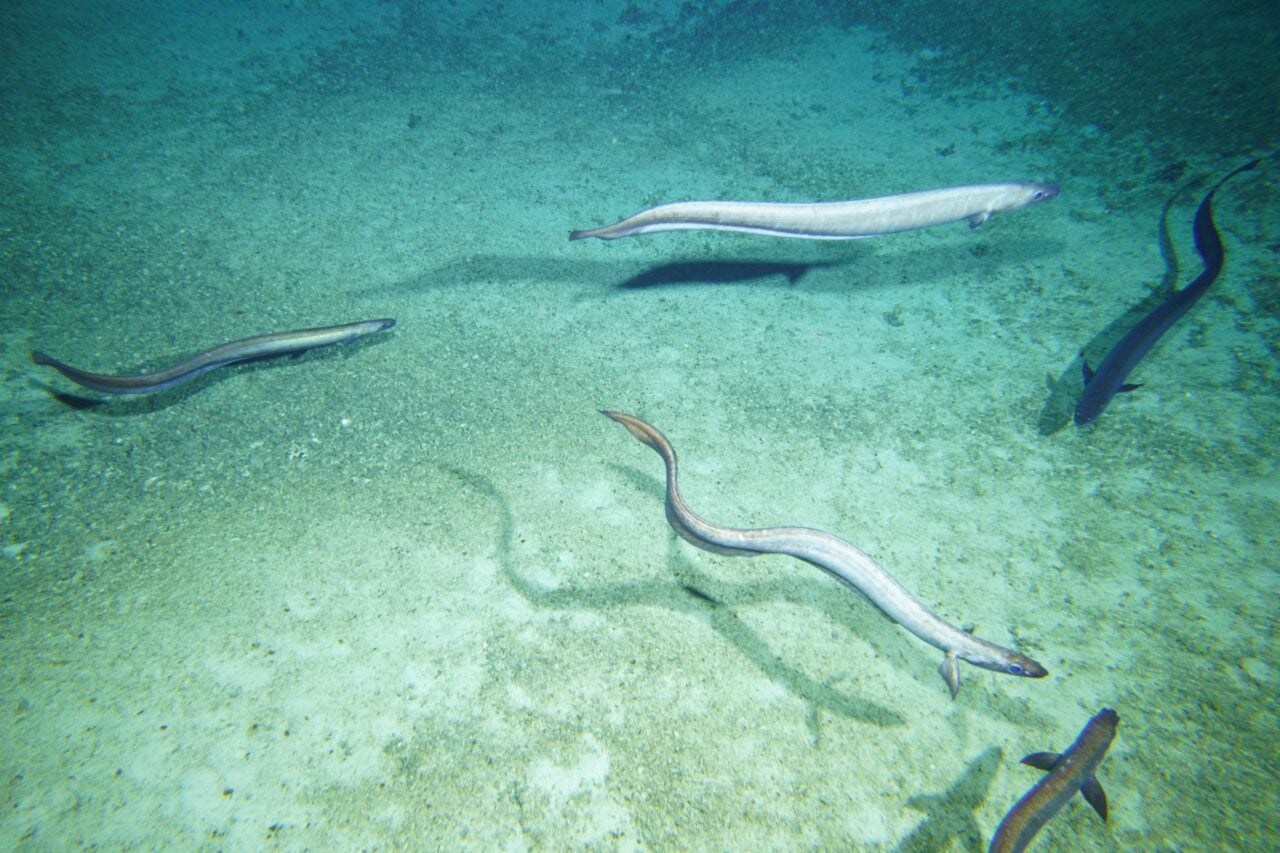
Accordingly, Scoulding said there were still several unanswered questions, adding, “One of the biggest is simply: why Patience Seamount? The Huon Marine Park contains more than 120 seamounts, yet this is the one where we’ve observed such an extraordinary aggregation of basketwork eels.”
If the eels are indeed gathering for reproduction—something for which Scoulding’s team hopes to gather more direct evidence—then other questions ensue, he said. For instance, where do the adults go after this? Where do the larvae drift? How do the adult eels know how to return to Patience Seamount?
“We often think of the deep ocean as being remote and inaccessible, yet it’s one of the largest habitats on Earth and many parts of it remain unexplored,” Scoulding said. “Discoveries like the basketwork eel aggregation remind us that there are still major biological phenomena waiting to be uncovered.”