The Greek philosopher Empedocles is perhaps best known for his theory of the four classical elements: fire, air, earth, and water (plus love and hate). Like many of his contemporaries, Empedocles was also a poet. But his literary works remained undiscovered—until now.
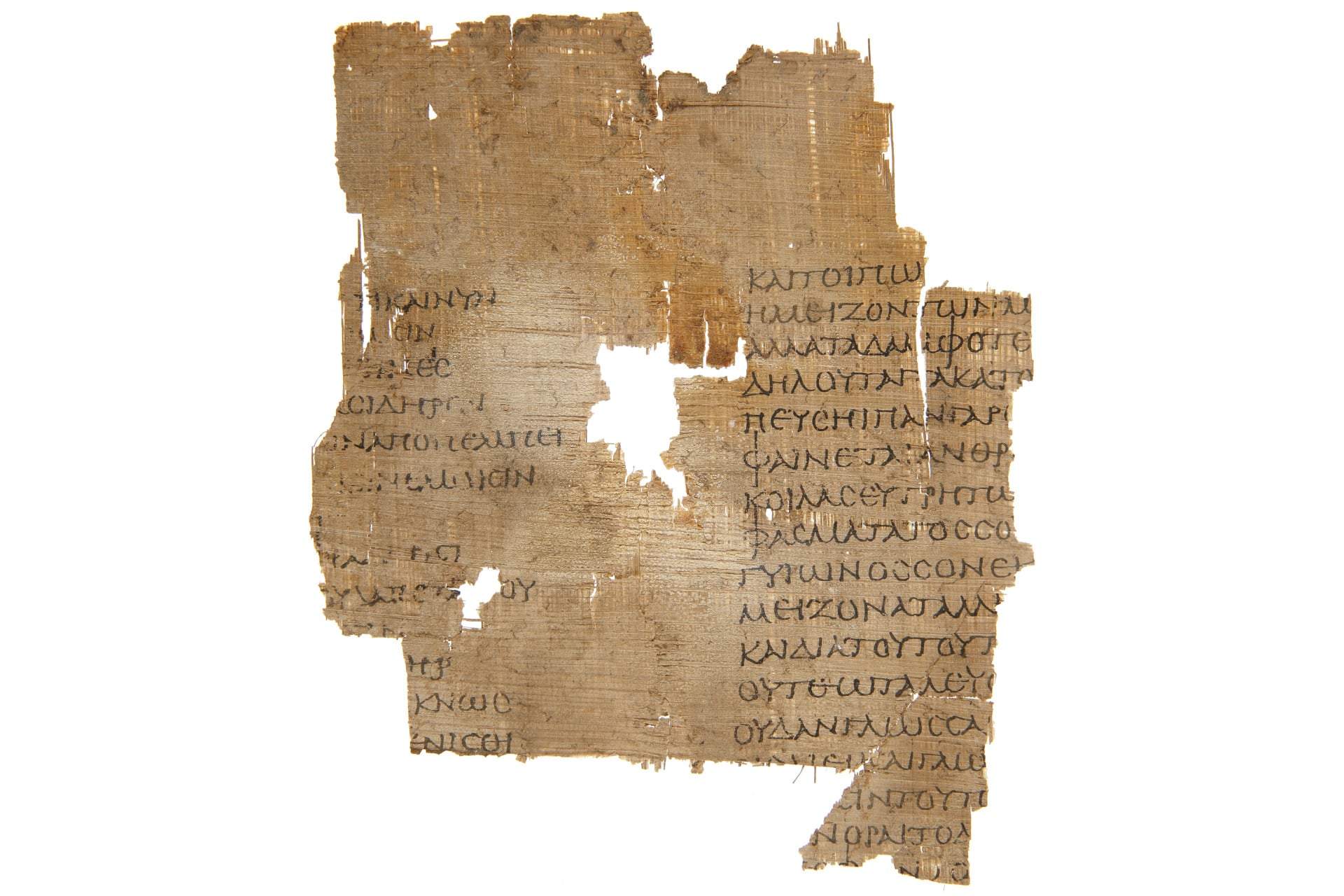
In a recent statement, a team of European researchers announced the discovery of 30 unpublished verses penned by Empedocles of Agrigentum from the 5th century BCE. The 2000-year-old papyrus fragments, designated “P.Fouad inv. 218,” lay inside the archives of the French Institute of Oriental Archaeology (IFAO) in Cairo until the team found and identified them in 2017. The papyrus appears to be part of the only known copy of Empedocles’ the Physica, or On Nature. The translated verses, complete with commentary, were recently published as a book, L’Empédocle du Caire.
“It is a bit like the Renaissance humanists rediscovered the main texts of Classical Antiquity,” Nathan Carlig, author of the new book and a papyrologist at the University of Liège in Belgium, told Gizmodo. “It gives us access for the first time since Antiquity to a portion of the work of the philosopher Empedocles that we thought was lost.”
A giant hidden from view
Carlig said he first encountered the papyrus in 2017 during an institution-wide program to study unidentified Greek papyrus rolls owned by the IFAO. But a detailed investigation of the papyrus, later confirmed to be from Empedocles’ Physica, began in earnest in 2021, he explained.
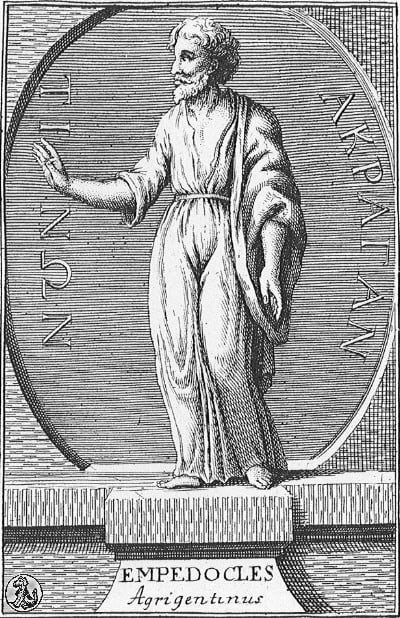
“Studying the papyrus raised many questions from papyrological and philological points of view that I could deal with, but for the philosophical questions, my expertise was not sufficient,” Carlig recalled.
It was around this time he reached out to Alain Martin and Oliver Primavesi, both specialists of Empedocles. Martin in particular was involved in the 1992 confirmation of the Strasbourg papyrus, which contained a large section of Physica. With his collaborators, Carlig confirmed that the literary style and layout of the fragments highly resembled known writings from Empedocles.
Legacies revisited
After rigorous scientific analysis, the team finally became confident that they’d found something big. Contrary to Empedocles’ impact on ancient philosophy, much of our knowledge on his ideas comes from “more or less reliable accounts about his life and doctrine and more or less long quotations of his works by later authors, such as Plato, Aristotle, Theophrastus, [or] Plutarch,” Carlig explained.
So the newfound papyrus rolls—written in Empedocles’ own words—revealed rich new insights into where he stood among the greats of Greek philosophy. The papyrus primarily dealt with the theory of particle effluvia (odor) and sensory perceptions, with a focus on vision. Until now, these concepts were only known through summaries by Plato and Aristotle’s student Theophratus, Carlig said.
Further down the line, the comic poet Aristophanes and the Roman philosopher Lucretius also showed “unnoticed echoes of Empedocles” in their respective writings. The team believes that this demonstrates Empedocles’ influence on atomist philosophers, such as Democritus (the guy who first proposed the stick-and-ball atomic models you saw in high school chemistry), according to the statement.
“I find Empedocles very innovative and also modern,” Carlig said. “His verses, which are from a literary point of view inspired by Homer, tell that our world and what is inside—human beings, objects, animals, etc.—are all made from the same elements that are put together thanks to love or separated by hate. It is a holistic view of the world, actually, in which human beings are only a part of the whole world.”