Spaceflight is hard, but crewed spaceflight is a million times harder. With humans onboard, engineers have to account for a long list of biological needs—including going to the bathroom.
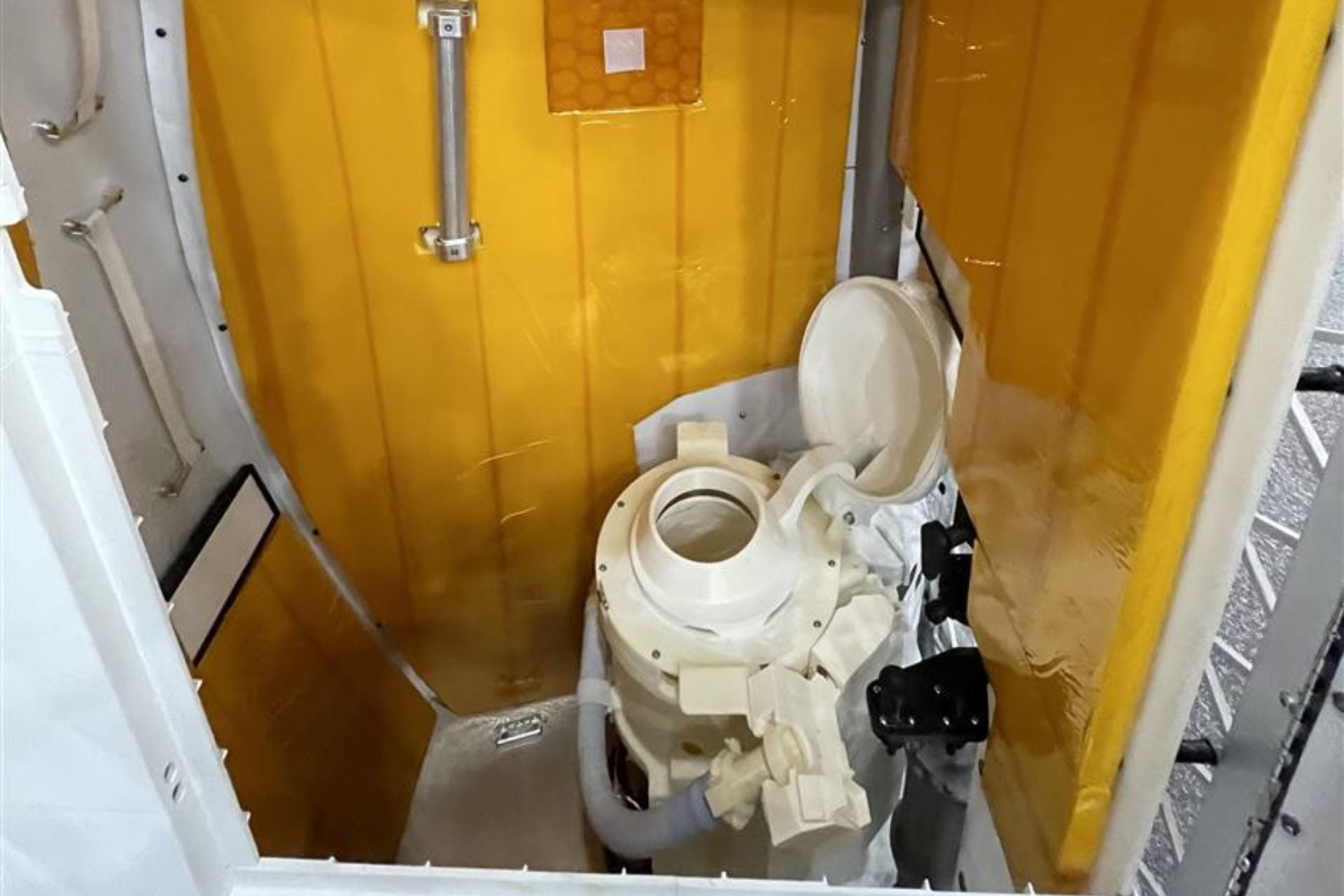
Designing a toilet that works reliably in an unforgiving microgravity environment is an engineering challenge NASA is apparently still grappling with. Artemis 2 is the first mission to send the agency’s Universal Waste Management System (UWMS) beyond low-Earth orbit. This state-of-the-art space toilet has been aboard the International Space Station since 2021, but the modified version NASA installed on the Orion spacecraft appears to be on the fritz.
A toilet trouble timeline
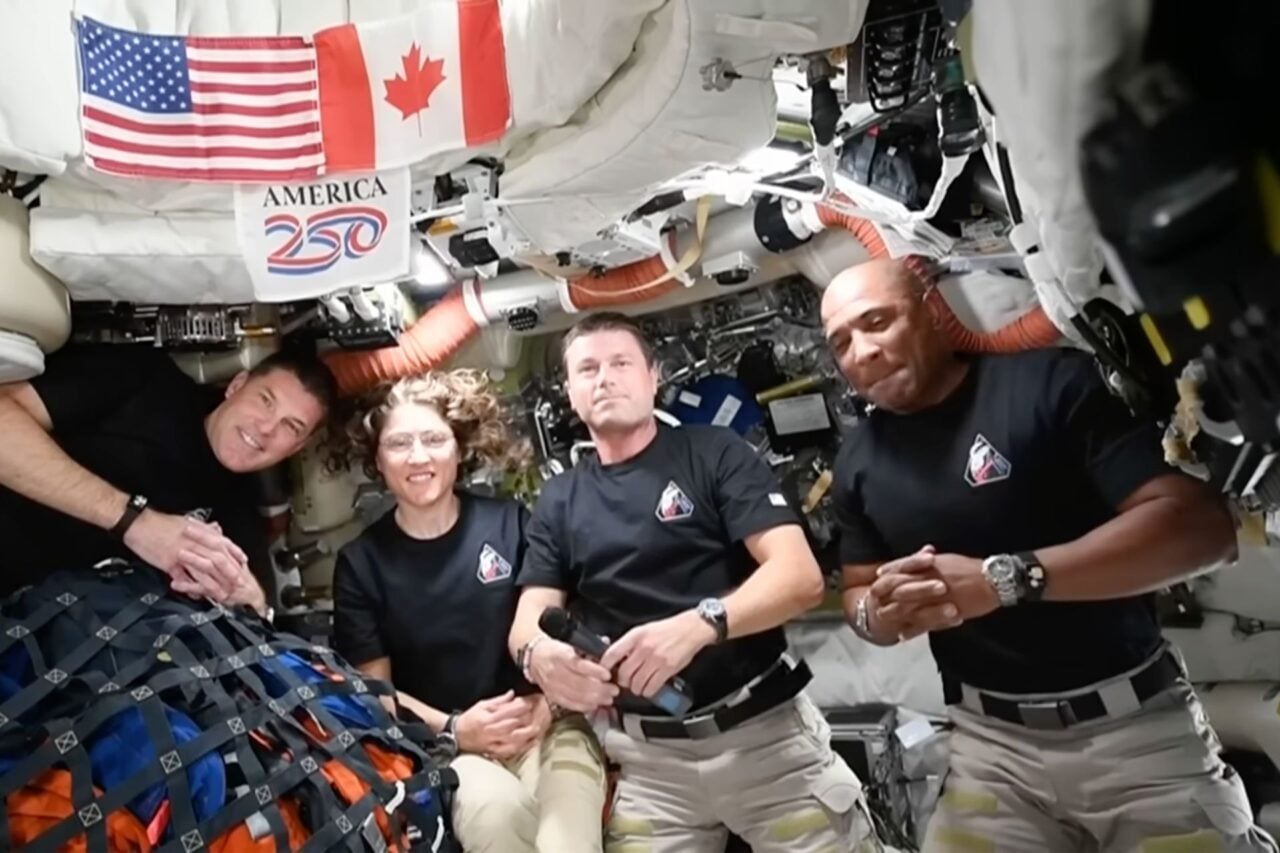
Just hours after Artemis 2 launched on April 1, the toilet’s urine collection fan jammed. Artemis 2 Mission Specialist Christina Koch worked with ground control to troubleshoot the problem and earned herself the esteemed title of “space plumber,” but that wasn’t the end of the crew’s toilet trouble.
On April 3, the crew reported a burning smell emanating from the toilet, but that did not alarm mission control—even though Koch said the odor was similar to one they smelled when the toilet malfunctioned on the first day of the mission. Houston told the astronauts they could keep using the bathroom as usual, suspecting the smell could be coming from orange insulation around the door to the hygiene bay.
Then, the UWMS began struggling to dump stored urine out into space, possibly due to a frozen vent line. Mission control advised the crew to use the contingency urine collection bags to pee while engineers worked to heat the nozzle and clear the ice.
During Tuesday’s mission briefing, NASA officials said that while the UWMS remains operational, it is still struggling to vent its stored urine.
“The vent is a lot less than we were expecting, and so we’re having to fall back to some other alternate means other than the toilet,” said NASA flight director Rick Henfling. “The engineering team is going to go through a full fault tree to identify all of the potential causes of the blockage.”
Henfling added that while engineers initially thought the blockage was caused by icing at the nozzle of the vent line, they now have “pretty high confidence that it’s not an icing condition.”
“We’ve put the spacecraft in a Sun-focused attitude to bake off any ice, we’ve activated heaters along the lines internal to the spacecraft, and we still see a blockage,” he said.
Getting to the root cause
With icing ruled out as the root cause, NASA’s engineers have a new hypothesis. This one isn’t directly related to Orion’s hardware but rather to the chemistry that ensures UWMS wastewater does not develop any biofilms.
“There may be something going on with a chemical reaction where there’s some debris that’s generated as part of that reaction, and it’s getting clogged in a filter,” Henfling explained. “But again, we don’t have a root cause.”
He said that after Orion returns to Earth, NASA will bring the spacecraft back to the processing facility at Kennedy Space Center to fully investigate what went wrong. Orion is due to splash down off the coast of San Diego, California, at approximately 8:07 p.m. ET on Friday.
Artemis 2 is the first crewed test flight of Orion and, therefore, the first test of its human waste management system. Working out the kinks is an essential part of readying this vehicle for future missions to the Moon and Mars. While these issues may have been inconvenient for the Artemis 2 crew, they present critical opportunities for engineers to improve the system.