Over the past eight days, the world has watched four intrepid explorers leave Earth, fly around the Moon, and make spaceflight history. The moments of reverence, camaraderie, and bravery we’ve witnessed since the launch of NASA’s Artemis 2 mission have done wonders for my faith in humanity, but sadly, all good things must come to an end.
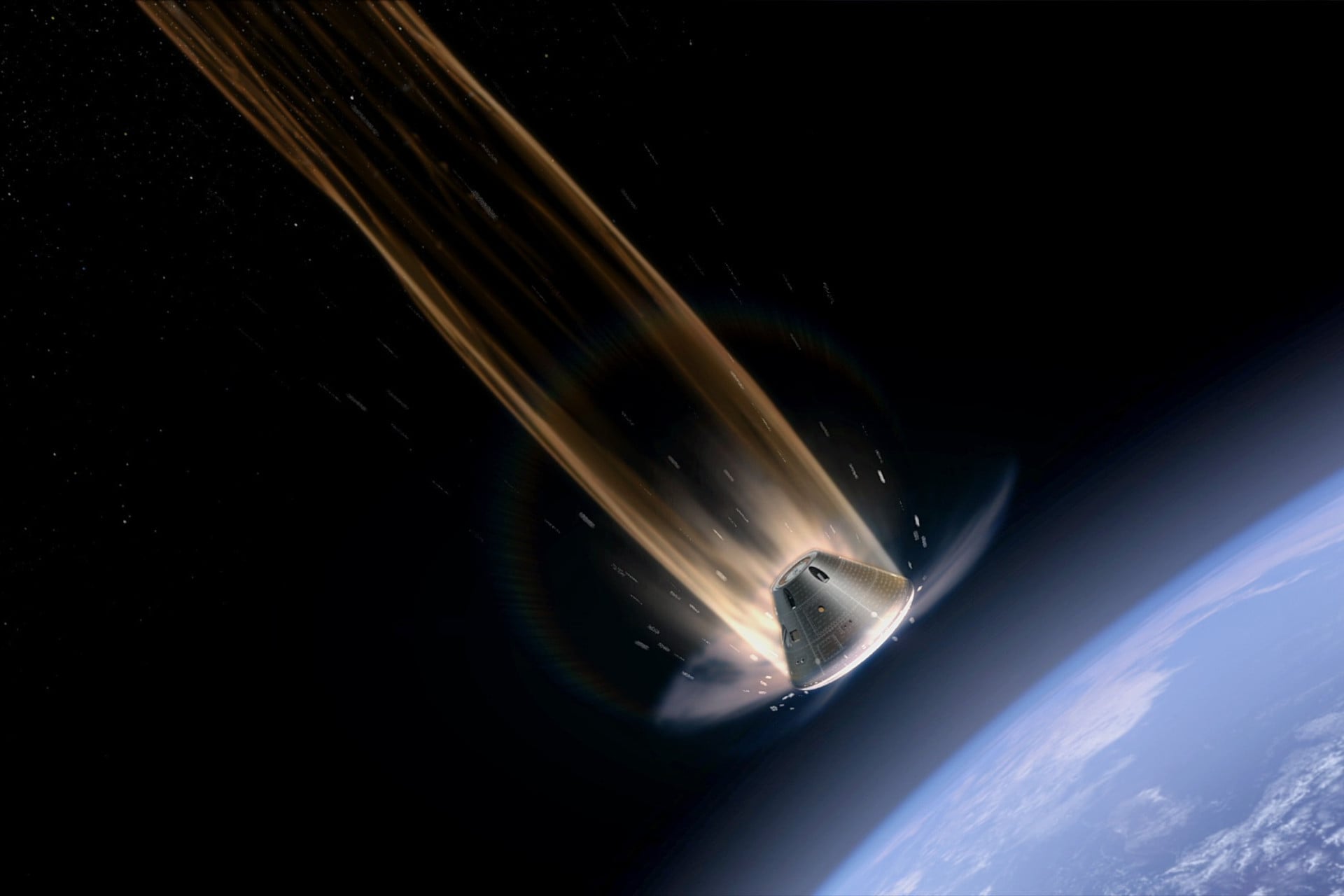
Having completed the lunar flyby on Monday, the Orion spacecraft is now on its way back to Earth, targeting a splashdown off the coast of San Diego, California, at approximately 8:07 p.m. ET on Friday. The capsule will reenter the atmosphere at a blazing 25,000 miles per hour (40,000 kilometers per hour), then slow to just 17 mph (27 kph) for a soft ocean landing.
This will easily be the most dangerous part of the mission, but NASA is highly confident the crew will return to Earth safe and sound.
After splashdown, recovery teams will retrieve the crew by helicopter and fly them to the USS John P. Murtha. Once aboard the ship, the astronauts will undergo post-mission medical evaluations before traveling back to shore to board a flight to NASA’s Johnson Space Center in Houston, Texas.
It’s going to be an action-packed day. You can watch the epic conclusion of the Artemis 2 mission right here via NASA’s livestream below. Splashdown coverage will begin at 6:30 p.m. ET. Gizmodo will be following along from reentry to recovery and will provide updates through our live blog.
Come on home, Artemis 2
On day two of the mission, Orion performed its translunar injection burn, setting it on a path to slingshot around the Moon and ultimately return to Earth. The spacecraft exited the lunar sphere of influence on Tuesday, which means Earth’s gravity is now pulling it back home.
This figure-eight “free return” trajectory harnesses the power of gravity to save on fuel. Aside from a few short trajectory correction burns to keep Orion on track, the spacecraft’s rocket engines have done little work since leaving low-Earth orbit. In fact, the translunar injection burn was so perfect that mission control actually skipped the first two corrective burns they had built into the schedule.
Orion is currently hurtling toward our planet at nearly 2,000 mph (3,200 kph). The spacecraft will gain significant speed as it approaches Earth due to the increasing pull of gravity, which is why it will reenter the atmosphere at a velocity nearly 33 times faster than the speed of sound.
Returning in a blaze of glory
When Orion slams into the atmosphere at that speed, it will generate intense heat by violently compressing the air in front of it. Orion’s heat shield will protect the capsule and its crew from these extreme temperatures. It’s designed to withstand up to 5,000 degrees Fahrenheit (2,760 degrees Celsius), but according to NASA, the spacecraft will only experience maximum temperatures around 3,000 degrees F (1,649 degrees C) during its descent.
The heat shield was one of the biggest question marks leading up to Artemis 2. After the unscrewed Artemis 1 mission, engineers noticed that large chunks of the shield sheered away unevenly during reentry. If that were to happen again on Artemis 2, it could expose the astronauts to dangerously high temperatures.
NASA and Lockheed Martin (the prime contractor for Orion) have spent the past four years investigating and fixing the heat shield issue. Both are exceptionally confident it will perform nominally during the Artemis 2 reentry—the mission would not have launched otherwise. Still, many will be watching to see if the heat shield holds up.
As the mission nears its end, it’s exciting to think of what lies ahead. This first crewed flight of NASA’s Artemis program will pave the way for future lunar landings and Mars missions. Though it may have taken decades to reach this point, this is only the beginning of a new chapter in human spaceflight.