Today, NASA will attempt to launch Artemis 2, the first crewed Moon mission in over 50 years. Decades of preparation have led up to this moment, which could make or break America’s space dominance. What could possibly go wrong?
I’m so glad you asked. In fact, there are all kinds of SNAFUs that could arise over the course of this costly, high-stakes trip around the Moon, from thruster failures to dangerous solar weather. Any one of them could put the future of the Artemis program—and the lives of four astronauts—at risk. Here are some of the worst-case scenarios.
Orbital injection error
Shortly after launch, the Orion spacecraft and the interim cryogenic propulsion stage (ICPS) will separate from the rest of the Space Launch System rocket, with the ICPS performing an initial burn to maintain Orion’s trajectory. There’s a slim chance that the upper stage fails and Orion does not reach its target low Earth orbit. This could force the spacecraft to reenter the atmosphere and return to Earth, derailing the mission.
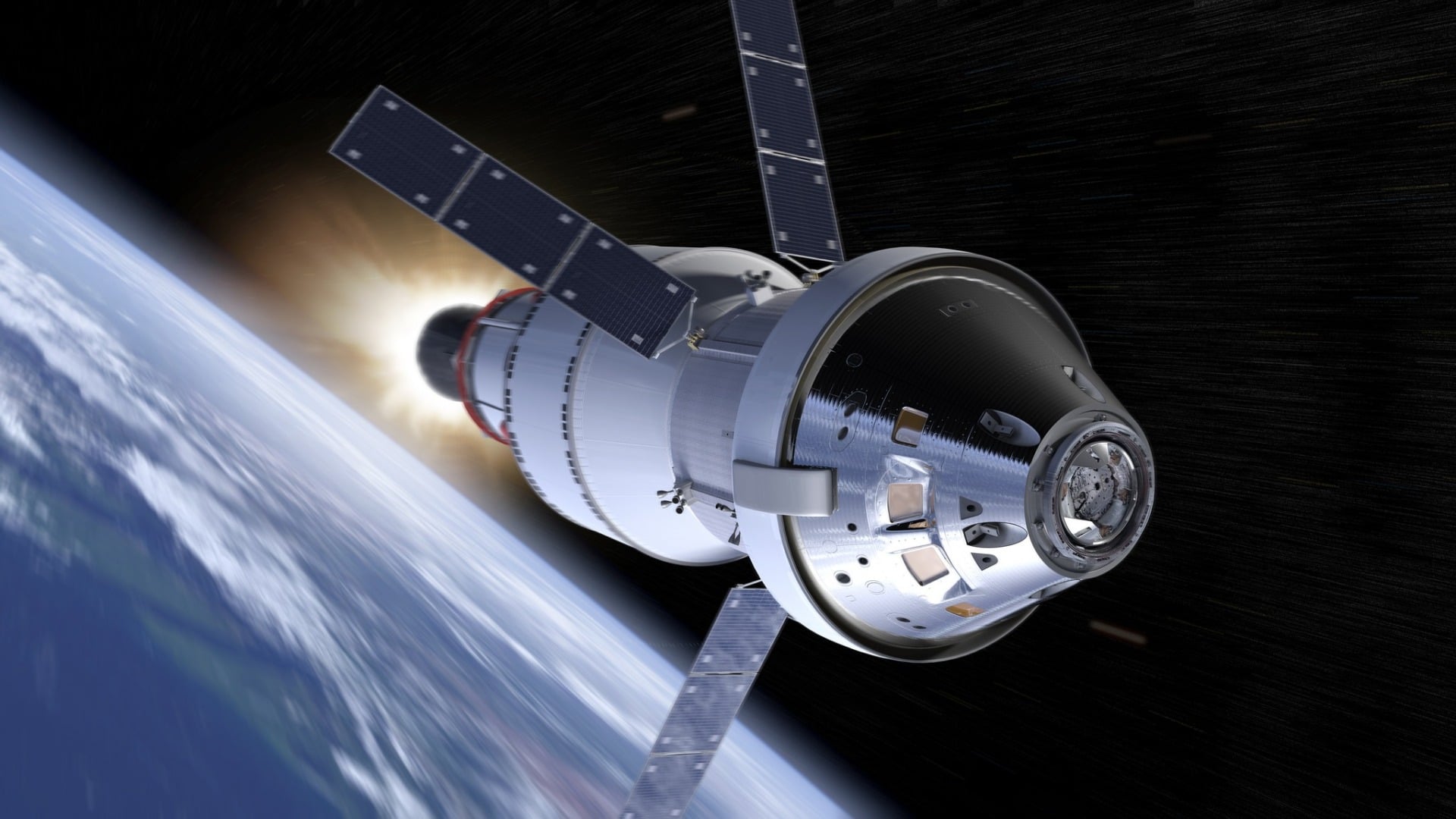
About 49 minutes into the flight, the ICPS will fire its engine to raise the perigee—the lowest point of Orion’s orbit—to an altitude of 100 miles (161 kilometers) above Earth. If all goes as planned, Orion’s perigee should reach that altitude about one hour after launch. The ICPS will then fire again to raise the spacecraft into a high Earth orbit. After completing these burns, the ICPS will separate from the spacecraft, and the crew will spend the next 23 hours preparing to fly to the Moon.
Failed translunar injection
The crew will then end the first day of flight by firing the Orion’s engines and putting the spacecraft into the correct orbital geometry for a translunar injection (TLI) burn on flight day 2. The TLI is the most critical engine firing of the mission, setting Orion on its path to the Moon.
Roughly 25 hours after launch, Orion’s service module will fire its engines to set the spacecraft on course to the Moon and on the free-return trajectory that will ultimately bring it back to Earth. “If TLI fails, however, the mission plan as defined may no longer be achievable,” according to NASA. Specifically, a failed TLI could strand Orion in high Earth orbit, send the spacecraft onto an incorrect trajectory that misses the Moon, or force the crew to abort the mission early and return Orion back to Earth.
That’s why the agency has contingency plans covering a range of problems that could interfere with the TLI, including engine malfunctions, loss of contact with mission control, and other spacecraft system failures that might force Orion onto the wrong trajectory—or require it to return to Earth early.
Service module systems failure
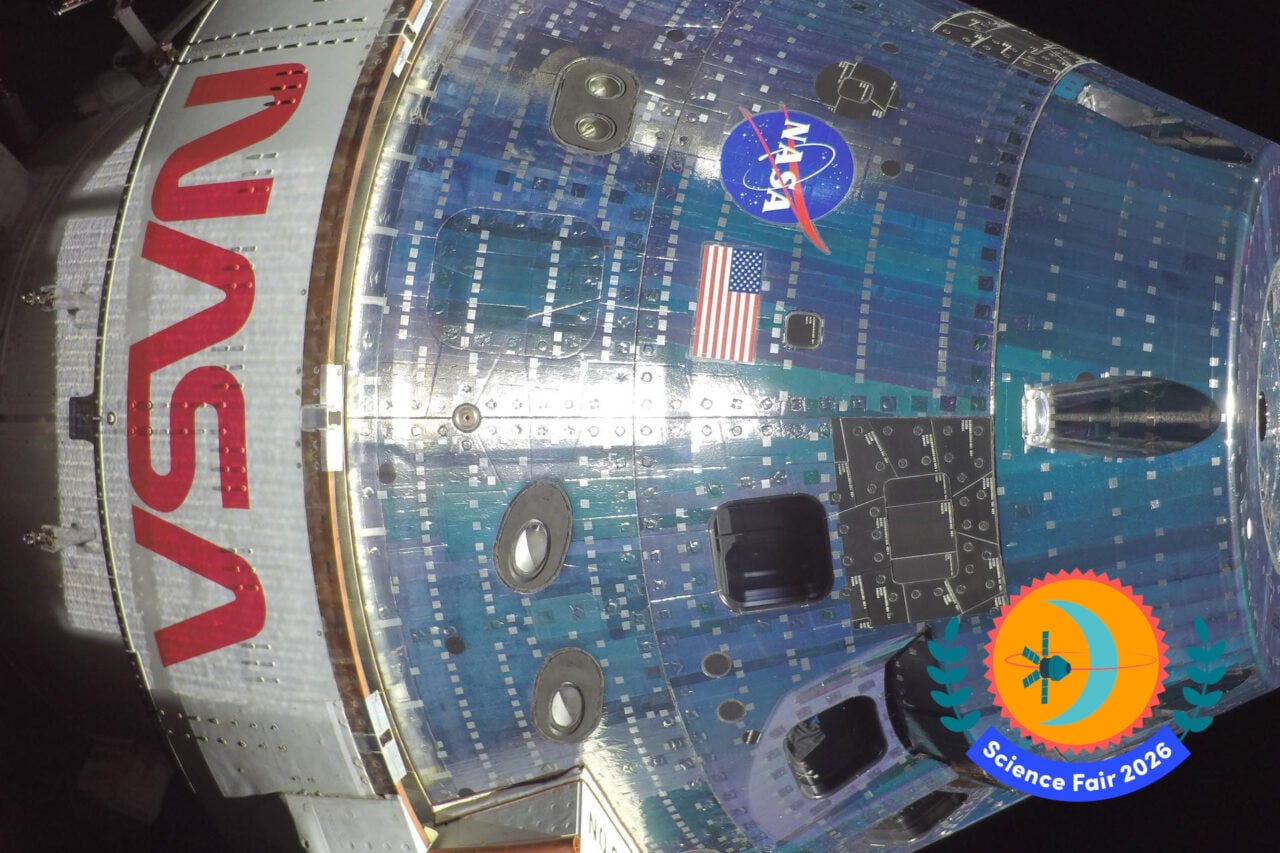
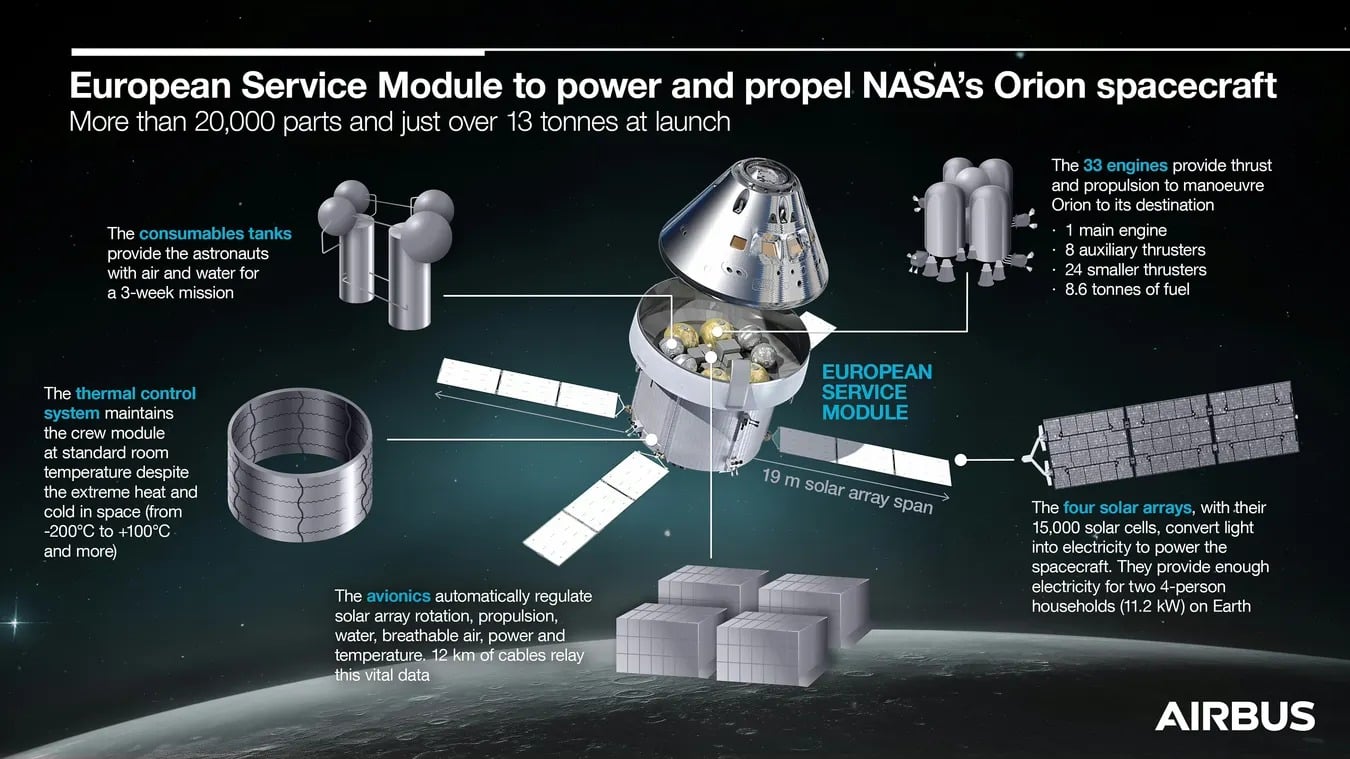
NASA describes Orion’s service module as the powerhouse of the spacecraft. Located below the crew module, it provides the electricity, propulsion, thermal control, air, and water the Artemis 2 astronauts need to reach their destination and—more importantly—stay alive. A failure of any one of its systems would cause big problems.
Let’s start the power system. The service module is equipped with four solar array wings that unfurl in space to generate 11.2 kilowatts of electricity. This system is absolutely essential, as it supplies the entire spacecraft with power, running everything from battery charging to life support.
During Artemis 1, the power system actually generated more power than expected, but one of the power conditioning units experienced an anomaly. These units evenly distribute power from the solar array wings to the rest of Orion. Engineers later traced the issue to a radiation-induced glitch that caused several electronic circuit breakers to open when they weren’t supposed to.
While this did not have a serious impact on the mission, a similar or more severe glitch during Artemis 2 could disrupt power distribution and potentially knock out Orion’s life support, avionics, or propulsion systems.
But it may not be a power issue that disables those critical systems. Any one of them could fail internally, though there are redundancies built in to reduce that risk. The propulsion system, for example, includes 33 engines across multiple tiers. This allows Orion to keep maneuvering even if some thrusters fail—though not all can fully replace the spacecraft’s main engine for major trajectory changes.
The life support system is also highly redundant. In the extremely unlikely event of a total system shutdown, the Artemis 2 astronauts would be in big trouble—suddenly losing access to breathable air, fresh water, temperature control, and safe cabin pressure.
Violent solar weather
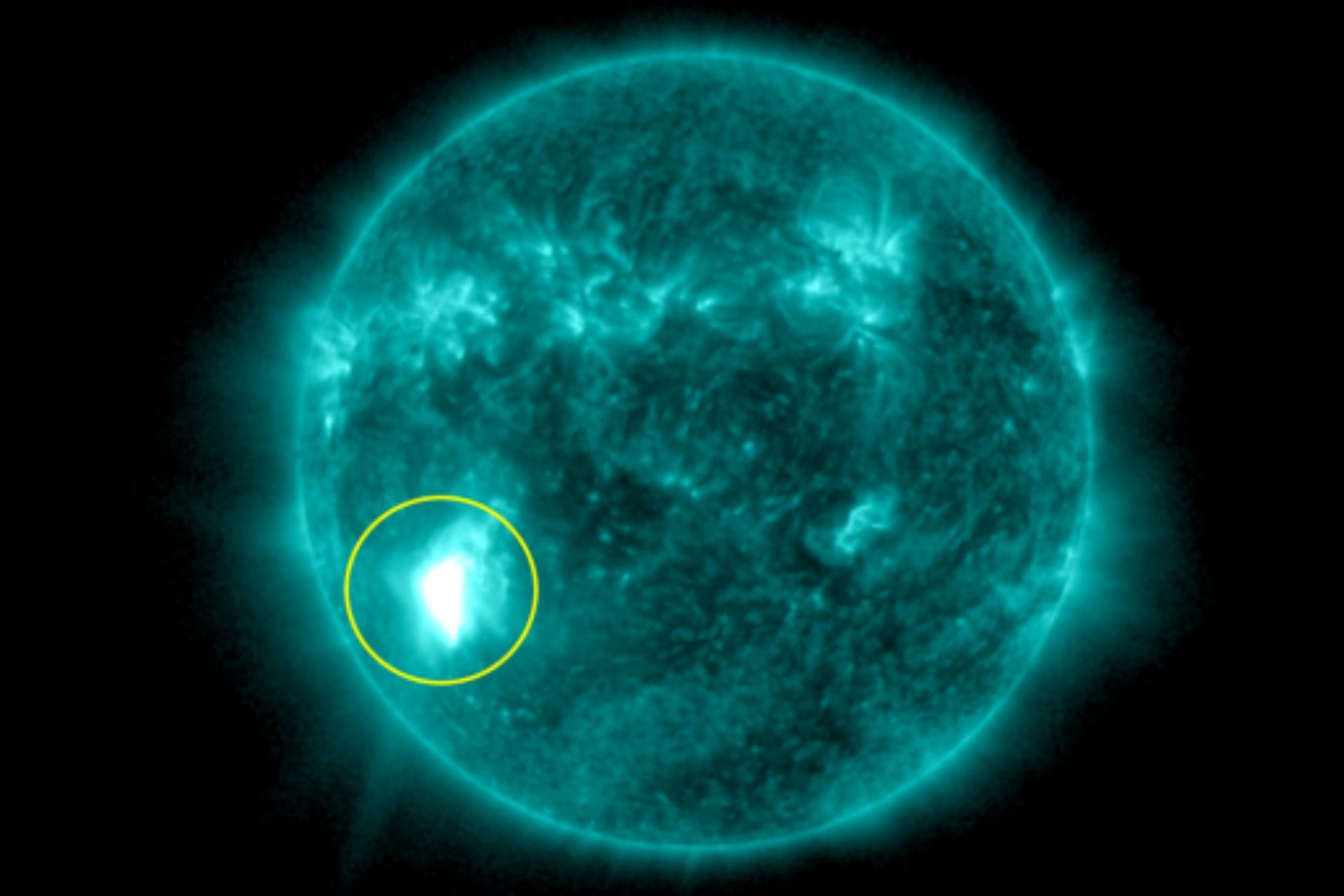
Throughout the 10-day mission, NASA will be keeping a close eye on the Sun. Powerful bursts of solar activity, such as X-class flares or coronal mass ejections (CMEs), could disrupt Orion’s systems and pose a risk to crew safety.
Even without the influence of solar weather, spaceflight exposes astronauts to levels of radiation far greater than those on Earth. If the Sun unleashes a large solar flare or CME upon Artemis 2, the crew’s dosage will increase drastically.
Orion is equipped with radiation shielding and sensors to monitor levels inside the spacecraft, but a severe bout of solar weather could potentially overwhelm its protective barrier. If interior radiation levels become dangerously high, the astronauts would have to construct a “shelter,” lining the capsule’s least shielded walls with bulky items from storage.
Solar weather could also lead to technical glitches, potentially disrupting Orion’s communications, navigation sensors, onboard computers, or power-distribution hardware.
While the forecast for Artemis 2 currently looks clear, the Sun can be unpredictable. On Monday, an X-class solar flare and CME sparked concerns of a launch delay, but NASA Associate Administrator Amit Kshatriya told reporters that the agency is not expecting it to cause problems. Still, radiation monitoring and space weather awareness will be key to the mission’s objectives and crew safety.
A heat shield that can’t take the heat
After swinging around the far side of the Moon and leaving the lunar sphere of influence, the Earth-Moon gravity field will naturally pull Orion back home. Prior to atmospheric reentry, the crew module will separate from the service module, exposing the crew module’s heat shield.

The heat shield will protect Orion and its crew from the extreme temperatures of reentry. It is designed to withstand up to 5,000 degrees Fahrenheit (2,760 degrees Celsius), but according to NASA, the spacecraft will only experience maximum temperatures around 3,000 degrees F (1,649 degrees C) during its descent.
Artemis 1 exposed problems with Orion’s heat shield. After the uncrewed spacecraft returned to Earth, engineers noticed that large chunks of the shield sheered away unevenly. If that were to happen again on Artemis 2, it could expose the crew to dangerously high temperatures.
NASA and Lockheed Martin—the prime contractor for Orion—have spent the past four years investigating and fixing the heat shield issue. They determined the problem was caused by gases building up inside the shield’s ablative outer layer that didn’t vent properly during reentry.
Parachute failure
While NASA is confident the heat shield will perform as expected for Artemis 2, reentry will be the riskiest part of the mission in terms of crew safety. Beyond heat shield concerns, there’s also a chance Orion’s parachute system won’t deploy correctly.
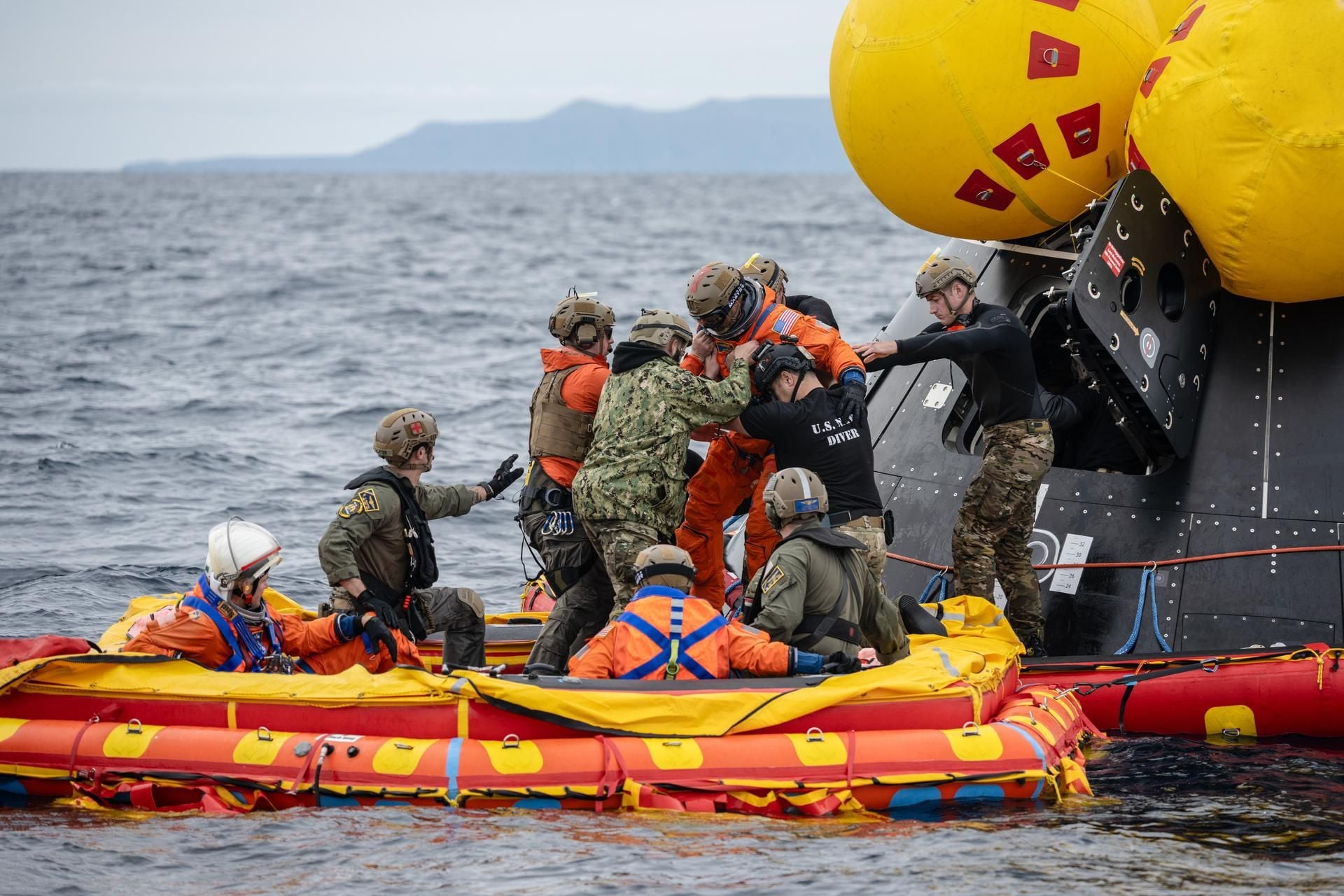
This system of 11 parachutes will slow the crew module from 324 miles per hour (521 kilometers per hour) to 17 mph (27 kph) during the last part of reentry for a soft ocean splashdown, according to Lockheed Martin. Orion only uses three main parachutes to land, but it can land safely using just two. However, if two or more fail, this would result in a dangerous splashdown.
To be clear, all the situations discussed in this article are unlikely worst-case scenarios—but they are not impossible. While NASA would not launch Artemis 2 without strong confidence in the mission and the crew’s safety, no spaceflight is risk-free, and the agency can’t predict every anomaly. Here’s hoping humanity’s epic return to the Moon goes off without a hitch.