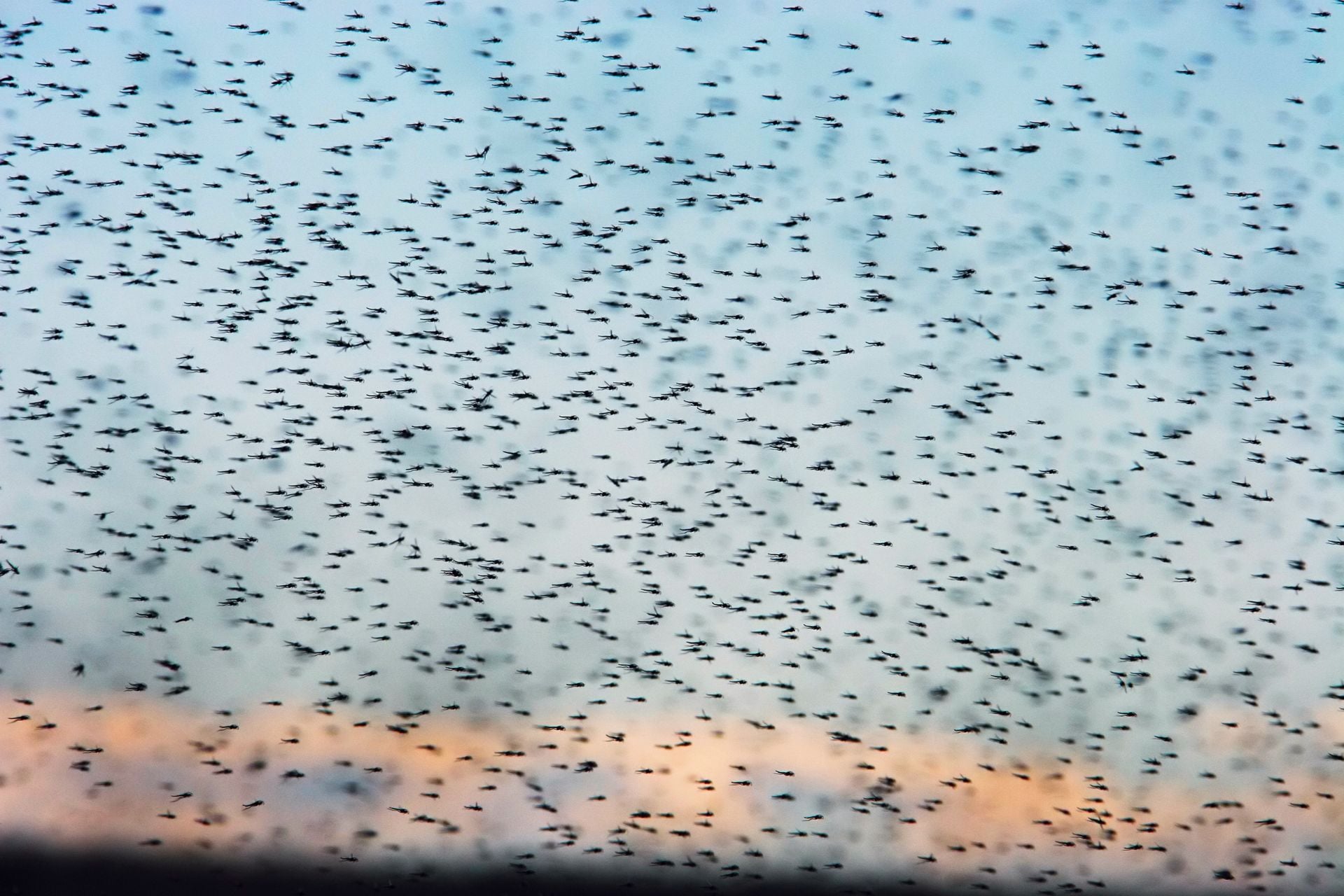
Until recently, Iceland was considered the last Arctic nation without mosquitoes. That changed in October 2025, when insect enthusiast Björn Hjaltason discovered one male and two female specimens of Culiseta annulata in his garden in Kiðafell, Kjós.
The arrival of this pest in Iceland is a warning, Arctic researchers Amanda Koltz and Lauren Culler argue in a newly published editorial. It reflects a major ecological shift driven by a warming climate and the expansion of human activity across the region, causing insect species to move “in new ways and at new scales.”
As these changes reshape Arctic ecology, they will also have global impacts. “What happens in the Arctic doesn’t stay in the Arctic,” Culler, a research associate professor and senior fellow at Dartmouth College’s Institute of Arctic Studies, told Gizmodo. “Some of the ways that ecosystems are changing in the Arctic have feedbacks to the climate system that influence what’s happening in the lower latitudes.”
Studying these changes is therefore critical to understanding both the regional and global consequences of a warming Arctic. The problem is, researchers lack a robust monitoring system for tracking those changes.
Little bugs driving big changes
Arthropods (which include mosquitoes and all other insects) make up the most biodiverse animal group in the Arctic, accounting for roughly 90% of all known species near the poles. These tiny invertebrates have a huge influence over the broader ecosystem.
“They pollinate plants, recycle nutrients, regulate populations through parasitism, and sustain foods webs that connect plants, wildlife, and people across the region,” Culler and Koltz explain in their editorial.
But as the Arctic warms four times faster than the rest of the planet, arthropod populations, distributions, and patterns of activity are rapidly changing, too. These shifts can trigger cascading changes that ripple across entire ecosystems. According to Koltz and Culler, researchers are already seeing the consequences unfold, from mismatches between Arctic-breeding shorebird hatching and food availability to increased parasitism of caribou and reindeer. Outbreaks of herbivorous insects can even wipe out large swaths of tundra vegetation, altering the landscape in ways that accelerate permafrost thaw.
As for the emergence of Culiseta annulata in Iceland, it’s too soon to tell what the consequences will be. Scientists are still working to understand how this species got there. It’s possible that human movement between Iceland and the species’ primary range—which spans Europe, Central Asia, and North Africa—allowed a few individuals to hitchhike to the Arctic nation, Culler explained.
Bridging gaps in Arctic insect monitoring
Confirming that hypothesis—and perhaps more importantly, determining whether Culiseta annulata has actually established itself in Iceland—will require a more robust long-term monitoring system, according to Koltz and Culler.
“We don’t really know how widespread this is, and we don’t really have enough information to understand if these [mosquitoes] are actually able to survive and reproduce in this new location, which would potentially lead to the persistence of this species in Iceland,” Culler said.
Current long-term arthropod monitoring efforts are highly limited and scattered across the Arctic. That’s largely because this massive region comprises multiple nations and spans extreme, inaccessible environments, Koltz, an assistant professor in the Department of Integrative Biology at the University of Texas at Austin, told Gizmodo.
“Across most parts of the Arctic, including Alaska, it’s very challenging to detect species moving around. It’s something that we need to do a better job of,” she said.
Through the Network for Arthropods in the Tundra, Culler, Koltz, and colleagues are already working to identify which key species or groups researchers should start with. They are also designing standardized monitoring protocols that researchers can implement across different parts of the Arctic. But building an internationally coordinated arthropod monitoring system will also require buy-in from the Arctic nations.
“Arctic researchers are a collaborative group and there’s a lot of motivation from the scientific community to improve monitoring,” Koltz said. “Biological changes don’t respect national boundaries, and effective science can’t be confined by them either. Enhancing biodiversity monitoring is a win-win. It’s an issue of shared interest and opportunity for collaboration across the different Arctic nations.”