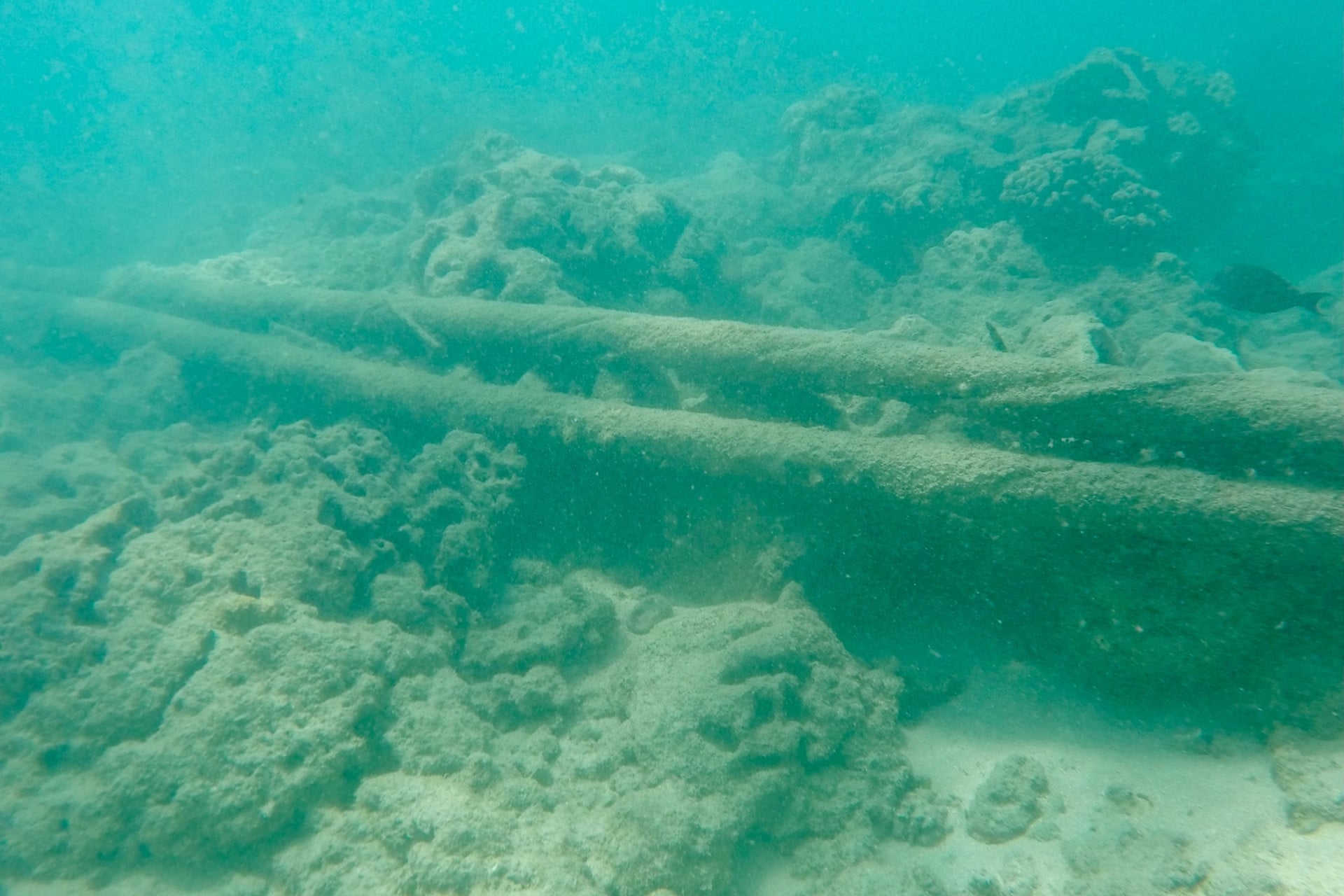
Every day, roughly $22 trillion in financial transactions course through the over 745,000 miles (1.2 million kilometers) of deep-sea fiber-optic cables that line the world’s oceans. And, contrary to what a Starlink superfan might tell you, 99% of all intercontinental web traffic does too—data pumping at terabit-per-second volumes orders of magnitude greater than even today’s best satellite internet.
So, with that said, there was news earlier this month relevant to this vast, nerve-like system of global telecommunications: A Chinese government maritime expedition announced that it has successfully tested an advanced device capable of slicing deep-sea cables at depths reaching 11,483 feet (3,500 meters) below sea level.
To put that in context, this advancement could leapfrog China’s undersea cable cutters past their global competitors. A 2024 recommendations report put out by the United Nations’ International Telecommunication Union lists only two remotely operated vehicles (ROVs) that come close: Japan’s MARCAS-V-ROV and the United Arab Emirates’ Olympian T2 ROV, which can both travel to a depth of 9,843 feet (3,000 meters).
While the UN data is not comprehensive, and cable ships flying under many flags have the capacity to dredge cables for splicing on the ocean surface, the new advancement gives China an edge that its great power competitors have fought to deny it. Foreign policy analysts have warned for years about escalating tensions over deep-sea fiber optic networks, with U.S. officials sometimes moving to freeze China out of the industry and accusations of maritime sabotage thrown in every direction (including, of course, at Russia).
“One of the big risks right now is heading in the direction of bifurcated networks,” April Herlevi, who researches China’s foreign economic policy at the federally funded Center for Naval Analyses, told the Financial Times in 2023. “Does this create a system where you don’t have connectivity, with a quasi-cold war, eastern bloc versus the west?”
Less plumbing and a diamond-coated cutter
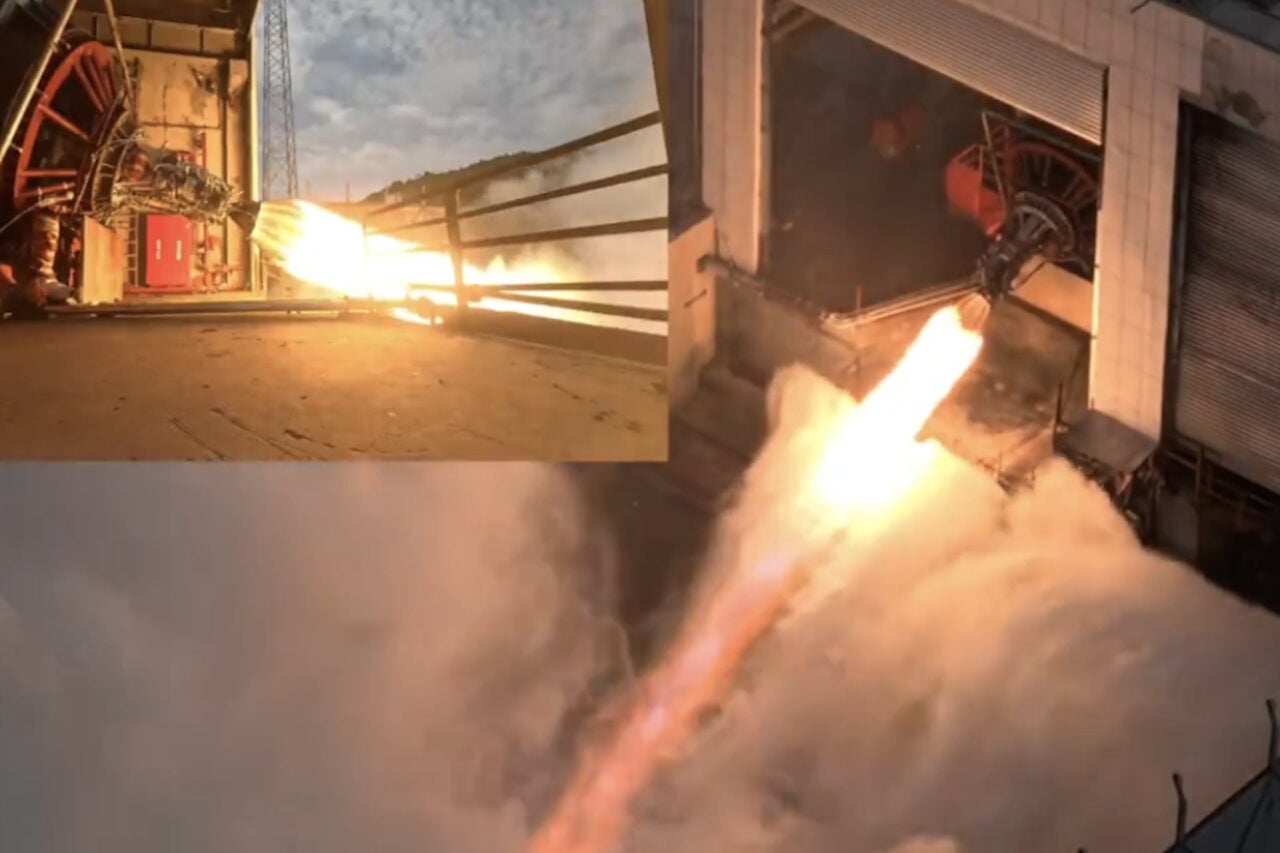
China’s new device (which can also repair undersea cables) incorporates technology first pioneered in sensitive aerospace applications, “electro-hydrostatic actuators” (EHAs) that were previously difficult to deploy in dark, remote environments near the ocean floor. China’s Haiyang Dizhi 2 research vessel accomplished the feat on April 11th, according to the nation’s Ministry of Natural Resources.
Hydraulics help articulate complex machinery via the flow of fluids (typically a synthetic oil) through piston-like systems called actuators—but pumping all that gunk around can be pretty cumbersome and dangerous in the wrong conditions. That’s why, for the past few decades, aerospace giants have begun developing EHAs, which reduce the amount of fluid needed by combining the hydraulic system, its electric motors, and control hardware into smaller, compact units.
China’s work developing a deep-sea EHA follows a similar logic. After all, you don’t want so many cables on your cable cutters that they could get cut themselves. Right?
The new deep-sea system, which is “poised for actual deployment,” according to reporting Wednesday in the South China Morning Post, will likely be integrated with China’s last major innovation in undersea cable surgery: a six-inch (150 millimeter) diamond-coated grinding wheel made public early last year.
The diamond-coated wheel reportedly moves at 1,600 rpm with enough power to penetrate steel and enough precision to avoid kicking up clouds of sediment off the ocean floor.
Every tool is a weapon, if you hold it right
Even concerned industry reports, including coverage in Telecom Review Asia Pacific, have acknowledged that the new device has “clear applications in repair and building of underwater oil and gas pipelines.”
And the scientists behind these innovations have taken pains to emphasize the benign commercial uses of their new technology as well. As Engineer Hu Haolong of the China Ship Scientific Research Center, who led the team that debuted the deep-sea diamond-coated grinder, put it, “The 21st century is the century of the oceans.”
“Enhancing marine resource development capabilities, advancing the blue economy and building China into a maritime powerhouse,” Hu said, “constitute critical components of realising the Chinese dream.”