As an adult who grew up watching Avatar: The Last Airbender, dodging the massive leaks for The Legend of Aang: The Last Airbender film has been an annoying cross to bear. Nonetheless, witnessing its fallout has been… illuminating to say the least. Overnight, the dormant fandom lurched back to life—partly out of spite toward Paramount, but mostly because everyone was caught up in the wanderlust of fan art hitting the internet like wildfire of their childhood animated crushes returning as grown, jacked adults. Riding alongside that revival was the resurgence of The Legend of Korra slander, which feels especially forced in 2026 for reasons I genuinely don’t have the energy to unpack.
What I do have the energy for is highlighting one of the ballsiest, underappreciated choices in Nickelodeon’s sequel series: The Legend of Korra wasn’t afraid to kill ATLA’s darlings. Not literally (mostly), but narratively, emotionally, and thematically—a way that feels especially timely with all the hubbub about seeing the Gaang all grown up in the new film in October. A decade ago, Korra zagged where a safer spin-off would’ve zigged, refusing to present the Gaang as the flawless heroes fans worship as kids. Instead, it presented them as complicated, messy, and sometimes outright shitty parents.

One of the first things that comes to the forefront of any ATLa fan’s mind when thinking of Korra is the “character assassination” of one Toph Beifong. We knew her as the boisterous, foolhardy rule-breaker and self-aggrandized “strongest earthbender in the world.” Korra took the wind out of fans’ sails almost immediately in its first season, revealing that, while her status as the GOAT remains, she ultimately becomes the chief of police in the steampunk metropolis of Republic City. Not only that, she winds up having two daughters, Lin and Suyin, whose fathers are still up for debate years after the show aired. Lin followed in her footsteps, becoming a cop herself, while Suyin quietly fell back into being the frontwoman of her family’s fortune.
But as far as either woman was concerned, their mother was an asshole of a parent. And nothing showcases how much of an asshole she was to them more than the fact that the official Avatar YouTube account has a video showcasing their rocky relationship that runs a whopping 48 minutes.
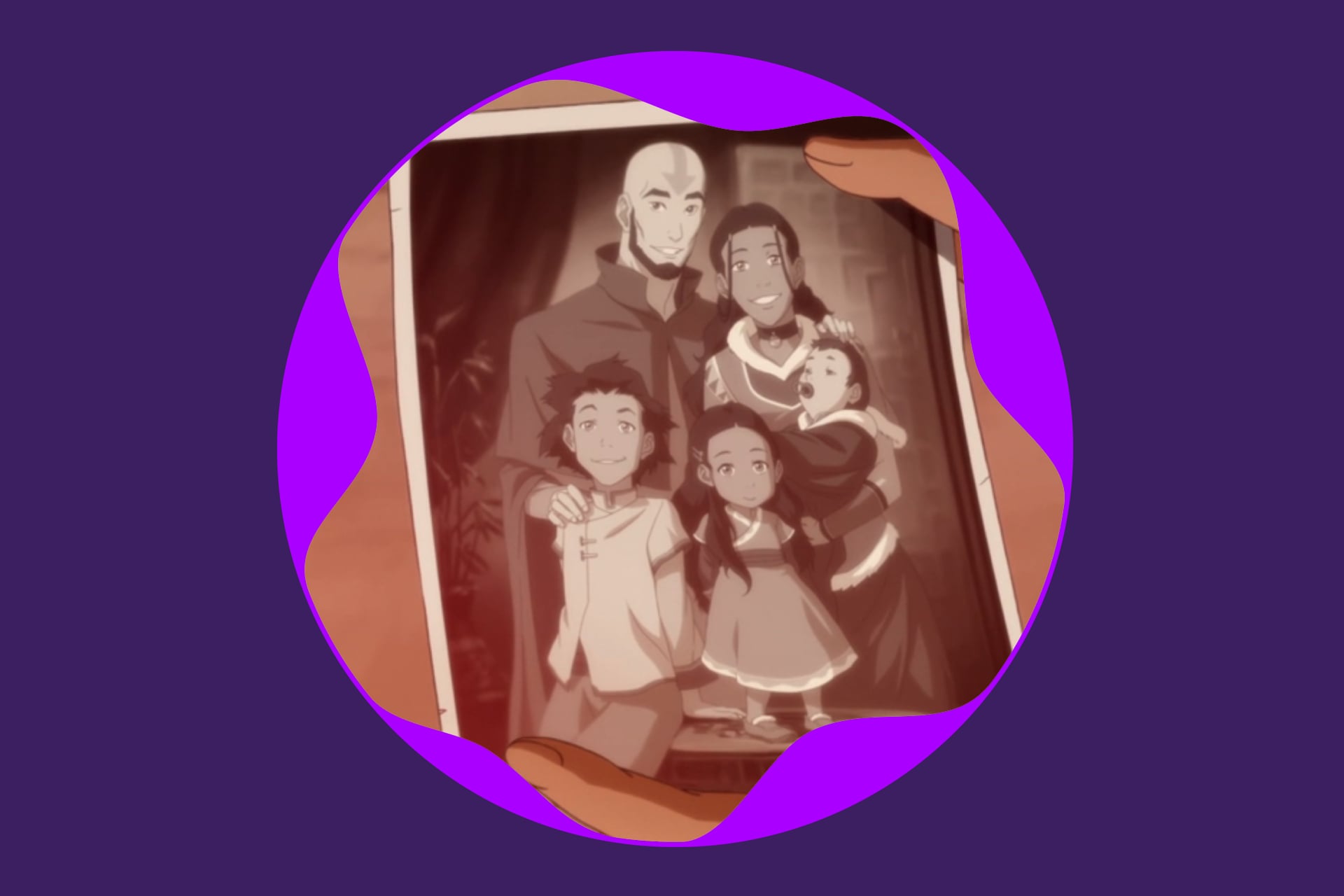
By far the biggest and arguably most painful example of Korra keeping it a buck about its heroes not being the parents fans imagined comes from the way Aang’s and Katara’s kids—the products of the last airbender, whose entire culture was genocided, and the matriarch of the Gaang—talk about their upbringing as adults.
At first, fans let out a collective sigh of relief when the show revealed that Aang and Katara had three children, chief among them being Tenzin, voiced by none other than J.K. Simmons. Tenzin, in turn, had a house full of airbending kids, seemingly fulfilling both Aang and the fandom’s wish to see the Air Nation reborn.
But Korra refused to let that fantasy stay clean. Just as it did with Toph’s rocky dynamic with her daughters, the show made it clear that the pressure of rebuilding an entire culture ultimately warped Aang’s parenting style. His firstborn, Bumi, grew up without the talent to bend. Despite laughing it all off as his namesake might’ve, he’d feel the weight of that absence throughout the rest of his life. Likewise, his second child, Kya, became a waterbender like her mother, leaving Tenzin—the only airbender—to become the apple of Aang’s eye, leaving his siblings feeling sidelined by a father who was already stretched thin as it was as the world’s father.
That’s not even getting into the mystery of the mother of Zuko‘s daughter, Izumi, or the way Sokka is virtually unmentioned outside of prevailing fan theories that he must be the father of one of Toph’s kids. All we know is that Zuko’s kids turned out all right, a fact that felt pyrrhic to many fans then as it does now.
But that was the point. Korra was a show obsessed with legends and legacy: the weight they leave behind and the pressure they exert on the next generation. But rather than serving up an easy, fanservice-tinged answer, the show centered on the hardships, the way the original trusted its young audience, and on the liberation that comes from wiping the slate clean and refusing to be defined by someone else’s myth.
What makes Avatar such a resonant series is that it never felt pedantic when delineating a lot of its complex themes to a young audience. Its comics further expanded upon these themes once the idealism of a united world without national borders became more complex than Aang and Zuko could’ve imagined when their early attempts to initiate that peace perpetuated an apartheid. And for all the shit that Korra gets (both the character and the show) about “ruining” the series’ legacy, it doesn’t get enough credit for carrying that energy forward by showcasing how hard it is to balance being well-intentioned while not having any control over how you will be remembered.

To this day, Korra’s lessons remain ones many fans seem none too eager to swallow—especially in the wake of people still slandering the show for “ruining” ATLA’s legacy, both by ending the Avatar line and by daring to ask what happens when the child heroes of a war grow up to be less than model parents.
Hopefully, with time, its fandom will chill the hell out and begin to see Korra (both the character and the show) in a different light. Ideally, that should’ve come before the Avatar movie trilogies and its sequel series, Seven Havens, nudging viewers toward healthier ways of thinking. But Iroh was a proponent of patience, so I’ll try to hold on for fans to give Korra the credit it deserves for following through on its themes, even when those truths weren’t what people wanted to hear.
Want more io9 news? Check out when to expect the latest Marvel, Star Wars, and Star Trek releases, what’s next for the DC Universe on film and TV, and everything you need to know about the future of Doctor Who.