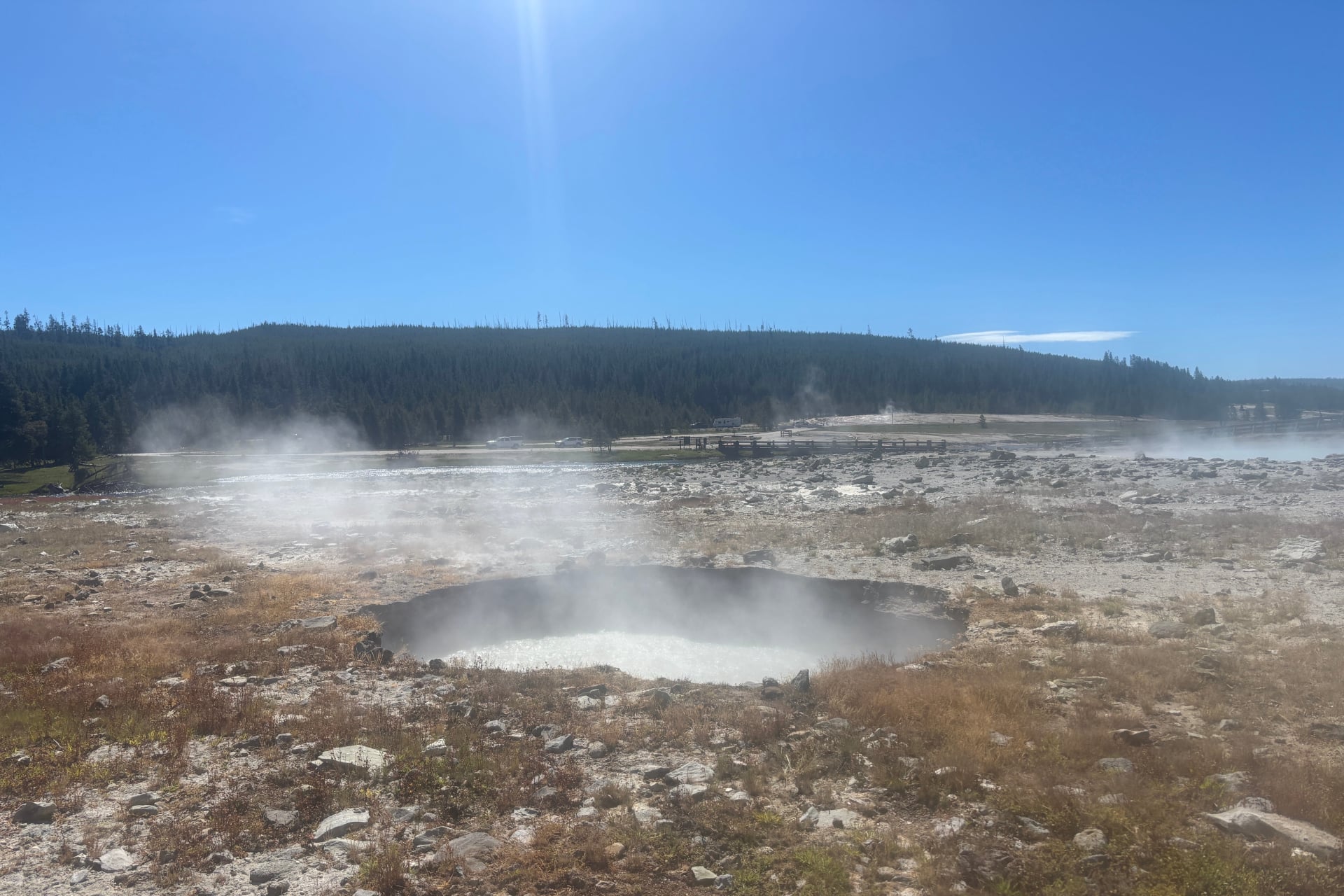
Earlier this month, a camera detected a plume of smoke coming from the Biscuit Basin at Yellowstone National Park. Over the following days, authorities investigated the area and discovered that a small explosion created several new vents and pools milling with steaming water.
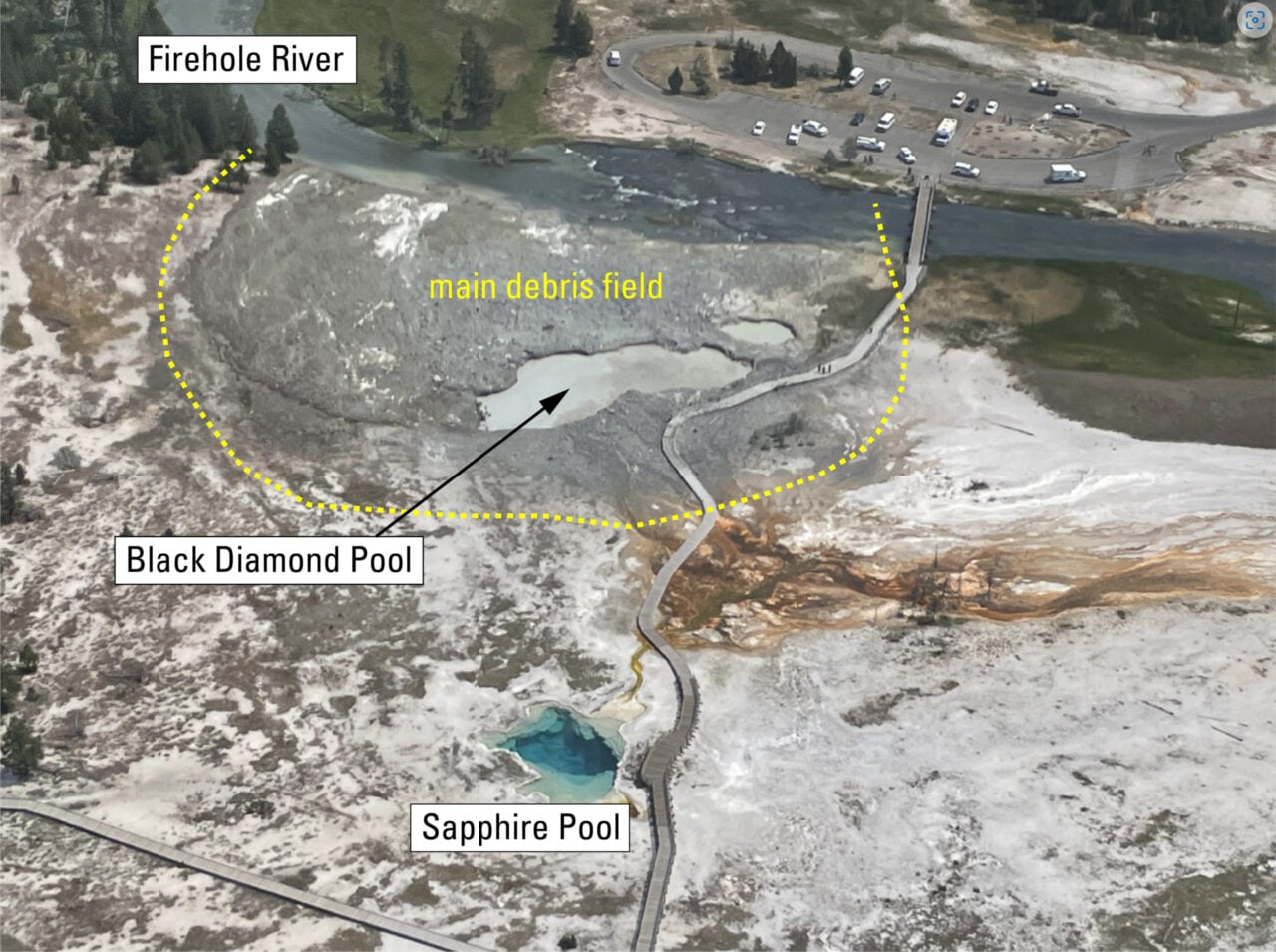
In 2024, the same area—specifically the Black Diamond Pool—experienced a much larger hydrothermal explosion. Still, the latest incident “emphasizes the dynamic and hazardous nature of hydrothermal activity in the region,” the Yellowstone Volcano Observatory noted in a blog post for the U.S. Geological Survey (USGS). Following the 2024 event, the Biscuit Basin has been closed off to the public. However, the various monitoring stations installed around the area may have captured the hydrothermal explosions at an unprecedentedly close distance, which experts anticipate will advance our understanding of these spectacular yet dangerous events.
Following the unpredictable
According to the Yellowstone Volcano Observatory, hydrothermal explosions are “violent and dramatic events resulting in the rapid ejection of boiling water, steam, mud, and rock fragments.” These eruptions occur as a result of sudden pressure changes coming from the rapid transition of liquid water to steam.
Hydrothermal explosions are by no means exclusive to Yellowstone, but they are relatively common at the park, Michael Poland, a geophysicist with Yellowstone, wrote in a USGS explainer in 2024. While scientists worldwide have known about hydrothermal explosions for a long time, they have yet to definitively identify their precursors, Poland noted.
“Unfortunately, changes are common in hydrothermal regions and are usually recognized as precursors to explosions only in hindsight,” Poland added. “In natural thermal areas worldwide, the hazards due to hydrothermal explosions tend to be underappreciated, despite the loss of life that has occurred in some events.”
A lucky strike
Given the unpredictability of hydrothermal explosions, officials installed new temporary monitoring stations around Black Diamond Pool following the 2024 incident. That turned out to be the perfect call, since this camera happened to be angled toward the eruption on the morning of June 13, according to the latest USGS post, authored by Poland and a team of experts in collaboration with the Yellowstone Volcano Observatory.
The next day, geologists began investigating the site, as the explosion and associated acoustic signals came from the general direction of Black Diamond Pool. However, temperature sensors “showed only a very small blip” that looked nothing like the thermal profiles of the pool from previous explosions, the team noted in the blog post.
Simmering changes
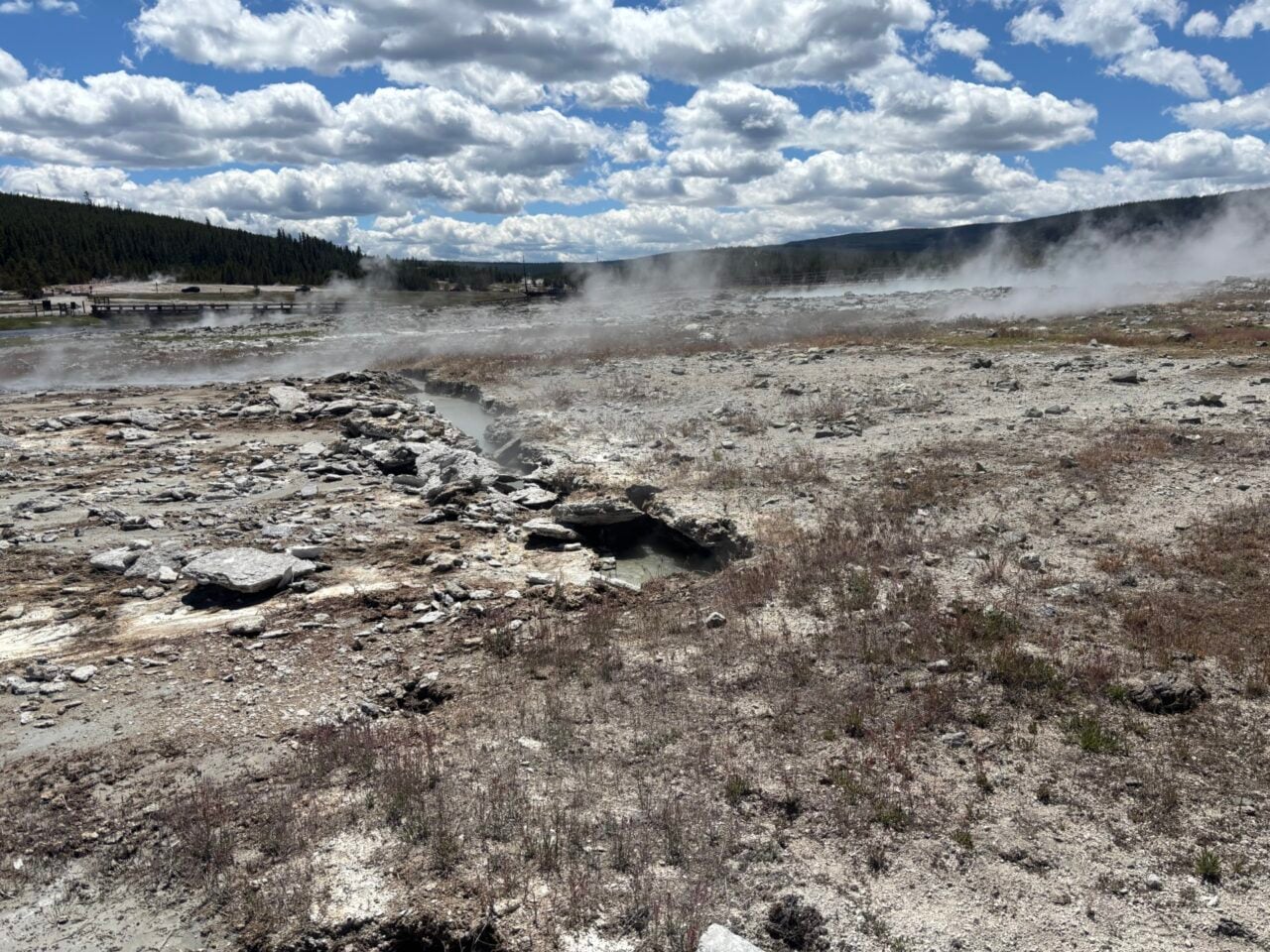
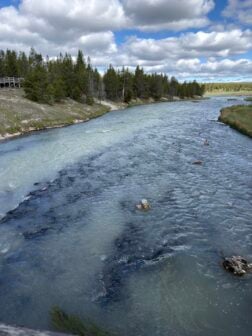
As their investigations advanced, the team found that the latest explosion, although small, had triggered numerous changes to the area. First, three sets of newly formed vents—pathways conducive to hydrothermal explosions—had pushed hot water into the Firehole River to the North of Black Diamond Pool. The water temperature at the time was about 194 degrees Fahrenheit (90 degrees Celsius), so slightly under boiling temperature, the experts reported.
When the team returned a couple of days later, it was in for a greater surprise. A portion of the ground that “the team had walked on just two days earlier” had transformed into a “vigorously boiling, gray, silty” pool about 21 × 17 feet (6.5 × 5.3 meters) in size. Cross-referencing the discovery with camera data showed that the pool continued to experience geyser-like behavior around June 18.
As of now, the scientists are picking apart datasets collected by monitoring stations in the Biscuit Basin. In the blog post, they reported that there’s a “good chance” the explosions were recorded from just around 238 feet (100 meters) away, which would make this the closest observation of similar events. The team hopes that this new data will provide hints to help them identify possible precursors to hydrothermal explosions.