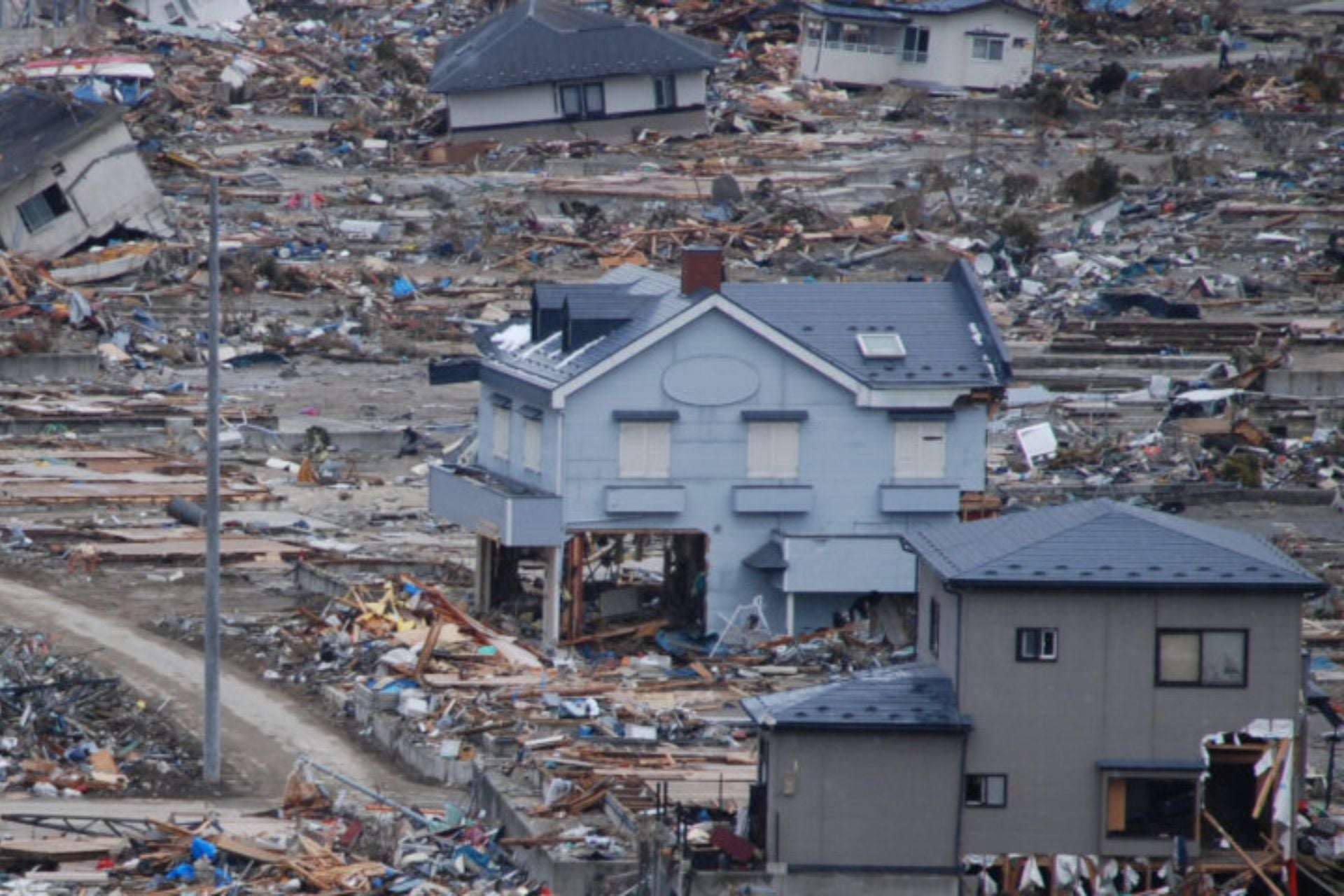
In March 2011, the magnitude 9 Tohoku earthquake struck off the northeast coast of Honshu, Japan. Violent ground shaking lasted for about six minutes and triggered a massive tsunami, ultimately killing more than 18,000 people.
But 15 minutes after the main shock, something strange happened. Researchers led by Sunyoung Park, an assistant professor in the Department of Geophysical Sciences at the University of Chicago, were examining GPS records of the Tohoku earthquake when they noticed an eastward, step-like ground shift of up to 6 millimeters throughout the entirety of Japan.
“We were quite puzzled because usually these offset signals are seen when there’s an earthquake, but there was no known earthquake corresponding to this timing,” Park told Gizmodo. What was also unusual, she said, was that the shift occurred uniformly across the entire country all at once and occurred at multiple plate boundaries.
In a study published today in the journal Science, Park and her colleagues analyzed this shift and offer a possible explanation for it. Their findings suggest that the Tohoku quake generated a huge seismic wave that traveled deep underground, bounced off Earth’s core, and returned to the surface 13 minutes after the main shock, causing the entire country to shift eastward toward the Japan trench. To their knowledge, it is the first known observation of a seismic event triggered by this type of wave.
Sleuthing a seismic shift
When earthquakes strike, they generate seismic waves that radiate outward in all directions from the epicenter. Ground shaking primarily stems from surface waves, but earthquakes also produce ScS waves that plunge below the surface, reflect off Earth’s core, and then rise back up to the surface.
As ScS waves travel deeper into Earth’s interior, they lose energy. That could explain why researchers haven’t seen this type of signal before—these waves typically fizzle out before rebounding to the surface, Park explained. But the Tohoku earthquake was so powerful that its ScS wave survived the 3,600-mile (5,800-kilometer) round-trip journey down to Earth’s core and back again. When it returned, it likely still retained enough energy to reactivate the tectonic plate boundary and cause the eastward shift.
Park and her colleagues also considered whether the shift could have resulted directly from the main shock itself. For example, the quake could have continued releasing energy for longer than previously thought or triggered a submarine landslide that triggered the shift. However, these possibilities could only explain eastward movement near the main shock area, not across the entirety of Japan, Park said. What’s more, the ScS wave was clearly detected at stations across Japan, followed by the eastward displacement.
A new earthquake hazard emerges
The findings change our understanding of large earthquake hazards. Long after the shaking has stopped, ScS waves can return to the surface and trigger another seismic event, potentially leading to more regular aftershocks or additional ruptures at other locations, Park explained.
“That’s something we didn’t actually know about before,” she said.
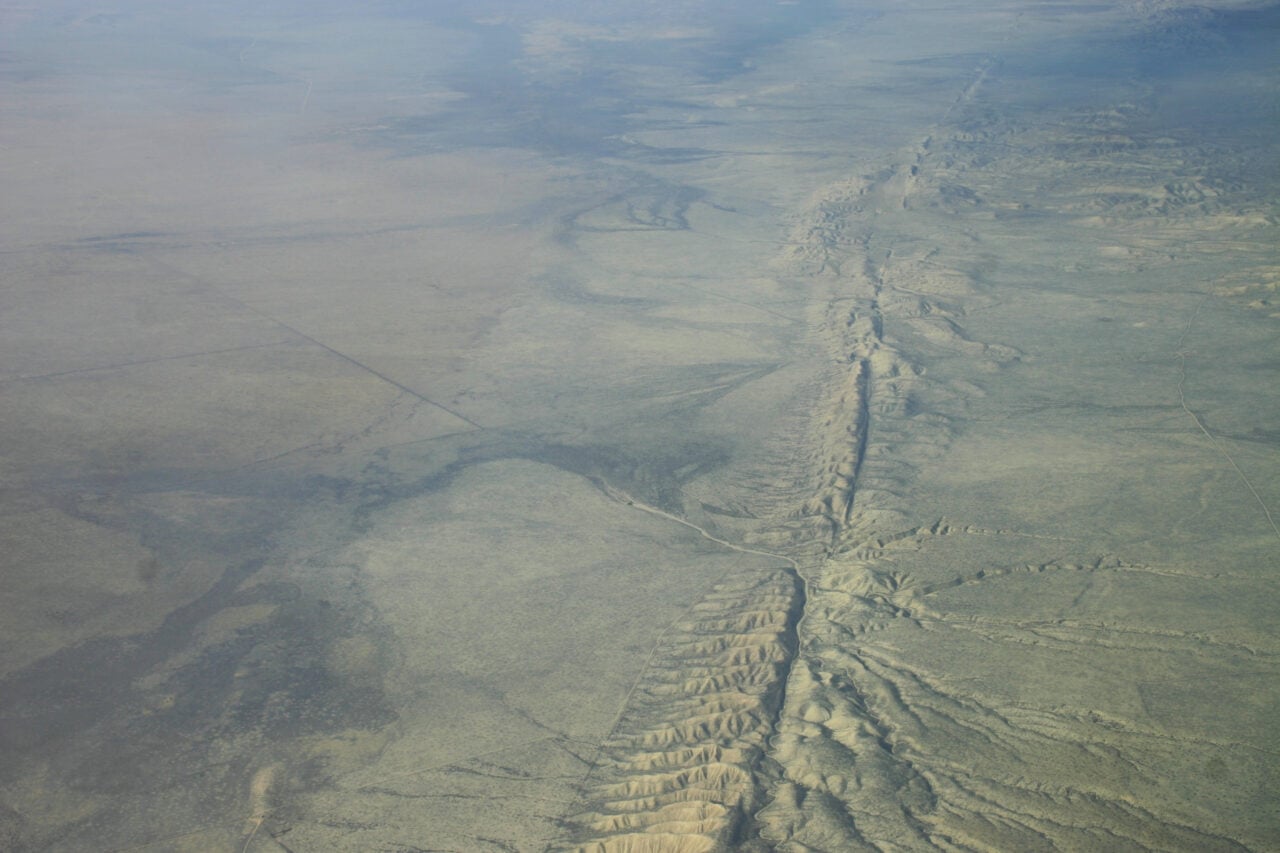
Measuring the effect of this ScS wave across the entirety of Japan already suggests that these waves can have a far-reaching impact, but the study was limited by a lack of offshore GPS data. It’s possible that the eastward shift extended beyond the length of Japan, Park said. She and her colleagues are also curious as to whether this type of event has occurred at other subduction zones, such as the San Andreas Fault in the Western U.S., but data availability could limit studies there as well.
It’s impossible to know when the next big earthquake will strike, but gaining a deeper understanding of their processes and hazards can improve preparedness. Fifteen years later, seismologists are still learning from the Tohoku quake. Their insights could help prevent a similar tragedy in Japan and other seismically active parts of the world.