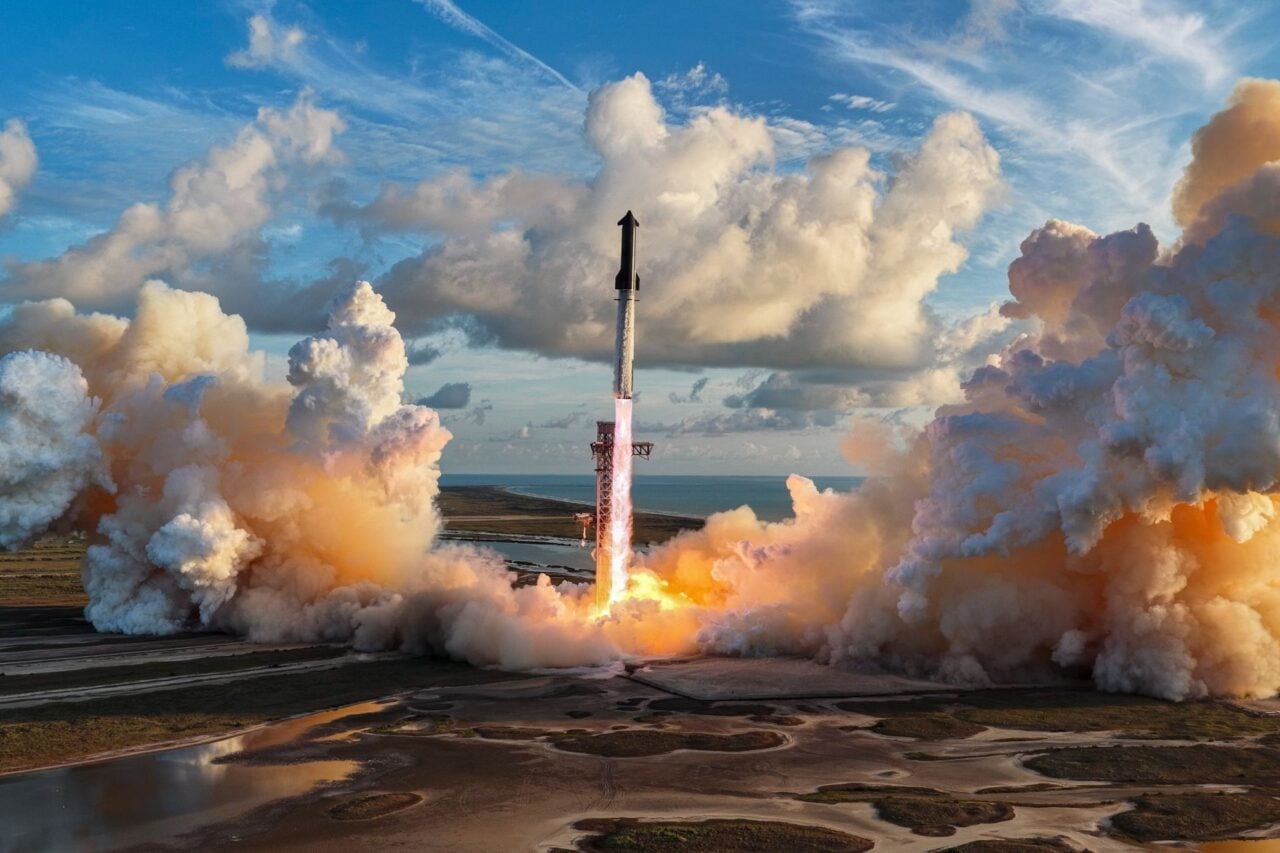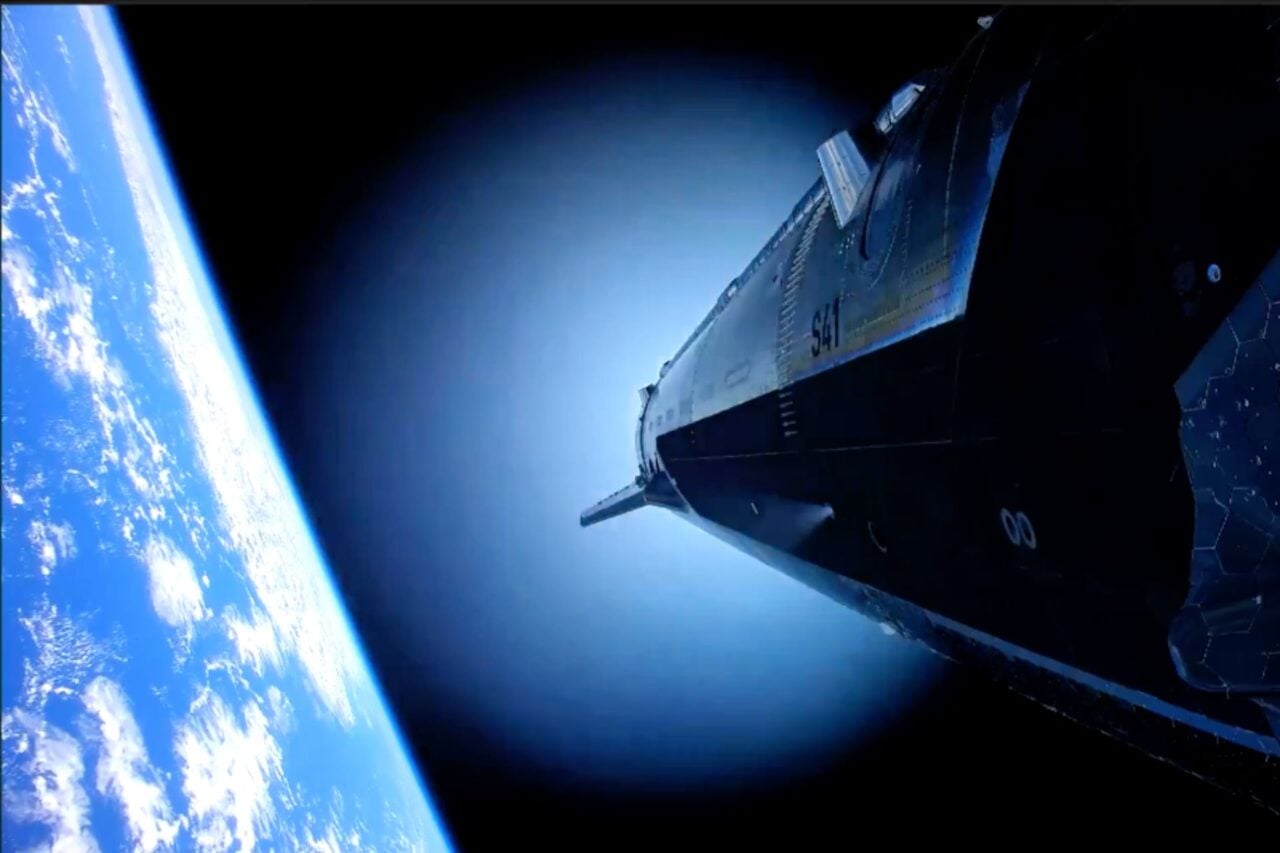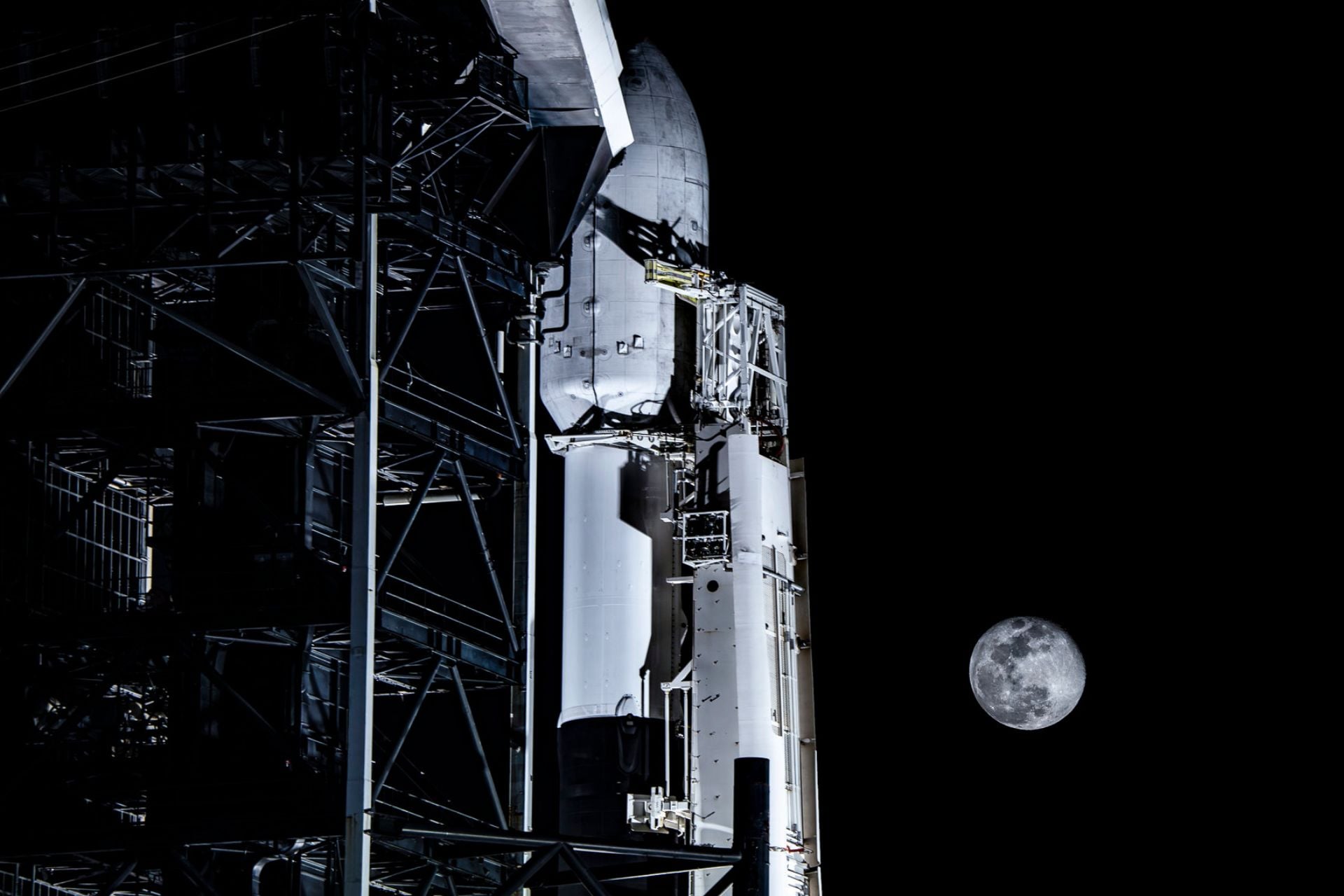
When SpaceX’s Falcon 9 launched a pair of commercial lunar landers in January 2025, the rocket’s upper stage was supposed to return to Earth. Instead, it got stuck in a highly elliptical orbit, and an astronomer now says it’s going to hit the Moon.
Bill Gray, an independent orbital analyst and creator of the Project Pluto object-tracking software, used this program to analyze the upper stage’s orbit and predict its future path. His findings indicate that the rocket will crash into the lunar surface at 5,400 miles per hour (8,700 kilometers per hour) at 2:44 a.m. ET on August 5. That’s seven times the speed of sound.
“It doesn’t present any danger to anyone, though it does highlight a certain carelessness about how leftover space hardware (space junk) is disposed of,” he wrote in a post on the Project Pluto website.
SpaceX’s wayfaring rocket
On January 15, 2025, a Falcon 9 rocket launched from NASA’s Kennedy Space Center carrying Firefly Aerospace’s Blue Ghost lander and ispace’s Resilience lander. Both landers made it to the Moon, but Resilience crashed into the surface, bringing an early end to its mission. Blue Ghost successfully touched down and captured stunning footage of the Sun setting over the lunar horizon before powering down as planned.
As for Falcon 9, the upper stage—the part that set the landers on a Moon-bound trajectory—failed to reenter the atmosphere after separating from its payloads. According to Gray, the rocket has had a few close passes by the Moon and Earth but has never come close enough for a possible impact. As of February, astronomers had accumulated 1,053 observations of it, he said.
These observations revealed that the rocket is circling Earth along a wide, lopsided orbit. It’s taking about 26 days to complete one trip around the planet, and at its closest point it only comes within 137,000 miles (220,000 km) of us. At its farthest, it’s about 310,000 miles (510,000 km) away, which puts it well within cislunar space.
“The orbit of the Moon and of this object, roughly speaking, intersect,” Gray said. “Usually, one goes through the intersection point while the other is someplace else. But on August 5, they’ll reach that point at the same time.”
Brace for impact
Based on his calculations, Gray said the upper stage should hit the lunar surface on the Moon’s near side, but just barely. By August, he expects to have accumulated enough data to significantly refine the impact point. It could shift over to the far side, but that remains to be seen.
“By the time August 5 comes around, we will have a very exact idea of where and when the impact will occur, probably within a few dozen meters and a fraction of a second,” he said. “We will be collecting data almost right up to the time of impact.”
Even if it does hit the near side of the Moon, it’s unlikely we’ll be able to see the impact from Earth. In 2009, NASA deliberately rammed a rocket into the lunar surface to see if the impact kicked up ice, but according to Gray, observing telescopes were not able to see the crash.
To him, this Flacon 9 situation underscores the need to address Earth’s growing space-junk problem. Humans are launching more objects into space than ever before, with consequences for astronomy, air quality, and, in rare cases, human safety. Some objects that have managed to reenter Earth’s atmosphere without burning up during descent have crash-landed in populated areas—a few have even fallen onto people’s homes.
Fortunately, this rocket’s crash landing on the Moon will not meaningfully damage the lunar surface, and as Gray said, it’s better to have space junk hit the Moon than the Earth. But even if the upper stage was on track to reenter Earth’s atmosphere, it would just burn up.
It will be fascinating to track this object’s journey over the next several months. Make sure you mark your calendar for the August 5 crash.