Some 600 years ago, a high-ranking member of the Chimú was buried in an elaborate mausoleum with many treasures. Miraculously, the tomb remained undisturbed by both scientists and looters—until now.
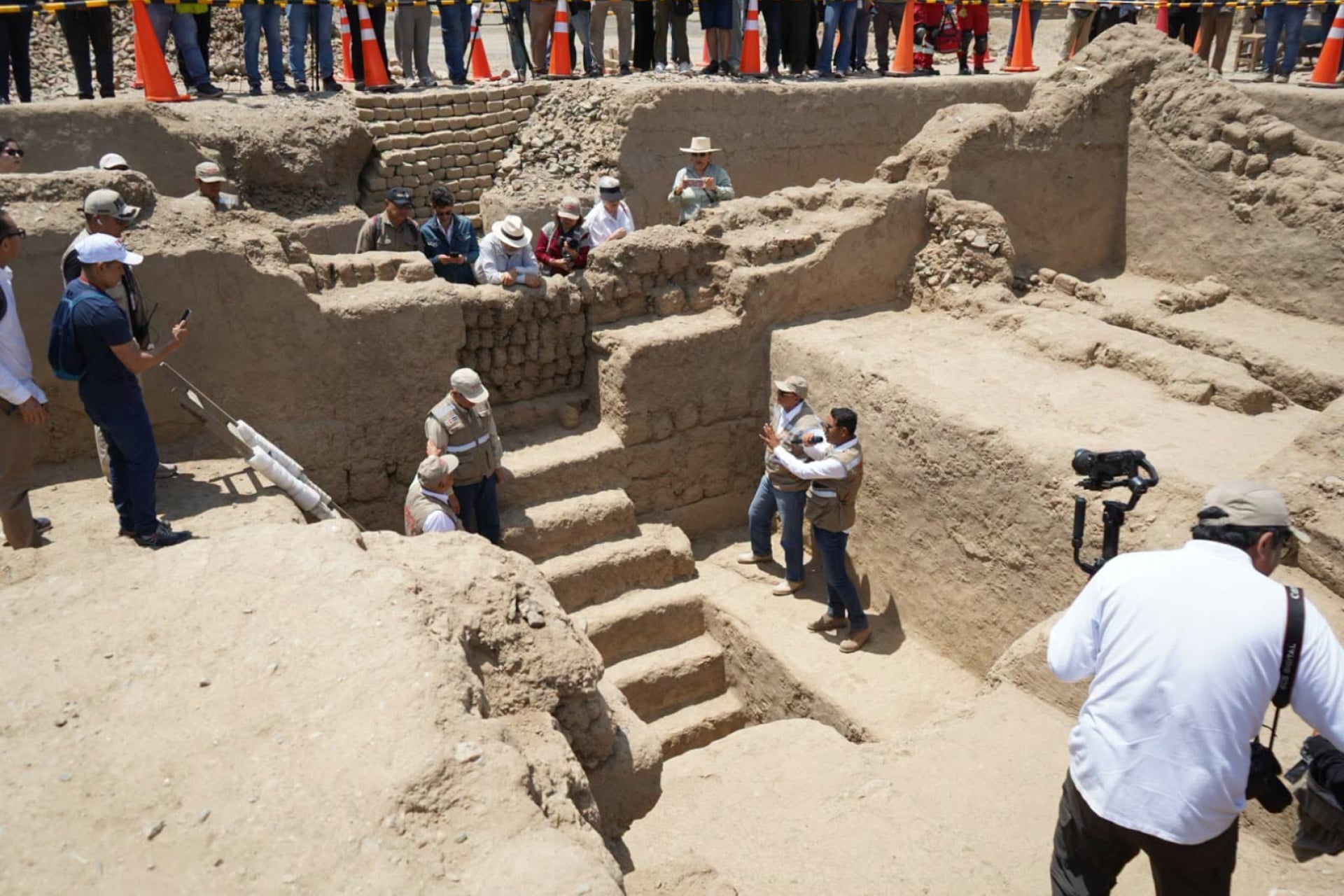
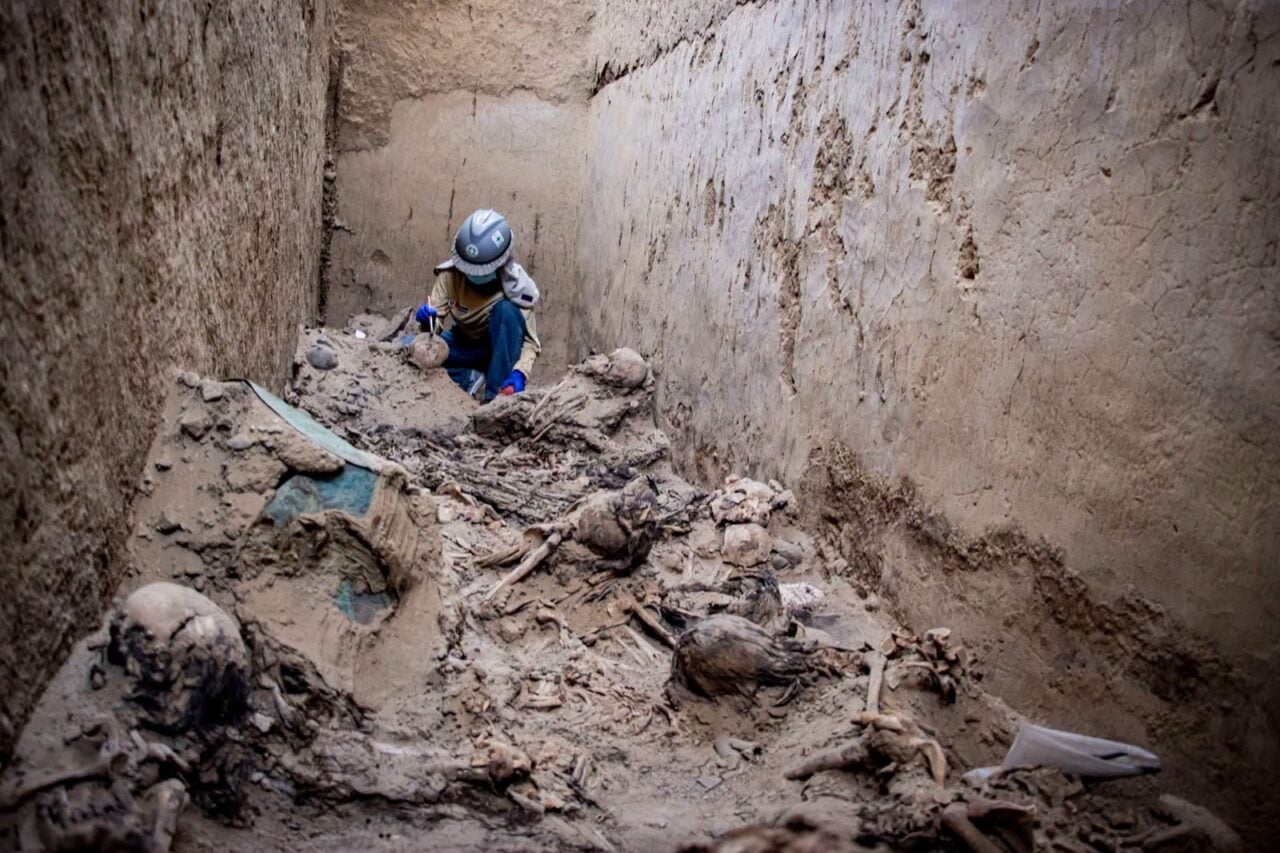
In a Facebook post, the Peruvian Ministry of Culture announced the “historic” discovery of a near-pristine Chimú-era mausoleum at the Utzh An complex in Chan Chan, the former capital city of the Chimú. So far, the research team has found the remains of at least 38 people, along with ornate artifacts and weapons. According to a report by The New York Times, a stairway descends eight feet (2.4 meters) into the mausoleum. The central chamber held the remains of a single individual with red pigment—likely cinnabar—painted on the bones, indicating that the tomb belonged to a member of the Chimú elite.
“It’s the first time that Peruvian archaeologists have been able to come across an almost intact platform […] that was designed for an elite individual, whose chamber has remained sealed for almost 600 years until we came across it,” Jorge Meneses, the project’s lead archaeologist, said in an interview with the BBC.
Saving a lost city
Before its conquest by the Incas in 1470, the Chimú Empire was among the largest pre-Columbian cultures of modern-day Peru. Like the Inca, the Chimú had a sophisticated socioeconomic, religious, and political system and left behind a rich artistic legacy, such as its unique adobe architecture. Accordingly, UNESCO designated Chan Chan a World Heritage Site and, in doing so, highlighted the various social and natural threats looming over the city’s premises.
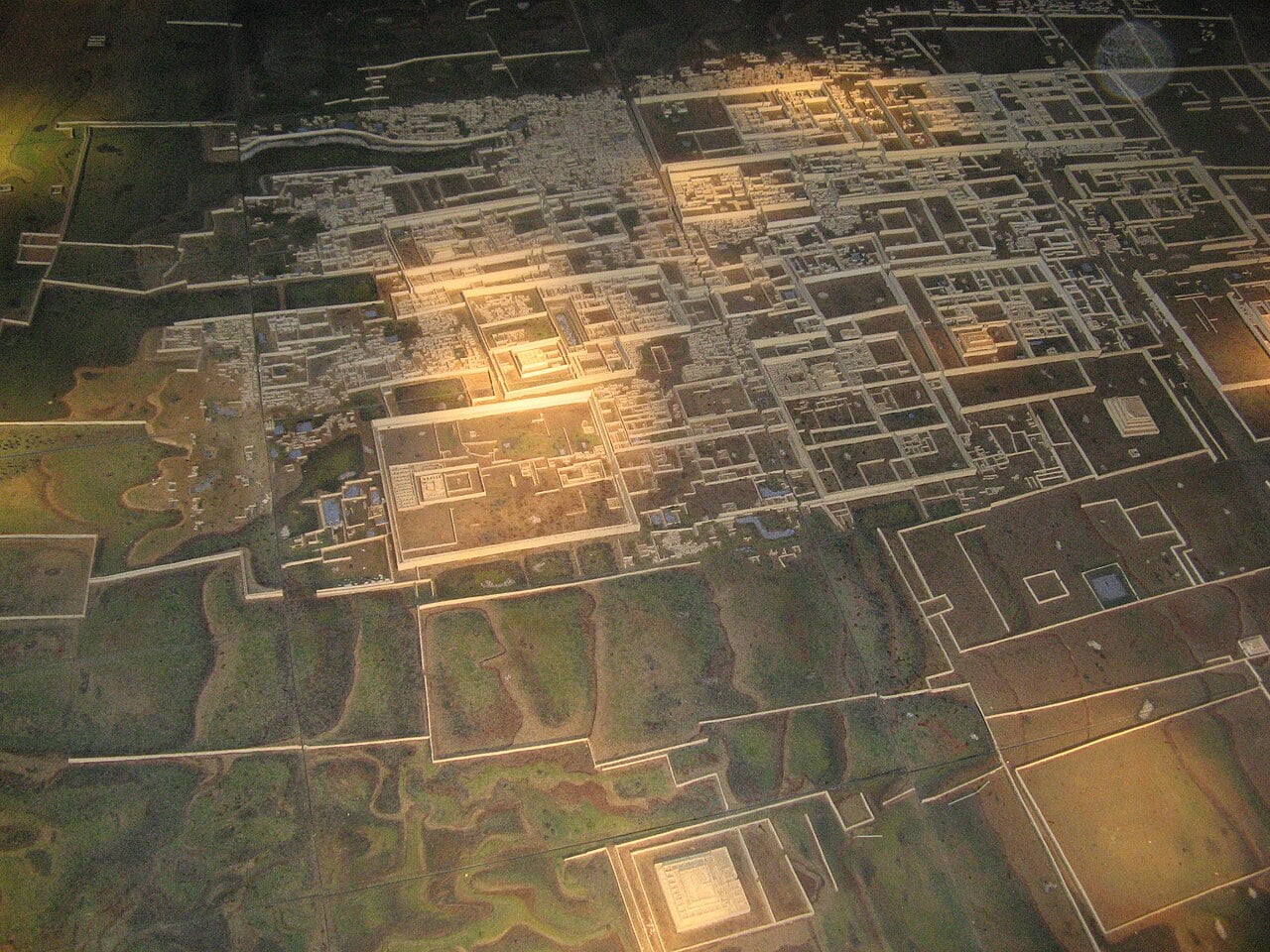
In that sense, the decades-long excavations at Chan Chan represent an effort by Peruvian officials and international archaeologists to properly study and conserve the site. Over the years, experts have restored old structures and recovered many artifacts from Chan Chan. But the latest findings might just be the “discovery of the decades,” as Gabriel Prieto, an anthropologist at the University of Florida, told The Times. Prieto was not involved in these excavations.
Communing with the dead
To El País, Meneses explained that the team found the first trails leading to the tomb about four years ago. Initially, the researchers just saw a small, unassuming depression that their “intuition as archaeologists” pushed them to investigate further. Their hunch was right on the mark—they eventually found the entrance, which had been blocked by a stone fill that also likely hid it from looters.
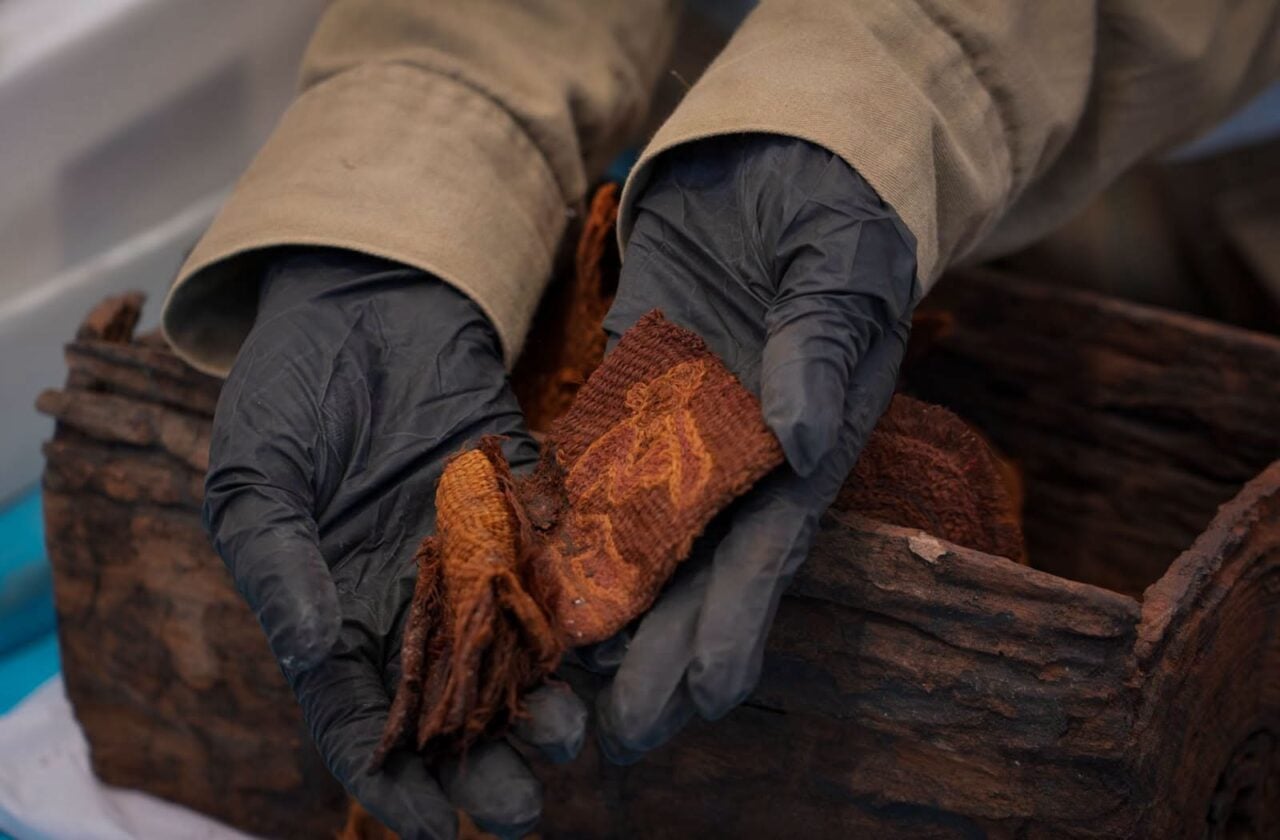
In a report by Andina, Peru’s state-run news agency, Meneses added that the burial of the one individual in the central chamber was an “exceptional departure” from known funeral patterns of the Chimú. This chamber was flanked by two others; one was empty, whereas the other was filled with treasures and remains of 20 people. Andean societies tended to engage in reburial processes to connect and honor the dead, which may be why some skeletons are missing several bones.
But that’s something the team will have to explore in coming investigations, he added. In fact, archaeologists have only excavated roughly 7% of the total area of Chan Chan—so, not that much. Other endeavors include analyzing the design of the mausoleum and running genetic tests on the skeletal remains. As Meneses commented to El País, “Evidently the citadel has much more to tell.”