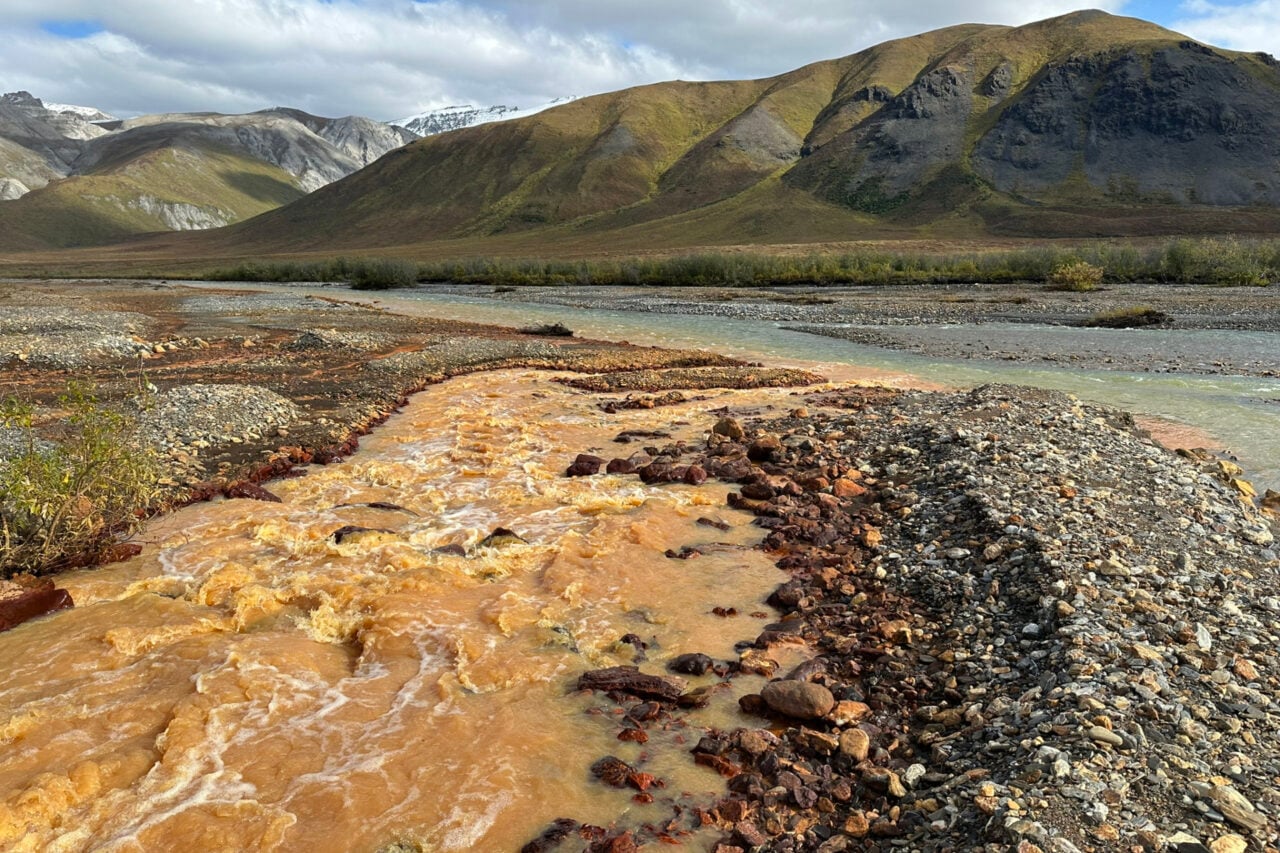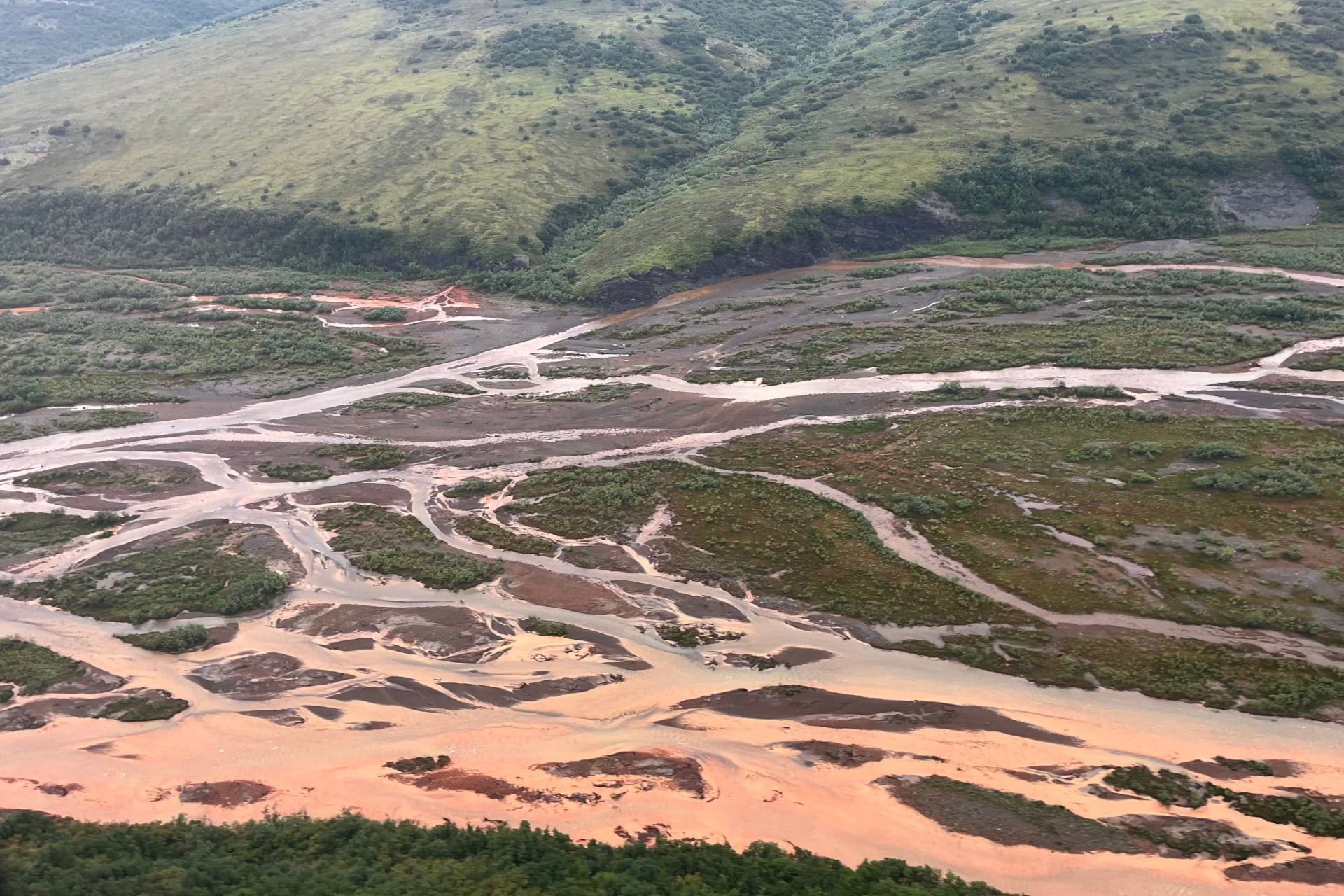
Early this year, researchers confirmed why one part of Antarctica bleeds red. In similar yet arguably more concerning news about Earth’s poles, Arctic rivers are turning orange—and scientists now know the real reason behind this shift.
In a study published last year, the same team initially documented the orange slush—toxic iron particles fatal to wildlife—at Alaska’s Brooks Range. In a follow-up investigation, published recently in Communications Earth & Environment, the researchers confirmed that, as suspected, the contamination comes from thawing permafrost. What’s more, the team outlined two distinct ways in which thawing soil “rusts” rivers and how to predict its spread.
“It’s already happening in Russia and will keep happening anywhere you have the right geology and warming temperatures,” Tim Lyons, the study’s corresponding author and a biochemist at the University of California Riverside, said in a statement. “It started as a canary in a coal mine in the Brooks Range, but now those canaries are chirping all over.”
When soil meets water
According to the paper, the leading explanation for discoloration of rivers involves the degradation of permafrost. Ultimately, this creates new pathways within soil layers for water to interact with compounds—like iron—that would otherwise have remained deep in the soil.
For the latest study, the researchers affirmed this was the case for both high-elevation and low-elevation regions, although there were some differences. At higher elevations, warming and thawing naturally trigger acid rock drainage, which is typically found near active or abandoned mines.
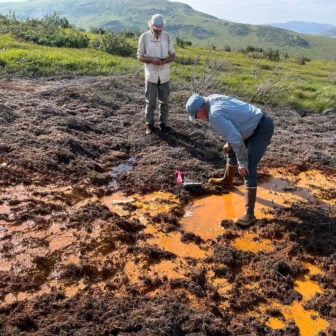
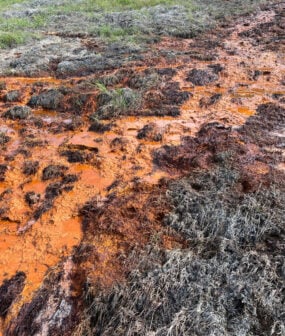
“When pyrite meets water, it comes apart. It breaks down into iron and sulfur, creating sulfuric acid as well as sulfate and other toxic metals,” Lyons explained. “When the iron-rich water mixes with more oxygen, the iron turns into rust-like particles that color the water and stain the bottom sediments orange.”
Lower elevations, on the other hand, host microbes inside wetlands, changing shape and composition as permafrost melts. As a result, these bacteria consume iron, convert it into water-soluble forms, and release it back to the water, where the compounds become oxygenated and, therefore, “rusted.”
Toxic chemistry
Either one of these phenomena doesn’t sound too great. Taken together, the rust and acid spread across large regions stretching across northern Alaska, the researchers explained. As fine iron particles can float in water for more than 62 miles (100 kilometers), the ecological impacts may be cataclysmic: “clouding rivers, smothering algae, disrupting insect populations, and clogging fish gills,” to name just a few happy examples noted in the statement.
“You’d think if any ecosystem could hide from the effects of warming and big human footprints, it’d be this one,” Lyons said, referring to how even remote natural areas are experiencing this change. “But it’s not so. There is no safe place.”
A ‘heads-up’
All that said, the recent investigations have indicated it’s possible to predict future contamination. Namely, there’s a slight delay in when iron is “flushed” into rivers, the paper noted. For instance, “warm summers with deep snowpack can signal widespread rusting the following year.” Combined with monitoring ground temperatures, local officials and relevant stakeholders could act to minimize damage.
“There’s no fixing this once it starts,” Lyons admitted. “But we can give people downstream a heads-up and work hard to protect the places that are still safe and less vulnerable to the rusting.”