
NordVPN‘s Zurich server recorded 179.63 Mbps and a 40 ms ping, the quickest Swiss figure in our round. ExpressVPN and Proton VPN came in behind it at 175.45 and 171.21 Mbps. Play SRF, RTS, Zattoo, and Netflix Switzerland unblocked on all three. Each of those services checks the country of your IP address before it loads.
Swiss IP Address Setup for October 2026
- Subscribe to NordVPN and install the app on your computer, phone, or TV.
- Search for Switzerland in the country list and connect to Zurich.
- Look up the IP address on a checker such as whatismyip.com to confirm the country.
- Open the Swiss service and sign in with your existing account.
How to Get a Swiss IP Address With a VPN
A VPN (virtual private network) replaces your IP address with one belonging to the server you pick. A Swiss server therefore produces a Swiss IP address. Install the app, open the country list, and connect to Switzerland. The change takes a few seconds. The optional step is the check. Load an IP lookup page and confirm the country reads Switzerland.
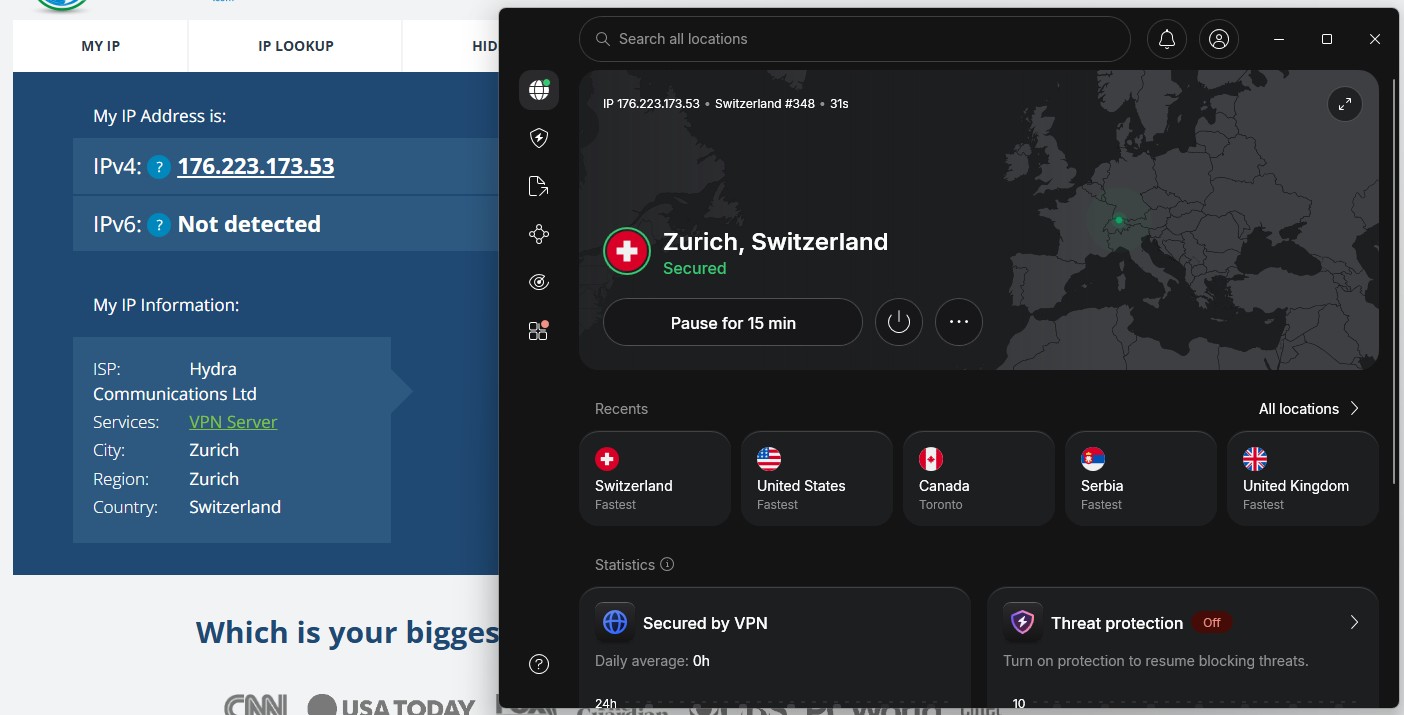
Our lookups named iway AG behind NordVPN’s Zurich server and Wingo AG behind ExpressVPN. Proton VPN’s came back as Salt Mobile in Glattbrugg. Each is a Swiss host. If yours names another country, connect to a second Swiss server and reload. The check takes seconds, and it’s a habit to build for staying anonymous online.
What a Swiss IP Address Unblocks
Swiss broadcasters license their content for Switzerland alone. Play SRF returns a regional error when the connection comes from abroad. Translated, that message reads: this content is not available outside Switzerland. RTS, Zattoo, and Netflix Switzerland apply the same geo-blocking check. Every VPN we tested unblocked the four from a Swiss server.
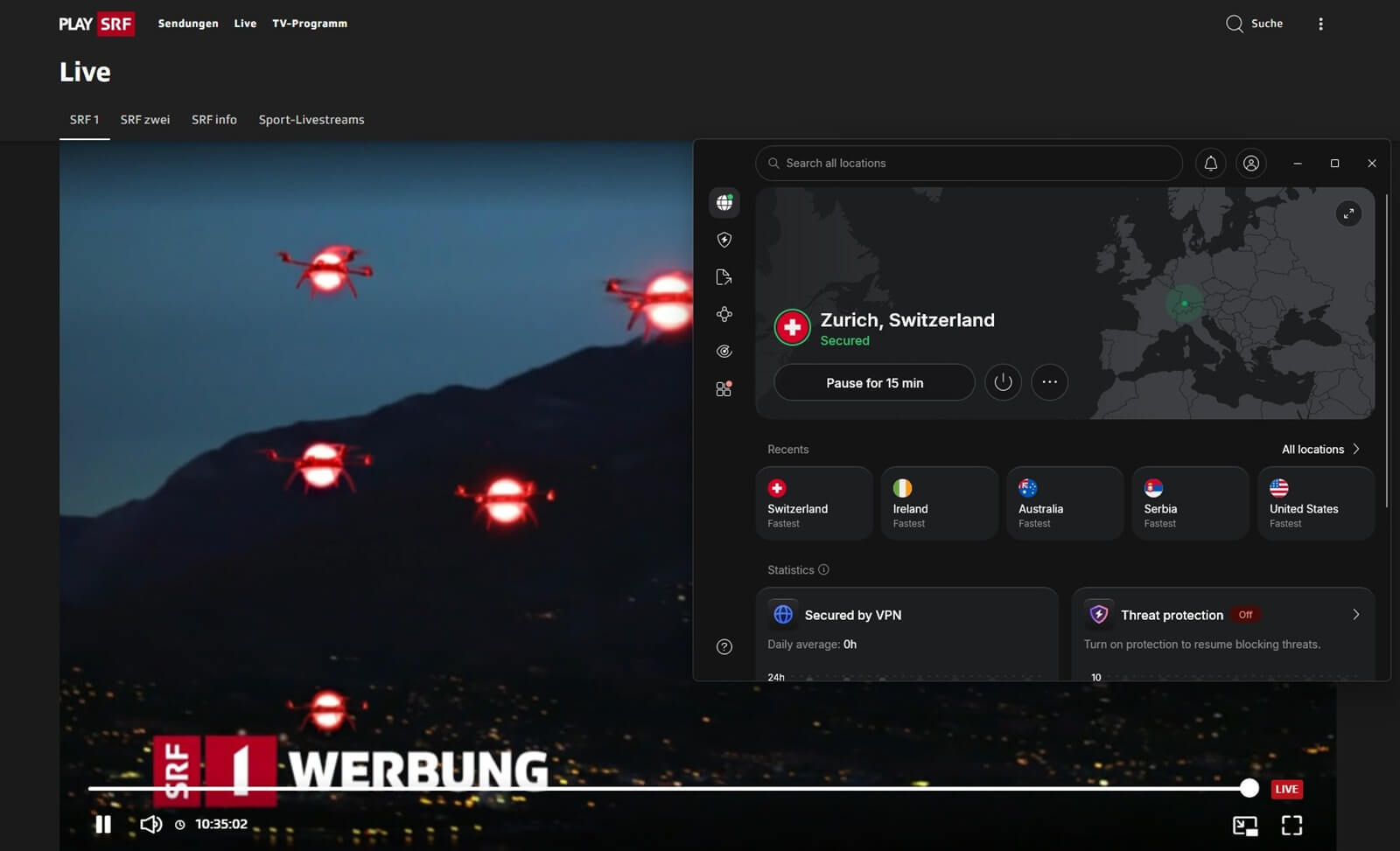
Swiss banks are stricter again: a login from a foreign IP address often triggers extra verification or a blocked session. That’s the everyday reason expats and travelers want a Swiss IP address. Sport is the other draw. Swiss channels show the Tour de France, MotoGP, and the French Open at no cost, and our guide to watching Swiss TV abroad lists what each channel shows.
Swiss Server Speeds Compared
Our October tests used a Windows 11 PC in Europe, on a connection that measures 190.36 Mbps without a VPN. We connected to each VPN’s Swiss location, confirmed the IP address, then opened Play SRF, RTS, Zattoo, and Netflix Switzerland.
| VPN | Swiss locations | Download | Upload | Ping | Price |
|---|---|---|---|---|---|
| NordVPN | Zurich, 120+ servers | 179.63 Mbps | 18.49 Mbps | 40 ms | $3.49/mo |
| ExpressVPN | 2 Swiss entries | 175.45 Mbps | 18.49 Mbps | 38 ms | $2.99/mo |
| Proton VPN | 800+ servers | 171.21 Mbps | 18.68 Mbps | 40 ms | $2.99/mo |
Best VPNs for a Swiss IP Address
1. NordVPN: Quickest Zurich Servers
Pros
- Quickest Swiss download measured
- Play SRF unblocked
- Smart DNS for consoles
- Meshnet for home devices
Cons
- Clashes with other VPNs
- Steep renewal price
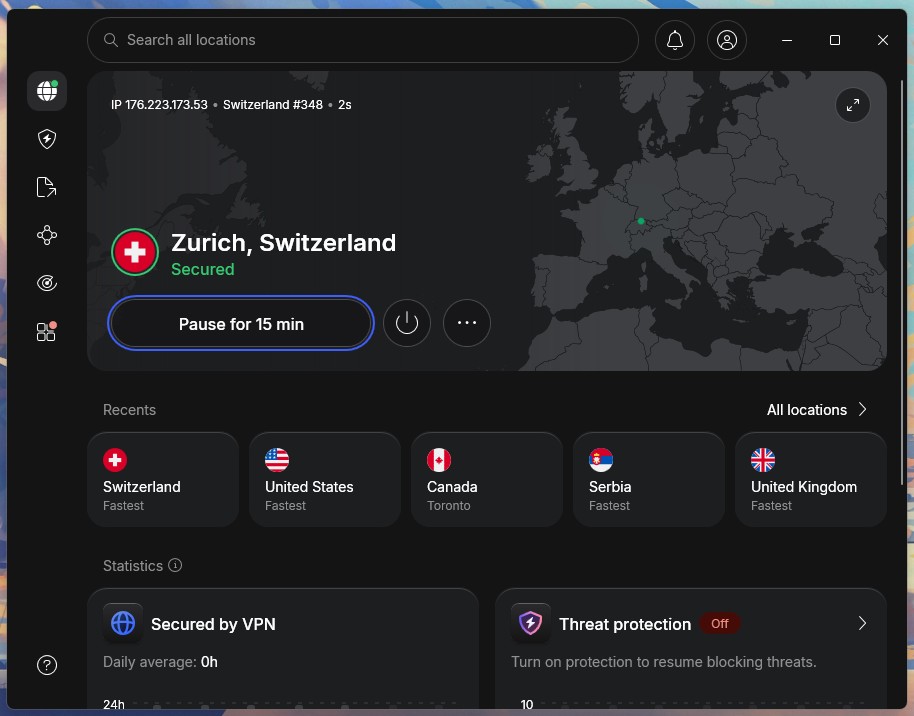
NordVPN‘s Zurich server recorded 179.63 Mbps down and 18.49 Mbps up at a 40 ms ping, a 5.6% loss off our baseline. The app lists Zurich as the only Swiss city, with 120+ servers behind it. Netflix Switzerland, RTS, and Zattoo opened without a second attempt. Smart DNS extends the Swiss IP address to a television or a console, and it’s configured on the NordVPN account page.
Meshnet links your own devices as though they shared one network. The Windows app has one recurring fault: with another VPN installed, it sometimes won’t connect until that app is removed. A year of the Basic plan is $65.88, or $94.23 for 27 months, with renewal at $139.08. Our Switzerland VPN rankings cover the rest of its network.
2. Proton VPN: Swiss Company, 800+ Swiss Servers
Pros
- Deepest Swiss server coverage
- Swiss company and jurisdiction
- Secure Core double encryption
- Netflix Switzerland unblocked
Cons
- No Smart DNS
- Slowest Swiss download measured
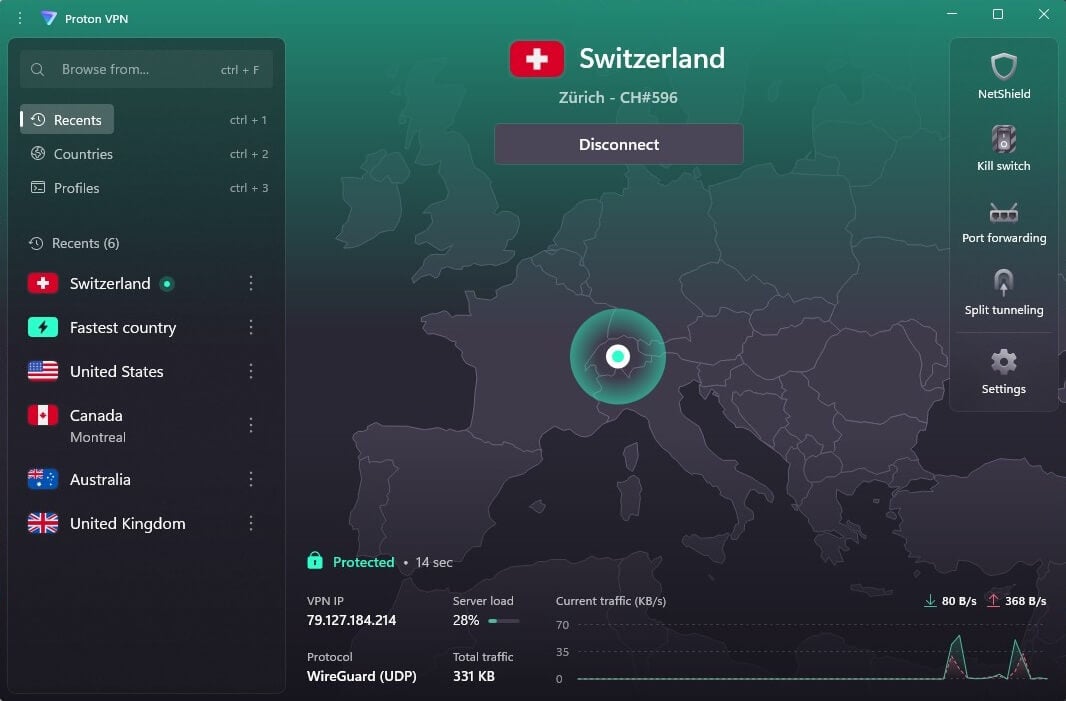
Proton VPN operates 800+ servers in Switzerland, the deepest Swiss coverage we found. The company is Swiss as well, so it answers to Swiss privacy law. Its Secure Core servers are in Switzerland too, and a connection can enter through a hardened Swiss data center before exiting elsewhere. Its Swiss server measured 171.21 Mbps at a 40 ms ping, a 10.1% loss, and the four Swiss platforms opened on it.
Televisions are the weaker point. Proton VPN has no Smart DNS, so a Swiss IP address on a Samsung or LG set means a router install or the Android TV app. VPN Plus is $71.76 for two years, $9.99 month-to-month, and covers 10 devices.
3. ExpressVPN: Lowest Ping to Zurich
Pros
- Lowest Swiss ping measured
- MediaStreamer for smart TVs
- 2 Swiss locations
- Obfuscation on every connection
Cons
- Limited advanced customization
- Costliest monthly plan
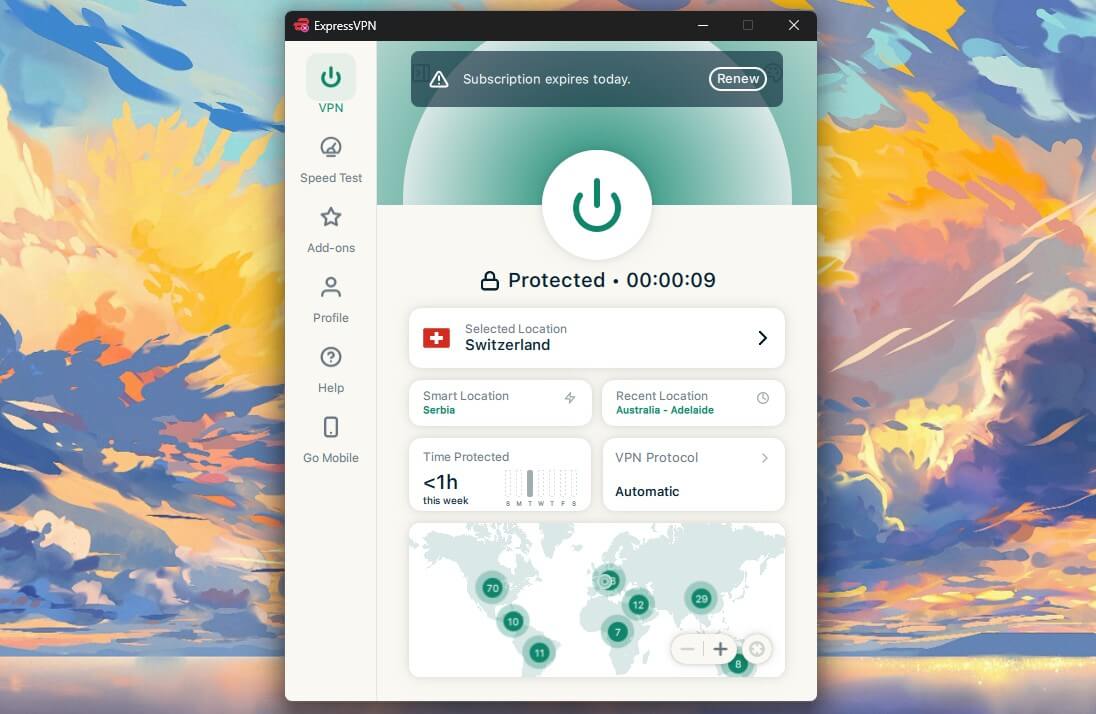
ExpressVPN recorded 175.45 Mbps and a 38 ms ping, the lowest Swiss ping in our round, which helps with live sport through Zattoo. The app lists two Swiss entries, the second labeled Switzerland – 2, and publishes no server count for either. Switching between them takes one tap when a stream stalls.
The Swiss platforms opened from either entry. Customization is where it falls short: settings stop at the protocol and the kill switch, and the alternatives to ExpressVPN allow more tuning. ExpressVPN charges $83.72 for a 28-month Basic plan, then $99.95 annually, and smart TVs connect through MediaStreamer.
Can a Free VPN Supply a Swiss IP Address?
Windscribe’s free plan includes Switzerland in its country list, so a Swiss IP address at no cost is possible, within a 10 GB monthly allowance. Proton VPN’s free plan assigns the country automatically, and Switzerland never came up across our sessions. The trade-offs are the usual ones: a data cap that a couple of hours of HD exhausts, congested servers at peak times, and no P2P support. Our free VPN rankings for Switzerland compare those plans.
Swiss Law and VPN Use
Using a VPN is legal in Switzerland, and Swiss privacy law is among the friendliest in Europe. One restriction is worth knowing before you connect: the Money Gaming Act blocks foreign online casinos in Switzerland, and using a VPN to sign in to one from the country breaks that law. Broadcasters add their terms on top of the law. SRF, Zattoo, and Netflix restrict an account to its home country, and breaking those terms risks suspension, rather than prosecution
Which VPN to Use for Swiss IP Address
NordVPN is the pick for most people after a Swiss IP address. It’s the fastest VPN, its Zurich list is deep enough to avoid congestion, and Smart DNS extends the Swiss address to a television that supports no VPN app. Proton VPN makes the stronger privacy argument, being a Swiss company under Swiss law with 800+ servers in the country, and it’s the one to install if the Swiss address is for banking or sensitive work rather than a match.
ExpressVPN recorded the lowest Swiss ping and offers two Swiss entries, so a stalled stream has somewhere to go. Our VPN rankings compare the three across everything else.
Swiss IP Address FAQs
How do I get a Swiss IP address?
Connect to a Swiss server in a VPN app. NordVPN lists Zurich, Proton VPN and ExpressVPN list Switzerland, and the address changes within seconds of the connection being established.
Can I get a Swiss IP address for free?
Yes, Windscribe's free plan includes a Swiss location. The allowance is 10 GB a month with a confirmed email address, which covers browsing and a few hours of standard-definition video.
Is it legal to use a VPN in Switzerland?
Yes, VPN use is legal in Switzerland. The exception is online gambling: the Money Gaming Act blocks foreign casino sites, and connecting to one through a VPN from Switzerland is against the law.
Which VPN has the most Swiss servers?
Proton VPN, with more than 800 servers in Switzerland. NordVPN lists 120+ in Zurich, and ExpressVPN offers two Swiss entries without publishing a server count.
Why does Swiss TV still block my VPN?
The IP address is on a blocklist. Broadcasters keep lists of known VPN ranges, so switching to another Swiss server, clearing cookies, and reloading usually restores access.