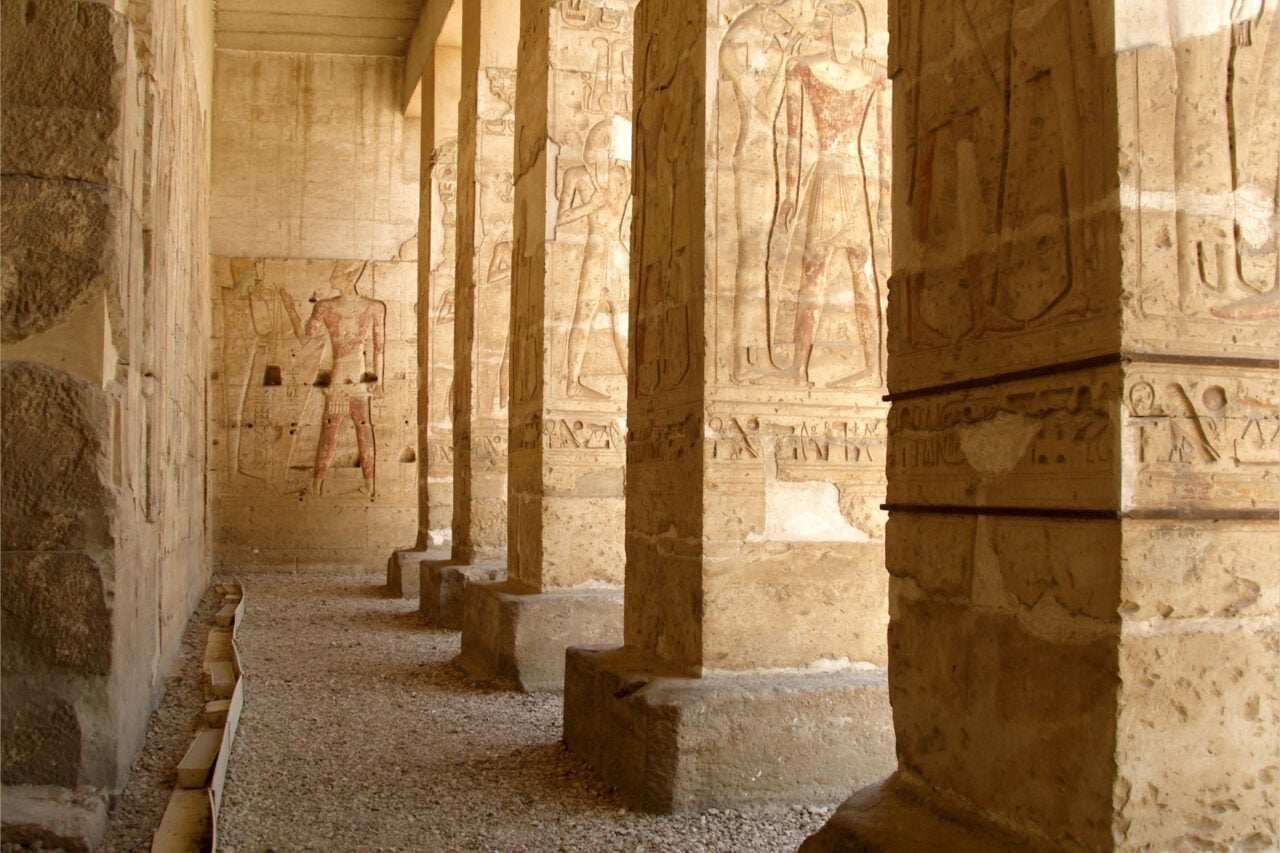
When archaeologist Howard Carter discovered the tomb of Tutankhamun in 1922, he found over six hundred artifacts buried alongside the ancient Egyptian ruler. But now it seems that both the pharaoh and his treasure may have been squatting in someone else’s burial.
In 2015, Egyptologist Nicholas Reeves suggested that Tutankhamun’s tomb might be bigger than it appears to be. Specifically, that there are additional secret chambers hiding the tomb of Nefertiti, one of the most famous women from ancient Egypt. In a study published yesterday in the Occasional Papers of the Amarna Royal Tombs Project, Reeves and colleagues review subsequent investigations carried out since 2015 and present further geophysical evidence in support of this groundbreaking hypothesis. Ultimately, the team seems convinced that there is more to King Tut’s tomb than meets the eye.
“Although the investigation has not yet reached a final conclusion, the cumulative architectural, decorative, and geophysical indicators strongly suggest the existence of at least one further storage chamber beyond the Burial Chamber (J)’s west wall, and a royal funerary continuation beyond its north wall,” the team argues.
An unusual tomb for a king
Tutankhamun was part of ancient Egypt’s Eighteenth Dynasty of rulers, and he was in power from around 1333 to 1324 BCE. When he died suddenly at 19 years old, he was buried in the Valley of the Kings, but his tomb doesn’t align well with Eighteenth Dynasty royal tombs, according to the study. As such, researchers see two different possible scenarios, both of which involve the young pharaoh being buried in someone else’s tomb.
The tomb was either a private burial that workers modified in the desperate context of Tut’s unexpected death, or an Eighteenth Dynasty queen’s tomb. In the latter scenario, only part of the original tomb was repurposed and sealed off for Tutankhamun, with the queen continuing her undisturbed slumber elsewhere in the broader burial.
A hijacked queenly burial?
One piece of evidence that points to a queen’s burial is the tomb’s orientation. Tutankhamun’s tomb is a left-turning structure from the point of view of the burial chamber. While contemporaneous kingly tombs are usually right-turning, the unusual layout aligns with that of an unfinished Eighteenth Dynasty tomb intended for queen Hatshepsut.
“The implication of this leftwards turn is clear: KV 62 conforms to the architectural grammar of neither a private nor a kingly monument,” the authors explain. KV 62 is the official name for Tutankhamun’s tomb. “The plan Tutankhamun’s tomb follows is that of an Eighteenth Dynasty queen.”
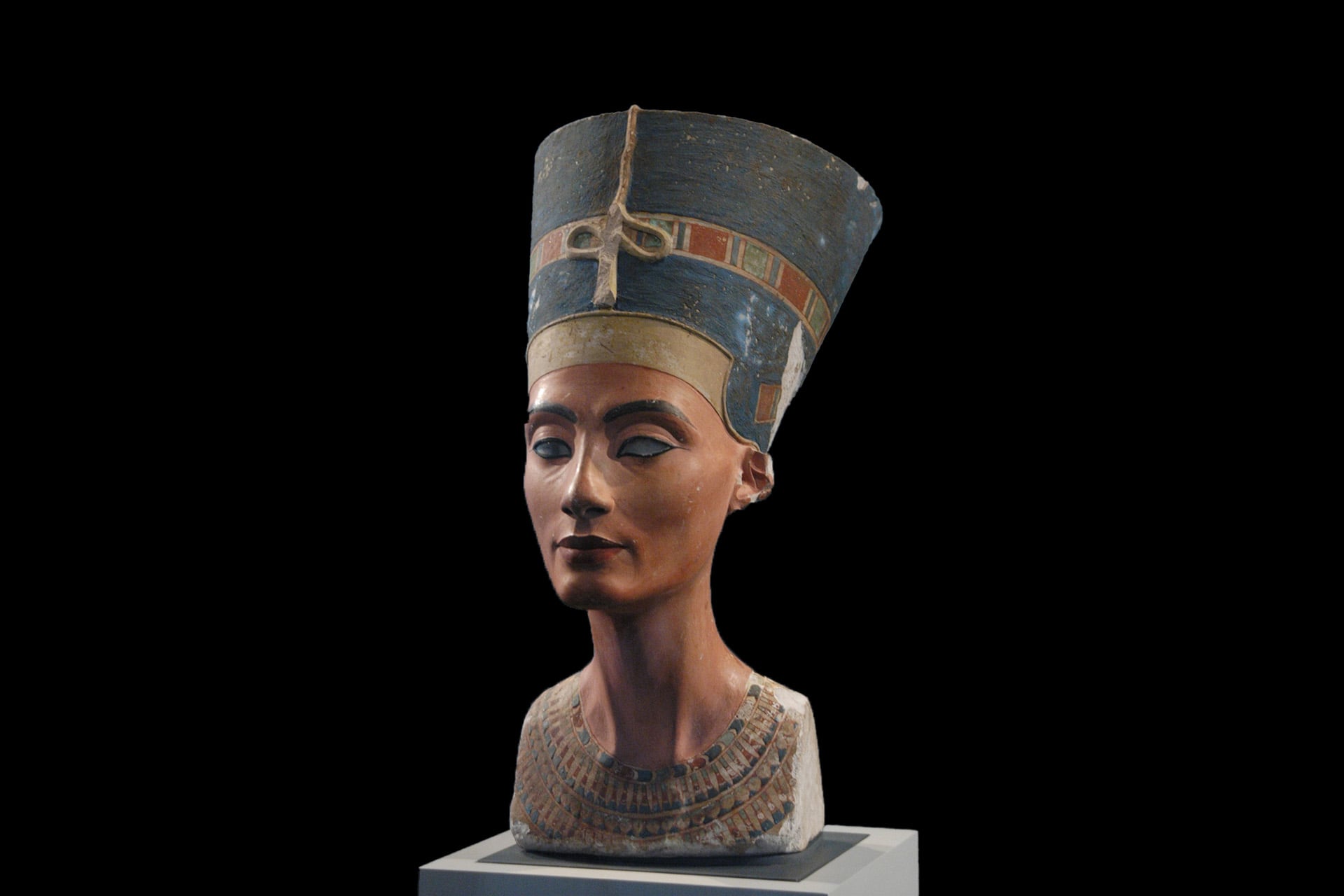
Queen Nefertiti was the wife of King Akhenaten, Tutankhamun’s possible father and a contentious figure who converted ancient Egypt to monotheism and built a new capital in Egypt’s modern-day Amarna. Archaeologists have yet to discover her body, and Nefertiti is perhaps best known to the public through the beautiful bust of Nefertiti, which is currently in Berlin’s Neues Museum.
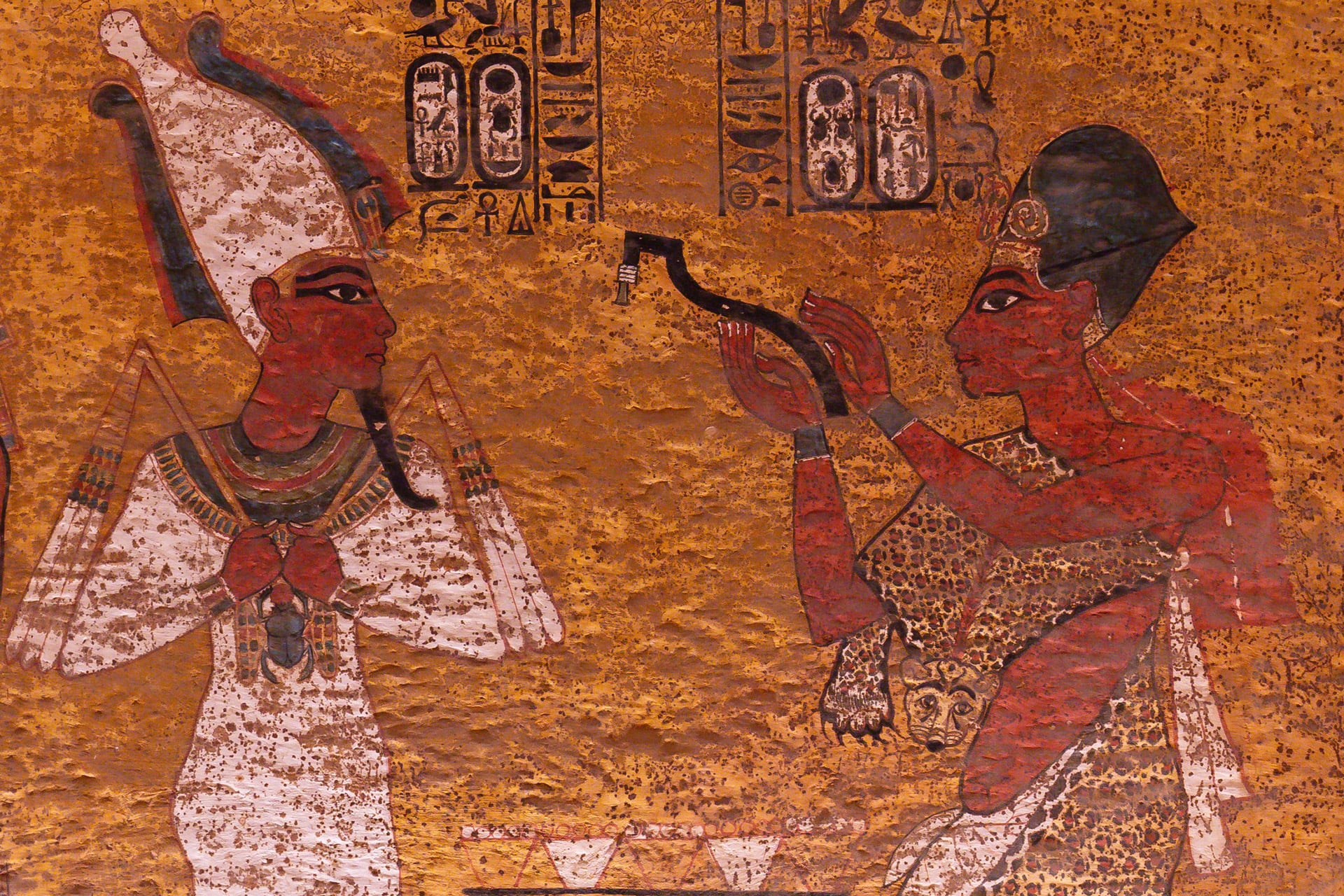
The scene depicted on the north wall of Tutankhamun’s tomb includes Tut’s successor Ay conducting the famous “opening of the mouth” ceremony on the previous ruler. There’s just one problem—Tutankhamun’s mummy looks exactly like Nefertiti’s bust, and Ay’s profile is the same as that of a Tutankhamun statue. This identification suggests that the image originally depicted Tutankhamun conducting the “opening of the mouth ceremony” for his predecessor. His predecessor was Smenkhkare, whom the researchers believe to be the same person as Nefertiti, and thus the person originally buried in this tomb.
New geophysical investigations
In 2023 and 2024, the team carried out new geophysical investigations with techniques including microgravimetry (measuring small changes in gravity) and ground-penetrating radar (underground imaging).
“The structural investigations of 2023/24 have usefully extended the previous investigations and the overall body of data and identified with high probability the presence of a funerary complex of generally recognisable type extending some 25-30m to the north of KV 62,” they wrote in the study. “Five or six chambers are likely to exist in this space, and there is a clear expectation that the voids detected connect to themselves and to KV 62 by passageways deliberately filled with rubble in antiquity.”
The next step should involve trying to access one of the theoretical chambers. And if there really are additional rooms from before Tutankhamun’s burial, they could “rank among the most transformative archaeological discoveries of the modern era,” Mamdouh Eldamaty, co-author of the study and an Egyptologist at Ain Shams University, told Nature.