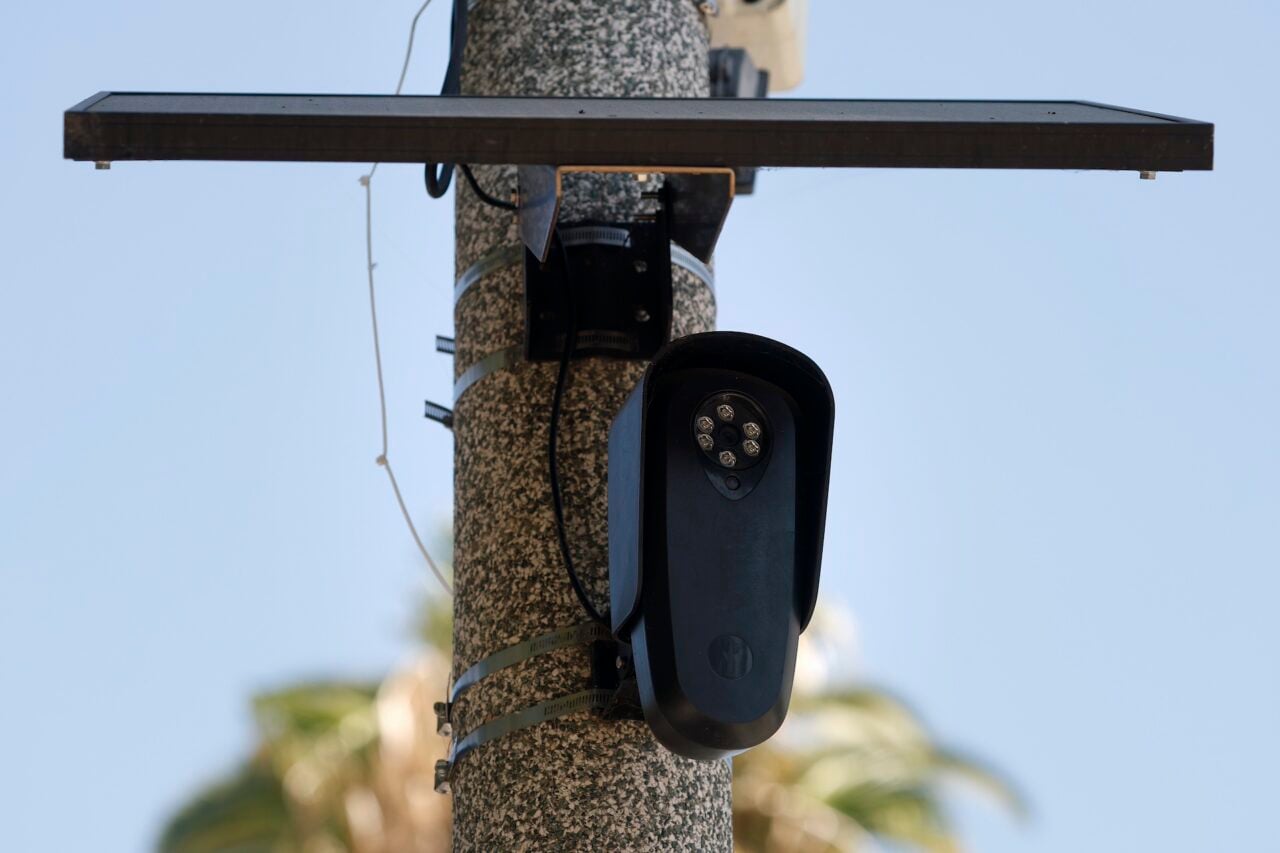
In addition to paying the cost of food and delivery fees, it turns out there’s another payment you might be making when you place an order that is brought to you by a delivery robot: your biometric data. According to a report from the Associated Press, two popular delivery robot manufacturers are accused of using cameras and sensors to scan the hands and faces of customers without consent.
The accusation stems from two separate class-action lawsuits being brought by residents of Chicago. And while the cases are separate, the charges are similar. According to the suits, both Coco Robotics and Serve Robotics have used cameras and LiDAR to record biometric details about customers.
In the case of Coco Robotics, the plaintiff alleged that the company’s delivery bot recorded his hands, head, and face with its cameras and used its LiDAR sensors to measure their geometry and distance from the machine as he went to pick up a DoorDash order from it. He also claimed that a remote operator was able to watch video of the delivery in real-time. None of that, according to the plaintiff, did he consent to.
As for the Serve Robotics case, the plaintiff there alleges that the company’s bot, completing an Uber Eats delivery, collected and retained biometric information without permission and alleges that the company may be using that information to train artificial intelligence systems, including potentially licensing the data to third parties.
Both lawsuits claim that the companies involved violated the Illinois Biometric Privacy Act, which requires any firm collecting biometric data from state residents to provide written notice of its collection practice, obtain written consent from the consumer to collect their data, and keep a clear policy for how that data is retained and destroyed.
Both companies denied any wrongdoing as accused in the lawsuits, according to the AP. The cases seek statutory damages of $1,000 per violation of the Biometric Privacy Act or $5,000 per intentional or reckless violation, plus other relief for the plaintiffs.
The fact that both lawsuits stem from Chicago is noteworthy, as the city has become something of ground zero for debates over the bots. The bots, which have grown considerably in number over the past few years, have become a point of contention among the city’s residents, many of whom seem to be sick of having to share the sidewalk with the bots, which they believe cause sidewalk congestion and can create safety hazards for pedestrians.