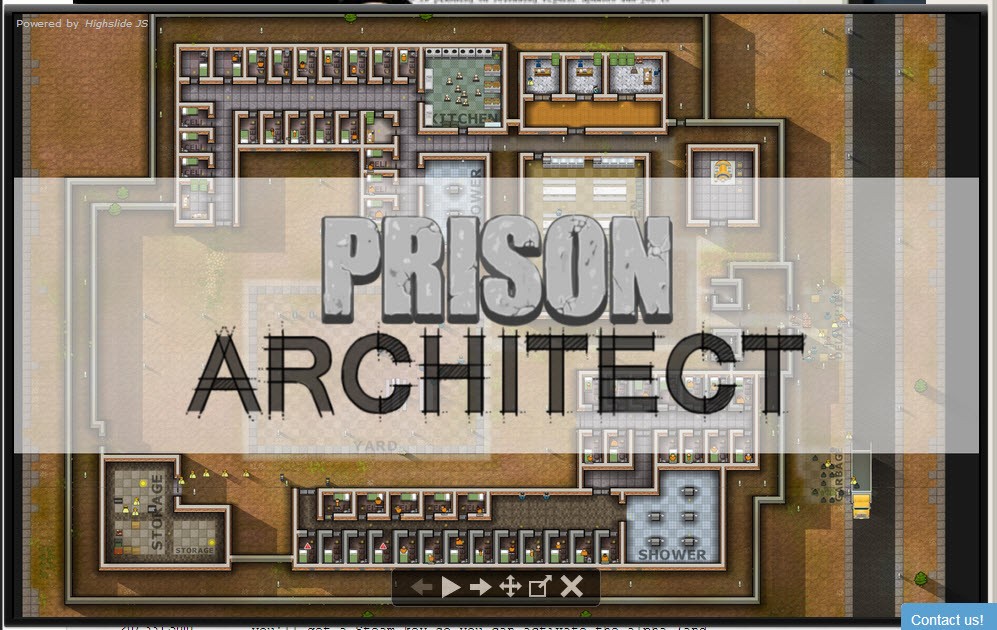
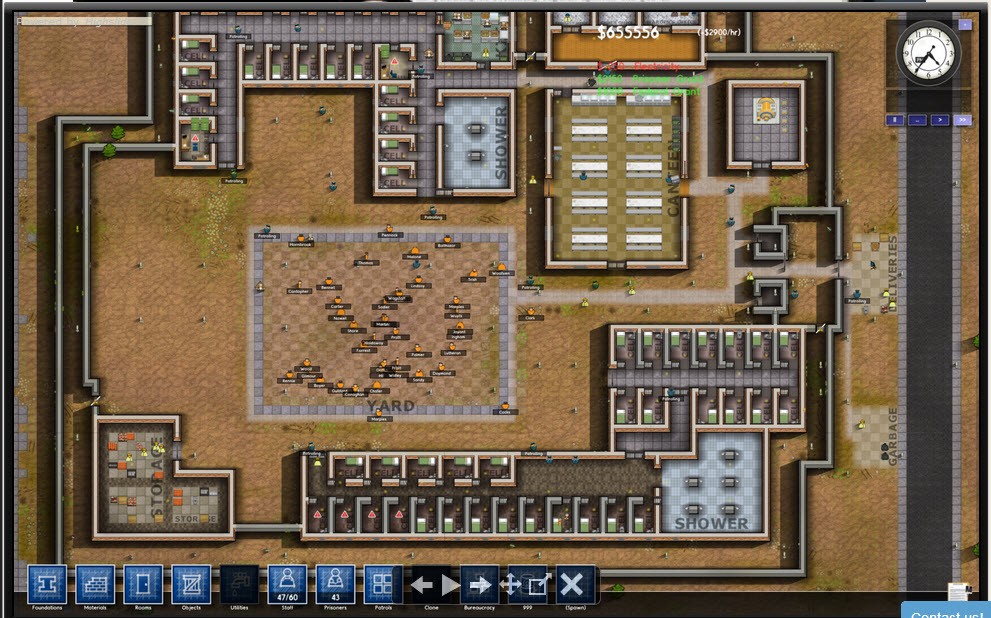
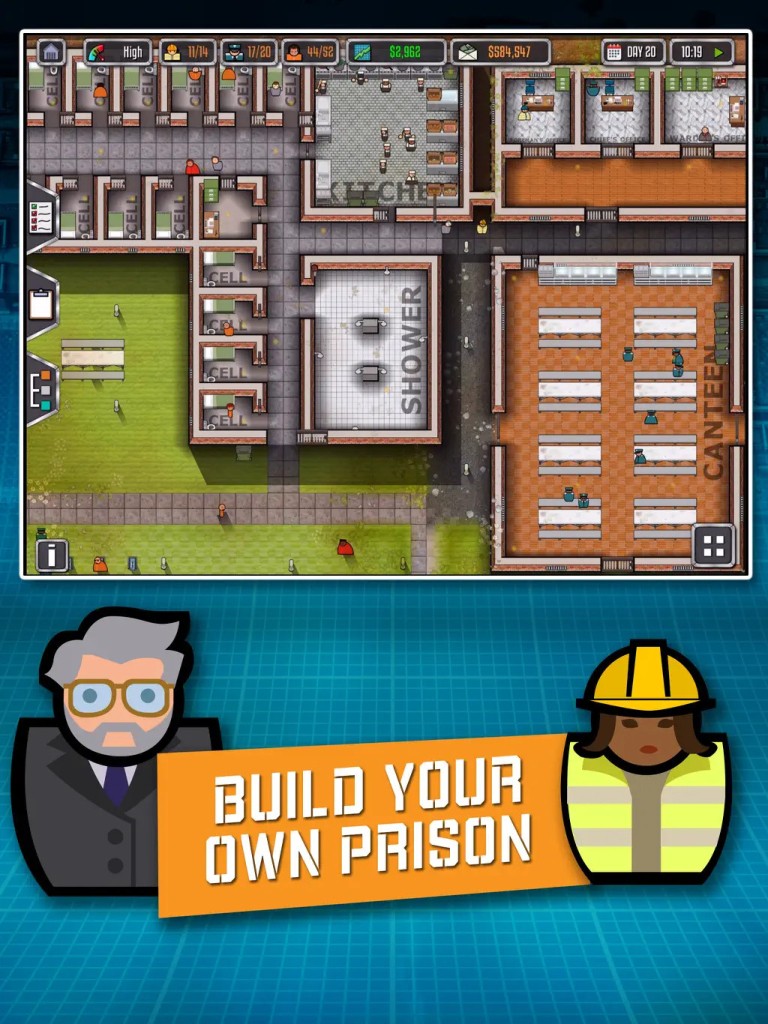
Prison Architect is a simulation game focusing on construction and management in the form of a highly layered and mildly disturbing challenge in which you are situated. You don’t build a town or a city here. You build a prison. And along comes the responsibility of determining what type of facility you would love to run.
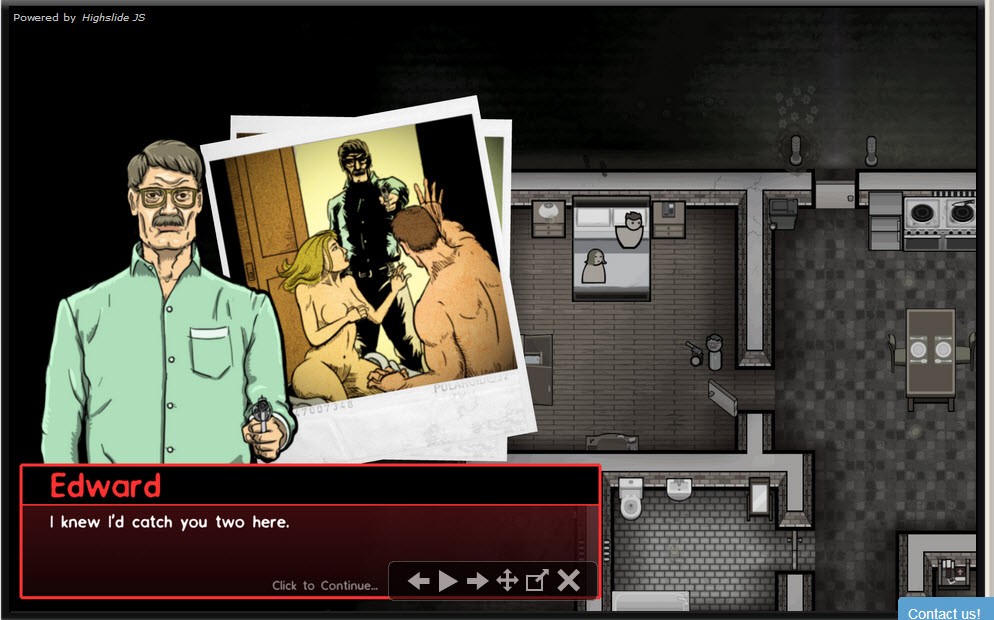
You set walls, cells, canteens, solitary rooms, guards, and therapy. But what plays out before your eyes as you play isn’t just a collection of buildings. It’s a story of choices, systems, cause, and effect. Those prisoners who come to your gate aren’t mindless units. They have names, have sentences, have pasts and, to some extent, even explosive tendencies. You must prepare for order, safety, fairness, or control. To be cruel in the game is not necessarily incumbent on you, but it doesn’t prohibit you either. That is part of what helps it run.
It is also asking more than how to build. How do you think systems should operate is what it asks. Will you leave space for reform? Will you create a machine of efficiency? Prison Architect provides the tools and then softly watches what kind of structure develops along with who gets left out when you go ahead.
Why should I download Prison Architect?
There is no shortage of games that allow you to build. Cities, hospitals, universities, and airports. But few games put you into the strange discomfort and unexpected sight that Prison Architect does. It drags you into a space where systems do count. You didn’t just put down a bed and walk off.
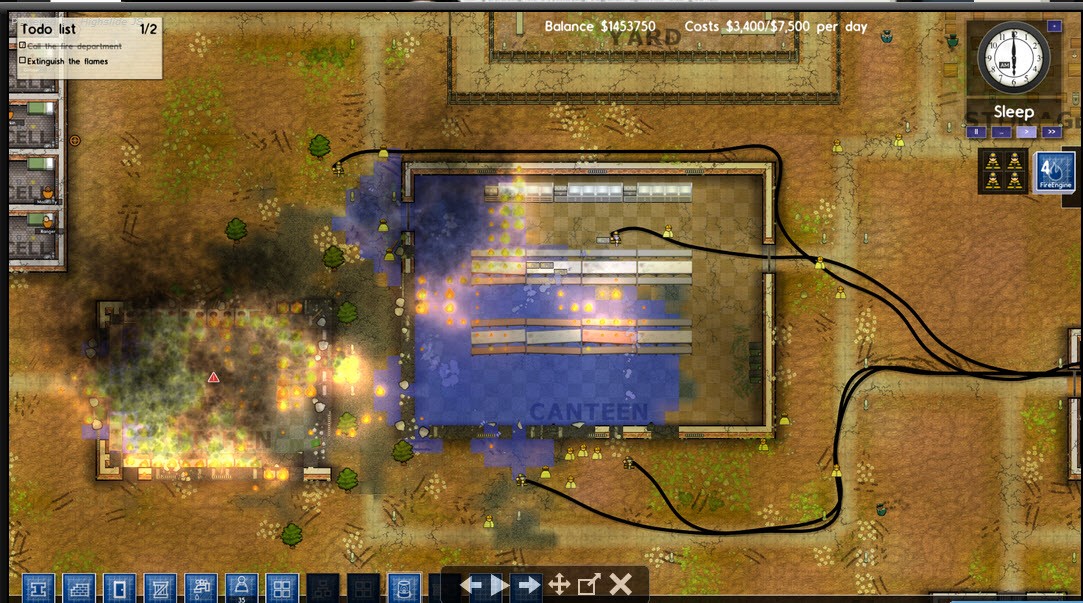
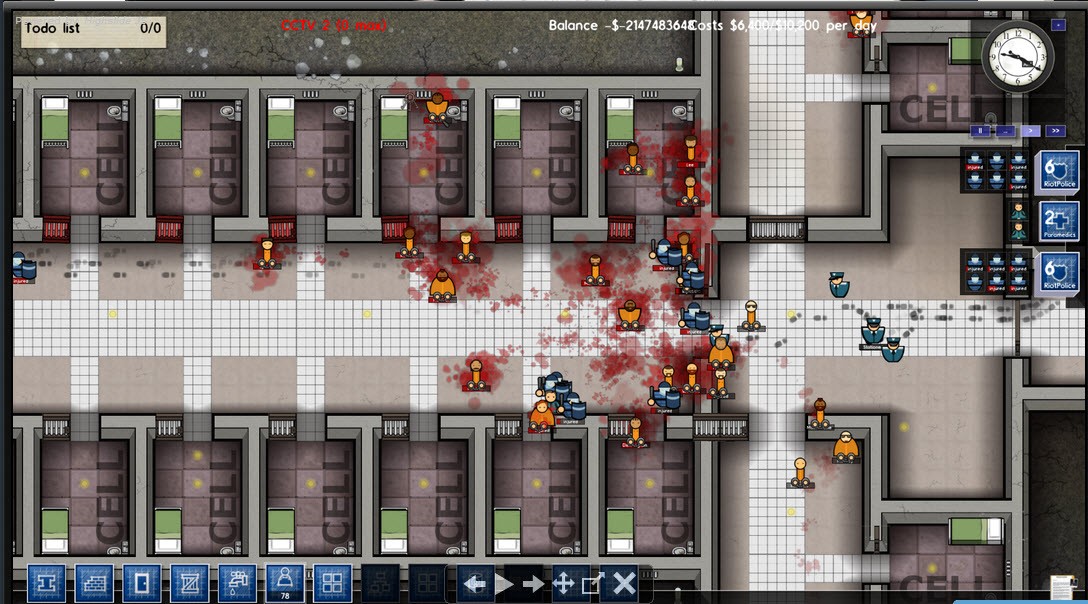
You consider surveillance lines, yard schedule, contraband risks, and staff burnout. Gradually, your facility starts to move as a living organism, and each decision you make creates a shadow. Perhaps a guard was overtaxed. Perhaps you didn’t pay enough attention to work on supporting mental health. Perhaps an inmate died, and now the entire population is in meltdown. It is not chaos for the pleasure of chaos. It’s something more deliberate.
The game’s design is intentionally minimalistic, cartoon-like, but complex underneath the layers. It teaches you through mistakes. That was the door you forgot to lock, wasn’t it? Someone escaped. That overcrowding you ignored? Now there’s violence.
It mixes micromanagement with strategy in such a way that it doesn’t bore you away by overwhelming you with information. You don’t just build. You control human behavior within invisible systems of pressure. And that makes the game more like a social simulation rather than a city builder.
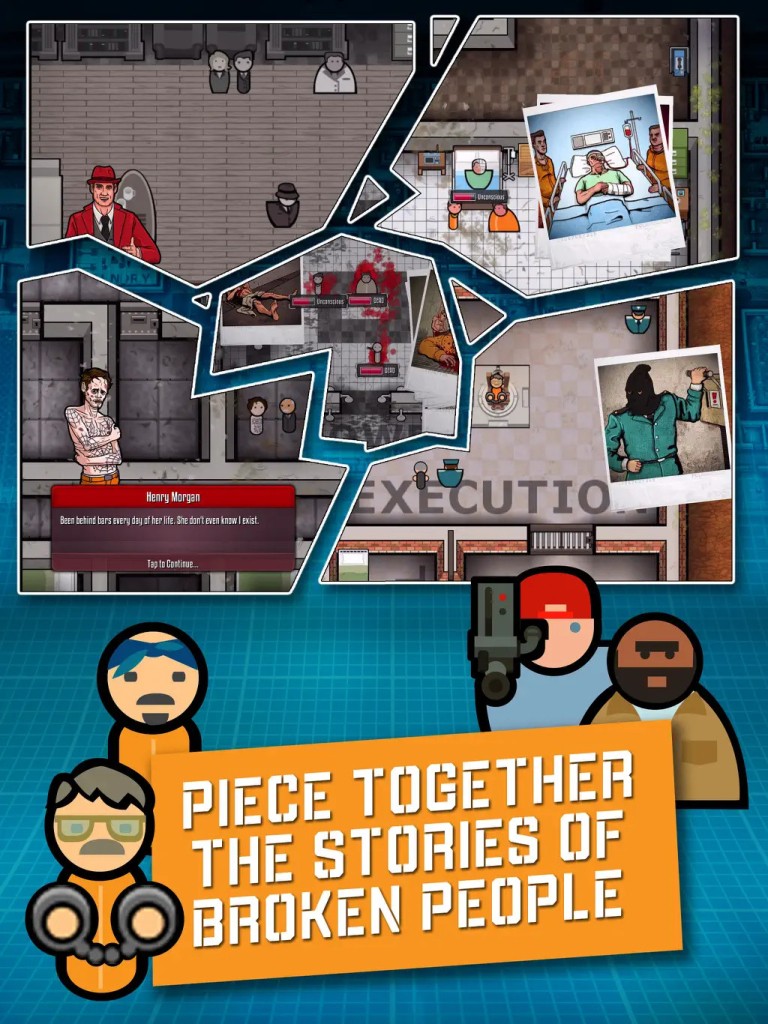
It’s also personal. You can name prisoners. Read their backstories. See them flourish or die because of what you did or didn’t do. And there’s sandbox freedom for those who don’t want to just maintain. You can bring about something idealistic as well as something dark. You can test ethics, or you can ignore them. And since the game doesn’t lecture you. It lets your prison talk for itself.
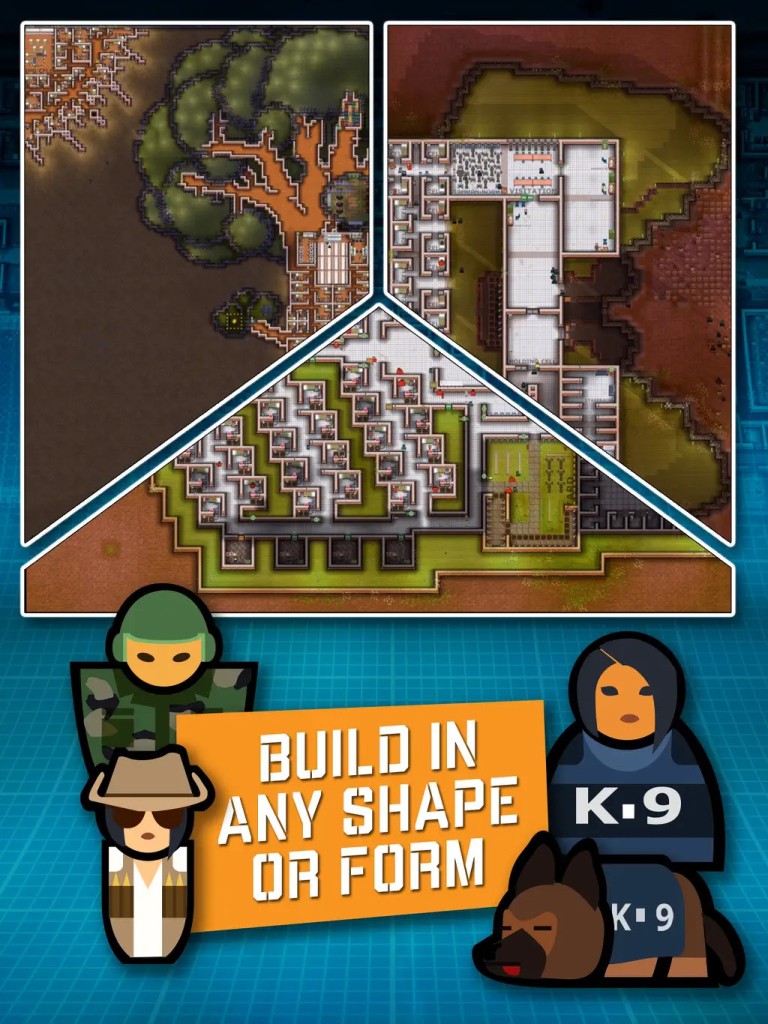
Further outside of this, the replayability, very much so. No game is played in the same way. Random events, alteration of prisoner behavior, and modular styles of building mean that your selections taste fresh every time. And if you like spreading your systems out and seeing how even small alterations make ripples outward, Prison Architect kind of turns into a quiet, reflective addiction. It’s not flashy. But it hangs around with you long after you leave it.
Is Prison Architect free?
Prison Architect is not a free to play game. To download and play, a one-time purchase is necessary. But, with a purchase, you have full rights to the core functions without the need for monthly payments. Other content is available as a series of paid downloadable expansions, but the base purchase is a fully functional and unique experience.
What operating systems are compatible with Prison Architect?
There are many platforms on which Prison Architect can be played. You can run it on Windows, macOS, and Linux systems for desktop use. It is also released on consoles like PlayStation, Xbox, and Nintendo Switch. And if you prefer Mobile devices, Prison Architect is also available for iOS users.
The game has been optimized to work smoothly on any device, keyboard, mouse, or controller. The interface adapts nicely, and the performance is stable even on mid-tier hardware. If you’re playing on a computer or a console, you’ll probably find that it loads fast and plays clean, and can go as far as you have a proper update or mod support, depending on your platform.
What are the alternatives to Prison Architect?
Even if the concept of building and administering systems intrigues you and you are searching for something different environment, other simulation games pose some of the same questions from other perspectives. Each one transforms the setting, but retains the same basic core idea: create, manage, and observe that develops.
Two Point Museum sets a lighter tone, but focuses on questions of space and people ordering. Instead of running a prison, you run a museum, curate exhibits, control the flow of visitors, and worry about quirky museum disasters. Where Prison Architect forces you to think about uprisings, Two Point Museum forces you to consider the possibility of a cursed object unleashing havoc in the dinosaur wing accidentally. It’s amusing, but again it demands consideration.
Surviving Mars changes the tone again, and you are placed on a red planet attempting to run a colony of humans attempting to make a life in one of the most hostile environments that can be imagined. Instead of prisoners, you have scientists and engineers. Rather than walls and surveillance, you have to cope with the supply of oxygen and lack of resources. There is indeed tension, and management goes ever deeper. If you like watching systems respond to minor adjustments and want to confront environmental, not social threats, this game may drag you as deep as The Sims.
Human Resource Machine is a completely different sort of simulation. It makes the programming concept a puzzle. You don’t run people, you learn how to run processes in a metaphorical office. Each level requires you to automate a task using the visual logic commands. It’s abstract, it's a clean and kinda meditative way of teaching you how machines think. It’s an alternative for system people not need a visual sandbox. It presents programming logic in a simple manner, and through repetition and pleasure lies in solving, not building.