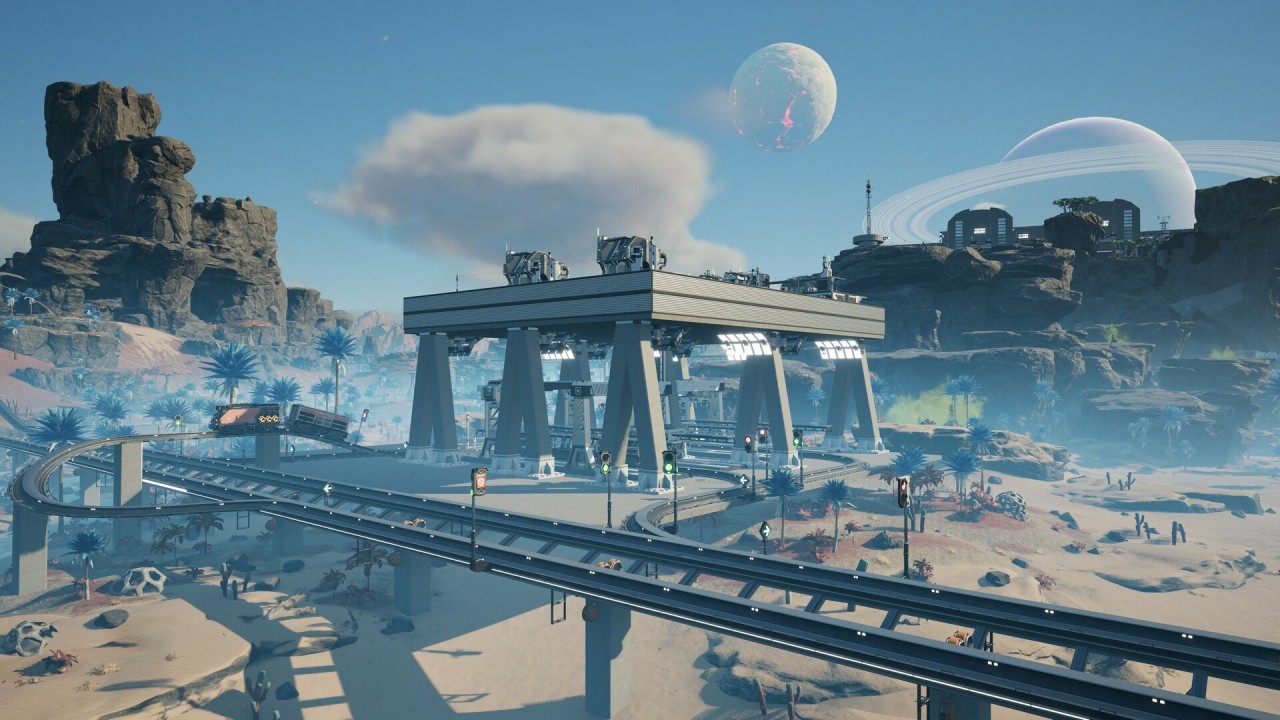
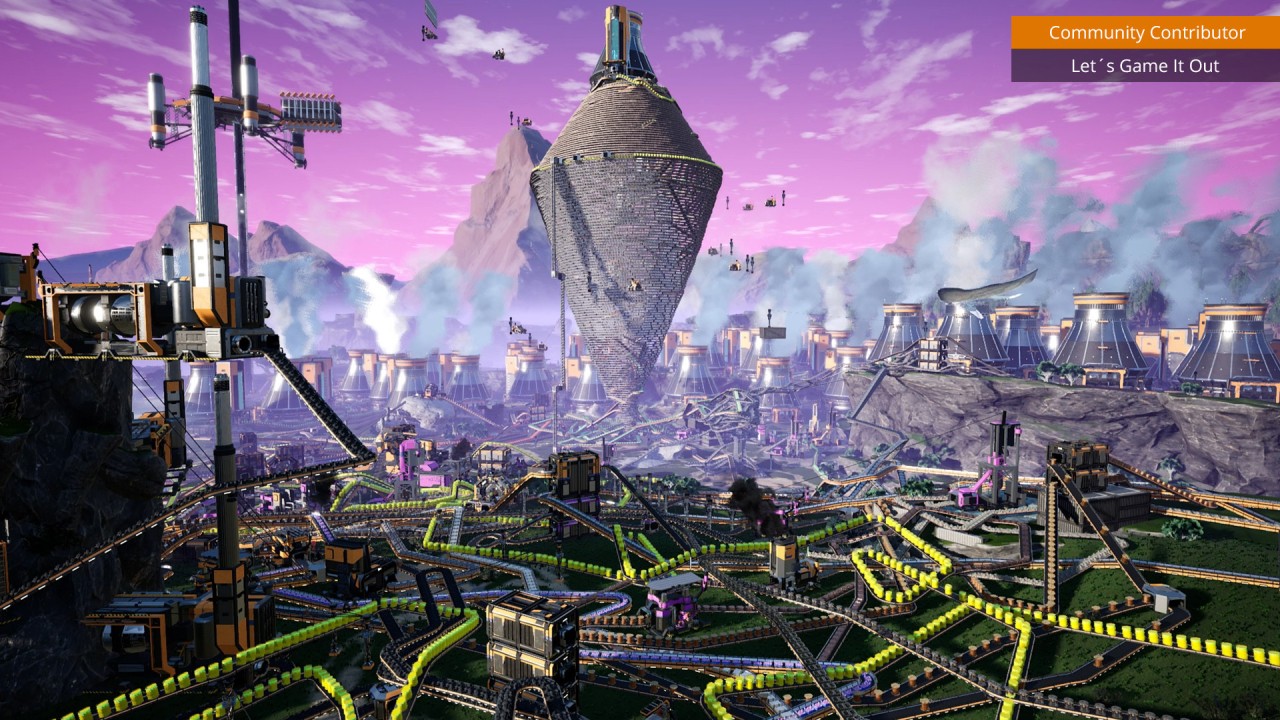
Satisfactory is a first-person, open-world factory-building video game in which the player takes the role of an engineer who has been dropped on an alien planet and has to build huge, automated production centers. The game, produced by Coffee Stain Studios, combines exploration, survival, and strategy with industrial management in a way that keeps players constantly glued to the screen. At the beginning, it’s a big mess, starting with just basic tools and blueprints, but before you know it, chaos turns into brilliance.
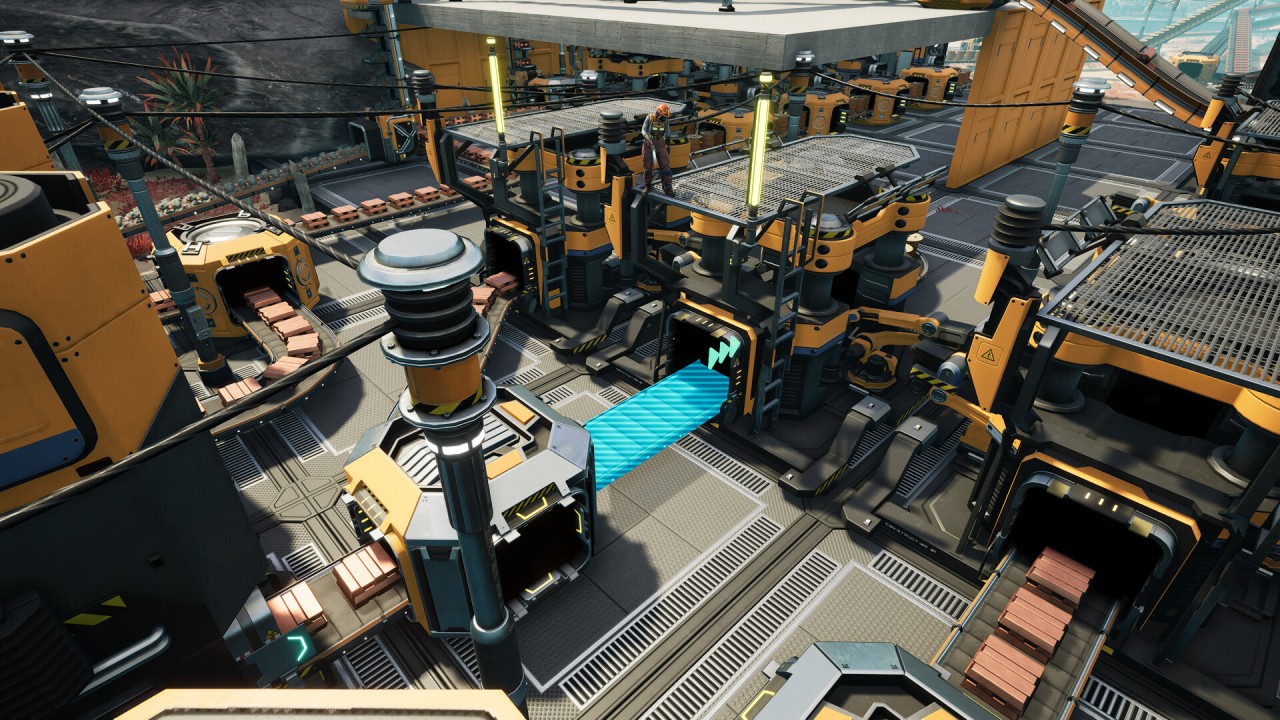
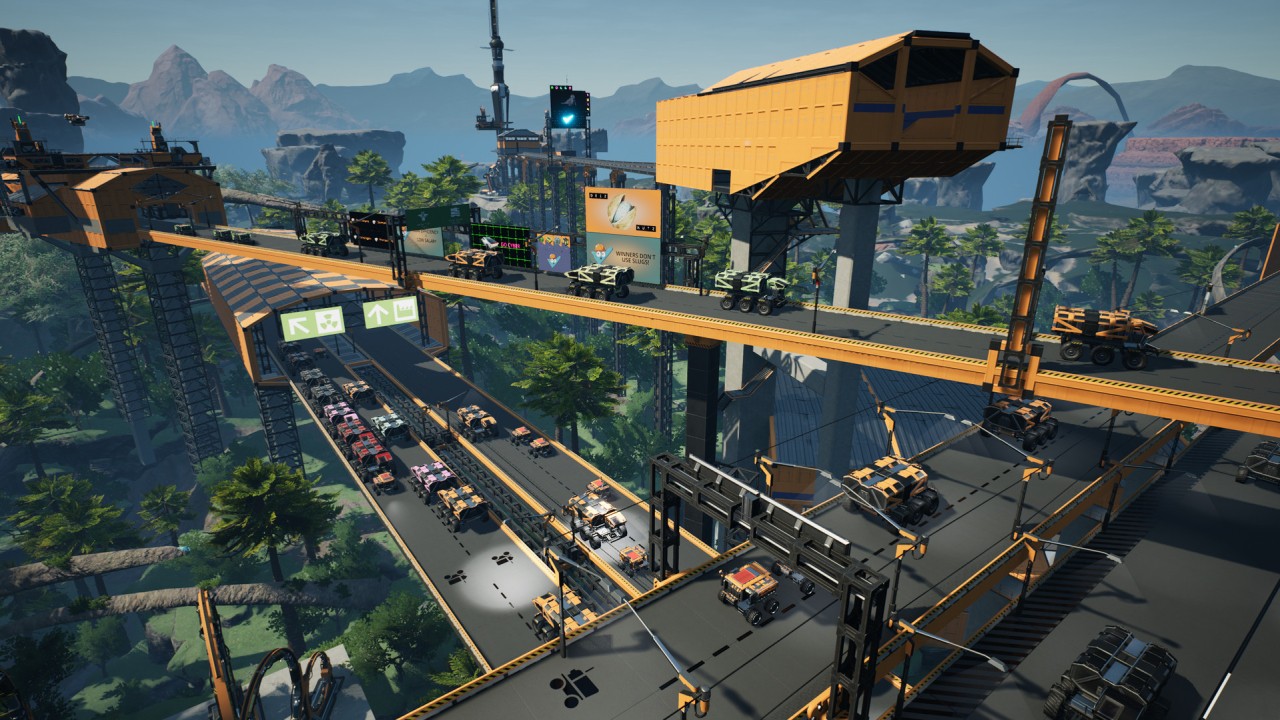
It is not only a building game but an optimization game. You begin on a small scale, positioning miners and smelters, and then you are soon constructing multistory conveyor belts, networked junctions, and massive logistics systems spanning canyons and mountains. It is large, foreign, and aesthetically beautiful, and various biomes have their own resource structures and demands. What really drives Satisfactory is the joy of solving big problems, whether that is working through power surges or taking care of the bottlenecks in your production chain.
You not only deal with machines; you step through them, leap on them, and stretch them out. The immersive view of Satisfactory enables you to touch and feel the magnitude of what you are building, and every choice you make, without exception, will feel organic and meaningful. It doesn’t hold your hand, and that’s exactly why players keep coming back, because of the freedom of creating your own way and at your own pace.
Why Should I Download Satisfactory?
Satisfactory is perfect for anyone who loves to build, organize, explore, and turn chaos into order. This game is ideal for people who enjoy systems, and by that I mean systems that start chaotic and messy, then evolve into streamlined, near-perfect machines. Whether you have been well-versed in factory simulations or you are a newcomer to the genre, Satisfactory draws you in with simplicity, then surprises you with its depth.
Its fundamentals of gameplay are simply fantastic. You start collecting raw resources and constructing robots in order to automate the simple processes. And then you discover new technologies, you grow your factory, and you have to deal with more convoluted logistics. The thing that is special about it is that there is the absence of forced progress. You construct because you have a desire to. There’s always something to fine-tune or optimize, keeping you engaged. Their application causes further development, more ideas, more suitable layouts, and an increased pace of production. It becomes a feedback loop of constant experimentation and improvement.
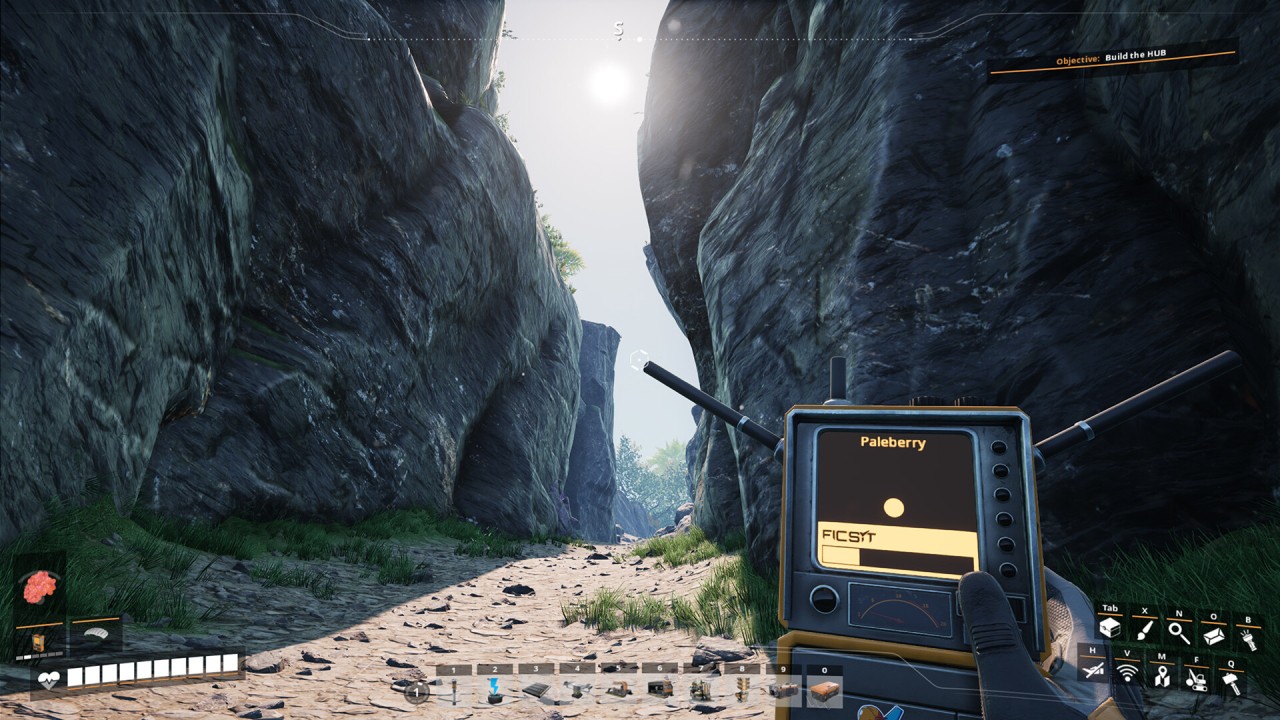
A big component of the experience is exploration. The alien world is not merely decoration, as it is stuffed with creatures, resources, caves, shady places, and surprises. Occasionally, you encounter a monster or tricky mountain pass, and you must either think fast or change the entire direction that you are taking to get around it. The landscape isn’t just for show; it actively influences your factory. You might be forced to bend belts to go around trees, construct bridges across deep valleys, or even stack machines vertically just to make them fit into small spaces.
Another layer is co-op. Satisfactory gives you the ability to work with others, splitting the work or cooperating on hard projects. It adds a collaborative layer that transforms the factory building into a journey for people. Co-op is all about adding energy and depth through troubleshooting power troubles as well as celebrating a successful milestone.
There’s no rush; you set your own pace. Other players will literally waste hours re-ordering their belt set-ups so as either to make things less cluttered or to be more efficient. The others will jump into end-game technology and huge mega-factories. The two methods are acceptable, and the game accepts that. There’s no penalty for creativity; it actually encourages it.
It has a pleasant zen quality as well. Watching conveyor belts hum, machines whirring in sync, and the day’s rhythm all built by you is deeply satisfying. Satisfactory is an uncommon type of pleasure for those players who like making order out of chaos.
Is Satisfactory Free?
No, Satisfactory is not free. It is a commercial game, which can be acquired on such sites as Steam and Epic Games Store. There are no subscription fees, though future expansions or updates may be released later. Your purchase includes unrestricted access to all the essential features and updates deployed in the development process.
What Operating Systems Are Compatible with Satisfactory?
Satisfactory runs on Windows-based systems. It is even smoothly played on the latest PCs with the proper 3D graphics and processing specifications. It can be purchased on both Steam and Epic Games, and a Linux release is not supported, but some users have managed to run it using compatibility tools. There is no Mac support as-yet, and the game is extremely performance-sensitive when trying to use it on non-native hardware.
What Are the Alternatives to Satisfactory?
The Alters is a unique alternative that focuses on resource management but with a very personal and story-focused approach. In contrast to Satisfactory, where so much attention is given to machines and factory blueprints, The Alters is based on one character dealing with several parallel versions of himself working together in a secluded environment. You continue to solve issues and keep systems, but you do it on a more personal or even psychological level. It is appropriate for those who prefer a cogitative storyline with elements of base development.
No Man’s Sky is an open-world game of exploration on a universal level. Although it is not a factory sim, in general, it has crafting, base-building, automation, and mining mechanics that can interest Satisfactory players. The difference between No Man’s Sky and many other games is that No Man’s Sky is large, and you can explore the planets, build outposts, collect materials, and automate chains throughout a huge galaxy. It is focused on discovery, just like on structure, and tackles those who like striking their own path.
RuneScape: Dragonwilds takes it up to the MMORPG level. It is not a factory game, but you similarly gather resources and crafts, and use system-driven progress. It throws in social interaction, real-time combat, and character growth. If you enjoy long skill trees, chain crafting, and world construction that is persistent, it scratches another, although similar, itch.