We don’t yet know what kind of gaming hardware the chefs at Valve are cooking up, but the makers of the Steam Deck don’t seem to be only serving up handhelds. Eagle-eyed Reddit users have spotted what may be a device that could resurrect old ideas from the Steam Box, Steam Machine, and Steam Link, but in a form that could rival the Xbox or PlayStation console that’s currently occupying space next to your TV.
Valve has a notoriously freeform work environment, which means projects get picked up and dropped based on the whims of its relatively small staff. In its Half-Life 2 20th anniversary self-documentary released earlier in 2025, the company effectively said its developers left Half-Life 2: Episode 3 on the drawing room table since few were interested in making it. That means any upcoming hardware, especially those long-rumored devices, may just be ruminations from a fickle company. Or, thanks to the popularity of the Steam Deck, it could be the first inklings of an incoming Valve hardware renaissance.
Valve’s ‘Fremont’ may be its first console foray
Fremont, named after the city in California along with a subtle reference to Half-Life’s protagonist Gordon Freeman, may be Valve’s final iteration of the age old SteamBox design that never went anywhere. Valve and VR info hound Brad Lynch published several leaked specs of the supposed console-like PC to his X account Aug. 20. The supposed leaked specs suggest this standalone console-like PC would be based on a custom AMD processor modeled on the Hawk Point 2 line of SoCs, or system on a chip. Today’s Steam Decks work based on a custom Zen 2-era AMD APU, or accelerated processing unit. This would use the chipmaker’s more-recent Zen 4 microarchitecutre with 6 CPU cores and a 4.8 GHz clock speed. Despite using the latest AMD tech, the supposed Geekmark benchmarks dont’ suggest this device will offer peak gaming performance.
Valve Fremont recap: a TV focused PC box/console running SteamOS. Has dedicated HDMI port
Has a semi-custom CPU based on Hawk Point 2. But with a removed iGPU
Has custom Valve mobo/case. And dedicated RX 7600 GPU (No shared RAM)
Geekbench is from Taiwan (Quanta factory debug) https://t.co/IdQvrWELo3 pic.twitter.com/Iywej8EClj
— SadlyItsDadley (@SadlyItsBradley) August 20, 2025
The device would use Radeon RX 7600 level graphics using RDNA 3. This would mean the device wouldn’t have access to AMD’s latest version of its AI upscaling tech, FidelityFx Super Resolution, or FSR 4. Ai upscaling takes a frame rendered at a lower resolution, bumps it up to a higher resolution, while keeping the same performance. Like Nvidia’s DLSS 4, FSR4 is hardware specific and offers far better clarity and framerates compared to older versions of the software. Fremont, if its using these specs, would need to rely on older versions of FidelityFX like FSR 3. That would mean that upcoming consoles such as the next-gen Xbox or PlayStation would have an edge. Rumors and suggest both consoles could make use of AMD’s latest technology and gain access to FSR 4.
The specs suggest Fremont is built to be a pseudo console that you can hook up to your TV and play most non-AAA games with minimal effort. Valve’s SteamOS is already far easier to use with gamepad controls than even Microsoft’s latest version of the Windows Xbox app. SteamOS is already great at scaling games for larger TVs than Windows, and with little fuss. The main downside would be trying to play the latest AAA games at their peak. An Xbox Series X or PlayStation 5 would both be better choices for most gamers who simply want a dedicated gaming experience. However, being a Linux-based PC has its benefits. Fremont could be a truly customizable platform with a large and dedicated third-party developer community. SteamOS is already great for game emulation, plus services like GeForce Now have a dedicated Steam Deck app. With incoming updates, streaming on Vavle’s platform will only get better in the months ahead.
Beyond speculation and data mining, there is no official information and little specific information. As one Reddit user on the r/SteamDeck subreddit proposed, the codenamed “Fremont” uses an HDMI CEC and has hardware “similar to Google ChromeOS devices.” ChromeOS and SteamOS are Linux-based operating systems, but the code points to the potential for a streaming device that would need to connect to an external source like a monitor or TV.

All the information stems from changes to the latest SteamOS kernel in the Steam Deck. With the latest updates, Fremont is looking less like a streaming device to rival Nvidia’s age-old Shield set top box. Google already has its own streaming devices, like the Chromecast and the Google TV Streamer, but the ChromeOS controller profile linked by the Redditor is part of Google’s open-source ChromeOS EC code. More than that, the SteamOS code referenced AMD Lilac, which the Redditor took to mean the device could run on the AMD 8540U chip. However, Lynch previously pointed out AMD Lilac could simply refer to the chipmaker’s developer platform and could refer to a whole range of chips across multiple generations.
Even if Fremont is less powerful than a full gaming PC, what will matter most is its price. The Steam Deck OLED sits at $550, and I can’t imagine Valve would want to customers to spend more than that for Fremont. While other handheld makers have raised prices due to Trump tariffs, Valve has kept the Steam Deck’s price steady. Remember, Valve makes the lion’s share of its revenue from Steam sales. The more it can funnel customers toward its game distribution network, the better. If Valve uses the same “Deck Verified” benchmarks for a TV-based device, it may prove a relatively cheap game console used to play your existing slate of Steam games.
Valve will never give up on trackpads for controllers
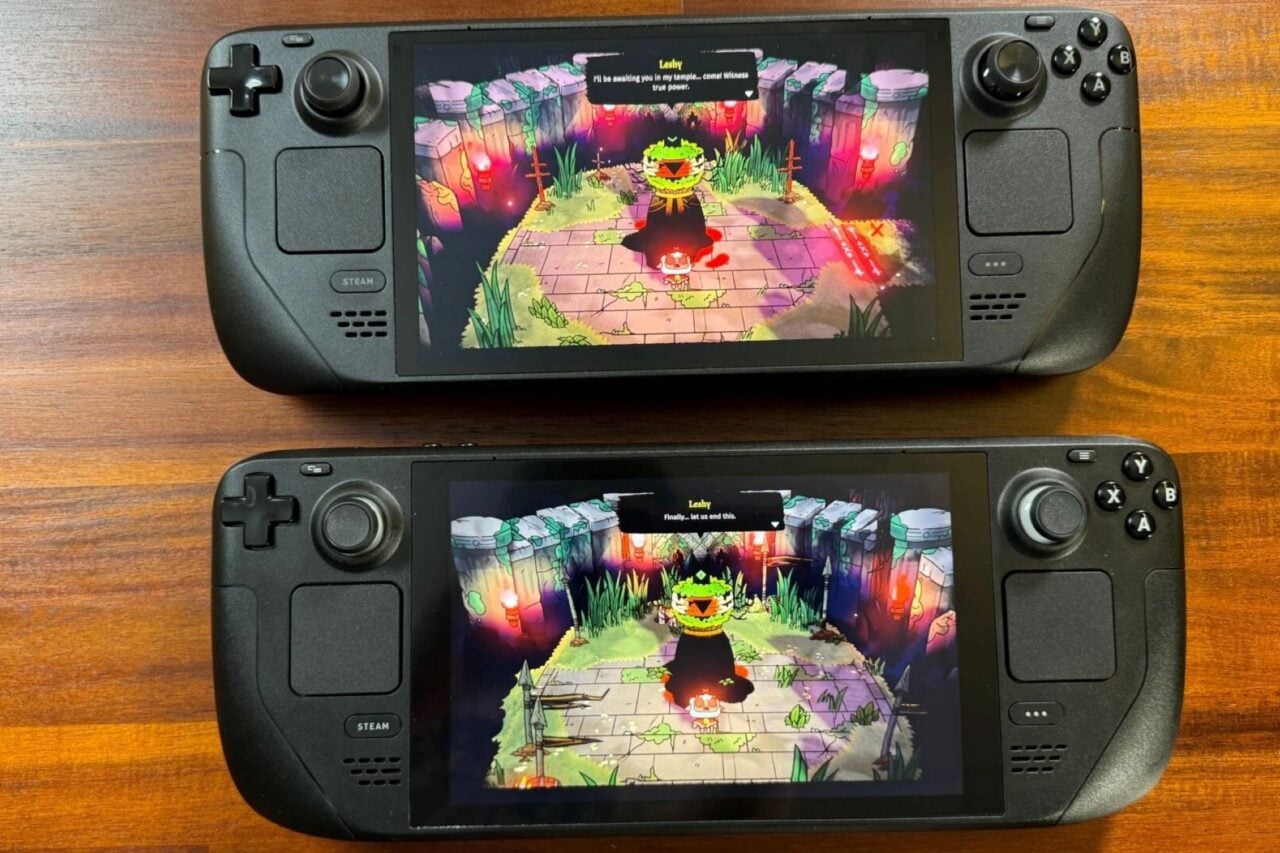
The dual trackpads on the original Steam Controller (you’ll find that in this article’s main image) made it one of the wonkiest controllers ever devised. Valve wasn’t deterred. It stuck trackpads on either side of the Steam Deck, and they’ve proven suprisingly useful navigating mouse-only games or when using desktop mode. Lynch’s leaks proposed Valve was working on a sequel to its controller to sell alongside Fremont. These new renders show a rectangular controller with two thumbsticks positioned above a twin trackpads. It’s hard to tell based on the images whether it will be comfortable, but it will certainly be unique nontheless. Lynch said Valve may be working to release all its new hardware at the same time. That includes an all new VR headset and a pair of controllers.
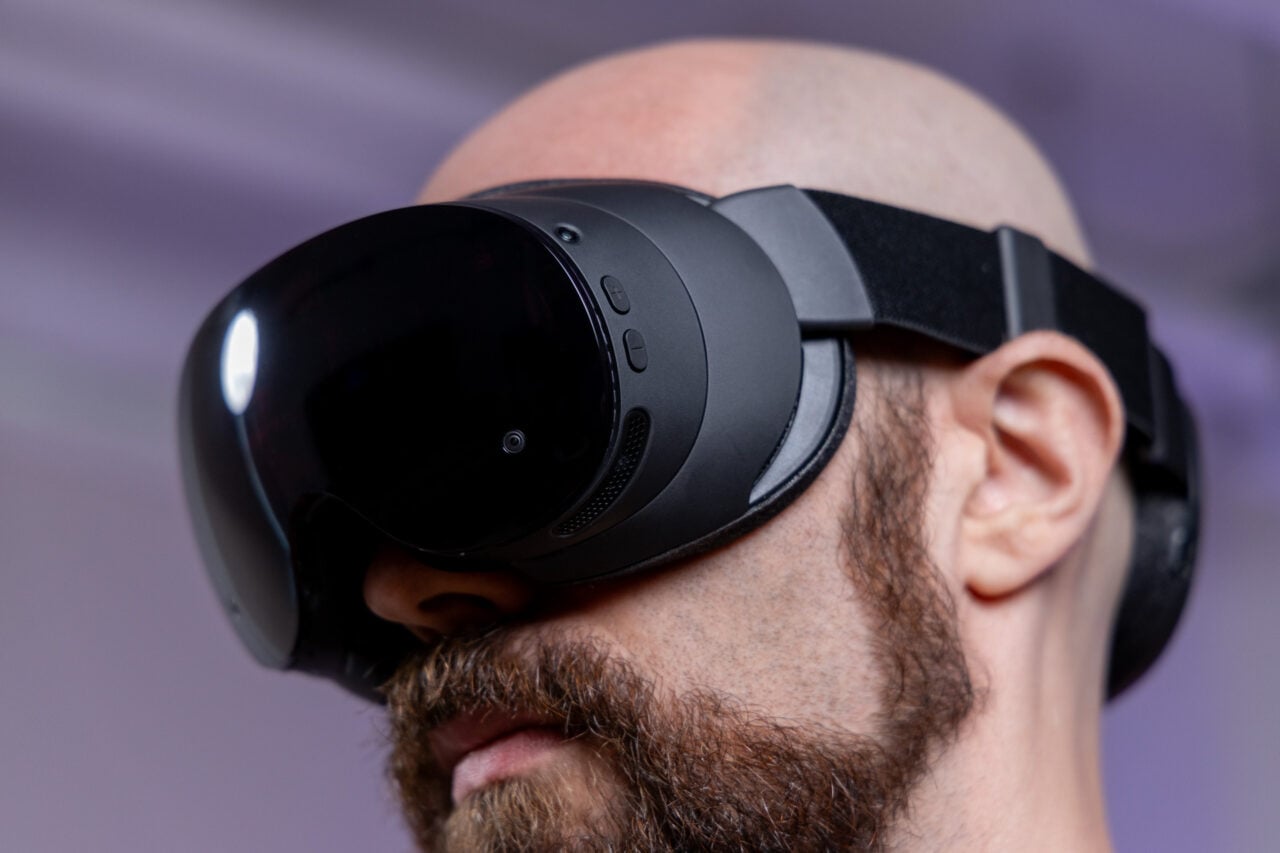
For years, rumors have circulated that Valve wants to follow the Index headset with a wireless headset. Last year, the company updated its SteamVR platform to make it much easier to manage, but there has been no peep from the Bellevue, Washington company about any new VR hardware. The last thing we’ve seen about VR headsets is a patent for a “Deckard” unit. Early rumors hinted that it would require a specific SteamVR box to run without needing a PC.
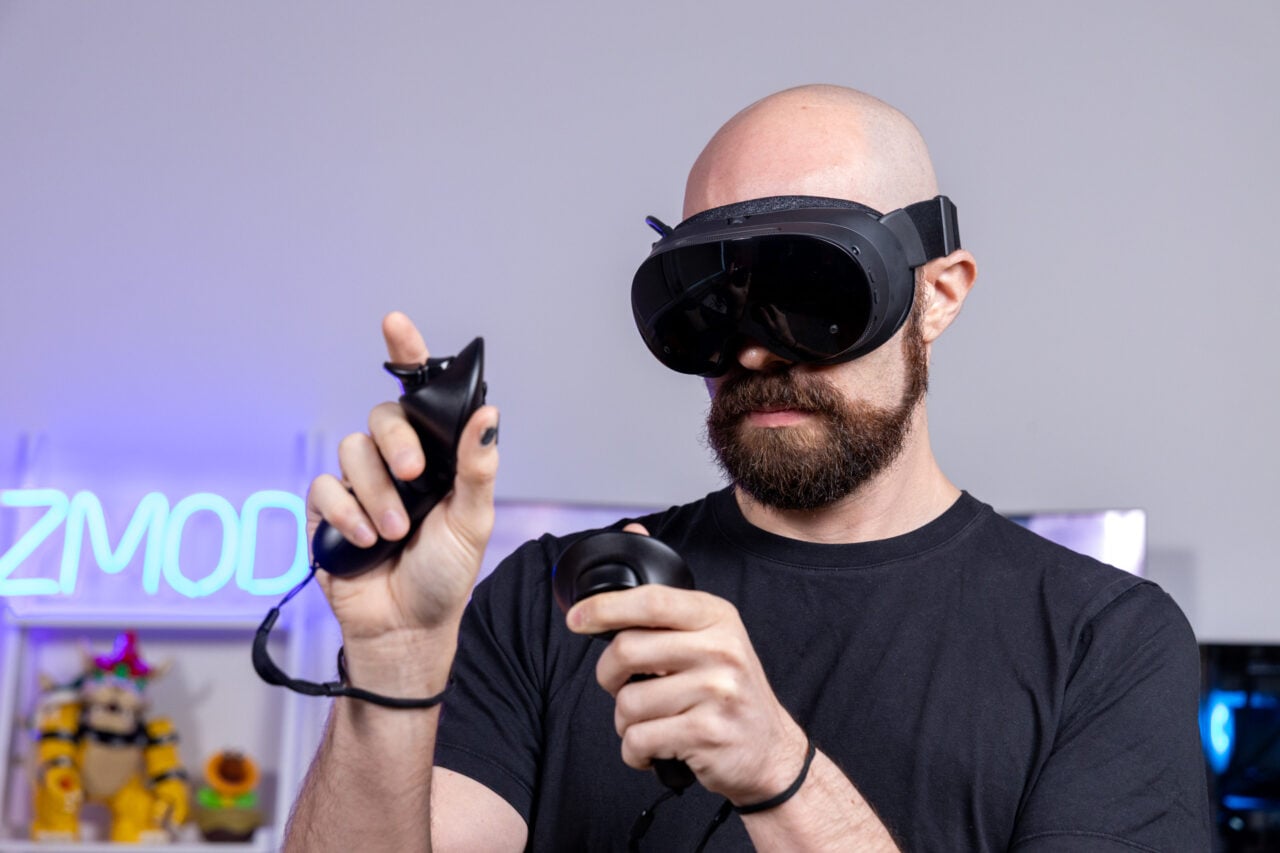
Lynch has posted some unconfirmed, supposedly leaked renders of controllers for the Deckard, codenamed “Roy.” They are obviously still in development, and different versions feature hand loops or flat-faced, Quest-like controllers. In addition, they may have more buttons than a standard VR controller, with an additional d-pad.
Progression of Valve Deckard's Roy controllers from prototype to mass production tooling (EV1 at least) pic.twitter.com/66VLcu5GuG
— SadlyItsDadley (@SadlyItsBradley) November 26, 2024
But when the Meta Quest 3 and Quest 3S exist, would anybody really pay more for a device that can’t play games anywhere natively? Meta has worked with Valve to get its Steam Link app operational for all Quest users, so perhaps Valve is heading in the same direction with a translation layer specific for putting VR games on ARM-based platforms, like the Quest.
If Valve has the hardware (and that’s a big “if”), then the software is left. Valve’s Proton compatibility layer already ports games from Windows to Linux with its Proton compatibility layer. Still, if it expands Proton to ARM64, it may not only be a great time for all those Snapdragon X Elite and Plus-based Copilot+ PCs, but it could also be good news for VR.
We may still need to wait for a Steam Deck 2
Valve’s rumored “Ibex” concept could be a whole new ballgame for a Steam Controller that might work well with a new VR headset or set-top box. Lynch claimed, based on unknown sources, that Ibex was already gearing up for production. If it’s separate from the Roy controllers, it will still be one of the most unique designs for a controller since the Wii-mote. Steam isn’t done with trying to put trackpads on controllers, believing all those games with mouse controls may eventually work just as well on a handheld device.
Ibex rendermodel thumbnail leaked in SteamVR drivers pic.twitter.com/amw3SFExF5
— SadlyItsDadley (@SadlyItsBradley) November 26, 2024
In a recent podcast episode, the semi-reliable gaming hardware leaker Moore’s Law is Dead suggested Valve is indeed working on a Steam Deck 2. This device would use AMD’s upcoming Zen 6 microarcitecture, similar to the upcoming Xbox and PlayStation. This would allow for the dedicated FSR 4 upscaling to enhance performance, which itself would be a major landmark for handhelds which all rely on hardware agnostic upscalers like FSR 3.5 and Intel’s XeSS 2.
The Steam Deck design language is entrenched at this point. Nearly every OEM is working on its own PC handheld, so you shouldn’t expect a Steam Deck 2. Valve told Gizmodo at CES back in January it wouldn’t put out a new, refreshed handheld for another two or three years. The company has released the same hardware with new color swatches, but it reiterated its stance that it wanted a “generational leap” before producing another handheld.
This story was updated 8/26/25 at 10:46 a.m. ET to include recent leaks from Brad Lynch and Moore’s Law is Dead.