When studying Venus and Mars, Earth’s neighbors in the inner solar system, scientists often rely on what we know about our own planet. However, that doesn’t work when it comes to the surface of Mercury, which has an iron-poor, sulfur-rich crust that is vastly different from what’s found on Earth.
Luckily, in this case, there was another otherworldly option available: a meteorite that crash-landed in Azerbaijan in 1891.
Researchers at Rice University realized that the meteorite Indarch’s chemical composition highly resembled Mercury’s and decided to use it to replicate the rock founds on the planet in the lab—or literally cook up a close copy of rocks on Mercury by following a chemical recipe. Mercury is the most “reduced” planet in the solar system, which means that the elements making up its rocky surface are in a chemical state that gains electrons.
Studying this replica has revealed fascinating insights into the role of sulfur in creating Mercury’s unique chemical environment, which the team describes in a recent study published in Geochimica et Cosmochimica Acta.
“This process of cooking a rock can show us what happened chemically inside of Mercury,” Yishen Zhang, the study’s lead author and a postdoctoral researcher at Rice, said in a statement.
Tiny and elusive
As the smallest planet in the solar system, Mercury’s size and surface resemble Earth’s Moon, “scarred by many impact craters resulting from collisions with meteoroids and comets,” according to NASA. Given Mercury’s proximity to the Sun—and its lack of an atmosphere to dampen radiation—temperatures on the planet can reach extreme levels, ranging from 800 degrees Fahrenheit (430 degrees Celsius) to -290 degrees Fahrenheit (-180 degrees Celsius).
This also means Mercury’s magnetosphere is highly prone to solar weather. Overall, both Mercury’s innate characteristics and location in the solar system make it a tricky planet to investigate. To put this into perspective, only three spacecraft to date have been sent into space specifically to study Mercury, compared to over 40 for Venus and hundreds for Mars.
“We couldn’t study [Mercury’s] magmatic evolution using assumptions built off our understanding of Earth, and mission data are difficult to interpret,” explained Rajdeep Dasgupta, the study’s senior author and an Earth scientist at Rice. “We had to find ways to bring the planet closer to our lab—specifically, through the meteorite Indarch.”
The Mercury rock recipe
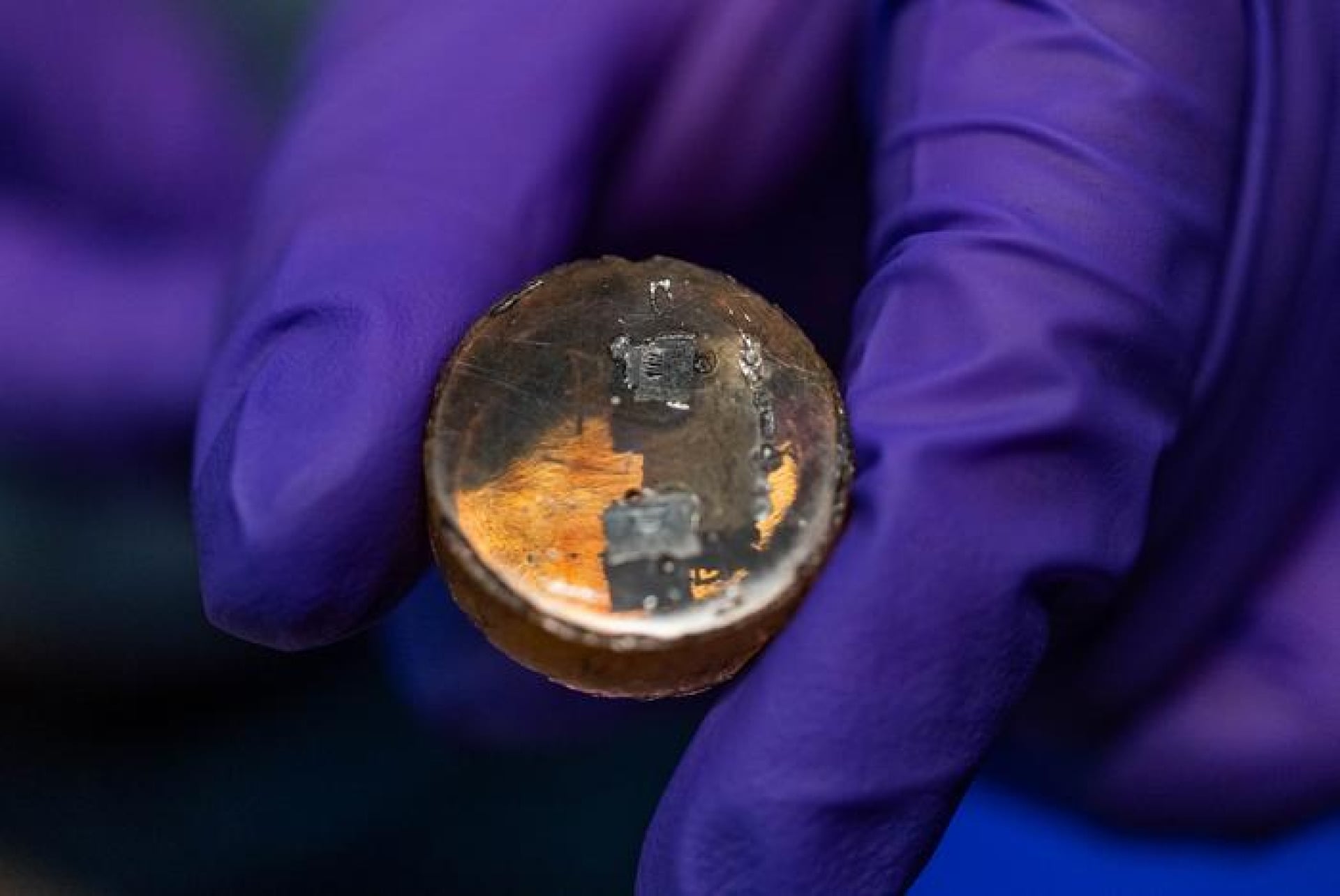
For the study, the researchers first dissected the chemical composition of Indarch, paying close attention to how the rocky material would behave under the temperature and pressure conditions of Mercury’s surface. Then, they mixed the chemical ingredients in a small glass vial and “cooked” the glass in a high-pressure, high-temperature chamber.
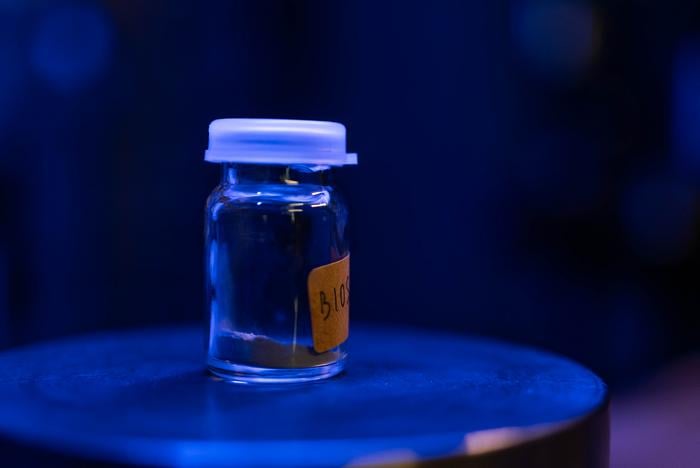
“By using the temperature, pressure, and chemical constraints derived from spacecraft observations and models, we recreate Mercury-like conditions to understand how magmas form and evolve there—even without direct samples from the planet,” Zhang said.
A sulfur substitute
The team’s cooking experiment demonstrated the particular role of sulfur in Mercury’s odd chemical composition. On iron-rich planets like Mars and Earth, sulfur likes to bind itself to iron, which Mercury’s surface notably lacks. This means that sulfur will find “new binding partners,” for instance, “major rock-forming elements like magnesium and calcium,” according to an article by the university.
These rock-forming elements on Earth typically link to oxygen, and the union creates stable silicate structures we see on our planet. But when sulfur replaces that role on Mercury, similar structures become much weaker and start melting at lower temperatures, “thereby [prolonging] magmatic activity and melt generation,” according to the paper.
“This is a fascinating glimpse of how Mercury may have evolved as a planet to its unique current-day surface chemistry,” Dasgupta said. The new work demonstrates a neat approach to analyze planets “based on their own unique chemistry and magmatic processes under vastly different conditions,” he added.