Here’s a trivia question for you: What branch on the tree of life has at least 14 million unique living members and can be found on every continent? According to research out today, the answer is the tiny but mighty insect.
An international team of researchers conducted an exhaustive genetic survey of insects in Costa Rica to come up with the figure. At minimum, they estimate, there are likely somewhere between 14 and 20 million insect species in the world. These numbers are well above most current estimates and suggest scientists need to do a much better job at cataloging the vast diversity of insects that roam the Earth, the researchers say.
“Our study provides a baseline to understand how much more we need to learn about insects. We need this baseline to understand the scope of current insect declines,” study author Laura Melissa Guzman, an associate professor in the department of entomology at Cornell University, told Gizmodo.
The insect census
As you might imagine, it’s no easy task trying to figure out how many distinct species of insect there are in the world. It’s not exactly like you can get every bug to line up for a count, and many species in the same broad insect group can look remarkably similar to each other on a surface level.
Scientists have certainly tried, though, with the most recent estimates hovering around 6 million or so. Some studies have calculated these estimates by tallying up the known number of species from a specific group of insects in a region, then trying to gauge how many unknown species are likely to live in that same region. From that known to unknown ratio, scientists can (hopefully) extrapolate a rough sketch of total global insect species.
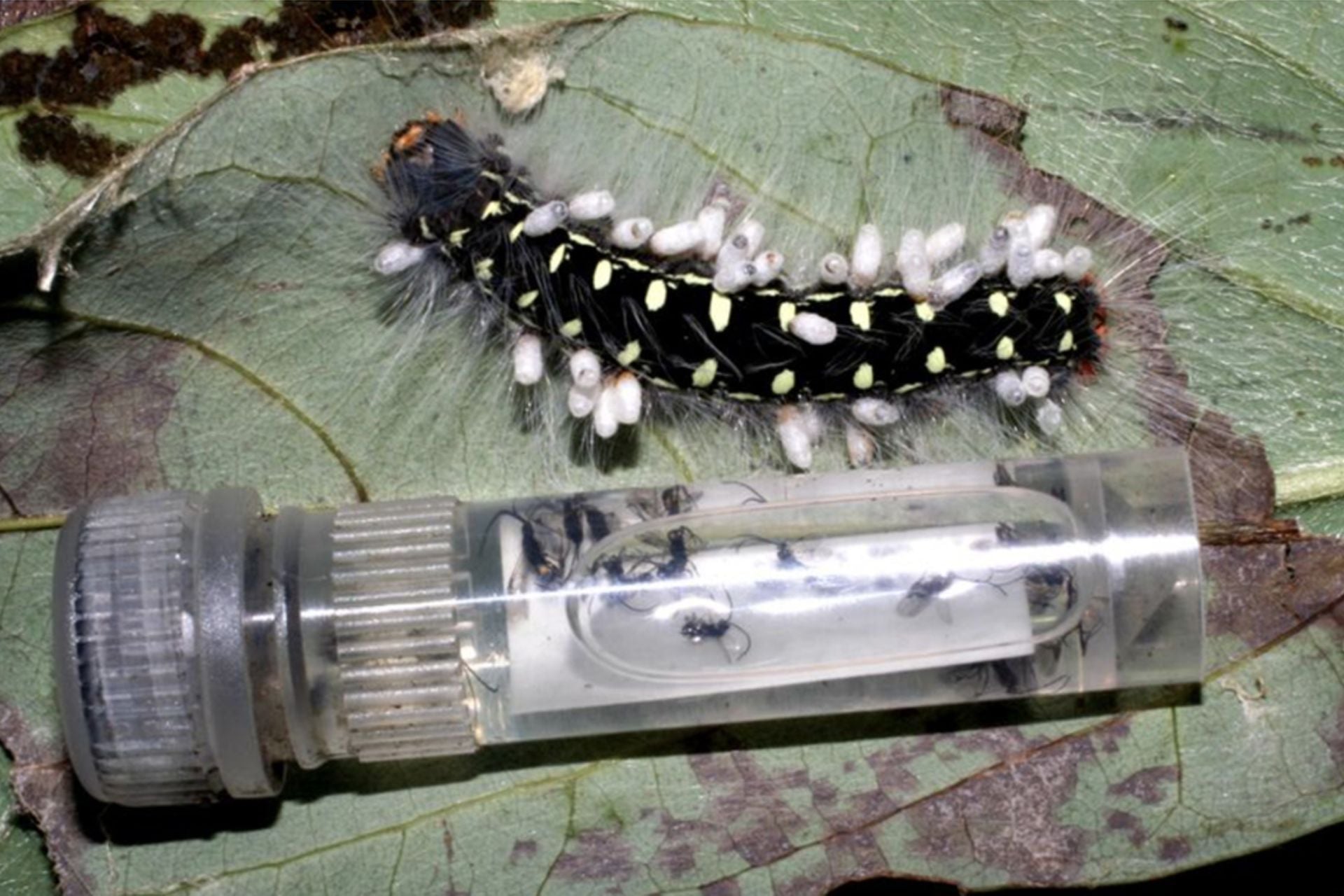
Guzman credits the origin of this research to senior author Mike Sharkey, a taxonomist who describes insects for a living. Though other studies have used beetles—widely considered the most diverse group of insects in the world—as the baseline insect to extrapolate from, Sharkey’s experience with parasitic wasps in Costa Rica led him to believe the latter would be a better group to use as a proxy for all insectkind.
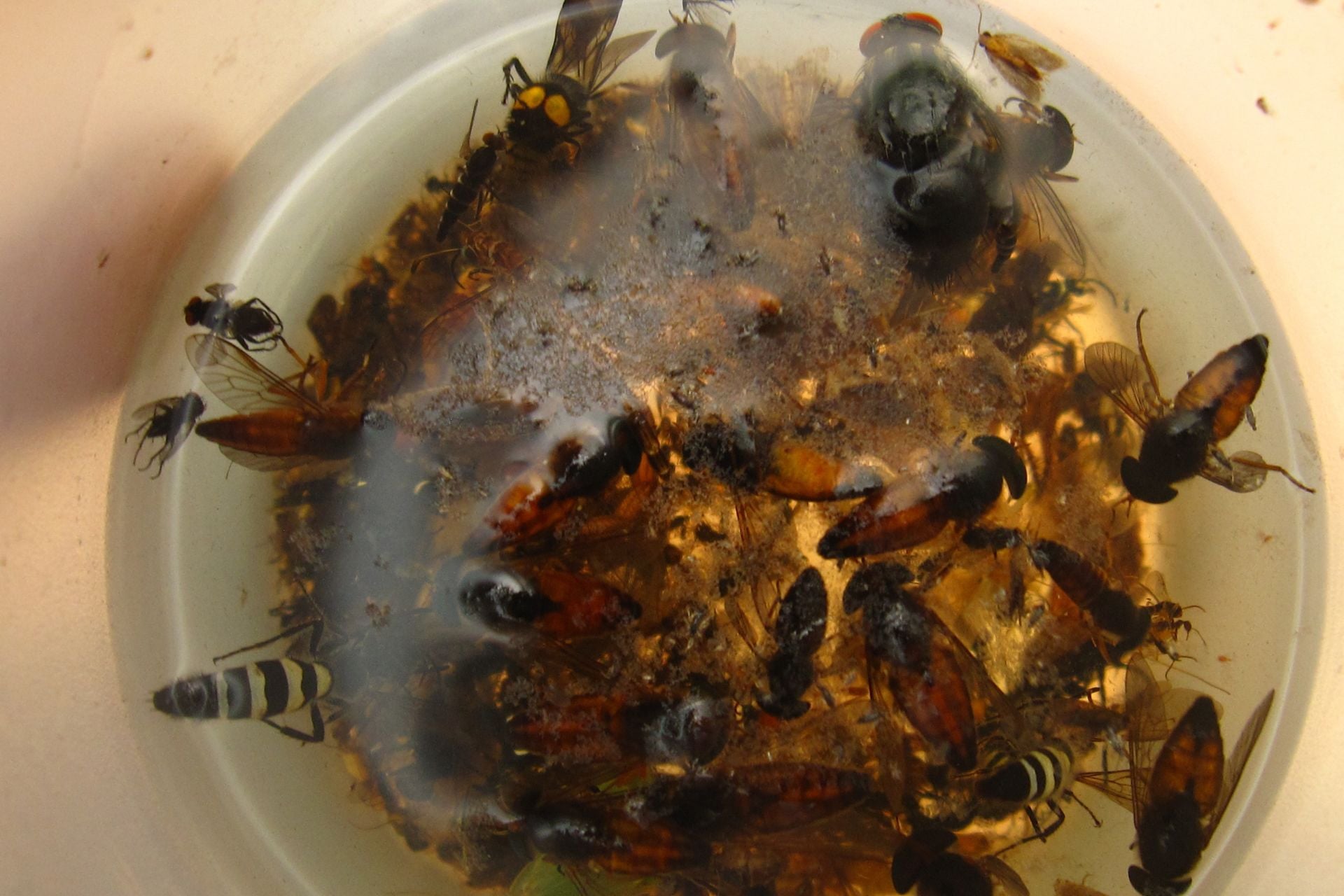
The team had access to a rich source of insect life: more than 1.5 million specimens collected over the years from 15 Malaise traps (tent-like traps used for gathering wasps and other flying insects) in the Área de Conservación Guanacaste (ACG), a network of protected regions in the country with three major ecosystems: dry, cloud, and rain forests. Advances in genetics additionally allowed the team to rapidly identify distinct DNA sequences corresponding to a unique species within these specimens, a technique known as DNA barcoding—a much improved method than trying to suss out a species by its physical features alone. Within these traps, they identified over 50,000 insect species.
The researchers then focused specifically on a highly diverse subfamily of wasps called Microgastrinae. They used a statistical method, borrowed from co-author Anne Chao, to calculate the ratio of known to unknown wasps in the ACG from three sources of specimens, the 15 main traps, 15 peripheral traps, and wasps collected from rearing roughly 1,500 species of caterpillars, their insect hosts. From there, they estimated the total number of insect species in the ACG, nearly 333,000. And finally, using four other groups of life as a reference (trees, frogs, birds, and a specific family of moths), they arrived at their range for the global census: 14 to 20 million species.
A hidden world of bugs in need
The team’s findings, published Monday in the journal PNAS, are ultimately an educated guess. But Guzman says they took great care to double-check their math.
“Our estimate is a lower bound. We took a lot of effort at every step to evaluate our assumptions to understand whether we could be over or underestimating this lower bound,” she said. And if their numbers are right, then scientists are “dramatically underestimating the scope of what needs to be described, monitored, and protected,” she adds.
The researchers say there’s a lot more to go before we can truly get to know our insect neighbors. Guzman notes that scientists can use this kind of long-term trapping data to study how their numbers have changed as of late. The ACG database in particular covers decades, a rare thing for tropical insects.
“That gives us a window into whether populations are growing, shrinking, or shifting in response to climate change and land use,” she said. “Getting a better count of how many species exist is the first step. Understanding what is happening to those species over time is the next one.”
As much as insects might creep out plenty of people, there’s no denying they’re a remarkable success story of nature—one that’s apparently even more impressive than we gave them credit for.