When a prolific scientist on the verge of revealing a cutting-edge ecological technology is levitated into the air by a mysterious, sentient vapor, then inflated and burst like a pulpy water balloon on live television, journalists, police officers, politicians, yakuza, and wannabe YouTubers descend into chaos. They scramble to explain what happened and why, and put a stop to the suit-wearing force of nature at the center of it all, the Human Vapor, who wastes no time forecasting his next public execution.
Even with its crowded mix of characters chasing or exploiting the creature’s political assassinations, Human Vapor‘s overarching narrative doesn’t hit as hard as it aims. But across eight episodes, the sci‑fi series still finds its footing as an evocative drama (with comedic sparks) in a streaming world where big marquee spectacle frequently overshadows meaningful thematic weight.
Inspired by TOHO’s 1960s tokusatsu film of the same name, Human Vapor goes from a noncommittal, fascinating show on Netflix to appointment viewing once it hits its stride in its third episode. Reimagining the titular character from a pedantic man with mysterious powers committing a string of robberies to a grisly serial killer, director Shinzô Katayama’s Netflix thriller approaches sci-fi horror like Leigh Whannell’s 2020 The Invisible Man. It also has flashes of the levity and charm synonymous with the tokusatsu genre to keep things from being too dour.
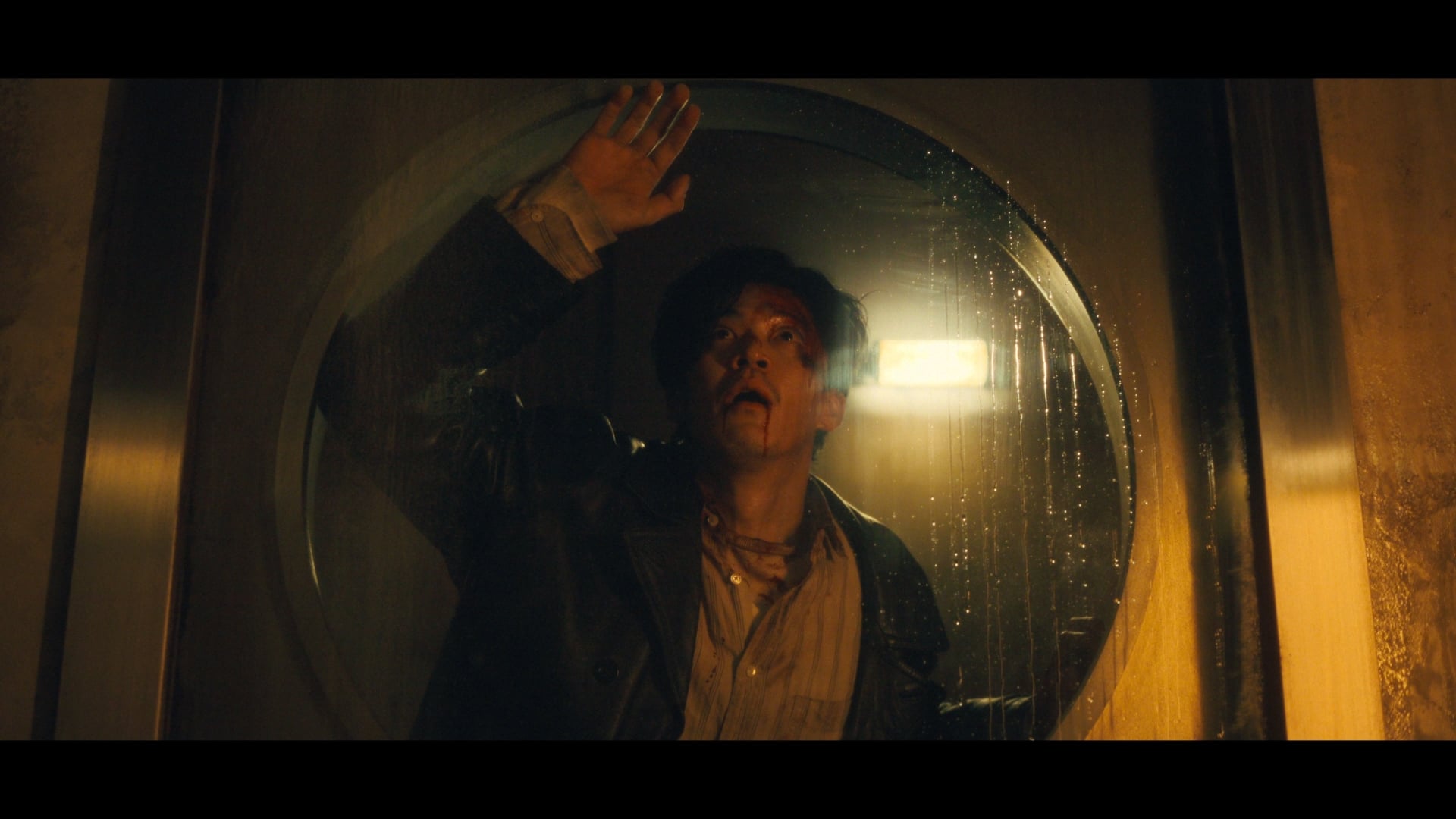
At the center of Human Vapor‘s tale is officer Kenji Okamoto (Shun Oguri), whose recent suspension is lifted to help end the Human Vapor’s (Uta Uchida) supernatural serial killings. It’s a matter made all the more complicated by Kenji’s ex, reporter Kono Kyoko (Yû Aoi), being the broadcaster who got a front-row splatter seat at the scientist’s visceral explosion and hunting for answers in the aftermath. Add in a pair of sibling horror-core YouTubers, eccentric yakuza members, and egotistical politicians, and you’ve got yourself a smorgasbord of converging storylines and colorful characters for Human Vapor to weave itself through.
From the jump, Human Vapor goes from a show reminiscent of the better seasons of Stranger Things to a captivating cat-and-mouse creature drama with a surprising balance of humor and gritty drama without one overpowering the other. Visual effects studio Shirogumi (of Godzilla Minus One fame) gets ample use out of crisp body horror effects from its eponymous creature, taking the meme of modern sci-fi spectacles invariably ending with either a sky beam or a smoke monster big bad and turning it on its head in moments of genuine sit-forward-in-your-chair panache worth gawking and recoiling at in equal measure.
Complementing its cinematography is the tokusatsu charm that Human Vapor adds through its supporting cast. Miraculously, the show’s measured stream of Looney Tunes-esque absurdity and Kamen Rider-tinged comedic asides never come off as cloying and don’t distract from its ensuing supernatural drama.







While the show moves with surgical precision and propulsion to keep itself going from episode to episode, it sometimes does so to its disadvantage. Revelations happen at just the right time to be relevant to the characters in ways that feel less like a testament to their shrewdness and cunning and more like a way to keep the story moving.
Okamoto suffers most from being a passenger in the story, relegated to reacting and serving as a frustrating holdout to obvious betrayals. Once the plot gets moving in the second act, Okamoto feels less like an active agent propelling the story than Human Vapor‘s side characters do, which sucks because he’s saddled with the lion’s share of the show’s logos. Whenever the camera is on him, you’re almost guaranteed a more bog-standard, anonymous plotline than anyone else in Human Vapor.
While Human Vapor‘s plot progression never drags, it gives rise to a sense of imbalance with the level of intellect between our admittedly morally grey good guys and the bad guys, with the villains rarely outsmarting each other as the random number generator of the Human Vapor hits the scene and shakes the foundation of either side’s game of chess.
No opposing side feels like it outfoxes the other, and revelations line up conveniently the moment they need to be revealed, leading to a lack of tension in a show where a guy goes full Terminator as a smoke monster whose inconsistent power scaling hits like a gale-force wind and turns people into mist in some moments and is head-scratchingly limited in others.
Because the villains never feel especially smart, victories over them or conflict arising from heroes being put in a bind feel less like an “and therefore” sequence of events leading to their triumph and more like an excitable child saying “and then” when recounting a story whose major beats ferry you from one non-sequitur plot point to the next. It’s sci-fi pointillism storytelling that never steps back and makes sense of how all the bright dots it sets up form a grander, universal tapestry.
When set against the backdrop of the show pointing toward a deeper message behind the deep-seated conspiracy surrounding the Human Vapor, its monologues and dialogues come off as clunky platitudes and clichés when spoken aloud because they feel disconnected from the march toward ending the Human Vapor’s ensuing havoc. That’s not to say there aren’t moving ideas about “humanity as fuel” and all the implications of the roles its revolving door of heroes play in the machine called society that must keep moving no matter who gets ground into dust in the process—especially with Kyoko’s storyline—but it all comes together a touch clunkily. It fits, but it doesn’t fall into place as seamlessly as it should.

All that to say, as high tides raise ships, everything in the vicinity of Uchida’s enigmatic, not-quite-human creature is elevated both narratively and thematically, especially as the show unspools its central villain and that villain’s place in the show’s throughline. Granted, despite its sometimes overly ambitious narrative weight, what Human Vapor has to say and the expediency with which it gets there is nonetheless an entertaining, verging-on-stirring tale worth watching for fans of sci-fi dramas with whimsical tokusatsu hijinks sprinkled in for good measure.
All eight episodes of Human Vapor are streaming on Netflix.
Want more io9 news? Check out the best movies and TV shows to stream this month and all the upcoming sci-fi, fantasy, and horror books that should be on your radar.