I
didn’t set out to do it. I didn’t even
know I was doing it. But it seems I have
written a science fiction novel. At least that’s what the SF community is
telling me with their much-appreciated support formy novel, Black Moon.
What
makes this book science fiction? This is tough to answer. My film teacher in college
comes to mind when such questions are raised. “There is no genre!” he would
shout, pounding on the podium. “There is no genre!”
It
took me a while to get what he meant. Okay, even now I’m not entirely sure. His
French accent was pretty thick and he often smoked a cigar while lecturing. But
I think the gist of his assertion was this: When you look closely at something
you think can be categorized a certain way, you find exceptions and deviations,
even willful subversions. It changes before your eyes, becomes idiosyncratic
and impure. If you look deeply enough, most works of art—like people—will
resist categorization.
As
a category, science fiction comes in a variety of flavors — categories within
categories. Certainly you could call Black
Moon speculative fiction. You would be within your rights to call it
dystopian. After all, it’s about an insomnia epidemic that causes the collapse
of society. Is it futuristic? Somewhat. I’d say it’s set about fifteen seconds
into the future, which could very well be light years away.
So
there’s definitely a SF case to be made, however loosely. This makes some sense,
given my SF past, which dates all the way back to my childhood magazine
subscriptions (yes, my parents encouraged this). I was an avid reader Isaac Asimov’s Science Fiction Magazine—a
bi-monthly journal about the size of a Reader’s
Digest.
The
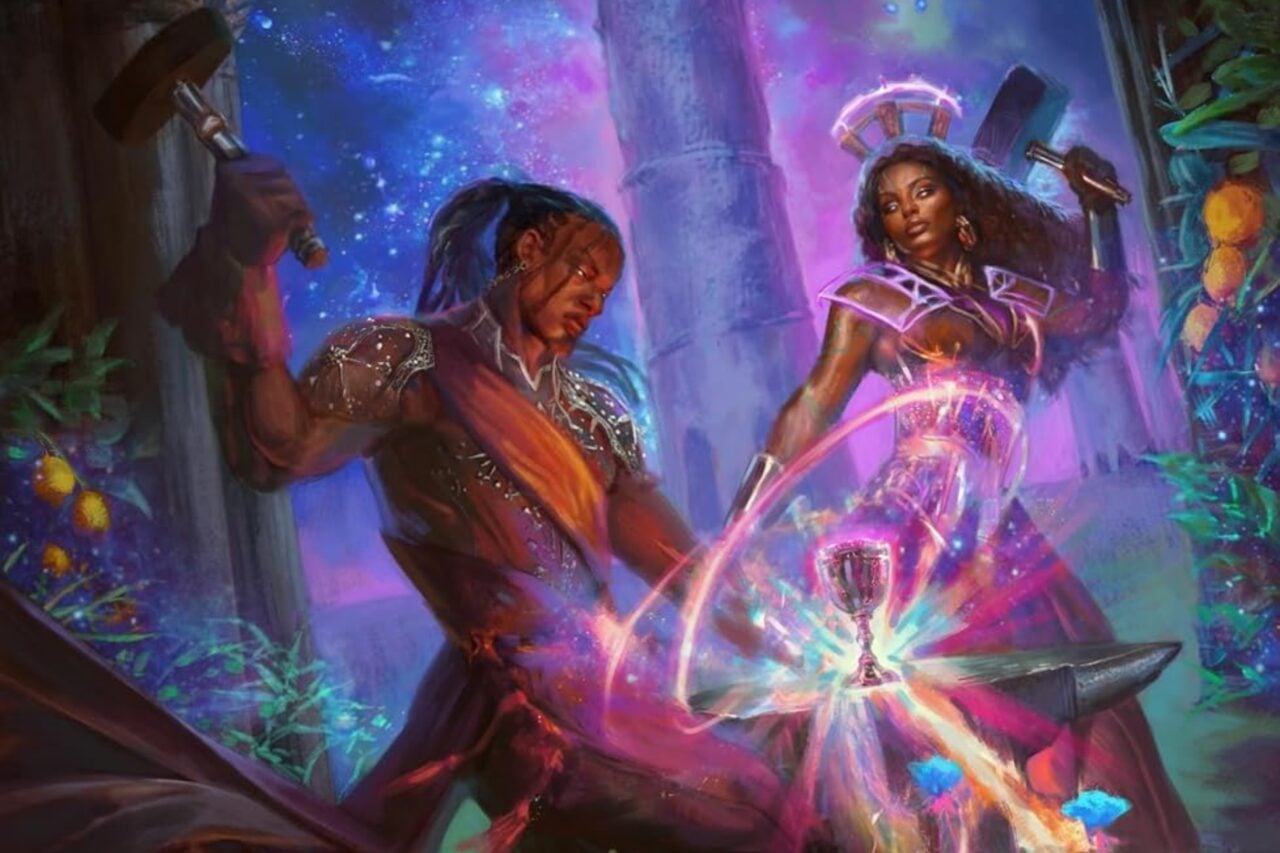
covers either featured Asimov himself, with his insane mutton chop sideburns,
or a whimsically rendered scene inspired by a story from the issue. I loved
these illustrations of bizarre worlds and spindly creatures and scantily clad,
mostly bipedal females, maybe even more than the stories themselves. At the
time, I liked my science fiction light on science and heavy on laser battles
and enslaved princesses.
I
was twelve.
At
an even younger age, however, I remember watching 2001: A Space Odyssey on a
flight to Asia. I had no headphones but the silent images of an untethered
astronaut tumbling into the void of space stayed with me, especially so soon
after watching real astronauts bounding over craters on the chalky gray surface
of the moon. It was a haunting vision that produced a strange feeling in me—a
kind of unarticulated existential longing, a vague awareness of humanity’s essential
aloneness in time and space. It was a curious, nuanced mood of my small boy’s
heart and it spooked and enticed me.
I
recognized that the feeling was conjured by other lesser films and books of the
period: The Planet of the Apes, Omega
Man, Logan’s Run, even Woody Allen’s Sleeper.
Many episodes of the Twilight Zone also did the trick. I read Ray Bradbury’s Martian Chronicles and The Illustrated Man, and learned to
relish the sense of apocalyptic foreboding.
The
flipside to this was comic books and, eventually, Star Wars, which certainly captured my imagination and, yes, became
my boyhood obsession. But the films did not necessarily evoke the dark sense of
cosmic isolation I had found so weirdly fascinating in other works. The
franchise was simply science-fantasy nerd candy that I could not stop eating.
I
hit rock bottom trolling the library stacks for Star Wars Expanded Universe novels,
like Alan Dean Foster’s Splinter of the Mind’s Eye or the Han Solo Adventures
books (not to be confused with the Han Solo Trilogy). It was a time of guilty
pleasure that went well with the Rush and Queen LPs—and other B.C. (before The
Clash) operatic productions—stacked on my turntable spindle.
But
the search for that more profound, somewhat eerie sense of world’s both lost
and discovered pushed me deeper into the classic SF canon. Frank Herbert’s Dune
saga was a step up in sophistication. Philip K. Dick, J.G. Ballard and William
Gibson showed me how SF can be voice and character driven, but still engage the
grand science fiction themes, such as the dangers of technology-driven
dehumanization. I re-read a lot of Ray Bradbury after meeting him in a suburban
bookstore as a high school sophomore. Then Vonnegut’s humorous, slyly science
fiction novels became my addiction the summer of my sixteenth year.
Soon
after, because it seemed the mature thing to do, I migrated to more realist
writers. In college, I was hit with a heavy dose of Latin American and Eastern
European Magical Realism and I struggled to articulate why, say, Kafka’s
Metamorphosis wasn’t a horror story. Or why Garcia Marquez’s story about a
fallen angel wasn’t fantasy.
Fairy
tales and fabulism entered into my own work, yet I struggled to explain why a
story I wrote about a tour guide cassette that speaks directly to a family,
guiding them to their demise, wasn’t science fiction. I mean, from a distance
it looked a lot like a Twilight Zone episode. And why was my story about a kid
who gets a jetpack for his birthday (and dies after flying too high) not
considered science fiction either? I knew it wasn’t but it was difficult to say
why.
When
I decided to write a novel, after years of writing short stories and working a
variety of jobs, I didn’t have any particular genre in mind—just a story. I
started with a single chapter that worked as a standalone story. It was about a
couple dealing with an insomnia epidemic. The man could sleep; the woman could
not. This mirrored a personal situation of mine, minus the epidemic aspect. So
I found my way into this story by trying to imagine what such a thing would do
to relationships, and how alone sleepers would feel in a sleepless world; how
lost the sleepless would be in a storm of dreams and hallucinations.
With
Black Moon, I knew I was
genre-blending, but at some point I simply decided to embrace my old
professor’s claim that genre didn’t exist, except as an organizing principle
for booksellers and publishers. Grappling with such distinctions isn’t a
writer’s concern, I decided. So I had no genre other than literature in mind
when writing Black Moon. Certainly the high concept epidemic set the story in
motion, but the narrative focuses more on the characters and their
relationships, less on solving the central problem of societal collapse.
Pushing
me ever further away from familiar science fiction elements, was my desire to
side-step standard dystopian set pieces. I quickly realized that there are a
number of tired tropes that stories of apocalypse and dystopia practically
insist upon and it was my mission to avoid them as much as possible.
I
did not want to write scenes showing the government in action, the military
mobilized. I was loath to have the usual arming of the surviving citizenry and
the predictable, gun-centric plot sandpits. I even tried hard not to write
extensive descriptions of looted shops and abandoned cars—though they are
there, archetypal fixtures populating shared dreams of our doom.
In
Black Moon, there are no unrealistic gadgets or devices, no specific villains,
no explanations for why some people can sleep and others can’t. There is a
chapter filled with schools of red herrings, just to make the point that
solving this thing isn’t the central concern of the book. There are characters
that abruptly emerge from the maelstrom, command the stage for a chapter, then
disappear forever.
Yet,
there is a medical facility where scientists struggle to find a cure. There are
zombie-like hordes of insomniacs who will snap into a rage if they witness
someone sleeping. There is the unstoppable epidemic and the end of life as we
know it.
These
are certainly familiar, maybe even oddly comforting, signposts of science
fiction. However, I don’t believe they are the most science fiction attributes
of the science fiction book I didn’t know I was writing. Something else makes
the book science fiction at the soul level. Something that goes beyond
structure and tropes. To me Black Moon is science fiction because, at least in
some readers, it seems to produce that same beautiful ache of cosmic loneliness
found in those books and films I loved so much, so long ago, in the future of
my past.