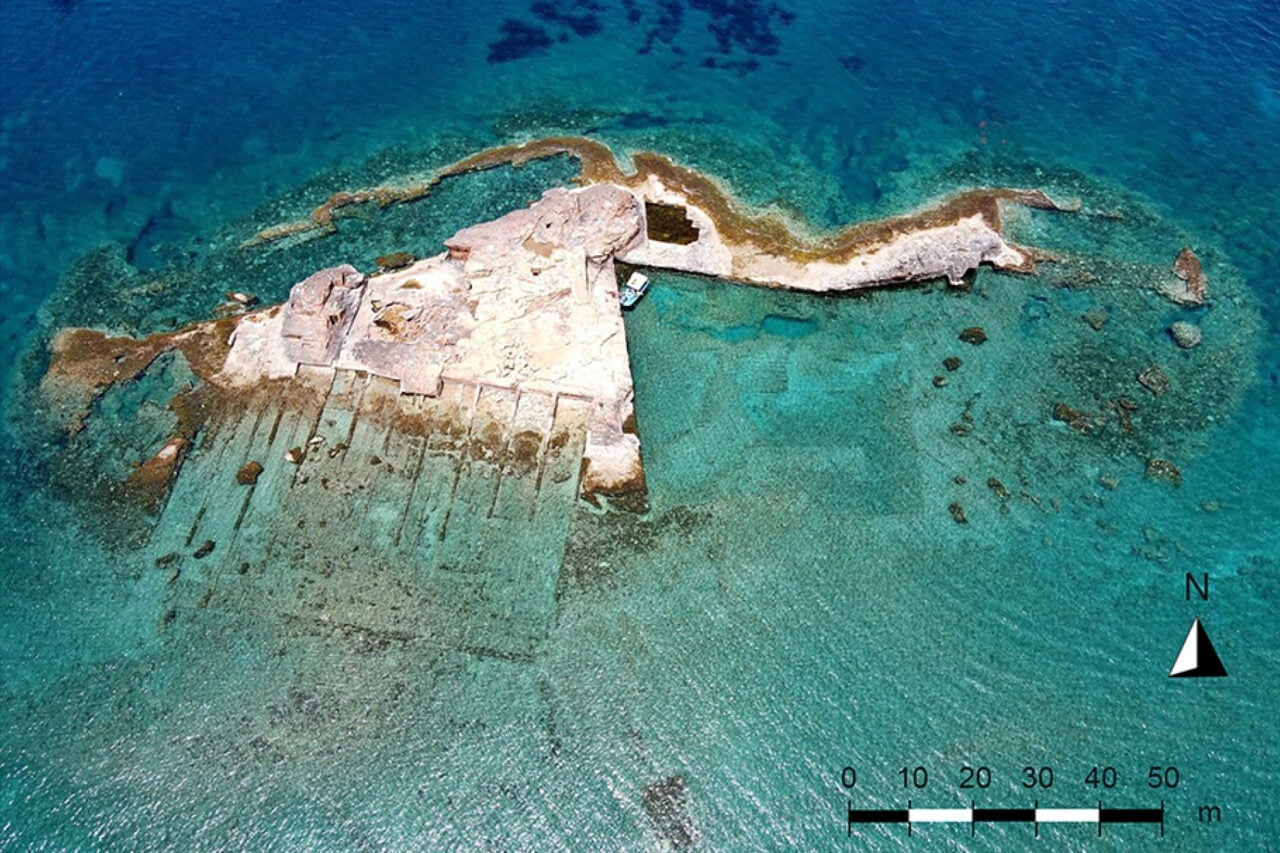
The entire island of Antirhodos, off the northern coast of Egypt and home to the royal seat of the ancient city of Alexandria’s Portus Magnus (“Great Harbor”), sank beneath the waves in 365 CE. For over 1,630 years, this imperial outpost and its treasures remained lost, if not forgotten, consumed by a tsunami that emanated from the monstrous July 21, 365 CE, earthquake that ravaged the nearby Mediterranean island of Crete.
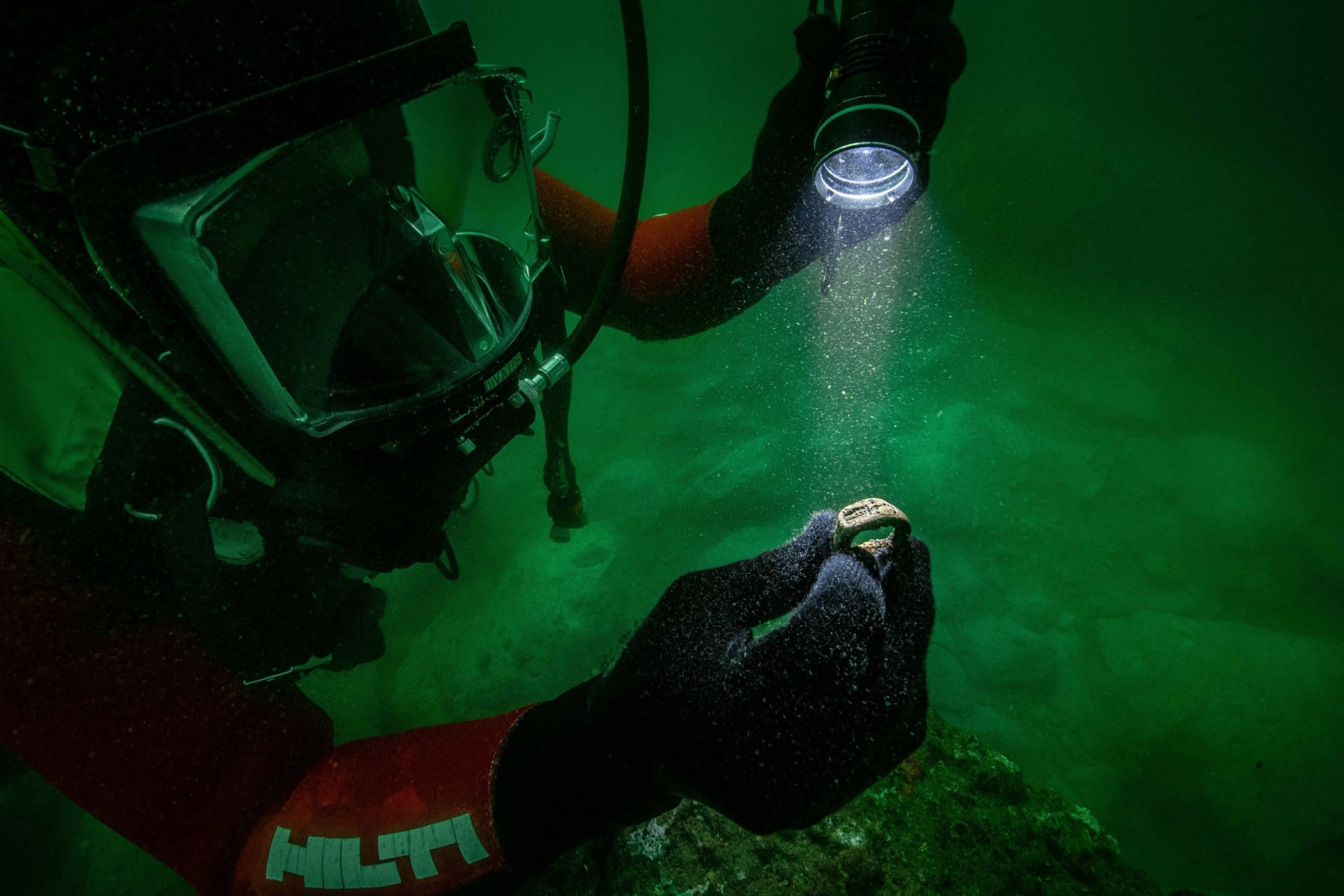
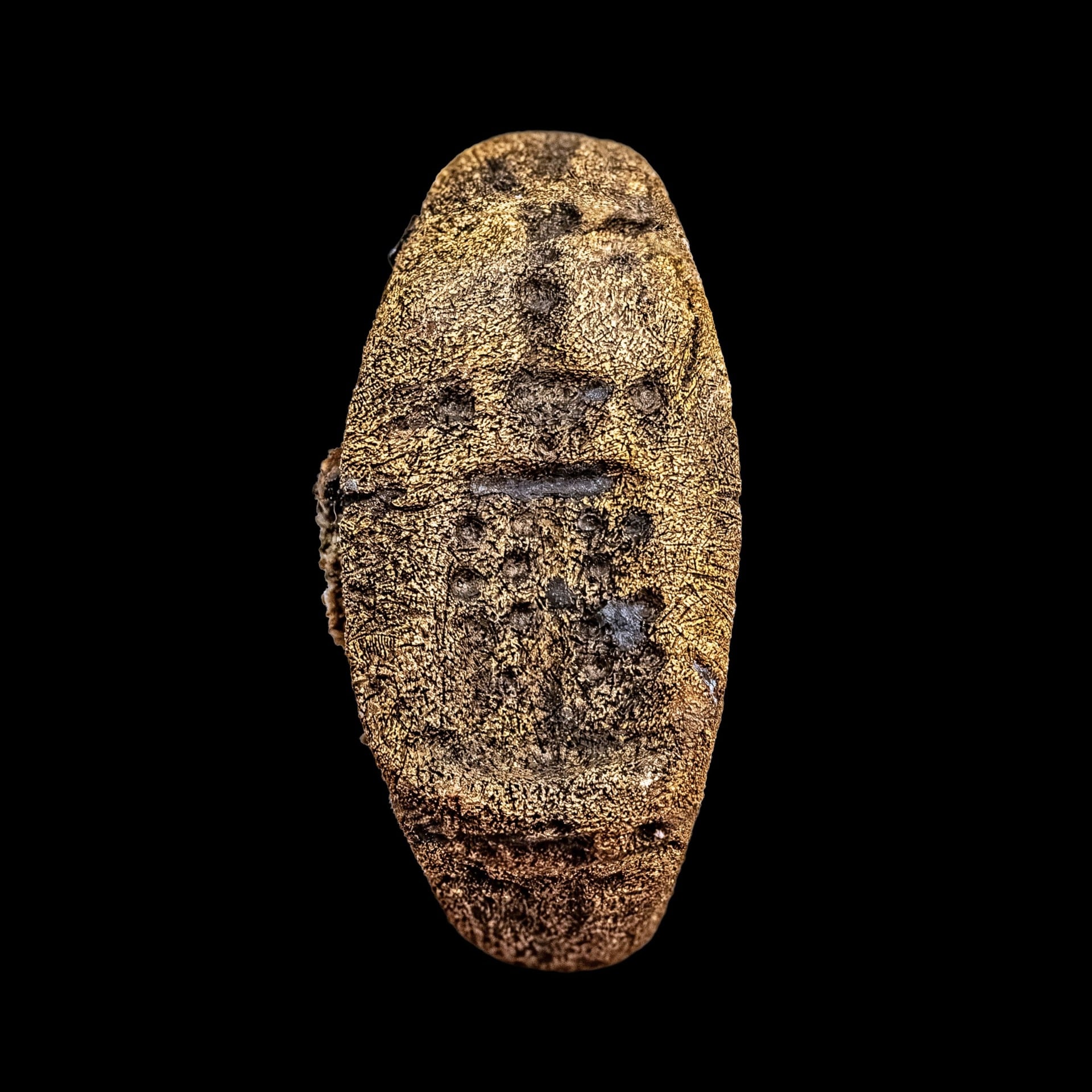
Antirhodos’ rediscovery by French underwater archaeologist Franck Goddio in 1996 has now yielded another priceless marvel from antiquity: A joint team from the European Institute for Underwater Archaeology (IEASM) and the Egyptian Ministry of Tourism and Antiquities has pulled a signet ring cast in bronze from the sunken rubble of the royal palace in Portus Magnus. The ring is engraved with the city’s iconic Lighthouse of Alexandria—the towering Pharos lighthouse, one of the seven wonders of the ancient world, which may have once reached as high as 348 feet (106 meters) tall.
According to a statement from IEASM, as reported by The Art Newspaper, the Pharos signet was likely used to make official notary impressions onto soft wax or clay seals. The bronze ring is reportedly the only one of its kind currently known.
“The discovery of the ring-signet is even more important as it has been excavated in the legendary palace of the Island of Antirhodos, that once was a centre of power,” Goddio said in a statement. The palace’s offices, according to the archaeologist, were once a seat of “administrative functions, including the administration of the famous lighthouse.”
Coin of the realm
Although the signet’s lighthouse engraving is faded and abstract, researchers are confident that the image depicts the Pharos structure, according to archaeologist Hisham el-Leithy, who serves as Egypt’s undersecretary of state for documentation in its Ministry of Tourism and Antiquities.
The ring’s lighthouse appears in “a form that resembles some of the coins known from the second century [CE],” including some also retrieved from the sunken neighborhoods of Antirhodos, according to an official ministry statement posted to Facebook and machine-translated by the site.
But the connection is even stronger, according to Doris Behrens-Abouseif, an emeritus professor in art history and archaeology at the University of London, who was not involved with IEASM’s project. As Behrens-Abouseif told Live Science, “thousands of coins from Alexandria showing a similar depiction of the lighthouse” have been recovered over the years, most dated to the Ptolemaic or Roman periods, meaning sometime between 331 BCE and 395 CE.
Wonders never cease
Many of Goddio’s previous discoveries along the seafloor around Antirhodos have arguably been more monumental than the new announcement of this admittedly quite phenomenally rare bronze signet. In 1998, for example, the French archaeologist and his team dredged up a 550-pound (250-kilogram) granite sphinx with the head of Cleopatra’s father—“beautifully preserved,” as Goddio told Reuters at the time, beneath the waves of the port city’s historic harbor.
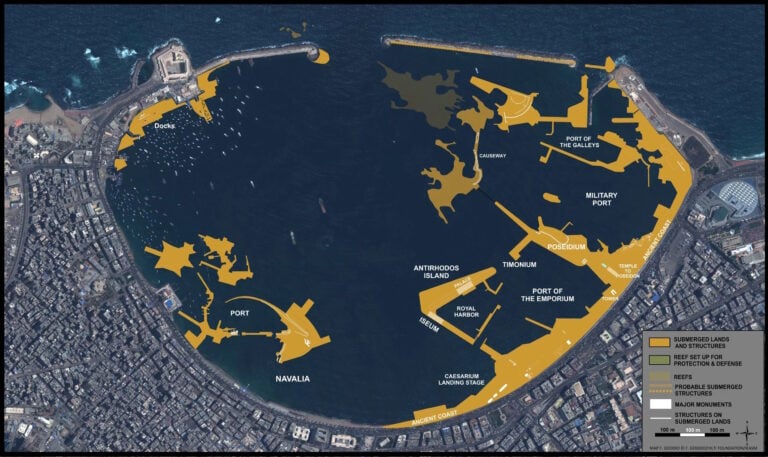
In the three decades since Goddio first discovered the island, he and his collaborators have uncovered the remains of a marble sculpture depicting the Greek deity Hermes; countless ancient ceramics, glasswork, and jewelry; and a 100-foot (30-meter) long shipwreck. (“The wreck is an important find […] because of its location in the private (royal) harbor,” Goddio told Reuters in 1998. “Evidence from a hole in the ship’s hull suggests that it could have sunk after being rammed by another boat.”)
Goddio’s focus in Portus Magnus now, as Egypt’s Ministry of Tourism and Antiquities noted in its statement, will be four sites within the eastern region of the port—including a temple devoted to Isis, more from the royal palace itself, and the remains of a sarcophagus also found on the submerged island.