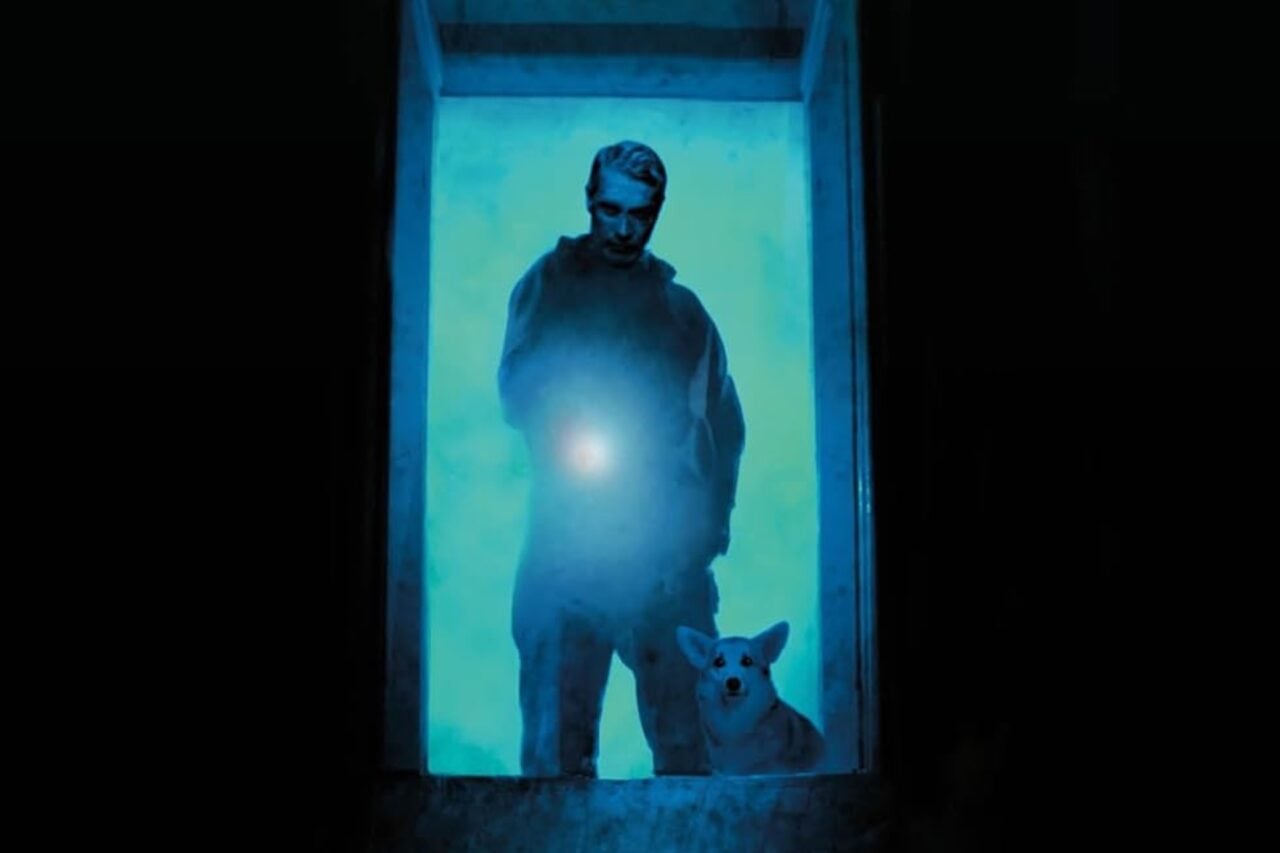
Legendary weird fiction writer and editor Jeff VanderMeer is back with a new trilogy, The Southern Reach, and the first novel came out last week. Called Annihilation, it’s a fascinating, poetic tale of a mysterious organization that’s sent a mission to explore “Area X,” a chunk of Earth that has been warped into an alternate reality.
The organization is called the Southern Reach, and over the course of the three novels we’ll find out what its true mission is — and what happened to Area X. Farrar, Straus and Giroux will publish all three volumes in the trilogy this year. Authority comes out in May and Acceptance arrives in September. Fans of VanderMeer’s politically-infused tales of science magic will be delighted with this novel, which reminded me of the Strugatsky Brothers’ classic novel of Soviet bureaucracy and alien technologies, Roadside Picnic.
VanderMeer is on tour right now (see the Southern Reach site for details), and during a recent reading in San Francisco he told the crowd that the geography of Area X is modeled on a wilderness trail near his home in Tallahassee, Florida.
This excerpt was used with permission from the publisher and author.
Annihilation, Chapter One
The
tower, which was not supposed to be there, plunges into the earth in
a place just before the black pine forest begins to give way to swamp
and then the reeds and wind-gnarled trees of the marsh flats. Beyond
the marsh flats and the natural canals lies the ocean and, a little
farther down the coast, a derelict lighthouse. All of this part of
the country had been abandoned for decades, for reasons that are not
easy to relate. Our expedition was the first to enter Area X for more
than two years, and much of our predecessors’ equipment had rusted,
their tents and sheds little more than husks. Looking out over that
untroubled landscape, I do not believe any of us could yet see the
threat.
There
were four of us: a biologist, an anthropologist, a surveyor, and a
psychologist. I was the biologist. All of us were women this time,
chosen as part of the complex set of variables that governed sending
the expeditions. The psychologist, who was older than the rest of us,
served as the expedition’s leader. She had put us all under
hypnosis to cross the border, to make sure we remained calm. It took
four days of hard hiking after crossing the border to reach the coast.
Our
mission was simple: to continue the government’s investigation into
the mysteries of Area X, slowly working our way out from base camp.
The
expedition could last days, months, or even years, depending on
various stimuli and conditions. We had supplies with us for six
months, and another two years’ worth of supplies had already been
stored at the base camp. We had also been assured that it was safe to
live off the land if necessary. All of our foodstuffs were smoked or
canned or in packets. Our most outlandish equipment consisted of a
measuring device that had been issued to each of us, which hung from
a strap on our belts: a small rectangle of black metal with a
glass-covered hole in the middle. If the hole glowed red, we had
thirty minutes to remove ourselves to “a safe place.” We were not
told what the device measured or why we should be afraid should it
glow red. After the first few hours, I had grown so used to it that I
hadn’t looked at it again. We had been forbidden watches and
compasses.
When
we reached the camp, we set about replacing obsolete or damaged
equipment with what we had brought and putting up our own tents. We
would rebuild the sheds later, once we were sure that Area X had not
affected us. The members of the last expedition had eventually
drifted off, one by one. Over time, they had returned to their
families, so strictly speaking they did not vanish. They simply
disappeared from Area X and, by unknown means, reappeared back in the
world beyond the border. They could not relate the specifics of that
journey. This transference
had
taken place across a period of eighteen months, and it was not
something that had been experienced by prior expeditions. But other
phenomena could also result in “premature dissolution of
expeditions,” as our superiors put it, so we needed to test our
stamina for that place.
We
also needed to acclimate ourselves to the environment. In the forest
near base camp one might encounter black bears or coyotes. You might
hear a sudden croak and watch a night heron startle from a tree
branch and, distracted, step on a poisonous snake, of which there
were at least six varieties. Bogs and streams hid huge aquatic
reptiles, and so we were careful not to wade too deep to collect our
water samples. Still, these aspects of the ecosystem did not really
concern any of us. Other elements had the ability to unsettle,
however. Long ago, towns had existed here, and we encountered eerie
signs of human habitation: rotting cabins with sunken, red-tinged
roofs, rusted wagon-wheel spokes half-buried in the dirt, and the
barely seen outlines of what used to be enclosures for livestock, now
mere ornament for layers of pine-needle loam.
Far
worse, though, was a low, powerful moaning at dusk. The wind off the
sea and the odd interior stillness dulled our ability to gauge
direction, so that the sound seemed to infiltrate the black water
that soaked the cypress trees. This water was so dark we could see
our faces in it, and it never stirred, set like glass, reflecting the
beards of gray moss that smothered the cypress trees. If you looked
out through these areas, toward the ocean, all you saw was the black
water, the gray of the cypress trunks, and the constant, motionless
rain of moss flowing down. All you heard was the low moaning. The
effect of this cannot be understood without being there. The beauty
of it cannot be understood, either, and when you see beauty in
desolation it changes something inside you. Desolation tries to
colonize you.
As
noted, we found the tower in a place just before the forest became
waterlogged and then turned to salt marsh. This occurred on our
fourth day after reaching base camp, by which time we had almost
gotten our bearings. We did not expect to find anything there, based
on both the maps that we brought with us and the water-stained,
pine-dust-smeared documents our predecessors had left behind. But
there it was, surrounded by a fringe of scrub grass, half-hidden by
fallen moss off to the left of the trail: a circular block of some
grayish stone seeming to mix cement and ground-up seashells. It
measured roughly sixty feet in diameter, this circular block, and was
raised from ground level by about eight inches. Nothing had been
etched into or written on its surface that could in any way reveal
its purpose or the identity of its makers. Starting at due north, a
rectangular opening set into the surface of the block revealed stairs
spiraling down into darkness. The entrance was obscured by the webs
of banana spiders and debris from storms, but a cool draft came from
below.
At
first, only I saw it as a tower. I don’t know why the word tower
came
to me, given that it tunneled into the ground. I could as easily have
considered it a bunker or a submerged building. Yet as soon as I saw
the staircase, I remembered the lighthouse on the coast and had a
sudden vision of the last expedition drifting off, one by one, and
sometime thereafter the ground shifting in a uniform and preplanned
way to leave the lighthouse standing where it had always been but
depositing this underground part of it inland. I saw this in vast and
intricate detail as we all stood there, and, looking back, I mark it
as the first irrational thought I had once we had reached our
destination.
“This
is impossible,” said the surveyor, staring at her maps. The solid
shade of late afternoon cast her in cool darkness and lent the words
more urgency than they would have had otherwise. The sun was telling
us soon we’d have to use our flashlights to interrogate the
impossible, although I’d have been perfectly happy doing it in the
dark.
“And
yet there it is,” I said. “Unless we are having a mass
hallucination.”
“The
architectural model is hard to identify,” the anthropologist said.
“The materials are ambiguous, indicating local origin but not
necessarily local construction. Without going inside, we will not
know if it is primitive or modern, or something in between. I’m not
sure I would want to guess at how old it is, either.”
We
had no way to inform our superiors about this discovery. One rule for
an expedition into Area X was that we were to attempt no outside
contact, for fear of some irrevocable contamination. We also took
little with us that matched our current level of technology. We had
no cell or satellite phones, no computers, no camcorders, no complex
measuring instruments except for those strange black boxes hanging
from our belts. Our cameras required a makeshift darkroom. The
absence of cell phones in particular made the real world seem very
far away to the others, but I had always preferred to live without
them. For weapons, we had knives, a locked container of antique
handguns, and one assault rifle, this last a reluctant concession to
current security standards.
It
was expected simply that we would keep a record, like this one, in a
journal, like this one: lightweight but nearly indestructible, with
waterproof paper, a flexible black-and-white cover, and the blue
horizontal lines for writing and the red line to the left to mark the
margin. These journals would either return with us or be recovered by
the next expedition. We had been cautioned to provide maximum
context, so that anyone ignorant of Area X could understand our
accounts. We had also been ordered not to share our journal entries
with one another. Too much shared information could skew our
observations, our superiors believed. But I knew from experience how
hopeless this pursuit, this attempt to weed out bias, was. Nothing
that lived and breathed was truly objective—even in a vacuum, even
if all that possessed the brain was a self-immolating desire for the
truth.
“I’m
excited by this discovery,” the psychologist interjected before we
had discussed the tower much further. “Are you excited, too?” She
had not asked us that particular question before. During training,
she had tended to ask questions more like “How calm do you think
you might be in an emergency?” Back then, I had felt as if she were
a bad actor, playing a role. Now it seemed even more apparent, as if
being our leader somehow made her nervous.
“It
is definitely exciting . . . and unexpected,” I said, trying not to
mock her and failing, a little. I was surprised to feel a sense of
growing unease, mostly because in my imagination, my dreams, this
discovery would have been among the more banal. In my head, before we
had crossed the border, I had seen so many things: vast cities,
peculiar animals, and, once, during a period of illness, an enormous
monster that rose from the waves to bear down on our camp.
The
surveyor, meanwhile, just shrugged and would not answer the
psychologist’s question. The anthropologist nodded as if she agreed
with me. The entrance to the tower leading down exerted a kind of
presence, a blank surface that let us write so many things upon it.
This presence manifested like a low-grade fever, pressing down on all
of us.
I
would tell you the names of the other three, if it mattered, but only
the surveyor would last more than the next day or two. Besides, we
were always strongly discouraged from using names: We were meant to
be focused on our purpose, and “anything personal should be left
behind.” Names belonged to where we had come from, not to who we
were while embedded in Area X.
*
* *
Originally
our expedition had numbered five and included a linguist. To reach
the border, we each had to enter a separate bright white room with a
door at the far end and a single metal chair in the corner. The chair
had holes along the sides for straps; the implications of this raised
a prickle of alarm, but by then I was set in my determination to
reach Area X. The facility that housed these rooms was under the
control of the Southern Reach, the clandestine government agency that
dealt with all matters connected to Area X.
There
we waited while innumerable readings were taken and various blasts of
air, some cool, some hot, pressed down on us from vents in the
ceiling. At some point, the psychologist visited each of us, although
I do not remember what was said. Then we exited through the far door
into a central staging area, with double doors at the end of a long
hallway.
The
psychologist greeted us there, but the linguist never reappeared.
“She
had second thoughts,” the psychologist told us, meeting our
questions with a firm gaze. “She decided to stay behind.” This
came as a small shock, but there was also relief that it had not been
someone else. Of all of our skill sets, linguist seemed at the time
most expendable.
After
a moment, the psychologist said, “Now, clear your minds.” This
meant she would begin the process of hypnotizing us so we could cross
the border. She would then put herself under a kind of self-hypnosis.
It had been explained that we would need to cross the border with
precautions to protect against our minds tricking us. Apparently
hallucinations were common. At least, this was what they told us. I
no longer can be sure it was the truth. The actual nature of the
border had been withheld from us for security reasons; we knew only
that it was invisible to the naked eye.
So
when I “woke up” with the others, it was in full gear, including
heavy hiking boots, with the weight of forty-pound backpacks and a
multitude of additional supplies hanging from our belts. All three of
us lurched, and the anthropologist fell to one knee, while the
psychologist patiently waited for us to recover. “I’m sorry,”
she said. “That was the least startling reentry I could manage.”
The
surveyor cursed, and glared at her. She had a temper that must have
been deemed an asset. The anthropologist, as was her way, got to her
feet, uncomplaining. And I, as was my way, was too busy observing to
take this rude awakening personally. For example, I noticed the
cruelty of the almost imperceptible smile on the psychologist’s
lips as she watched us struggle to adjust, the anthropologist still
floundering and apologizing for floundering. Later I realized I might
have misread her expression; it might have been pained or
self-pitying.
We
were on a dirt trail strewn with pebbles, dead leaves, and pine
needles damp to the touch. Velvet ants and tiny emerald beetles
crawled over them. The tall pines, with their scaly ridges of bark,
rose on both sides, and the shadows of flying birds conjured lines
between them. The air was so fresh it buffeted the lungs and we
strained to breathe for a few seconds, mostly from surprise. Then,
after marking our location with a piece of red cloth tied to a tree,
we began to walk forward, into the unknown. If the psychologist
somehow became incapacitated and could not lead us across at the end
of our mission, we had been told to return to await “extraction.”
No one ever explained what form “extraction” might take, but the
implication was that our superiors could observe the extraction point
from afar, even though it was inside the border.
We
had been told not to look back upon arrival, but I snuck a glance
anyway, while the psychologist’s attention was elsewhere. I don’t
know quite what I saw. It was hazy, indistinct, and already far
behind us—perhaps a gate, perhaps a trick of the eye. Just a sudden
impression of a fizzing block of light, fast fading.
*
* *
The
reasons I had volunteered were very separate from my qualifications
for the expedition. I believe I qualified because I specialized in
transitional environments, and this particular location transitioned
several times, meaning that it was home to a complexity of
ecosystems. In few other places could you still find habitat where,
within the space of walking only six or seven miles, you went from
forest to swamp to salt marsh to beach. In Area X, I had been told, I
would find marine life that had adjusted to the brackish freshwater
and which at low tide swam far up the natural canals formed by the
reeds, sharing the same environment with otters and deer. If you
walked along the beach, riddled through with the holes of fiddler
crabs, you would sometimes look out to see one of the giant reptiles,
for they, too, had adapted to their habitat.
I
understood why no one lived in Area X now, that it was pristine
because of that reason, but I kept un-remembering it. I had decided
instead to make believe that it was simply a protected wildlife
refuge, and we were hikers who happened to be scientists. This made
sense on another level: We did not know what had happened here, what
was still happening here, and any preformed theories would affect my
analysis of the evidence as we encountered it. Besides, for my part
it hardly mattered what lies I told myself because my existence back
in the world had become at least as empty as Area X. With nothing
left to anchor me, I needed to be here. As for the others, I don’t
know what they told themselves, and I didn’t want to know, but I
believe they all at least pretended to some level of curiosity.
Curiosity could be a powerful distraction.
That
night we talked about the tower, although the other three insisted on
calling it a tunnel. The responsibility for the thrust of our
investigations resided with each individual, the psychologist’s
authority describing a wider circle around these decisions. Part of
the current rationale for sending the expeditions lay in giving each
member some autonomy to decide, which helped to increase “the
possibility of significant variation.”
This
vague protocol existed in the context of our separate skill sets. For
example, although we had all received basic weapons and survival
training, the surveyor had far more medical and firearms experience
than the rest of us. The anthropologist had once been an architect;
indeed, she had years ago survived a fire in a building she had
designed, the only really personal thing I had found out about her.
As for the psychologist, we knew the least about her, but I think we
all believed she came from some kind of management background.
The
discussion of the tower was, in a way, our first opportunity to test
the limits of disagreement and of compromise.
“I
don’t think we should focus on the tunnel,” the anthropologist
said. “We should explore farther first, and we should come back to
it with whatever data we gather from our other
investigations—including of the lighthouse.”
How
predictable, and yet perhaps prescient, for the anthropologist to try
to substitute a safer, more comfortable option. Although the idea of
mapping seemed perfunctory or repetitive to me, I could not deny the
existence of the tower, of which there was no suggestion on any map.
Then
the surveyor spoke. “In this case I feel that we should rule out
the tunnel as something invasive or threatening. Before we explore
farther. It’s like an enemy at our backs otherwise, if we press
forward.” She had come to us from the military, and I could see
already the value of that experience. I had thought a surveyor would
always side with the idea of further exploration, so this opinion
carried weight.
“I’m
impatient to explore the habitats here,” I said. “But in a sense,
given that it is not noted on any map, the ‘tunnel’ . . . or
tower . . . seems important. It is either a deliberate exclusion from
our maps and thus known . . . and that is a message of sorts . . . or
it is something new that wasn’t here when the last expedition
arrived.”
The
surveyor gave me a look of thanks for the support, but my position
had nothing to do with helping her. Something about the idea of a
tower that headed straight down played with a twinned sensation of
vertigo and a fascination with structure. I could not tell which part
I craved and which I feared, and I kept seeing the inside of nautilus
shells and other naturally occurring patterns balanced against a
sudden leap off a cliff into the unknown.
The
psychologist nodded, appeared to consider these opinions, and asked,
“Does anyone yet have even an inkling of a sensation of wanting to
leave?” It was a legitimate question, but jarring nonetheless.
All
three of us shook our heads.
“What
about you?” the surveyor asked the psychologist. “What is your
opinion?”
The
psychologist grinned, which seemed odd. But she must have known any
one of us might have been tasked with observing her own reactions to
stimuli. Perhaps the idea that a surveyor, an expert in the surface
of things, might have been chosen, rather than a biologist or
anthropologist, amused her. “I must admit to feeling a great deal
of unease at the moment. But I am unsure whether it is because of the
effect of the overall environment or the presence of the tunnel.
Personally, I would like to rule out the tunnel.”
Tower.
“Three
to one, then,” the anthropologist said, clearly relieved that the
decision had been made for her.
The
surveyor just shrugged.
Perhaps
I’d been wrong about curiosity. The surveyor didn’t seem curious
about anything.
“Bored?”
I asked.
“Eager
to get on with it,” she said, to the group, as if I’d asked the
question for all of us.
We
were in the communal tent for our talk. It had become dark by then
and there came soon after the strange mournful call in the night that
we knew must have natural causes but created a little shiver
regardless. As if that was the signal to disband, we went back to our
own quarters to be alone with our thoughts. I lay awake in my tent
for a while trying to turn the tower into a tunnel, or even a shaft,
but with no success. Instead, my mind kept returning to a question:
What lies hidden at its base?
*
* *
During
our hike from the border to the base camp near the coast, we had
experienced almost nothing out of the ordinary. The birds sang as
they should; the deer took flight, their white tails exclamation
points against the green and brown of the underbrush; the raccoons,
bowlegged, swayed about their business, ignoring us. As a group, we
felt almost giddy, I think, to be free after so many confining months
of training and preparation. While we were in that corridor, in that
transitional space, nothing could touch us. We were neither what we
had been nor what we would become once we reached our destination.
The
day before we arrived at the camp, this mood was briefly shattered by
the appearance of an enormous wild boar some distance ahead of us on
the trail. It was so far from us that even with our binoculars we
could barely identify it at first. But despite poor eyesight, wild
pigs have prodigious powers of smell, and it began charging us from
one hundred yards away. Thundering down the trail toward us . . . yet
we still had time to think about what we might do, had drawn our long
knives, and in the surveyor’s case her assault rifle. Bullets would
probably stop a seven-hundred-pound pig, or perhaps not. We did not
feel confident taking our attention from the boar to untie the
container of handguns from our gear and open its triple locks.
There
was no time for the psychologist to prepare any hypnotic suggestion
designed to keep us focused and in control; in fact, all she could
offer was “Don’t get close to it! Don’t let it touch you!”
while the boar continued to charge. The anthropologist was giggling a
bit out of nervousness and the absurdity of experiencing an emergency
situation that was taking so long to develop. Only the surveyor had
taken direct action: She had dropped to one knee to get a better
shot; our orders included the helpful directive to “kill only if
you are under threat of being killed.”
I
was continuing to watch through the binoculars, and as the boar came
closer, its face became stranger and stranger. Its features were
somehow contorted, as if the beast was dealing with an extreme of
inner torment. Nothing about its muzzle or broad, long face looked at
all extraordinary, and yet I had the startling impression of some
presence in the way its gaze seemed turned inward and its head
willfully pulled to the left as if there were an invisible bridle. A
kind of electricity sparked in its eyes that I could not credit as
real. I thought instead it must be a by-product of my now slightly
shaky hand on the binoculars.
Whatever
was consuming the boar also soon consumed its desire to charge. It
veered abruptly leftward, with what I can only describe as a great
cry of anguish, into the underbrush. By the time we reached that
spot, the boar was gone, leaving behind a thoroughly thrashed trail.
For
several hours, my thoughts turned inward toward explanations for what
I had seen: parasites and other hitchhikers of a neurological nature.
I was searching for entirely rational biological theories. Then,
after a time, the boar faded into the backdrop like all else that we
had passed on our way from the border, and I was staring into the
future again.
*
* *
The
morning after we discovered the tower we rose early, ate our
breakfast, and doused our fire. There was a crisp chill to the air
common for the season. The surveyor broke open the weapons stash and
gave us each a handgun. She herself continued to hold on to the
assault rifle; it had the added benefit of a flashlight under the
barrel. We had not expected to have to open that particular container
so soon, and although none of us protested, I felt a new tension
between us. We knew that members of the second expedition to Area X
had committed suicide by gunshot and members of the third had shot
each other. Not until several subsequent expeditions had suffered
zero casualties had our superiors issued firearms again. We were the
twelfth expedition.
So
we returned to the tower, all four of us. Sunlight came down dappled
through the moss and leaves, created archipelagos of light on the
flat surface of the entrance. It remained unremarkable, inert, in no
way ominous . . . and yet it took an act of will to stand there,
staring at the entry point. I noticed the anthropologist checking her
black box, was relieved to see it did not display a glowing red
light. If it had, we would have had to abort our exploration, move on
to other things. I did not want that, despite the touch of fear.
“How
deep do you think it goes down?” the anthropologist asked.
“Remember
that we are to put our faith in your measurements,” the
psychologist answered, with a slight frown. “The measurements do
not lie. This structure is 61.4 feet in diameter. It is raised 7.9
inches from the ground. The stairwell appears to have been positioned
at or close to due north, which may tell us something about its
creation, eventually. It is made of stone and coquina, not of metal
or of bricks. These are facts. That it wasn’t on the maps means
only that a storm may have uncovered the entrance.”
I
found the psychologist’s faith in measurements and her
rationalization for the tower’s absence from maps oddly . . .
endearing? Perhaps she meant merely to reassure us, but I would like
to believe she was trying to reassure herself. Her position, to lead
and possibly to know more than us, must have been difficult and
lonely.
“I
hope it’s only about six feet deep so we can continue mapping,”
the surveyor said, trying to be lighthearted, but then she, and we,
all recognized the term “six feet under” ghosting through her
syntax and a silence settled over us.
“I
want you to know that I cannot stop thinking of it as a tower,” I
confessed. “I can’t see it as a tunnel.” It seemed important to
make the distinction before our descent, even if it influenced their
evaluation of my mental state. I saw a tower, plunging into the
ground. The thought that we stood at its summit made me a little
dizzy.
All
three stared at me then, as if I were the strange cry at dusk, and
after a moment the psychologist said, grudgingly, “If that helps
make you more comfortable, then I don’t see the harm.”
A
silence came over us again, there under the canopy of trees. A beetle
spiraled up toward the branches, trailing dust motes. I think we all
realized that only now had we truly entered Area X.
“I’ll
go first and see what’s down there,” the surveyor said, finally,
and we were happy to defer to her.
The
initial stairwell curved steeply downward and the steps were narrow,
so the surveyor would have to back her way into the tower. We used
sticks to clear the spiderwebs as she lowered herself into position
on the stairwell. She teetered there, weapon slung across her back,
looking up at us. She had tied her hair back and it made the lines of
her face seem tight and drawn. Was this the moment when we were
supposed to stop her? To come up with some other plan? If so, none of
us had the nerve.
With
a strange smirk, almost as if judging us, the surveyor descended
until we could only see her face framed in the gloom below, and then
not even that. She left an empty space that was shocking to me, as if
the reverse had actually happened: as if a face had suddenly floated
into view out of the darkness. I gasped, which drew a stare from the
psychologist. The anthropologist was too busy staring down into the
stairwell to notice any of it.
“Is
everything okay?” the psychologist called out to the surveyor.
Everything had been fine just a second before. Why would anything be
different now?
The
surveyor made a sharp grunt in answer, as if agreeing with me. For a
few moments more, we could still hear the surveyor struggling on
those short steps. Then came silence, and then another movement, at a
different rhythm, which for a terrifying moment seemed like it might
come from a second source.
But
then the surveyor called up to us. “Clear to this level!” This
level. Something within me thrilled to the fact that my vision of a
tower was not yet disproven.
That
was the signal for me to descend with the anthropologist, while the
psychologist stood watch. “Time to go,” the psychologist said, as
perfunctorily as if we were in school and a class was letting out.
An
emotion that I could not quite identify surged through me, and for a
moment I saw dark spots in my field of vision. I followed the
anthropologist so eagerly down through the remains of webs and the
embalmed husks of insects into the cool brackishness of that place
that I almost tripped her. My last view of the world above: the
psychologist peering down at me with a slight frown, and behind her
the trees, the blue of the sky almost blinding against the darkness
of the sides of the stairwell.
Below,
shadows spread across the walls. The temperature dropped and sound
became muffled, the soft steps absorbing our tread. Approximately
twenty feet beneath the surface, the structure opened out into a
lower level. The ceiling was about eight feet high, which meant a
good twelve feet of stone lay above us. The flashlight of the
surveyor’s assault rifle illuminated the space, but she was faced
away from us, surveying the walls, which were an off-white and devoid
of any adornment. A few cracks indicated either the passage of time
or some sudden stressor. The level appeared to be the same
circumference as the exposed top, which again supported the idea of a
single solid structure buried in the earth.
“It
goes farther,” the surveyor said, and pointed with her rifle to the
far corner, directly opposite the opening where we had come out onto
that level. A rounded archway stood there, and a darkness that
suggested downward steps. A tower, which made this level not so much
a floor as a landing or part of the turret. She started to walk
toward the archway while I was still engrossed in examining the walls
with my flashlight. Their very blankness mesmerized me. I tried to
imagine the builder of this place but could not.
I
thought again of the silhouette of the lighthouse, as I had seen it
during the late afternoon of our first day at base camp. We assumed
that the structure in question was a lighthouse because the map
showed a lighthouse at that location and because everyone immediately
recognized what a lighthouse should look like. In fact, the surveyor
and anthropologist had both expressed a kind of relief when they had
seen the lighthouse. Its appearance on both the map and in reality
reassured them, anchored them. Being familiar with its function
further reassured them.
With
the tower, we knew none of these things. We could not intuit its full
outline. We had no sense of its purpose. And now that we had begun to
descend into it, the tower still failed to reveal any hint of these
things. The psychologist might recite the measurements of the “top”
of the tower, but those numbers meant nothing, had no wider context.
Without context, clinging to those numbers was a form of madness.
“There
is a regularity to the circle, seen from the inside walls, that
suggests precision in the creation of the building,” the
anthropologist said. The building. Already she had begun to abandon
the idea of it being a tunnel.
All
of my thoughts came spilling out of my mouth, some final discharge
from the state that had overtaken me above. “But what is its
purpose? And is it believable that it would not be on the maps? Could
one of the prior expeditions have built it and hidden it?” I asked
all of this and more, not expecting an answer. Even though no threat
had revealed itself, it seemed important to eliminate any possible
moment of silence. As if somehow the blankness of the walls fed off
of silence, and that something might appear in the spaces between our
words if we were not careful. Had I expressed this anxiety to the
psychologist, she would have been worried, I know. But I was more
attuned to solitude than any of us, and I would have characterized
that place in that moment of our exploration as watchful.
A
gasp from the surveyor cut me off in mid-question, no doubt much to
the anthropologist’s relief.
“Look!”
the surveyor said, training her flashlight down into the archway. We
hurried over and stared past her, adding our own illumination.
A
stairway did indeed lead down, this time at a gentle curve with much
broader steps, but still made of the same materials. At about
shoulder height, perhaps five feet high, clinging to the inner wall
of the tower, I saw what I first took to be dimly sparkling green
vines progressing down into the darkness. I had a sudden absurd
memory of the floral wallpaper treatment that had lined the bathroom
of my house when I had shared it with my husband. Then, as I stared,
the “vines” resolved further, and I saw that they were words, in
cursive, the letters raised about six inches off the wall.
“Hold
the light,” I said, and pushed past them down the first few steps.
Blood was rushing through my head again, a roaring confusion in my
ears. It was an act of supreme control to walk those few paces. I
couldn’t tell you what impulse drove me, except that I was the
biologist and this looked oddly organic. If the linguist had been
there, perhaps I would have deferred to her.
“Don’t
touch it, whatever it is,” the anthropologist warned.
I
nodded, but I was too enthralled with the discovery. If I’d had the
impulse to touch the words on the wall, I would not have been able to
stop myself.
As
I came close, did it surprise me that I could understand the language
the words were written in? Yes. Did it fill me with a kind of elation
and dread intertwined? Yes. I tried to suppress the thousand new
questions rising up inside of me. In as calm a voice as I could
manage, aware of the importance of that moment, I read from the
beginning, aloud: “Where lies the strangling fruit that came from
the hand of the sinner I shall bring forth the seeds of the dead to
share with the worms that . . .”
Then
the darkness took it. “Words? Words?” the anthropologist said.
Yes,
words.
“What
are they made of?” the surveyor asked. Did they need to be made of
anything?
The
illumination cast on the continuing sentence quavered and shook.
Where lies the strangling fruit became bathed in shadow and in light,
as if a battle raged for its meaning.
“Give
me a moment. I need to get closer.” Did I? Yes, I needed to get
closer.
What
are they made of ?
I
hadn’t even thought of this, though I should have; I was still
trying to parse the lingual meaning, had not transitioned to the idea
of taking a physical sample. But what relief at the question! Because
it helped me fight the compulsion to keep reading, to descend into
the greater darkness and keep descending until I had read all there
was to read. Already those initial phrases were infiltrating my mind
in unexpected ways, finding fertile ground.
So
I stepped closer, peered at Where lies the strangling fruit. I saw
that the letters, connected by their cursive script, were made from
what would have looked to the layperson like rich green fernlike moss
but in fact was probably a type of fungi or other eukaryotic
organism. The curling filaments were all packed very close together
and rising out from the wall. A loamy smell came from the words along
with an underlying hint of rotting honey. This miniature forest
swayed, almost imperceptibly, like sea grass in a gentle ocean
current.
Other
things existed in this miniature ecosystem. Half-hidden by the green
filaments, most of these creatures were translucent and shaped like
tiny hands embedded by the base of the palm. Golden nodules capped
the fingers on these “hands.” I leaned in closer, like a fool,
like someone who had not had months of survival training or ever
studied biology. Someone tricked into thinking that words should be
read.
I
was unlucky—or was I lucky? Triggered by a disturbance in the flow
of air, a nodule in the W chose that moment to burst open and a tiny
spray of golden spores spewed out. I pulled back, but I thought I had
felt something enter my nose, experienced a pinprick of escalation in
the smell of rotting honey.
Unnerved,
I stepped back even farther, borrowing some of the surveyor’s best
curses, but only in my head. My natural instinct was always for
concealment. Already I was imagining the psychologist’s reaction to
my contamination, if revealed to the group.
“Some
sort of fungi,” I said finally, taking a deep breath so I could
control my voice. “The letters are made from fruiting bodies.”
Who knew if it were actually true? It was just the closest thing to
an answer.
My
voice must have seemed calmer than my actual thoughts because there
was no hesitation in their response. No hint in their tone of having
seen the spores erupt into my face. I had been so close. The spores
had been so tiny, so insignificant. I shall bring forth the seeds of
the dead.
“Words?
Made of fungi?” the surveyor said, stupidly echoing me.
“There
is no recorded human language that uses this method of writing,”
the anthropologist said. “Is there any animal that communicates in
this way?”
I
had to laugh. “No, there is no animal that communicates in this
way.” Or, if there were, I could not recall its name, and never did
later, either.
“Are
you joking? This is a joke, right?” the surveyor said. She looked
poised to come down and prove me wrong, but didn’t move from her
position.
“Fruiting
bodies,” I replied, almost as if in a trance. “Forming words.”
A
calm had settled over me. A competing sensation, as if I couldn’t
breathe, or didn’t want to, was clearly psychological not
physiological. I had noticed no physical changes, and on some level
it didn’t matter. I knew it was unlikely we had an antidote to
something so unknown waiting back at the camp.
More
than anything, the information I was trying to process immobilized
me. The words were composed of symbiotic fruiting bodies from a
species unknown to me. Second, the dusting of spores on the words
meant that the farther down into the tower we explored, the more the
air would be full of potential contaminants. Was there any reason to
relay this information to the others when it would only alarm them?
No, I decided, perhaps selfishly. It was more important to make sure
they were not directly exposed until we could come back with the
proper equipment. Any other evaluation depended on environmental and
biological factors about which I was increasingly convinced I had
inadequate data.
I
came back up the stairs to the landing. The surveyor and the
anthropologist looked expectant, as if I could tell them more. The
anthropologist in particular was on edge; her gaze couldn’t alight
on any one thing but kept moving and moving. Perhaps I could have
fabricated information that would have stopped that incessant search.
But what could
I
tell them about the words on the wall except that they were either
impossible or insane, or both? I would have preferred the words be
written in an unknown language; this would have presented less of a
mystery for us to solve, in a way.
“We
should go back up,” I said. It was not that I recommended this as
the best course of action but because I wanted to limit their
exposure to the spores until I could see what long-term effects they
might have on me. I also knew if I stayed there much longer I might
experience a compulsion to go back down the stairs to continue
reading the words, and they would have to physically restrain me, and
I did not know what I would do then.
There
was no argument from the other two. But as we climbed back up, I had
a moment of vertigo despite being in such an enclosed space, a kind
of panic for a moment, in which the walls suddenly had a fleshy
aspect to them, as if we traveled inside of the gullet of a beast.
When
we told the psychologist what we had seen, when I recited some of the
words, she seemed at first frozen in an oddly attentive way. Then she
decided to descend to view the words. I struggled with whether I
should warn her against this action. Finally I said, “Only observe
from the top of the stairs. We don’t know whether there are toxins.
When we come back, we should wear breathing masks.” These, at
least, we had inherited from the last expedition, in a sealed
container.
“Paralysis
is not a cogent analysis?” she said to me with a pointed stare. I
felt a kind of itchiness come over me, but I said nothing, did
nothing. The others did not even seem to realize she had spoken. It
was only later that I realized the psychologist had tried to bind me
with a hypnotic suggestion meant for me and me alone.
My
reaction apparently fell within the range of acceptable responses,
for she descended while we waited anxiously above. What would we do
if she did not return? A sense of ownership swept over me. I was
agitated by the idea that she might experience the same need to read
further and would act upon it. Even though I didn’t know what the
words meant, I wanted them to mean something so that I might more
swiftly remove doubt, bring reason back into all of my equations.
Such thoughts distracted me from thinking about the effects of the
spores on my system.
Thankfully
the other two had no desire to talk as we waited, and after just
fifteen minutes the psychologist awkwardly pushed her way up out of
the stairwell and into the light, blinking as her vision adjusted.
“Interesting,”
she said in a flat tone as she loomed over us, wiping the cobwebs
from her clothing. “I have never seen anything like that before.”
She seemed as if she might continue, but then decided against it.
What
she had already said verged on the moronic; apparently I was not
alone in that assessment.
“Interesting?”
the anthropologist said. “No one has ever seen anything like that
in the entire history of the world. No one. Ever. And you call it
interesting?” She seemed close to working herself into a bout of
hysteria. While the surveyor just stared at both of them as if they
were the alien organisms.
“Do
you need me to calm you?” the psychologist asked. There was a
steely tone to her words that made the anthropologist mumble
something noncommittal and stare at the ground.
I
stepped into the silence with my own suggestion: “We need time to
think about this. We need time to decide what to do next.” I meant,
of course, that I needed time to see if the spores I had inhaled
would affect me in a way significant enough to confess to what had
happened.
“There
may not be enough time in the world for that,” the surveyor said.
Of all of us, I think she had best grasped the implications of what
we had seen: that we might now be living in a kind of nightmare. But
the psychologist ignored her and sided with me. “We do need time.
We should spend the rest of our day doing what we were sent here to
do.”
So
we returned to camp for lunch and then focused on “ordinary things”
while I kept monitoring my body for any changes. Did I feel too cold
now, or too hot? Was that ache in my knee from an old injury suffered
in the field, or something new? I even checked the black box monitor,
but it remained inert. Nothing radical had yet changed in me, and as
we took our samples and readings in the general vicinity of the
camp—as if to stray too far would be to come under the tower’s
control—I gradually relaxed and told myself that the spores had had
no effect . . . even though I knew that the incubation period for
some species could be months or years. I suppose I thought merely
that for the next few days at least I might be safe.
The
surveyor concentrated on adding detail and nuance to the maps our
superiors had given us. The anthropologist went off to examine the
remains of some cabins a quarter mile away. The psychologist stayed
in her tent, writing in her journal. Perhaps she was reporting on how
she was surrounded by idiots, or just setting out every moment of our
morning discoveries.
For
my part, I spent an hour observing a tiny red-and-green tree frog on
the back of a broad, thick leaf and another hour following the path
of an iridescent black damselfly that should not have been found at
sea level. The rest of the time, I spent up a pine tree, binoculars
focused on the coast and the lighthouse. I liked climbing. I also
liked the ocean, and I found staring at it had a calming effect. The
air was so clean, so fresh, while the world back beyond the border
was what it had always been during the modern era: dirty, tired,
imperfect, winding down, at war with itself. Back there, I had always
felt as if my work amounted to a futile attempt to save us from who
we are.
The
richness of Area X’s biosphere was reflected in the wealth of
birdlife, from warblers and flickers to cormorants and black ibis. I
could also see a bit into the salt marshes, and my attention there
was rewarded by a minute-long glimpse of a pair of otters. At one
point, they glanced up and I had a strange sensation that they could
see me watching them. It was a feeling I often had when out in the
wilderness: that things were not quite what they seemed, and I had to
fight against the sensation because it could overwhelm my scientific
objectivity. There was also something else, moving ponderously
through the reeds, but it was closer to the lighthouse and in deep
cover. I could not tell what it was, and after a while its
disturbance of the vegetation ceased and I lost track of it entirely.
I imagined it might be another wild pig, as they could be good
swimmers and were just as omnivorous in their choice of habitats as
in their diets.
On
the whole, by dusk this strategy of busying ourselves in our tasks
had worked to calm our nerves. The tension lifted somewhat, and we
even joked a little bit at dinner. “I wish I knew what you were
thinking,” the anthropologist confessed to me, and I replied, “No,
you don’t,” which was met with a laughter that surprised me. I
didn’t want their voices in my head, their ideas of me, nor their
own stories or problems. Why would they want mine?
But
I did not mind that a sense of camaraderie had begun to take hold,
even if it would prove short-lived. The psychologist allowed us each
a couple of beers from the store of alcohol, which loosened us up to
the point that I even clumsily expressed the idea that we might
maintain some sort of contact once we had completed our mission. I
had stopped checking myself for physiological or psychological
reactions to the spores by then, and found that the surveyor and I
got along better than I had expected. I still didn’t like the
anthropologist very much, but mostly in the context of the mission,
not anything she had said to me. I felt that, once in the field, much
as some athletes were good in practice and not during the game, she
had exhibited a lack of mental toughness thus far. Although just
volunteering for such a mission meant something.
When
the nightly cry from the marshes came a little after nightfall, while
we sat around our fire, we at first called back to it in a drunken
show of bravado. The beast in the marshes now seemed like an old
friend compared to the tower. We were confident that eventually we
would photograph it, document its behavior, tag it, and assign it a
place in the taxonomy of living things. It would become known in a
way we feared the tower would not. But we stopped calling back when
the intensity of its moans heightened in a way that suggested anger,
as if it knew we were mocking it. Nervous laughter all around, then,
and the psychologist took that as her cue to ready us for the next
day.
“Tomorrow
we will go back to the tunnel. We will go deeper, taking certain
precautions—wearing breathing masks, as suggested. We will record
the writing on the walls and get a sense of how old it is, I hope.
Also, perhaps a sense of how deep the tunnel descends. In the
afternoon, we’ll return to our general investigations of the area.
We’ll repeat this schedule every day until we think we know enough
about the tunnel and how it fits into Area X.”
Tower,
not tunnel. She could have been talking about investigating an
abandoned shopping center, for all of the emphasis she put on it . .
. and yet something about her tone seemed rehearsed.
Then
she abruptly stood and said three words: “Consolidation of
authority.”
Immediately
the surveyor and the anthropologist beside me went slack, their eyes
unfocused. I was shocked, but I mimicked them, hoping that the
psychologist had not noticed the lag. I felt no compulsion
whatsoever, but clearly we had been preprogrammed to enter a hypnotic
state in response to those words, uttered by the psychologist.
Her
demeanor more assertive than just a moment before, the psychologist
said, “You will retain a memory of having discussed several options
with regard to the tunnel. You will find that you ultimately agreed
with me about the best course of action, and that you felt quite
confident about this course of action. You will experience a
sensation of calm whenever you think about this decision, and you
will remain calm once back inside the tunnel, although you will react
to any stimuli as per your training. You will not take undue risks.
“You
will continue to see a structure that is made of coquina and stone.
You will trust your colleagues completely and feel a continued sense
of fellowship with them. When you emerge from the structure, any time
you see a bird in flight it will trigger a strong feeling that you
are doing the right thing, that you are in the right place. When I
snap my fingers, you will have no memory of this conversation, but
will follow my directives. You will feel very tired and you will want
to retire to your tents to get a good night’s sleep before
tomorrow’s activities. You will not dream. You will not have
nightmares.”
I
stared straight ahead as she said these words, and when she snapped
her fingers I took my cue from the actions of the other two. I don’t
believe the psychologist suspected anything, and I retired to my tent
just as the others retired to their tents.
Now
I had new data to process, along with the tower. We knew that the
psychologist’s role was to provide balance and calm in a situation
that might become stressful, and that part of this role included
hypnotic suggestion. I could not blame her for performing that role.
But to see it laid out so nakedly troubled me. It is one thing to
think you might be receiving hypnotic suggestion and quite another to
experience it as an observer. What level of control could she exert
over us? What did she mean by saying that we would continue to think
of the tower as made of coquina and stone?
Most
important, however, I now could guess at one way in which the spores
had affected me: They had made me immune to the psychologist’s
hypnotic suggestions. They had made me into a kind of conspirator
against her. Even if her purposes were benign, I felt a wave of
anxiety whenever I thought of confessing that I was resistant to
hypnosis— especially since it meant any underlying conditioning
hidden in our training also was affecting me less and less.
I
now hid not one but two secrets, and that meant I was steadily,
irrevocably, becoming estranged from the expedition and its purpose.
*
* *
Estrangement,
in all of its many forms, was nothing new for these missions. I
understood this from having been given an opportunity along with the
others to view videotape of the reentry interviews with the members
of the eleventh expedition. Once those individuals had been
identified as having returned to their former lives, they were
quarantined and questioned about their experiences. Reasonably
enough, in most cases family members had called the authorities,
finding their loved one’s return uncanny or frightening. Any papers
found on these returnees had been confiscated by our superiors for
examination and study. This information, too, we were allowed to see.
The
interviews were fairly short, and in them all eight expedition
members told the same story. They had experienced no unusual
phenomenon while in Area X, taken no unusual readings, and reported
no unusual internal conflicts. But after a period of time, each one
of them had had the intense desire to return home and had set out to
do so. None of them could explain how they had managed to come back
across the border, or why they had gone straight home instead of
first reporting to their superiors. One by one they had simply
abandoned the expedition, left their journals behind, and drifted
home. Somehow.
Throughout
these interviews, their expressions were friendly and their gazes
direct. If their words seemed a little flat, then this went with the
kind of general calm, the almost dreamlike demeanor each had returned
with—even the compact, wiry man who had served as that expedition’s
military expert, a person who’d had a mercurial and energetic
personality. In terms of their affect, I could not tell any of the
eight apart. I had the sense that they now saw the world through a
kind of veil, that they spoke to their interviewers from across a
vast distance in time and space.
As
for the papers, they proved to be sketches of landscapes within Area
X or brief descriptions. Some were cartoons of animals or caricatures
of fellow expedition members. All of them had, at some point, drawn
the lighthouse or written about it. Looking for hidden meaning in
these papers was the same as looking for hidden meaning in the
natural world around us. If it existed, it could be activated only by
the eye of the beholder.
At
the time, I was seeking oblivion, and I sought in those blank,
anonymous faces, even the most painfully familiar, a kind of benign
escape. A death that would not mean being dead.