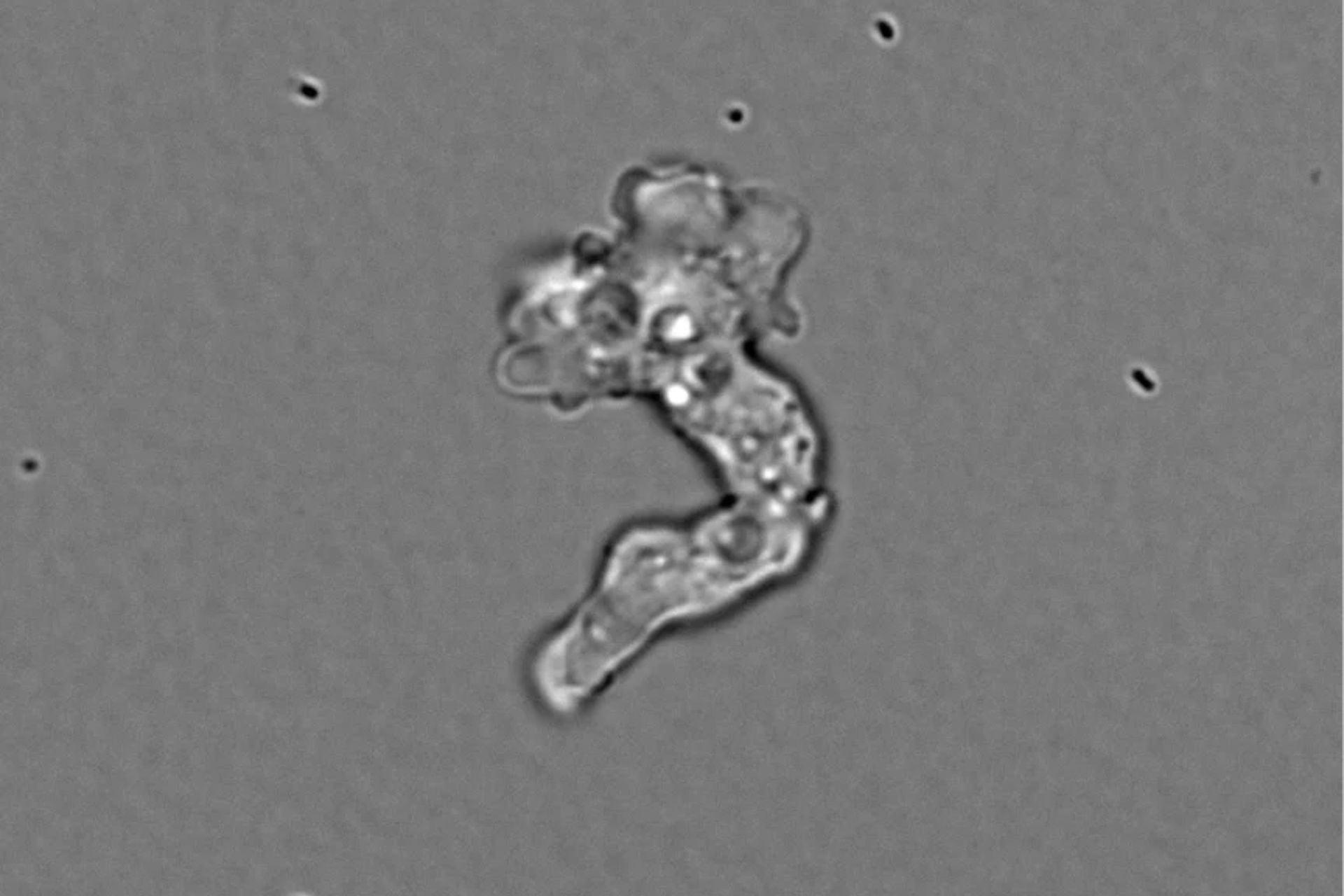
Life finds a way—even in some of the most inhospitable environments on Earth. Scientists have just discovered a species of amoeba that can endure hot temperatures previously thought impossible for any relatively complex lifeform to survive.
Researchers at Syracuse University found the toasty survivor living in the hot springs of a national park in California. The microorganism, aptly nicknamed the fire amoeba, can thrive at temperatures as high as 145 degrees Fahrenheit, or 63 degrees Celsius, and withstand even hotter conditions. It’s likely that this amoeba isn’t the only one out there that can shatter our preconceptions of life’s upper limits, the researchers say.
“We suspect that other high-temperature eukaryotic organisms await discovery,” study author Angela Oliverio, a biologist and biochemist at Syracuse, told Gizmodo.
The fire amoeba
There are known bacteria and similar microbes that can survive temperatures well above 200 degrees F. However, these organisms are prokaryotic, meaning they don’t have a nucleus or other cellular machinery contained by a membrane. More complex living things that do have these membranes (which includes humans) are called eukaryotic. These membranes, though very useful, become unstable at hotter temperatures, and scientists have historically thought that eukaryotic life, or eukaryotes, simply can’t live above 140 degrees F (60 degrees C) as a result.
Some studies have suggested the possible presence of single-celled amoeba in geothermal springs hotter than that threshold, though. But it’s only now that Oliverio and her team were able to definitively confirm the existence of such extreme eukaryotes.
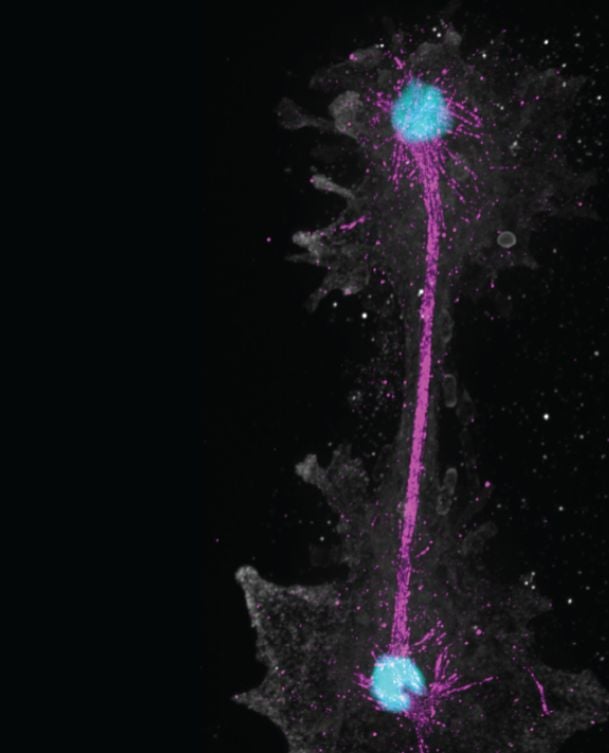
The researchers had collected various samples between 2023 and 2025 from the geothermal steams of Lassen Volcanic National Park, which is located along a long multistate mountain chain known as the Cascade Range. The samples contained one particular unknown amoeba that could grow comfortably at 135 degrees F (57 degrees C), the previously established limit for amoeba life. The researchers then continued turning up the dial.
Ultimately, the fire amoeba was observed making more of itself via mitosis at a max temperature of 145 degrees F (63 degrees C). And it could endure and recover from being subjected to temperatures as high as 158 degrees F (70 degrees C); it did so by changing shape and forming a protective outer layer.
The researchers have formally named their find Incendiamoeba cascadensis, a.k.a. the “fire amoeba from the Cascades.” Their work was published Tuesday in the journal Cell.
What this means
There’s still so much left to learn about how I. cascadensis can survive where most other eukaryotes can’t. That said, the team has already uncovered some potential clues.
“When we compared gene expression of Incendiamoeba grown at 48 degrees Celsius versus at 61 degrees Celsius, near the lower and upper limits of its growth range, we found several pathways that were upregulated at 61 degrees Celsius,” Oliverio said. Specifically, they found that the amoeba expressed genes likely important for maintaining cellular integrity under hotter temperatures, as well as genes involved in DNA repair.
The team also found evidence the amoeba had evolved mechanisms for protein stability similar to those found in some hardy bacteria and other extremophiles, an example of convergent evolution.
It’s unlikely that I. cascadensis is the only eukaryote of its kind, and the researchers are optimistic their work will set off a race to find even more extreme examples of complex life. “Our hope is that this effort will inspire others to continue characterizing many of the unique microbial eukaryotic lineages that break the rules of biology,” Oliverio said.
The team also plans to keep studying their discovery aplenty.
“We are searching for Incendiamoeba cascadensis in other geothermal environments to understand its broader distribution,” study author Beryl Rappaport, a PhD student at Oliverio’s lab, told Gizmodo. “Alongside this, we are studying additional close relatives of I. cascadensis to understand how high-temperature adaptation may have evolved and what sets it apart from closely related amoebae that cannot survive at such high temperatures.”
In any case, I now know what to name my next fire-type Pokémon: Incendiamoeba.