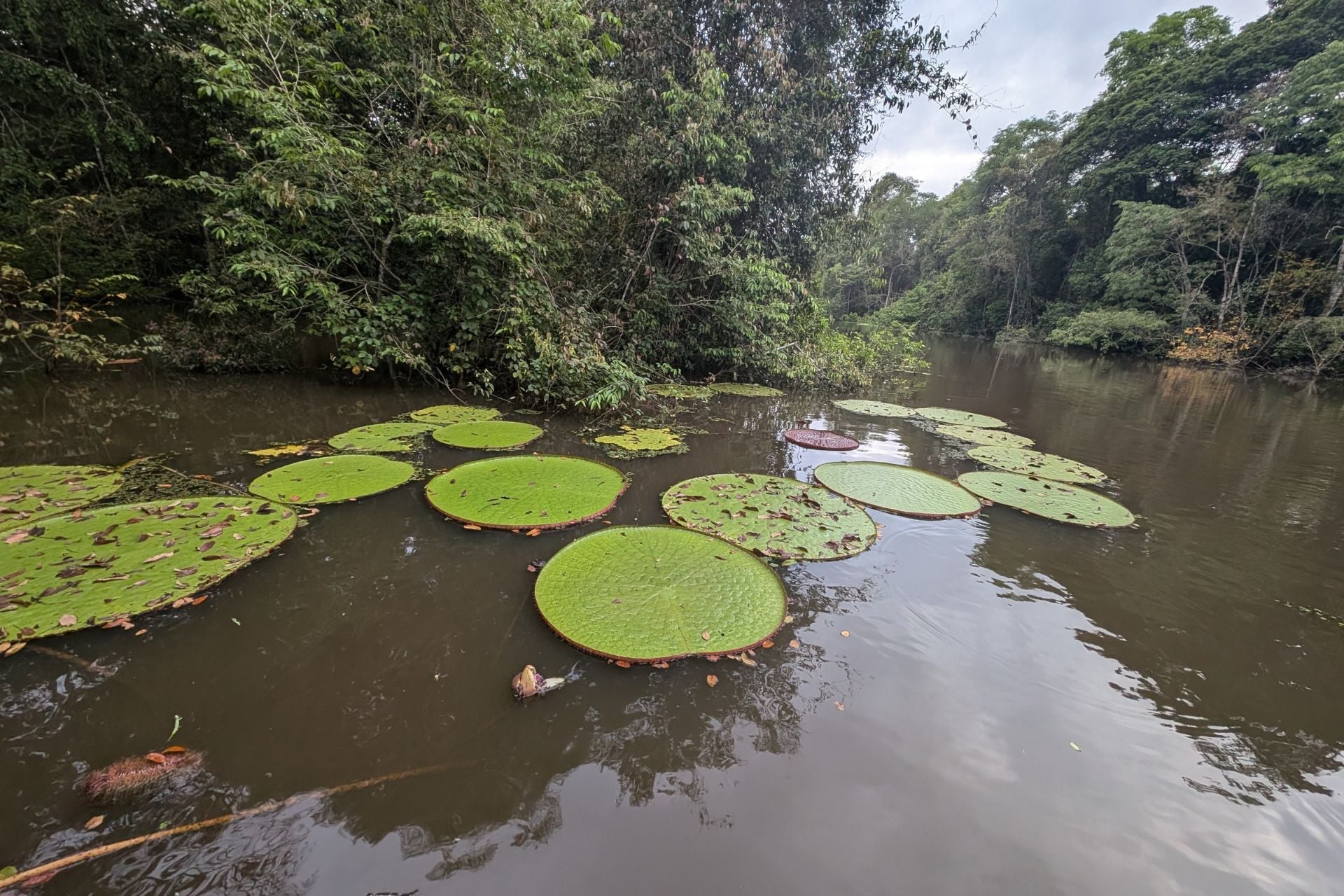
In research out this week, scientists describe having found a new species of giant waterlily that was initially spotted in an Instagram post. That post eventually set the researchers out on a journey through Columbia, where they were able to confirm the plant’s existence at the last possible second. Unfortunately, though, the waterlily may already be critically endangered.
“We live in a wonderful world where there are many extraordinary forms of life, all of them unique and many which are being destroyed before we get to know them,” lead study author Carlos Magdalena, a botanical and scientific research horticulturist at the Royal Botanic Gardens, Kew in the UK, told Gizmodo.
A chance discovery
In December 2021, Jeremiah Harris posted an innocuous photo he had taken of himself next to a giant waterlily in the Inírida region of eastern Colombia. Harris, the owner of a carnivorous plant nursery in the U.S., assumed the plant was simply an example of the giant Amazon waterlily (Victoria amazonica). But when Magdalena came across the post, he soon clocked something off about that assumption—namely, that this species isn’t thought to naturally reside near the Inírida River. He began to suspect that Harris had inadvertently discovered a previously unknown Victoria.
Using satellite imagery, Magdalena confirmed the presence of Victoria plants in the region. He got in touch with Harris, who confirmed these images matched the plants he had seen. From there, Magdalena started coordinating with Mauricio Bernal-Rodriguez, a fellow researcher at a botanical garden in Bogotá, as well as several members of indigenous communities in the area. It took almost two years, but eventually, the team made a five-day expedition to the Inírida region to look for the potential new species.
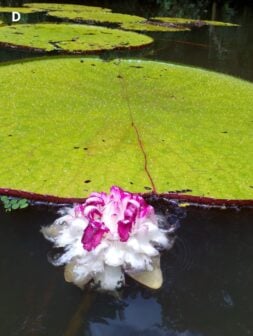
Things didn’t go quite so smoothly at first. After several days of searching, the team only came across two waterlilies, neither of which were in flower and blooming. That was important since only blooming plants can provide the pressed and dried plant specimen, also known as a fertile herbarium voucher, that would allow scientists to reliably distinguish a new species from others of its kind.
But on the very last night before they had to wrap the trip up, with the help of their local boatman Gustavo Melo, they managed to find a second batch of the waterlilies, including one that was in flower. The researchers ultimately identified and detailed seven plants across two lakes and barely made it back in time to catch their flight.
The researchers have formally named the plant Victoria colombiana, and their findings were published today in the journal Phytotaxa. They also argue that another waterlily plant, named Victoria mattogrossensis, should be considered a distinct species, making for five total known species of the genus. Harris, Melo, and the other indigenous members of the expedition, alongside Bernal-Rodriguez and Magdalena, are all listed as authors on the paper.
“The discovery of this plant would have not been possible without the collaboration of many individuals that handle many aspects of knowledge, from indigenous knowledge to botanical horticulturists from two countries and technology such as GIS Satellite surveying,” Magdalena said. “Remarkably some of this tech is in your pocket, be it Instagram or WhatsApp.”
An uncertain but hopeful fate
As amazing as this discovery is, the situation may already be dire for V. colombiana. While there might be other undiscovered populations, the researchers currently estimate that as few as 30 to 50 of these plants are currently living in the wild, meaning that it’s critically endangered. The team plans to formally submit the plant for this designation to the International Union for Conservation of Nature.
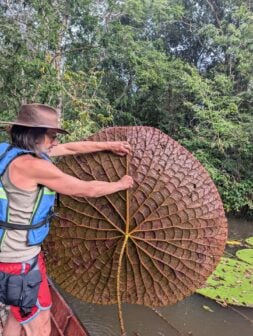
Now that it’s been discovered, though, it might not be too late to prevent its extinction. The researchers hope it’s possible to establish a population of the plant in lakes that are closer to indigenous residents who can monitor them. They’re also looking to cultivate seeds of V. colombiana that can then grow and be studied at Bernal-Rodriguez’s botanical gardens in Bogotá, and from there, maybe eventually at the Royal Botanic Gardens, Kew, too.
With any luck, Magdalena is optimistic that plenty of people in the future will get to see these plants thrive and appreciate them as much as he does.
“Connecting these people from different backgrounds is key in a rapidly changing world, however, we all had one thing in common: we are all fascinated by nature,” he said. “I hope you find this finding as fascinating as I do.”