
But at what point would you pay extra for them?
XJY-7 launched in 2020 but its purpose has remained unknown.
Astronomers and wildlife experts are up in arms over an unprecedented approach to maximizing solar energy generation.
The Starshield constellation was caught using an unauthorized frequency to send data to Earth.
ESA's Swarm constellation shows the magnetic field's weak spot has expanded dramatically.
“They just really didn't think anyone would look up.”
The biggest salt flat on Earth is considered by many to be the world’s largest natural mirror. A team of scientists wondered if that’s actually true, and the answer is—sort of.
Astroscale aims to tackle the growing problem of space debris, one rocket part at a time.
The company is buying up spectrum.
A new study measured the correlation between the number of electrons in space and the sudden release of electrical charges from satellites.
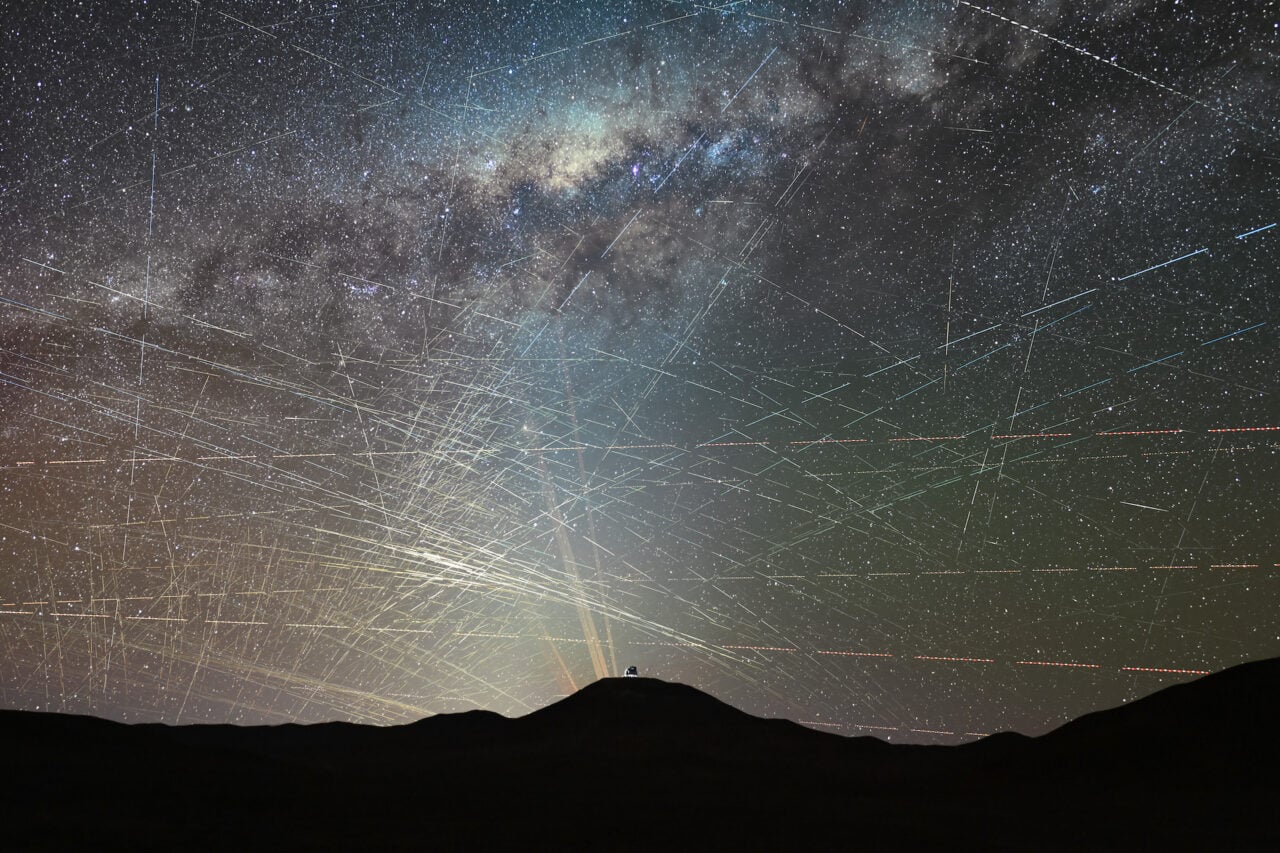
Most satellite constellations exceed recommended brightness levels, with some even visible to the naked eye.
NISAR will scan nearly all of Earth's land and ice surface twice every 12 days.
A state-of-the-art ocean-observing satellite recorded the massive wave rippling out from the epicenter of this major quake.
The Orbiting Carbon Observatories have been a game-changer for agriculture and climate science. Now, NASA is under pressure to terminate them.
The Department of Defense has walked back its decision to stop sharing satellite storm data with federal forecasters.
Shiyan-28B finally appeared in an unexpectedly low orbit, but its mission remains unclear.
The $88 million satellite suddenly went silent just one year into its five-year mission.
This latest blow to federal forecasting abilities is sparking outrage from meteorologists and public officials.
Relay-2 emitted a powerful fast radio burst that lasted for less than 30 nanoseconds.
The latest incident raises concern that Russia is developing anti-satellite weapons.