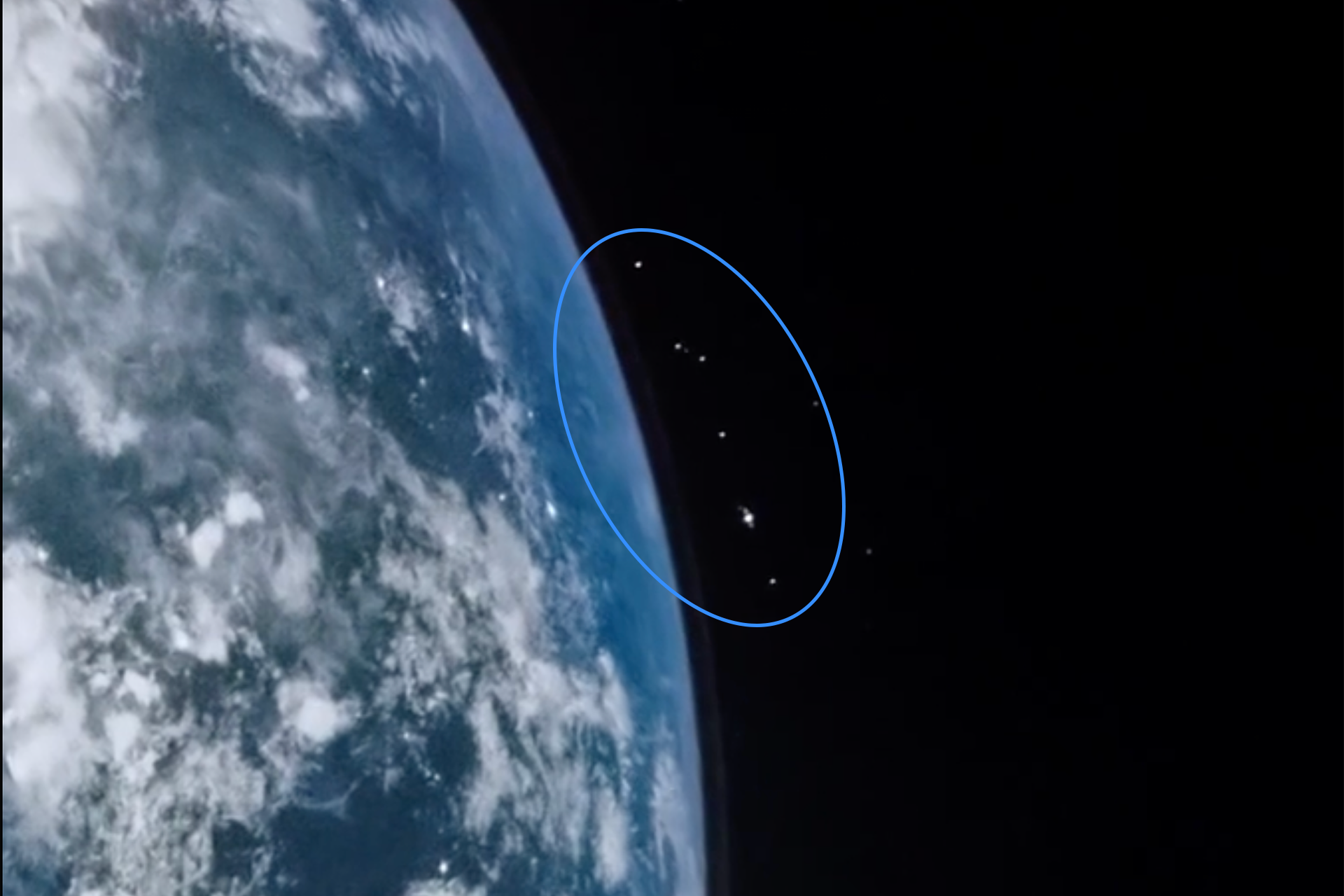
We often hear about the number of objects that are whizzing around our planet, but it’s rare that we actually get to see the situation for ourselves. NASA released a decent visualization a couple of years ago, but the recent Artemis II mission provided an unexpected first-hand glimpse of just how crowded low Earth orbit is getting.
Along with a bunch of stunning photos of the moon, the Artemis II mission captured a heap of images of the Earth. Those images include a bunch of small points of light near the Earth. At first glance, it’s easy to mistake them for stars—especially in a single still image—but as various users on the Artemis subreddit were delighted to discover, some are in fact satellites in low Earth orbit. And happily, there are enough photos taken in rapid succession that you can string them together to create an animation.
One particularly striking example of such an animation was posted by Seán Doran on Bluesky. In it, you can clearly see a bunch of tiny objects in orbit around the Earth, their surfaces gleaming as they catch the light of the sun.
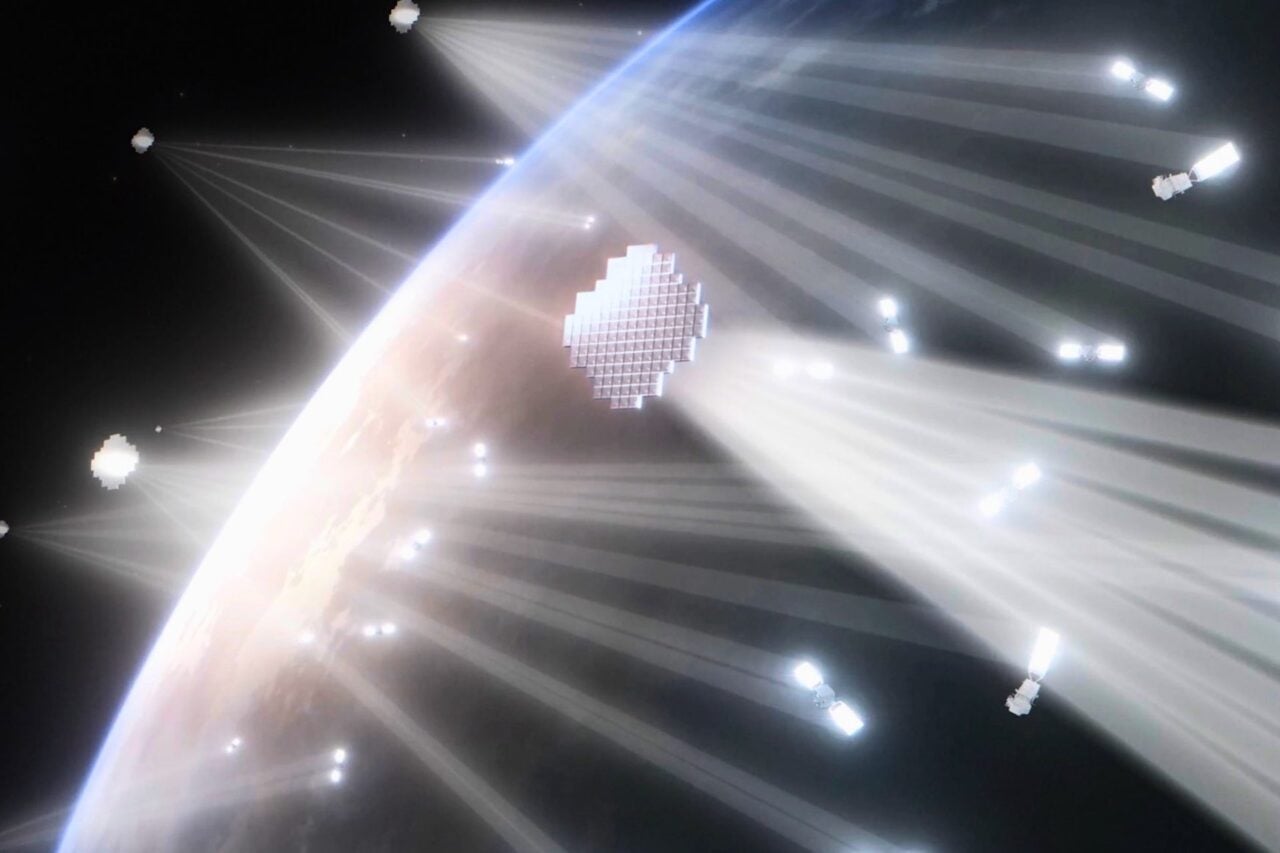
It’s unclear exactly what these objects are, but the fact that there are so many visible in only a couple of seconds of composite footage really drives home just how much manmade orbital material there is. The numbers vary depending on which source you use—as of the date of publication, CelesTrak’s satellite catalog listed 15,731 active satellites, along with 2,915 dead ones, 2,269 rocket bodies, 12,518 pieces of debris and 51 unknown thingamajigs for a total of 33,484 objects in orbit; the similar Kayhan SATCAT listed a total of 36,899, and the US Space Force’s estimate is even higher, at 50,600 objects. The majority is in low Earth orbit (LEO), i.e., less than 2,000 km from the surface.
The number is increasing, too. This visualization, which is based on Space Force data and excludes debris, suggests that the number of objects in low Earth orbit has nearly tripled since the start of the decade, increasing from 6,068 in 2020 to 16,084 today.
By pretty much every metric, then, there’s a whole lot of junk up there already, and there’s more arriving every day. This is a problem. Every time we launch a rocket, we have to calculate a window that will ensure that there’s no risk of intersecting with a piece of junk, let alone a satellite—at LEO altitudes, objects orbiting the earth travel at around 7.8 meters per second, or 17,550 mph, making even tiny pieces of debris extremely dangerous. Such a fragment of debris could cause severe damage to a launch, and any significant collision would be catastrophic.
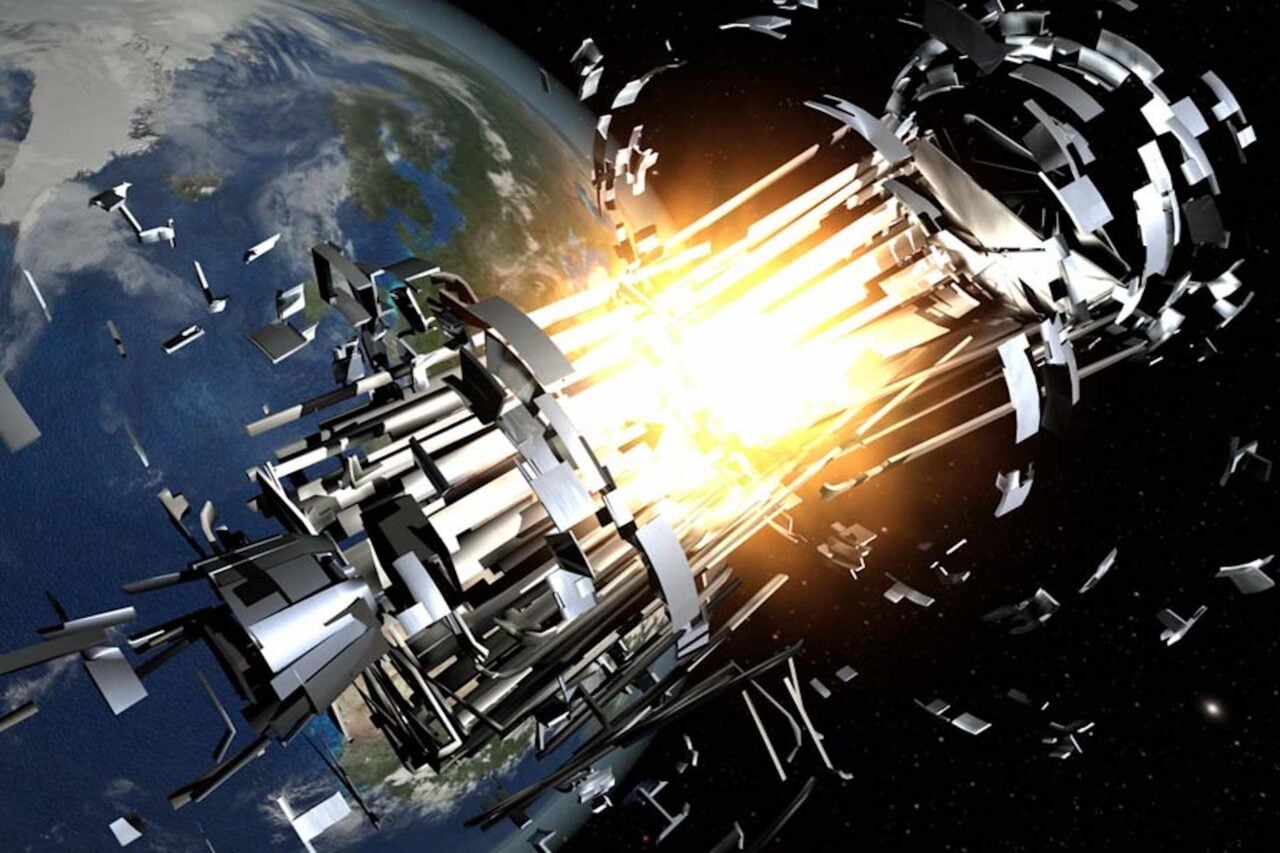
Aerospace.org provides a frankly terrifying description of what an on-orbit collision would be like: “A hyper-velocity collision like those at orbital speed doesn’t behave like collisions that we are used to seeing. The objects are moving so fast that they travel through each other faster than the shock waves can travel… [and the result] looks more like an explosion of each object, as if they passed through each other and exploded on the other side.”
The same piece contains a handy table of the kinetic energy of the impact of various objects, from one the same size as a poppy seed (.0003 kg of TNT, or a pitched baseball) to one the size of a football field (up to 1013 kg TNT, or a “very large bomb”, which feels like something of an understatement: it’s the equivalent of 200 Tsar Bombas or 10 Project Sundials.)
So, yeah. This is a beautiful view of our planet, but it’s also mildly terrifying.