If you’re someone with a passing interest in a) cryptography, b) World War II, c) cool machines or d) all of the above, you’ve probably heard of the Enigma machine. That machine remains perhaps the most famous of the cipher machines used to encrypt messages during the 1930s and 1940s, but it wasn’t the only one—and once the German military started to worry that the Allies had compromised the Enigma’s codes, they started working on a replacement.
The result was the Schlüsselgerät 41, or SG-41 for short. (It was also known by a memorable nickname: the Hitler Mill, because the hand crank used to operate it apparently reminded someone of a pepper mill.) The SG-41 was first produced in 1941, but material shortages meant that only 1,000 were ever produced. These shortages also meant it was too heavy for use on the front lines, and thus it was never able to fully replace the Enigma, despite the fact that it was a far more capable device: the British cryptographic wizards of Bletchley Park were bewildered by its messages, and when they got their hands on one after the war, the US Signal Security Agency called it “a remarkable machine.”
Anyway, the Allies weren’t the only ones bewildered by the device; its rarity and complexity means that the SG-41 has remained an object of fascination for modern enthusiasts, and information about the machine is still coming to light: earlier this year, for example, a copy of the device’s encryption manual was discovered in a forgotten folder in the archives of the Czech Military History Institute in Prague.
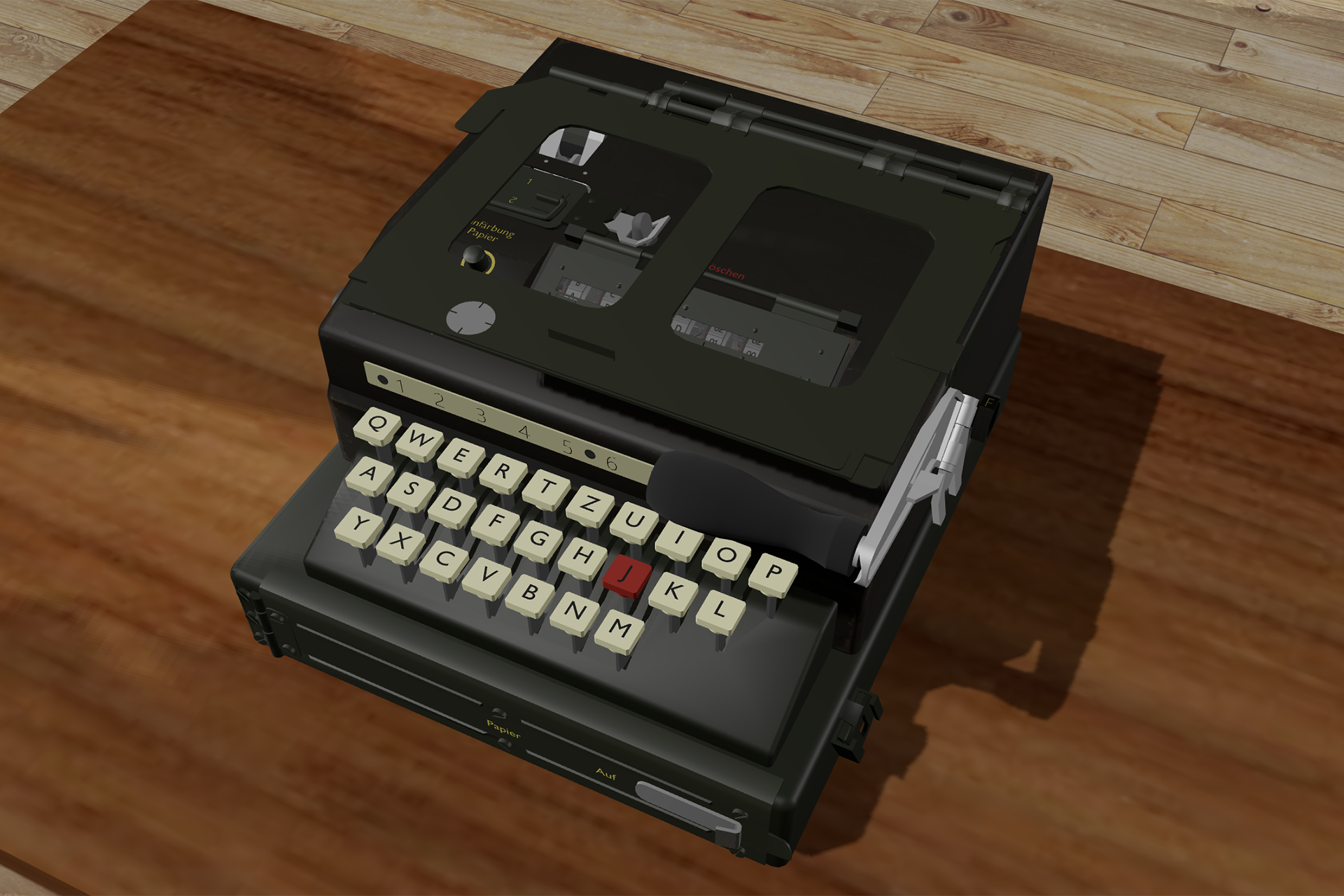
Those manuals would probably have been helpful to British software developer Martin Gillow, who decided several years ago that he was going to answer his own question about the machine—”How on earth did [it] even work?”—by building his own own SG-41. Being as it’s the 21st century and all, Gillow created a 3D model instead of an actual physical replica, and the extremely impressive completed model is now available online. (This isn’t the first such project Gillow has undertaken—his recreation of the Colossus codebreaking computer is also online, and also a lovely piece of work.)
So how does the SG-41 work? The short answer is, “It’s complicated.” The device employed four levels of encryption, starting with a key sequence of six letters, which were issued daily. The key sequence was cross-referenced with a table of pin configurations, which was reissued every month, and combined with the device’s individual two-digit identification code to provide an initial configuration for the machine. Once the machine was configured, you could input your message, and the machine would provide an encrypted version. The resultant message was scrambled with another key to obscure its starting location. For anyone interested, there’s an in-depth explanation at a website called The Crypto Museum, which Gillow told The Register “did a huge amount working out the detail of how the machine enciphered.”
If that all sounds awfully complicated to you, well, yes, you’re not the only one. Happily, however, Gillow’s model is fully interactive, so we recommend just going and having a play with the thing to get a feel for how it operates.