Much ado has been made about Avatar: Seven Havens. At the start of the show’s weekly batch releases, much of the early online conversation about the Paramount+ animated series wasn’t about what it was, but what it wasn’t. It wasn’t Avatar: The Last Airbender, nor was it its unfairly criticized predecessor, The Legend of Korra, in either the narrative or animated fight choreography department. What it is is a wildly different take on Michael Dante DiMartino and Bryan Konietzko‘s fantastical universe that carries the baggage of being a legacy sequel, sure, but is less concerned with the ghosts of its past and more concerned with standing on its own feet and marching to the beat of its own drum.
While the first leg of the four-book journey certainly had its fair share of growing pains, the book one finale of Avatar: Seven Havens did the work in setting up an adventure worth sticking around for.
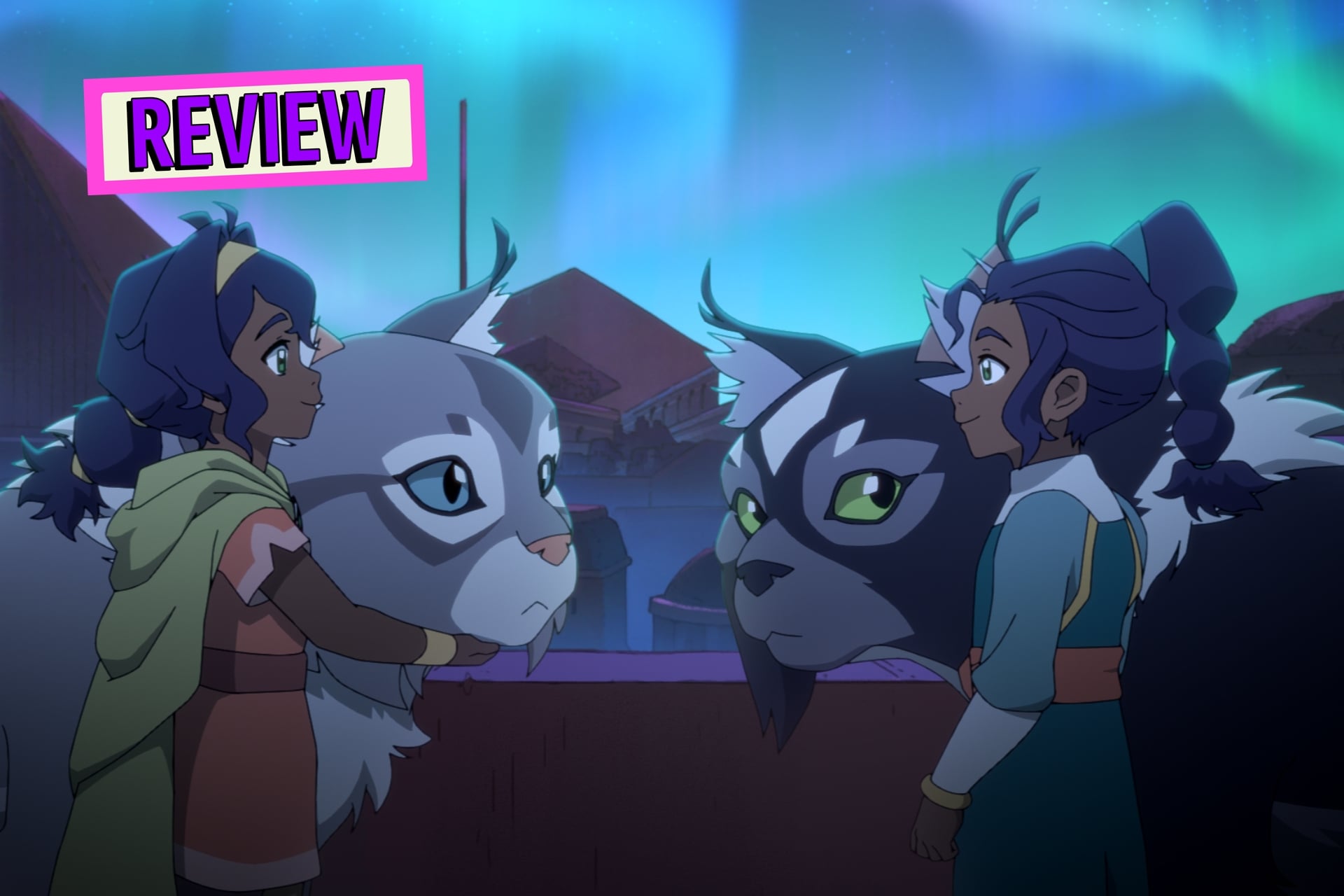
Avatar: Seven Havens, animated by La Chouette Compagnie, began as a show whose main point of entry seemed to be raising the eyebrows of fans with decades of investment in the Nickelodeon franchise rather than genuine newcomers. Unlike past series, the show has twin avatars, Nisha and Pavi, two nine-year-olds with the fate of the world (that wants them dead) on their shoulders. Gone are the days when humanity welcomed the avatar as its savior with open arms; now it sees them as its ruiner. Likewise, the delicate balance the avatar once facilitated, uniting humanity and the spirit world, is steeped in centuries-long chaos.
The title of book one might have been Survival, but the word that felt like the season’s overture was “lost.” No one felt attached to the cultures of airbending; fewer benders were being born than before, the elemental symbols were smoothed over like corporate logos, and everyone had a bone to pick with Korra as the pariah causing all the strife in the world. Reddit couldn’t have written a better art-imitates-life version of this show on the canonization of Korra slander. It’s not that clever.
For a minute, fans who grew up on Avatar (myself included) fretted over whether the show would land the proverbial plane they buckled up for. The show’s choreography and direction (not its animation) were a far cry from the bending feats showcased decades prior. Its ensemble humor also came off as a bit forced, using references as a crutch in its earlier episodes, like jingly keys, to keep legacy fans intrigued with callbacks. But the feeling that the show just wasn’t going to measure up to its past accomplishments was ever-present. To any other show, that would be a death knell. For Avatar, that’s a part of its whole appeal. That’s narrative harmony.
While a vocal sect of Avatar’s fandom misplaced blame on Korra for “killing” the Avatar Cycle—the cycle of reincarnation in which the Avatar’s past lives can commune with newcomers and dole out advice—that ignores the longstanding pattern that every Avatar works to fix a problem their predecessors left behind. It happened with Roku’s hubris toward Aang, Aang’s shortsightedness toward Korra, and now Korra’s radical change toward Nisha and Pavi. Rather than lean hard on real-world animosity toward Korra to appeal to the worst parts of its fandom, Avatar Studios used that as a narrative throughline for how history can be flattened by the very people who hold it in such high regard. It continues the show’s legacy by not showing this, admitting early on that historical records from past centuries were sparse and suggesting that not everything is what it seems.
Although the fights in Avatar: Seven Havens ramped up in quality and dynamism as the season progressed, culminating in a finale that proved the show could deliver spectacle when it counted, the real intrigue lay elsewhere. It was in watching its fledgling Avatars navigate a world that seemed determined to reject them.
Seven Havens was never going to be like Aang’s piecemeal mastery of the elements as the doomsday counter ticked down toward the end of the world. Nor would it be like Korra cleaning up the mess and animosities festering beneath Aang’s naïve sense of peacekeeping. Avatar: Seven Haven‘s goal was to look inward, and it did so by bringing back old, somewhat messy, undercooked concepts from the past into a more refined light: chakras.
At first, Seven Havens appeared to be heading in an overly familiar direction. Nisha and Pavi felt poised to embark on a straightforward journey of self-actualization. The road toward that destination was the show’s renewed focus on chakras and energy bending. The seven chakras were mental gateways Aang had to overcome to master the Avatar State (his Super Saiyan form). In the past, chakras and energy bending served as some of the franchise’s messier spiritual concepts that made less sense and took away from the show’s mystery. Instead of positioning them as series-finale tide-turners and lore expanders, Seven Havens reframes them as tools for personal growth rather than simple power-ups.
As the season unfolds, Nisha and Pavi don’t unlock new abilities by formula. They develop into distinct people with conflicting priorities, worldviews, and ideas about what being the Avatar means, and if they even want to be one in the first place. What that culminates in not only separates itself from the long shadow of its predecessors—it makes the show far more interesting narratively than on an action level. Which is kind of the point.

A safer version of Seven Havens would have corralled both girls by the hip, buddy-system field trip style, toward paths of enlightenment across the seven havens against clear-cut villains until they became fully realized avatars. Instead, across 13 episodes, Seven Havens dismantles that expectation. Pavi and Nisha’s The Suite Life of Zack and Cody-coded relationship is far messier than early episodes suggest. On top of the whole prepubescent pressure of being enemies of the world, the pair are burdened by resentments and misunderstandings that are even harder to wrestle with. Their hurt isn’t treated as a temporary obstacle on the road to destiny.
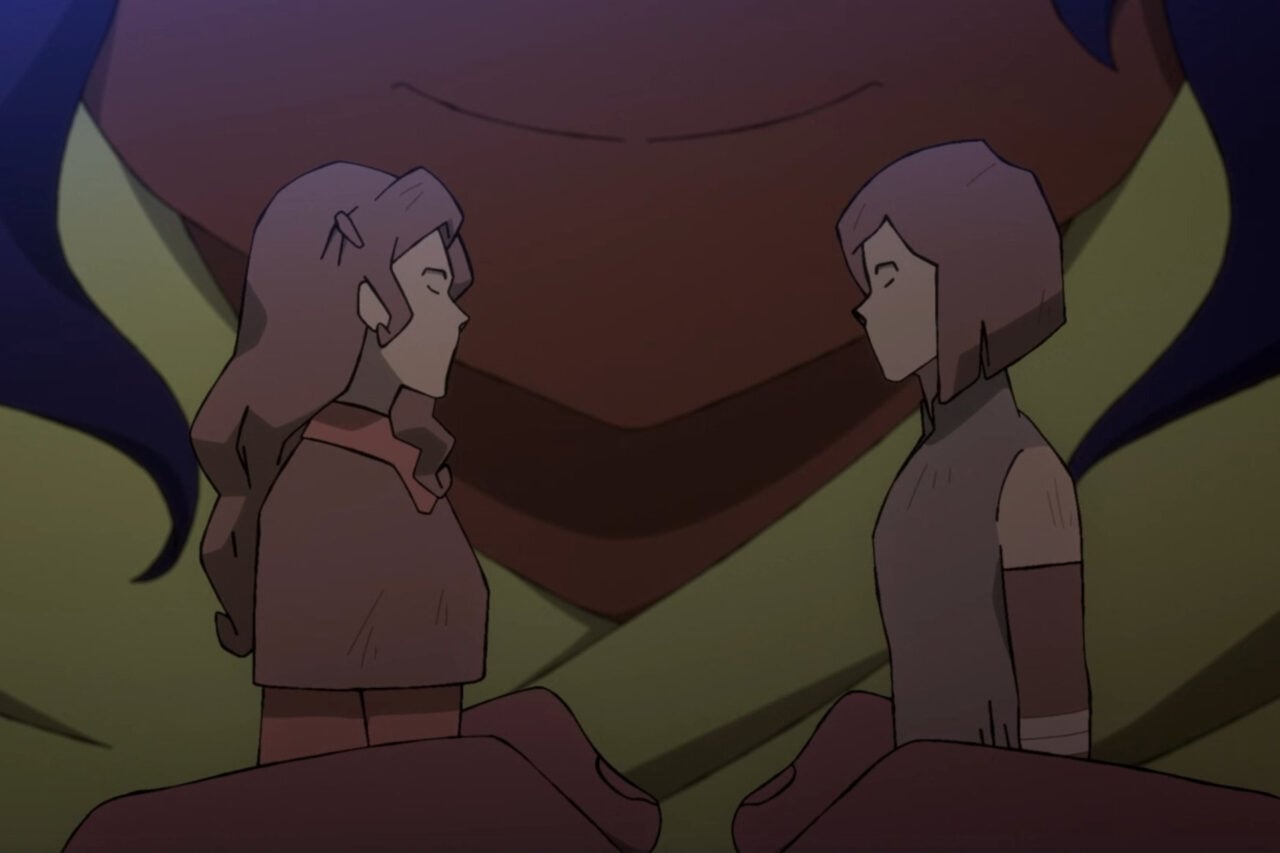
The wound opened by Nisha, in a fit of confused and age-appropriate despair, when she inadvertently caused her parents’ demise and the mutilation of her twin after Pavi and Nisha’s almighty power led to their parents grabbing Pavi and abandoning Nisha, is one neither nine-year-old can simply meditate away. The two don’t lock in and dismantle the blaring red geometric shape engulfing Allura. After accepting her fear of being the Avatar, Pavi solos it herself, and Nisha watches in shame as she can’t unlock her own blocked chakra. The book one finale of Seven Havens loudly abandons the comforting rhythms of the traditional hero’s journey. Rather than converging, Nisha and Pavi seem destined to diverge, setting out in the world not to become the Avatar together, but to discover what kind of Avatar each wants to be. In a franchise built on inheriting wisdom from the past, that’s a refreshingly bold direction for the show to give its youngest protagonist.
By the same token, this decision also shows up in the show’s broader approach to conflict. During the show’s panel at New York Comic Con, showrunner Sehaj Sethi said she wrote the show without there being a clear antagonist. Despite the fact that characters like Ellora’s leader, Kayoko, spend much of the season making staggeringly shortsighted and occasionally abhorrent decisions, including beefing with literal children, sure enough, no one is presented as a clear-cut villain. Instead, Seven Havens treats conflicts as the accumulated consequences of people clinging to flawed interpretations of history. Just as the season reframes Korra’s legacy as something distorted by time, it repurposes old Avatar concepts into new obstacles. While the past comforts the afflicted and afflicts folks roaming the seven havens, it isn’t a complete source of answers for Pavi and Nisha. It’s a burden they, as the next generation, have to wrestle with.
With this new treatment of the series, the season’s mystery becomes compelling not because they’re teasing the next big Avatar mythological revelation, but because it’s built around a spinning plate of intersecting lives, ambitions, and grievances orbiting Nisha and Pavi. Bump surface-level intrigue like Ba Sing Se surviving after 225 years, Korra having action figures (and getting married to Asami), and reference fodder; that’s intrigue Seven Havens earns on its own terms. Not by asking viewers to speculate about the next connection to Aang or Korra, but by presenting characters whose trajectories increasingly refuse to follow the franchise’s established roadmap. Like the old adage about those who don’t learn from history being doomed to repeat it, Seven Havens understands that endlessly retracing the same narrative footsteps and chasing ghosts of the past would be its own kind of insanity.
All that said, the series still requires some warming up, and book one isn’t without its growing pains. But by its finale, it feels less like a carefully engineered legacy sequel that Paramount+ said, “Damn, fine, here,” and tossed into its catalog, and more like a story that might eventually be retold as folklore within its own world. Picture it: some wise historian surrounded by bright-eyed youngerers, recounting how two twins were born from the same power, separated by circumstance, reunited by fate, and then chose different roads because the hurt between them never truly healed. That’s the scaffolding of a story worth leaning forward to hear more about. Granted, the show often tells that story in a less compelling fashion than its broad strokes suggest, but the confidence it has to land its proverbial plane, taking its time to tease out story beats instead of rushing to flashy spectacle and double-crosses, made its 13-episode journey far more rewarding.
I wrote it in my premiere review and still feel it at the finale: Avatar: Seven Havens has promise. It’s unlikely that it might someday eclipse Avatar: The Last Airbender or The Legend of Korra, but it’s slowly figuring out how to become something else entirely worthwhile.
Want more io9 news? Check out the best movies and TV shows to stream this month and all the upcoming sci-fi, fantasy, and horror books that should be on your radar.