As part of his annual financial disclosure, U.S. President Donald Trump reported interests in companies holding more than $100 million in bitcoin and ether in cold-storage wallets. In addition to using crypto in the way Satoshi originally intended, Trump-affiliated businesses also reported at least $1.2 billion in crypto-related income during 2025 from various crypto ventures, including World Liberty Financial and the TRUMP memecoin, based on calculations from Reuters and the Associated Press. The totals were broadly consistent with an earlier Bloomberg estimate of the Trump family’s crypto earnings since he returned to office.
Trump’s 927-page financial disclosure, filed with the U.S. Office of Government Ethics, shows how rapidly digital assets have become one of the most lucrative parts of his business empire. Reuters calculated that Trump reported more than $1.4 billion in income from family crypto ventures during 2025, while the Associated Press arrived at a lower total of nearly $1.2 billion based on a narrower set of businesses and proceeds.
The largest individual source was Trump’s memecoin operation. CIC Digital LLC, one of the principal companies behind the TRUMP token business, reported roughly $635 million in memecoin-related income. The token was launched shortly before Trump returned to the White House, allowing buyers to trade a speculative digital asset directly associated with the sitting president.
World Liberty Financial was almost as productive. Trump-affiliated companies received close to $800 million from the venture, including more than $520 million from token sales and over $250 million from selling interests in the business.
EXTRACTOR IN CHIEF pic.twitter.com/VVHd4IxL6x
— beeple (@beeple) July 1, 2026
Government disclosure forms generally report asset values in broad ranges, so they cannot provide an exact accounting of Trump’s wealth. They also list income received by business entities without always showing how much was ultimately distributed to Trump personally or divided among family members.
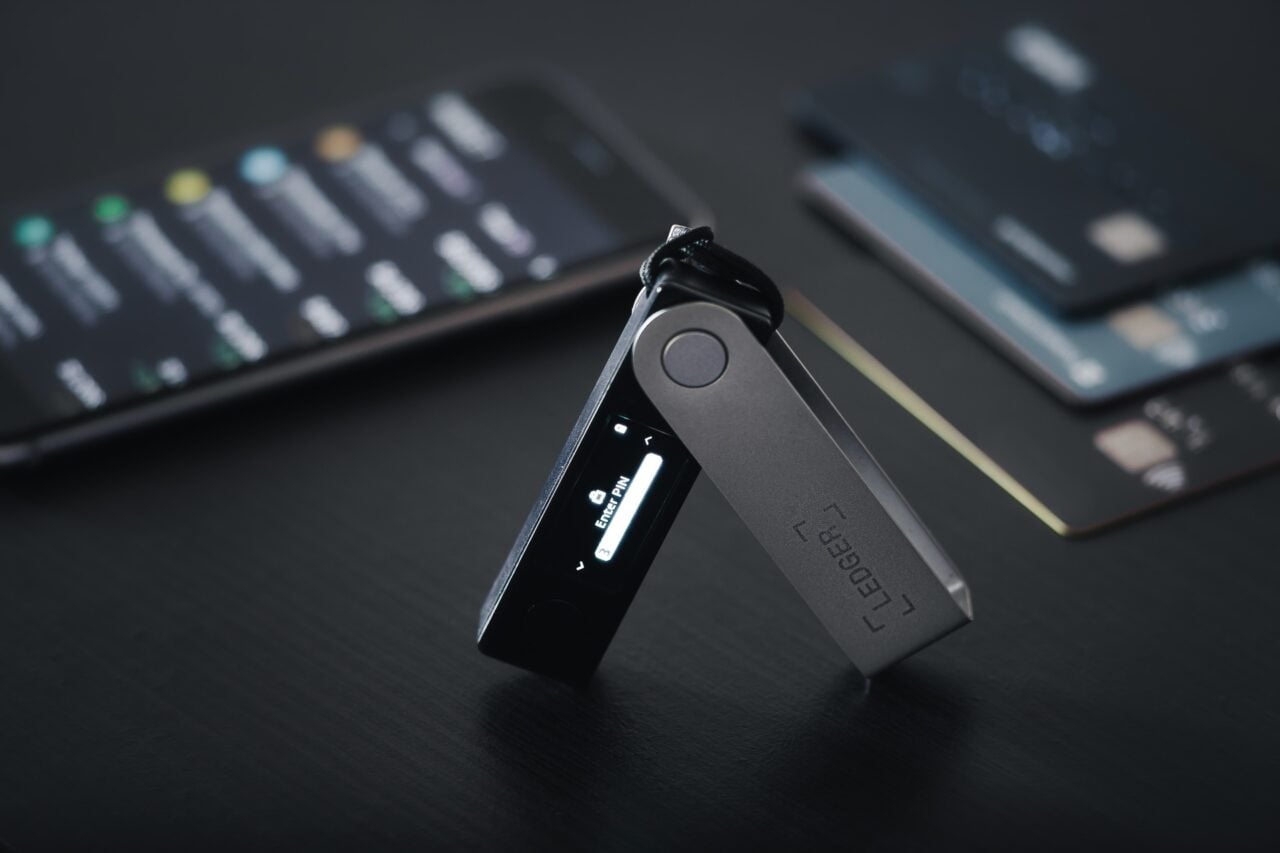
According to CoinDesk’s review of Trump’s financial disclosure, the filing also offers a detailed look at crypto assets held through Trump-controlled entities. DT Marks DeFi LLC, a Trump Organization affiliate with a stake in World Liberty Financial, reported cold wallets containing more than $50 million in bitcoin, more than $50 million in ether, and more than $6 million combined in other crypto assets. The principal bitcoin and ether accounts were explicitly described as cold wallets, as a true cypherpunk would prefer, although the disclosure does not establish whether Trump or the companies directly control the private keys.
CIC Digital LLC, a Trump-controlled company involved in the TRUMP memecoin business, reported a separate bitcoin cold wallet worth more than $50 million. It also listed ether and USDC cold wallets, each valued between $5 million and $25 million, along with an equity investment in CoreWeave. A separate entity, DT Marks SC LLC, reported an interest in a stablecoin holding company connected to World Liberty Financial’s USD1 business.
Trump additionally reported purchases and sales of Coinbase stock through several investment accounts. The filing contained more purchases than sales during 2025, with some individual transactions valued in the tens of thousands of dollars, although the ranges make it impossible to calculate his precise Coinbase position. Trump also reported $6 million in income from an NFT licensing agreement, adding another crypto-adjacent revenue stream to the mix.
Profiteering While Regulating?
The scale of the crypto income disclosed by Trump is particularly striking because the administration was simultaneously rewriting federal crypto policy. Since returning to office, Trump has supported and signed stablecoin legislation into law via the GENIUS Act, reduced crypto enforcement activity at the Justice Department and Securities and Exchange Commission, and promoted the United States as a global center for crypto businesses.
Of course, the White House has denied that the president’s business interests create a conflict. Spokesperson Anna Kelly told Reuters that neither Trump nor his family had engaged in conflicts of interest and said the administration’s decisions were made “in the best interest of the American people.” Trump’s assets are overseen by his children, but he remains the beneficiary of the trust that receives the income. However, Don Fox, a former acting director of the Office of Government Ethics, noted that presidents are exempt from conflict-of-interest laws covering most executive branch employees. He told Reuters that previous presidents still behaved as though those restrictions applied, but said that under Trump, “those norms are just totally out the window.”
Asked about the filing, Trump said he does not manage his personal finances because investment funds handle his money. He attributed the gains to the broader market, telling reporters, “Everybody’s profiting.”
A report from Reuters this spring found that the estimated $2.3 billion in profits generated by various Trump-affiliated crypto projects were roughly equal to the losses suffered by investors in those projects through the end of April. While it’s not true that every investor ends up losing out on these sorts of crypto schemes, it’s a clear illustration of how a wide swath of this industry really works. Of course, it’s also possible that some investors were more interested in buying access to the president rather than profiting off actual revenue generated by the associated crypto projects.
The president’s projects have become entangled in several specific corruption allegations. Democratic lawmakers have questioned whether Trump’s pardon of Binance founder Changpeng Zhao was connected to Binance’s business relationship with World Liberty, whose USD1 stablecoin was selected to facilitate Abu Dhabi-backed MGX’s roughly $2 billion investment in Binance. Elizabeth Oyer, who was previously the pardon chief at the DOJ, called the pardon “unprecedented” and said, “This is absolutely not justice. This is corruption.”
Lawmakers have separately raised concerns about a UAE-linked company’s reported purchase of a 49% stake in World Liberty for $500 million before the administration approved access to advanced Nvidia chips previously restricted for export to the United Arab Emirates. No public finding has established that the transactions were formally connected, but the timing intensified demands for investigations and disclosure.
The SEC’s resolution of its case against crypto entrepreneur Justin Sun, a major investor in World Liberty tokens and the TRUMP memecoin, has produced additional pay-to-play allegations. Sun later sued World Liberty over frozen tokens and changes to the project’s smart contracts, and World Liberty Financial responded with its own defamation countersuit.
A May 2026 Public Opinion Strategies poll of 1,000 registered voters found that 62% did not trust the Trump administration to regulate crypto. Only 45% were aware of the Trump family’s profitable crypto holdings, while 73% opposed senior government officials maintaining crypto business interests. Even among Republican respondents, 59% opposed such arrangements.
According to a report in The Block from roughly a month ago, Trump’s crypto profiteering may be holding up progress of the CLARITY Act, which is intended to provide regulatory clarity to the crypto industry in the United States. This piece of legislation is a key implementation of Trump’s pro-crypto policies in his second term; however, Senate Democrats are pushing for ethics provisions that would prevent elected federal officials, whether they be in the executive or legislative branch, from profiting off of crypto-related ventures while serving out their terms. At the time of this writing, prediction market Kalshi gives the CLARITY Act a 45% chance of being signed into law this year, which is down from a peak of roughly 90% in January.