Since taking office, President Trump has been waging war on renewables, leveraging policy rollbacks, permitting delays, and expanded oil and gas leasing to shift the nation’s energy economy back toward fossil fuels. But new data suggests his efforts may be in vain.
According to national electricity generation data from the energy think tank Ember, renewables—including wind, solar, hydropower, and bioenergy—produced more than a third of U.S. electricity in March 2026, surpassing natural gas across an entire month for the first time. Natural gas has been the nation’s leading power source for the past decade, but it appears a new champion may be on the rise.
To be clear, one month does not necessarily signal a lasting shift. This data also reflects a seasonal drop in power demand, as mild spring weather typically reduces the need for coal- and gas-powered heating. But according to Ember, last month’s fossil fuel generation fell to its lowest March level in at least 25 years, while renewable generation rose to its highest March level.
This is an important milestone. It shows that the gap between renewables and natural gas has narrowed significantly as solar, wind, and biofuels have grown, despite Trump’s best efforts to stymie them.
The persistent growth of renewables
As soon as Trump entered his second term, his administration began throwing punches at the renewable energy sector. The One Big Beautiful Bill Act, signed into law in July, rolled back many clean energy tax credits and introduced new restrictions, increasing pressure on wind and solar development pipelines.
Even before the enactment, the proposed changes and uncertainty around Trump’s tariffs contributed to a 36% drop in wind and solar investments in the first half of 2025 compared to the prior six months. Despite this, renewables continued to dominate U.S. energy capacity growth, accounting for 93% of additions through September 2025—largely due to rapid expansion of solar.
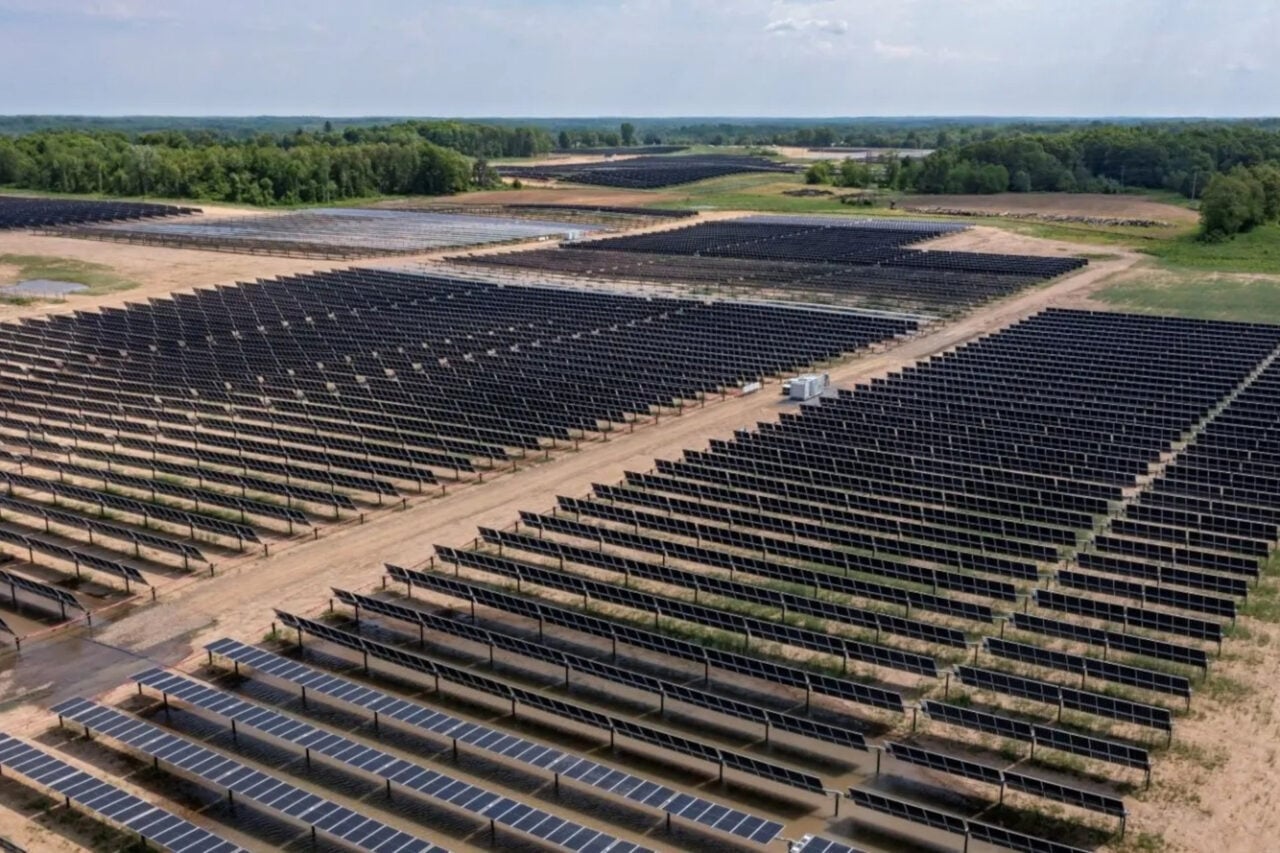
Today, renewable energy remains the fastest-growing energy sector in the U.S., with solar leading the pack. The Trump administration has continued to push back, taking drastic measures to kill offshore wind projects, weakening the Environmental Protection Agency’s regulatory power over carbon emissions, opening new oil and gas leasing areas, and more.
Still, the Energy Information Administration expects solar, wind, and batteries to account for 93% of energy capacity added to the grid this year.
Fossil fuels here to stay
This is encouraging progress, but as U.S. power demand soars, fossil fuels are still picking up the slack.
Coal power plants on the cusp of retirement have had their operating lives extended, largely due to AI-driven data center growth. What’s more, many tech companies are installing diesel or natural gas generators at data centers to bypass the grid.
On a global scale, the International Energy Agency expects renewables to meet nearly half the additional energy demand driven by AI over the next five years. In the U.S., however, that may not be the case. The Trump administration’s efforts to slow renewable energy growth could limit the sector’s ability to accommodate AI’s surging energy needs.
Still, the March milestone suggests renewables remain highly competitive in the U.S. power mix—at least for now.