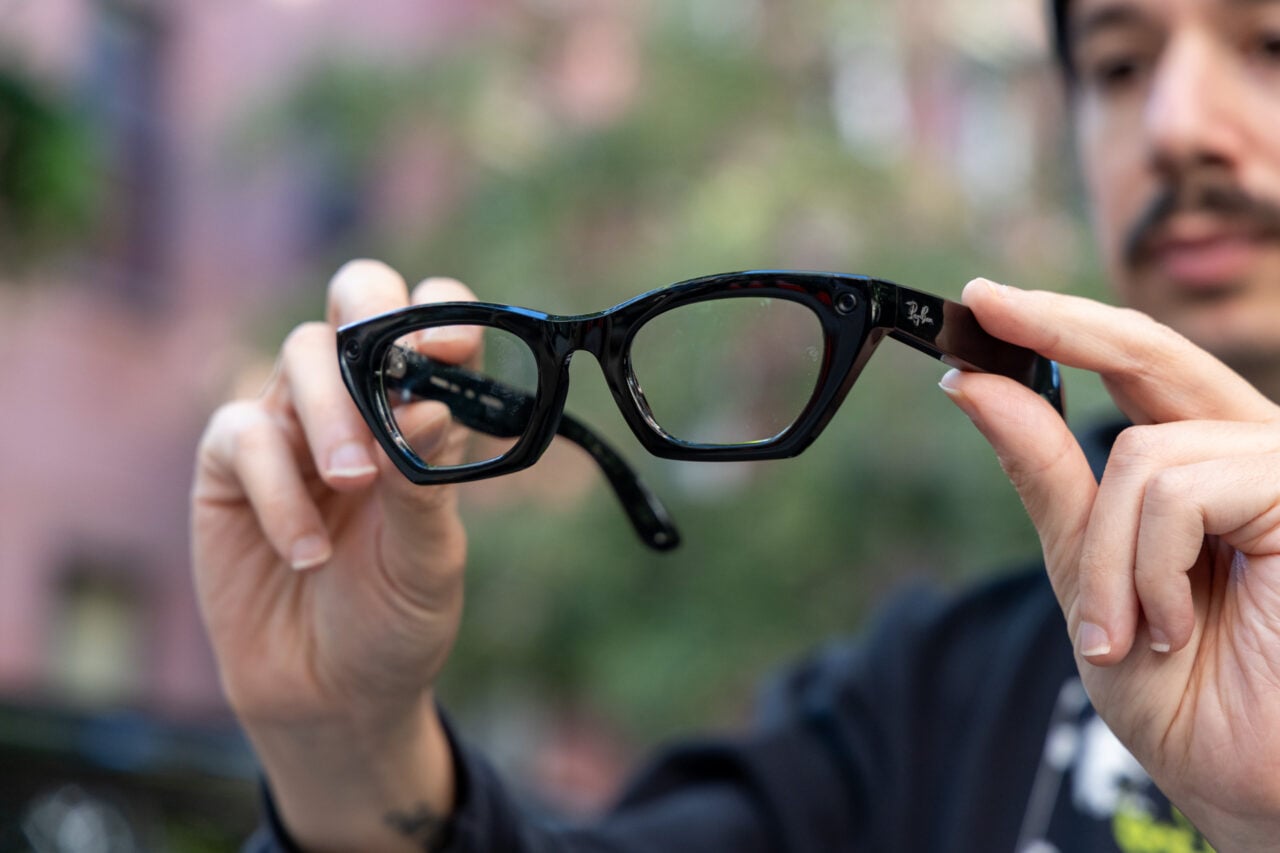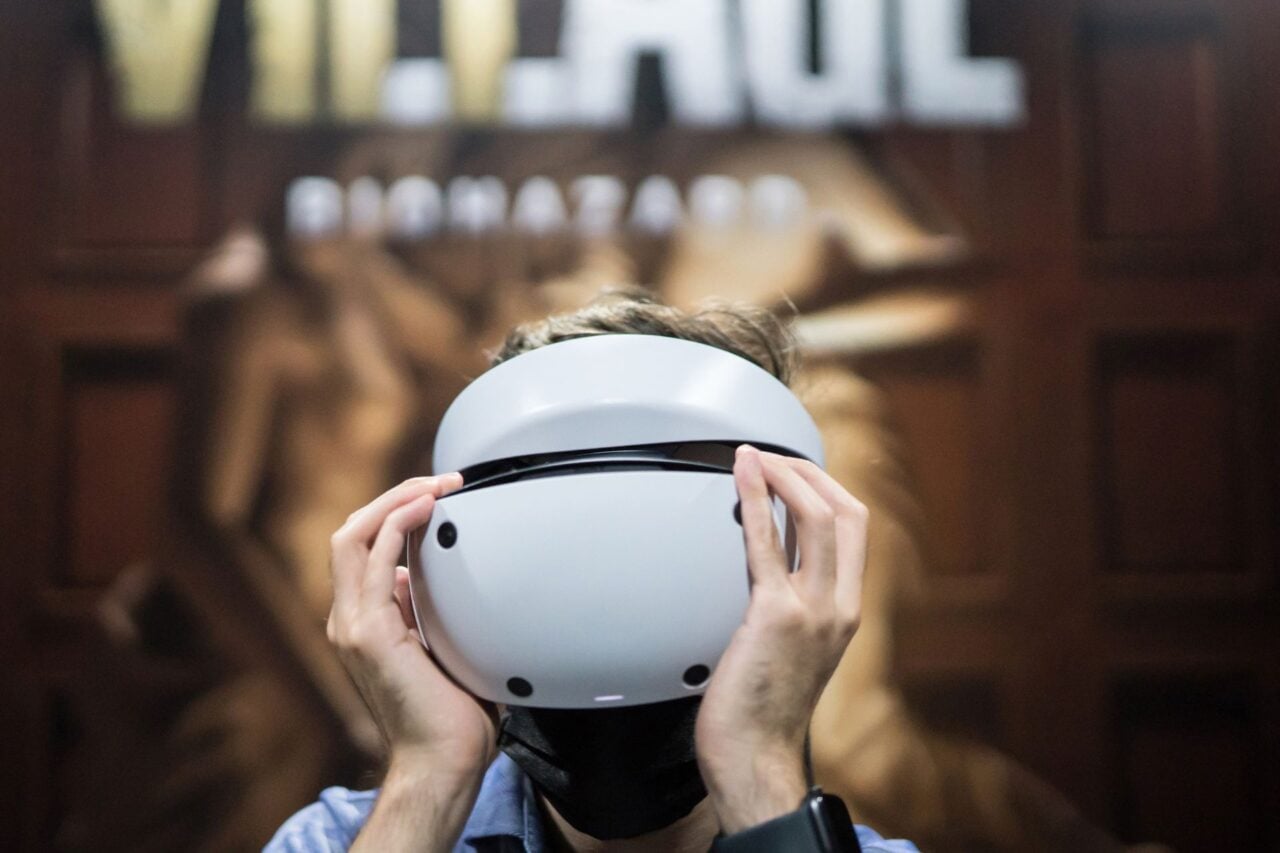
On stage at Meta’s annual Connect keynote, Meta’s CTO Andrew Bosworth (“Boz” for those who partake) delivered one very salient message: “VR gaming is alive and well.”
The reason for that proclamation is twofold. For one, Meta has objectively pulled back from VR this year, shuttering and kind of reopening the Metaverse, axing VR gaming studios, widening the eyes of onlookers (myself included), and casting doubt on the future of VR writ large. With that uncertainty looming over VR, Meta—which has invested immensely in the future of mixed and virtual reality—has incentive to convince folks that the VR train is still chugging along.
The second reason for that statement is the more exciting one: Meta VR Glasses. In case you missed it, Meta took the wraps off new VR hardware—a pair of glasses tethered to a compute puck—and, having tried it myself, the promise feels real.
It’s good news for the future of VR and anyone who cares about it. It’s bad news for one unlikely bystander—VR headsets.
Headset? Who needs it?
The second I was done using the newly announced Meta VR Glasses, I had one gadget on my mind—the Quest. That’s (obviously) because Meta VR Glasses are clearly in the same vein as the Quest; they’re capable of XR passthrough, they can be used to play XR/VR games, they can even be used for work if you’re that type of person.
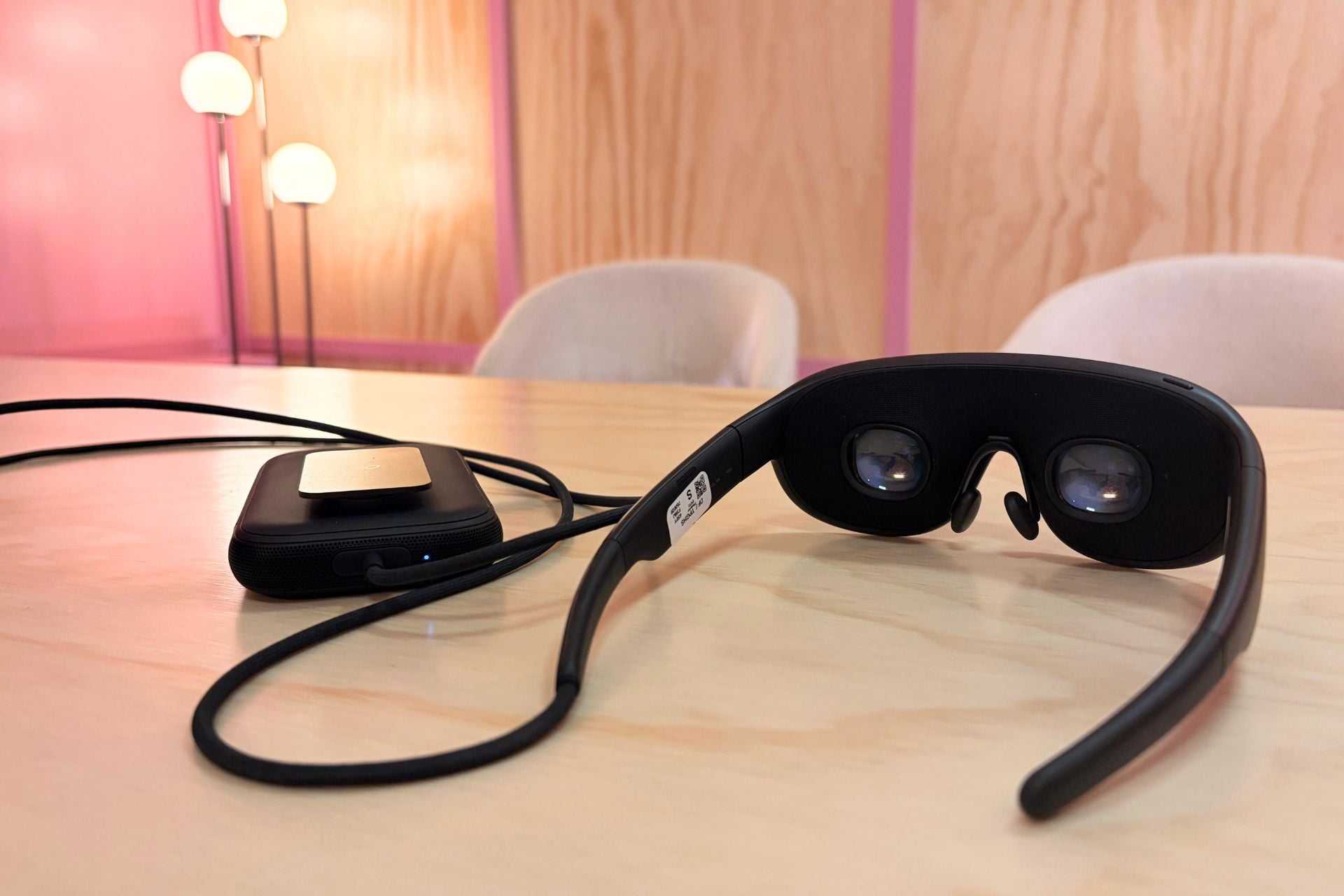
That’s not the only reason I had Quest on the brain, though. Meta VR Glasses don’t just do all of that stuff, but they do all of the stuff in a way that (for the most part) feels… better.
That’s because Meta VR Glasses are not a headset. When Meta says “glasses,” they mean it. These weigh just 100g compared to the Quest 3’s 515g or the Vision Pro’s whopping 750 to 800g. That’s a big difference. While I didn’t get a chance to use the Meta VR Glasses for an extended period, I could already tell they were going to be much less burdensome than wearing a computer over your whole head.
And you’d think that with that drastic size reduction, you’d get a big compromise in overall quality, but from my experience, that’s not the case here. First of all, the display is on par with the Vision Pro. It’s a 5K micro OLED with 37 pixels per degree. Jargon aside, that translates to a really sharp, really clear screen that you would actually want to watch and play things on. It’s actually nicer than the Quest 3 and 3S in terms of resolution.
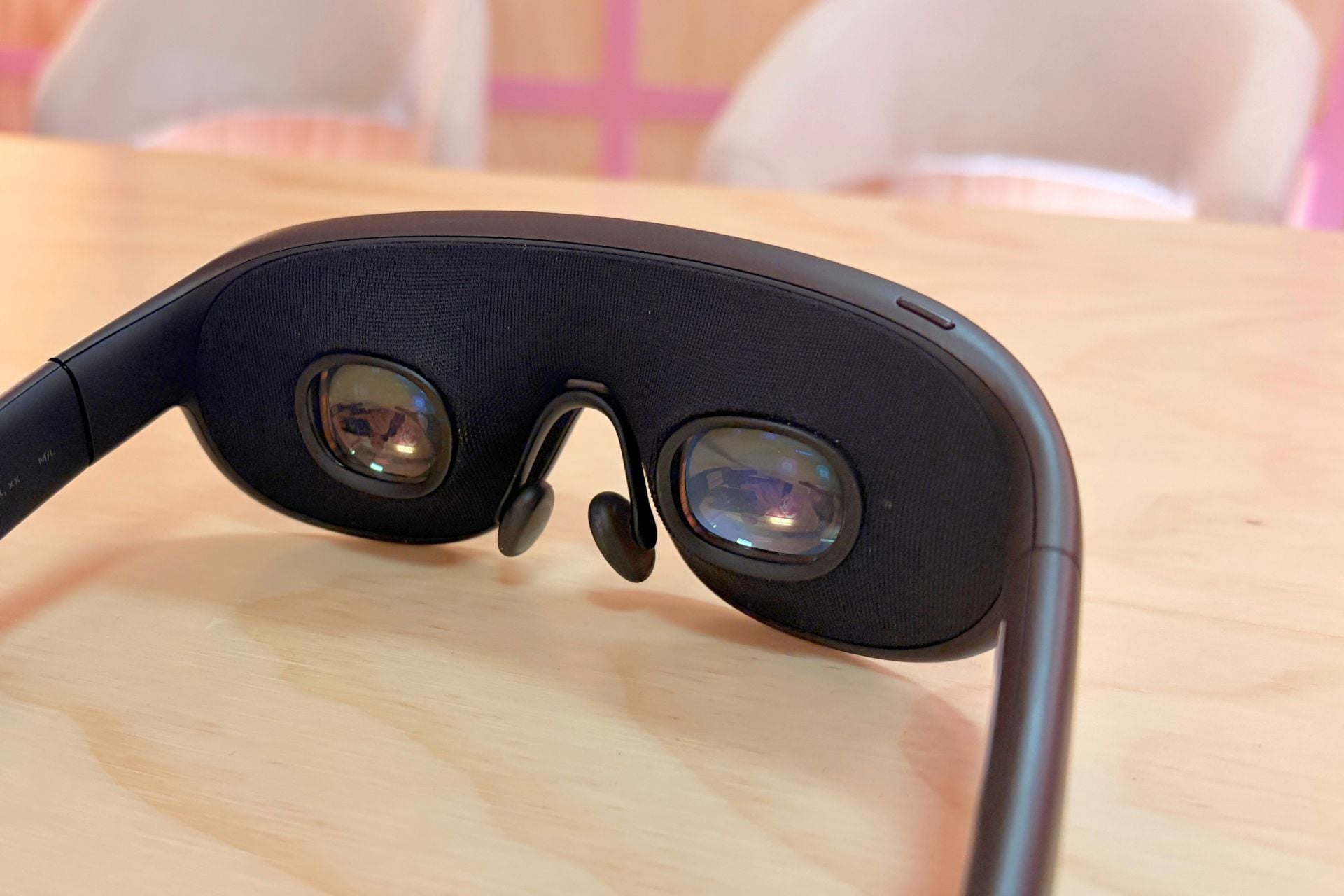
Performance is still a question mark, but I did get a feel for some of that too, and—with the help of Qualcomm’s Snapdragon Reality Elite processor—the puck attached to Meta VR Glasses seems sturdy. I played Beat Saber with no noticeable lag, and both hand and eye tracking were very snappy.
Oh, and speaking of hand and eye tracking, that’s another advantage of Meta VR Glasses. The Quest 3 and 3s also let you use your hands as inputs, but in my experience, it doesn’t feel nearly as quick and intuitive as Meta VR due to the lack of eye tracking. Controllers are fine, don’t get me wrong, but nothing beats being able to just pop on a pair of glasses and get going, especially when you can play about 75 Quest titles with just your hands, no controllers needed.
As long as we’re talking about games, I should also note that you can, in fact, play the entire Quest catalog of games, though some of those will require connecting Quest controllers.

In many ways, Meta VR Glasses do everything as well as or better than Quest, but in a smaller form factor. Sure, you have to be tethered to a puck that’s about the size of a phone, but is that really any more burdensome than feeling the weight of a whole computer on your nose and forehead? Is it really that much less immersive? For me, not really. Also, let’s not discount the fact that you get three hours of battery life with a puck, according to Meta, as opposed to the Quest, which gets a little more than two hours.
To be clear, Meta VR glasses don’t have every advantage. Easily the biggest downside is the field of view (FOV). While the Quest 3 gets a 110-degree FOV, Meta VR Glasses get just 70 degrees. That’s a very noticeable difference. I wouldn’t quite categorize it as tunnel vision, but you’re not going to get the same expansive view as you would on a headset.
I’m also interested to see how light blockage compares. Without your eyes surrounded by a whole machine, you do get more bleed from lighting around you. My demo of Meta VR Glasses was in a fairly dim room, so I didn’t notice many problems there, but using them in direct or indirect sun might be a different story.
Just too many perks
Still, even with those potential downsides, what you’ve got is a machine that does a lot of what premium headsets like the Vision Pro do in a form factor that feels much, much, more palatable. If that’s not a recipe for disruption, I’m not sure what is. Price will still be a major factor, with Meta VR Glasses clocking in at $1,300, but Meta has Apple to thank for setting our expectations there. The Vision Pro debuted at $3,500 and now costs $3,700 due to the ongoing RAM shortage. If you’re comparing the two devices directly (and you absolutely could), $1,300 may not seem totally out of the realm of possibility.
Meta may still have plans for additional Quest headsets in the works, but I’d be lying if I said I wasn’t skeptical about the Quest’s future. Where do headsets fit in when you can do all of this stuff in a pair of glasses? Does Quest go more premium? Does it cater more to the entry level? Will you even want to strap a whole computer to your head when you know damn well someone out there is sporting a lightweight pair of glasses to do the same stuff?
There are many questions left to be asked, but for me the overall answer is simple: VR glasses are the thing I want.