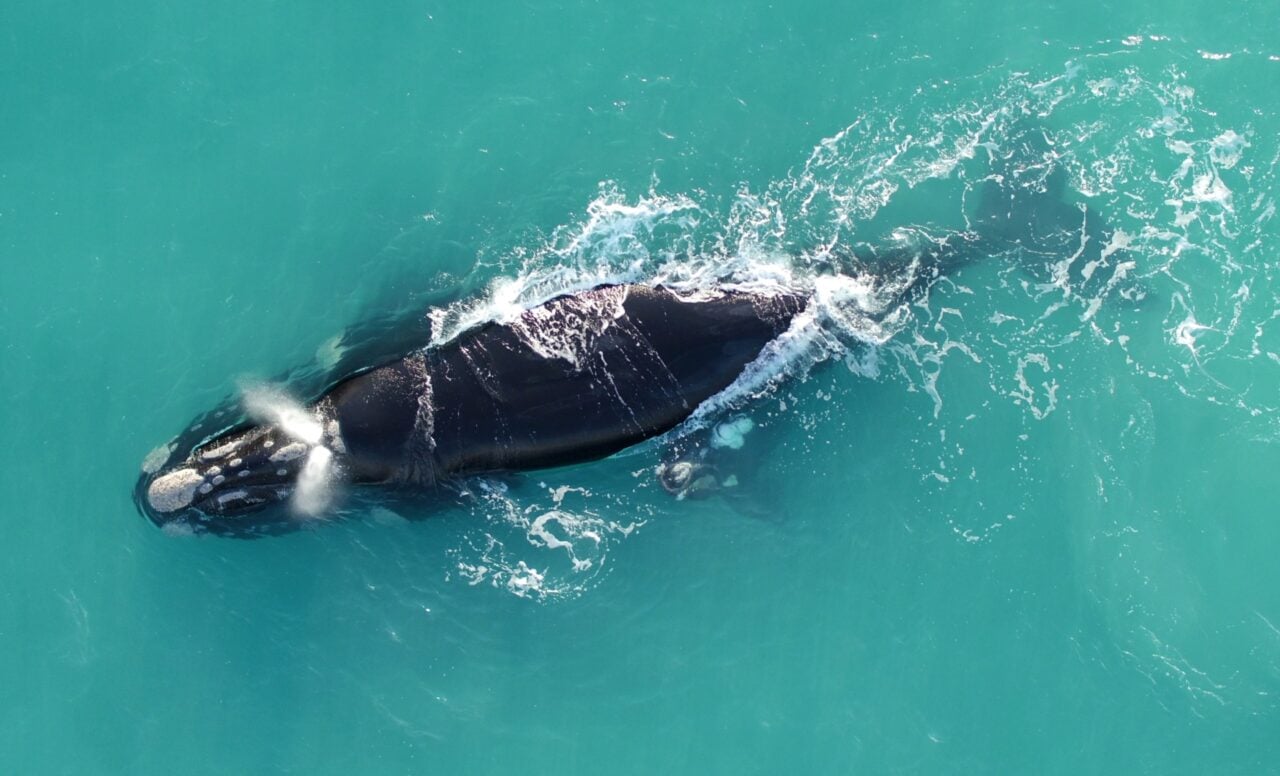
The sight of a huge whale floating upside-down might be worrisome. Is it sick or injured? According to a new study, probably not—the whale is likely a mom taking a well-deserved break from raising her calves.
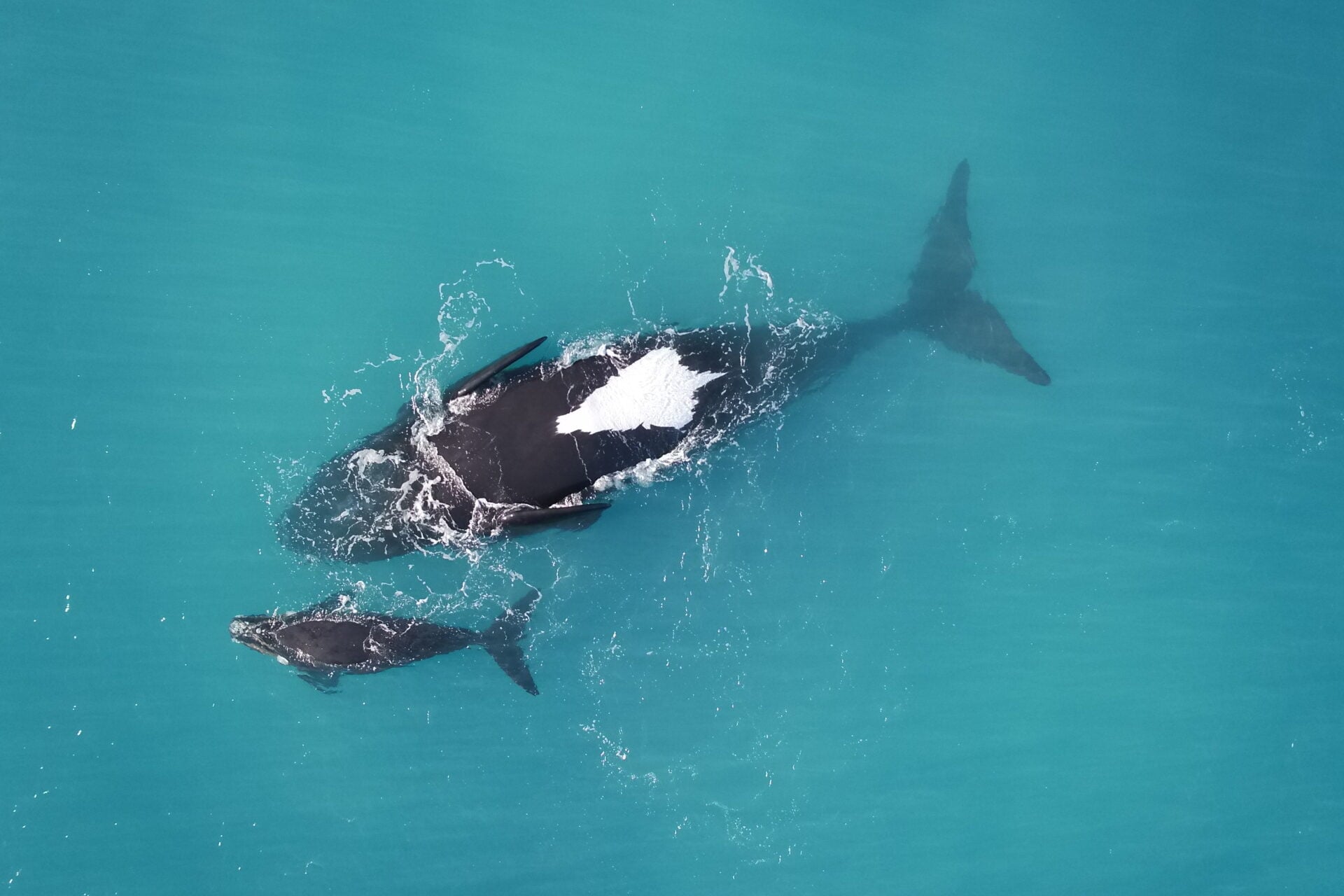
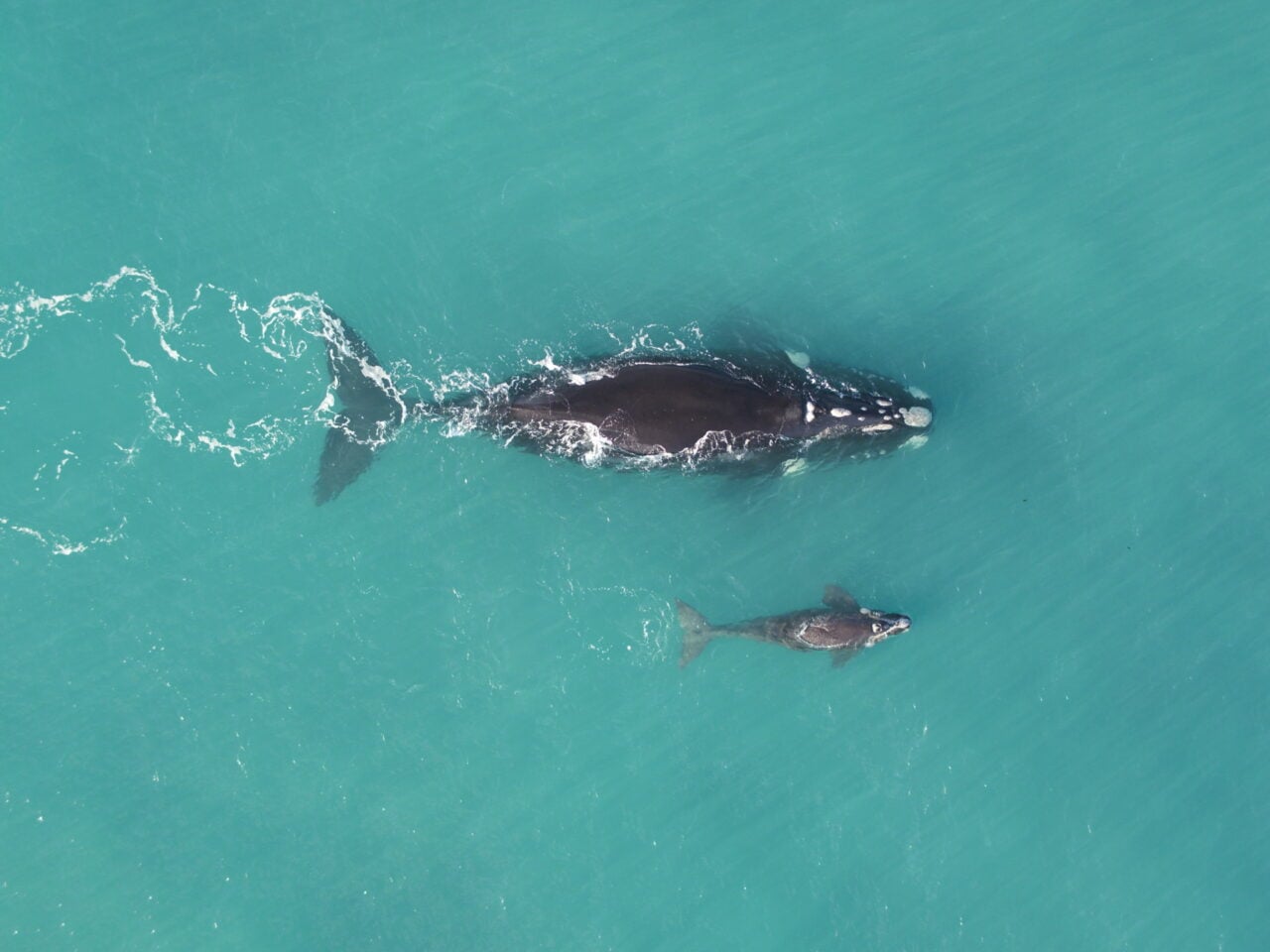
Southern right whales (Eubalaena australis) migrate extremely long distances—about 3,728 miles (6,000 kilometers)—between western Australia and Antarctica. While following this long journey with overhead drones, researchers noticed that some of the whales would lie upside-down at or just above the ocean surface. Upon further investigation, the team concluded that, fortunately, the whales weren’t sick. Rather, this behavior appeared to be a whale mother resting, either to prevent overheating or to get some reprieve from feeding milk to her calves. The team published its results in a recent paper for Mammalian Biology.
“To our knowledge, no other large whale has been recorded resting this way,” study co-authors Kate Sprogis, Renae van Noort, and Fredrik Christiansen wrote in a column for The Conversation. Sprogis and van Noort are marine biologists at the University of Western Australia, whereas Christiansen is a marine biologist at Aarhus University in Denmark.
Upside-down moms
When the team noticed upside-down whales, its first instinct was to identify who was lying this way—was there a particular sex or age group that preferred this position? From their observations, the researchers realized that only mothers with newborn calves (and one mother in the late stages of pregnancy) were resting upside down.
For the study, the team tracked and analyzed 59 mother-calf pairs. The team explained that about 25% of the mothers observed displayed this upside-down behavior, and this was for roughly 19% of the time that the drones filmed the whales.
Childcare is hard everywhere
Southern right whales lead an energy-intensive lifestyle. They’re known as capital breeders, which means the whales have separate locations for feeding and breeding. Earlier in the migration season, the whales swim over to Antarctica to feast on krill. Then they travel back to warmer breeding grounds on Australian coasts while relying on energy stored in their blubber, the team explained in The Conversation.
That calls for smart management of energy, as mothers’ body condition “declines as the season progresses while calf growth rate and energetic demands increase,” according to the paper. In that sense, resting upside-down would prevent calves from reaching their mother’s mammary slits, allowing the mom whale to get some well-deserved “beauty sleep,” as the researchers put it.
It’s also possible that this upside-down position lets the mothers cool down—literally speaking. Southern right whales don’t have dorsal fins, which typically allow marine mammals (and also fish) to control their internal temperatures. Lying upside down exposes the mom whale’s belly and pectoral fins, which increases exposure to the cool sea breeze, somewhat like how humans dip their “legs in a cold pool on a hot day,” the team wrote.
Whales at peace
All that said, the researchers noted in the paper that there may be other explanations for this particular behavior. However, it’s worth noting that lying upside-down does put whales in a more vulnerable position. For example, if a boat or ship sails nearby, it would take longer for the whale to swim away, as “rotating the right way up is no easy feat, especially when you can weigh upwards of 40 tons,” the team said.
What’s more, southern whale populations are still recovering from historical whaling. So, the team concluded, the takeaway is this: “Remember these animals are undertaking one of the most energetically demanding periods of their lives, and it’s best to give them space and not disturb them.”
Correction (07/08/2026): An earlier version of this article’s headline incorrectly stated that the researchers initially thought the whales were sick. In fact, the study’s authors did not reach that conclusion. Rather, their research examined why mother whales were observed floating upside down. The headline has been updated accordingly.