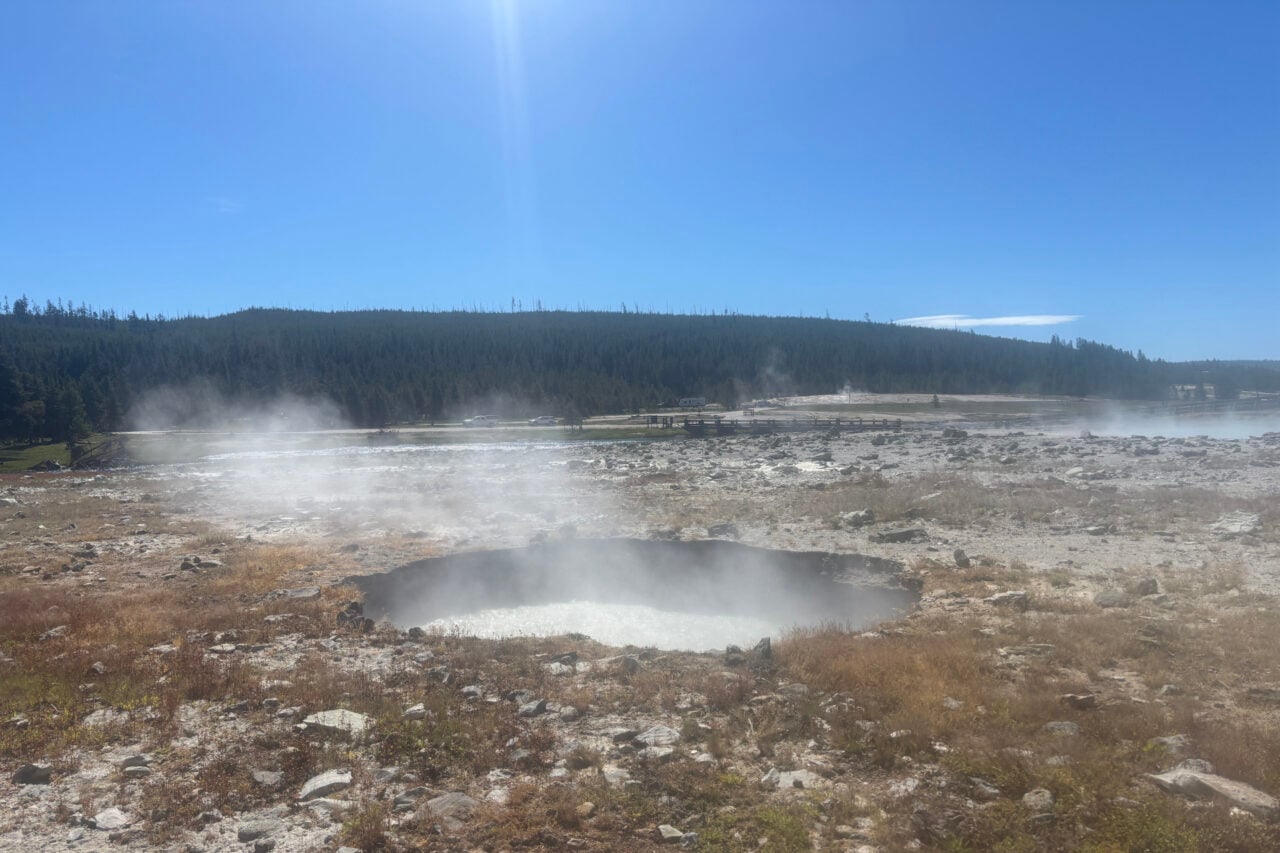
Beneath the geysers and steaming ground of Yellowstone National Park lies one of the most studied, yet still elusive, volcanic systems on Earth. Unlike most volcanoes that form along shifting tectonic plates, the Yellowstone Caldera sits in the middle of a continent, leaving scientists wondering what powers its immense heat. A new model of Yellowstone’s magma system suggests it is fueled by melts from the shallow mantle, guided by tectonic forces, rather than a deep mantle plume.
A team of scientists from the Chinese Academy of Sciences Headquarters set out to interpret past volcanic events at Yellowstone to help predict future eruptions. The results, published Thursday in Science, revealed that tectonic forces largely control how magma moves through a complex network of channels and reservoirs from the upper mantle toward the surface. The findings could help better assess the risks of active volcanic systems.
Magma plumbing system
The Yellowstone Caldera is a massive volcanic system, with the potential for extremely large eruptions that are far bigger than typical volcanoes. Its last major eruption was approximately 630,000 years ago, and while it is not overdue for another one soon, scientists are still keeping a close watch on the volcano.
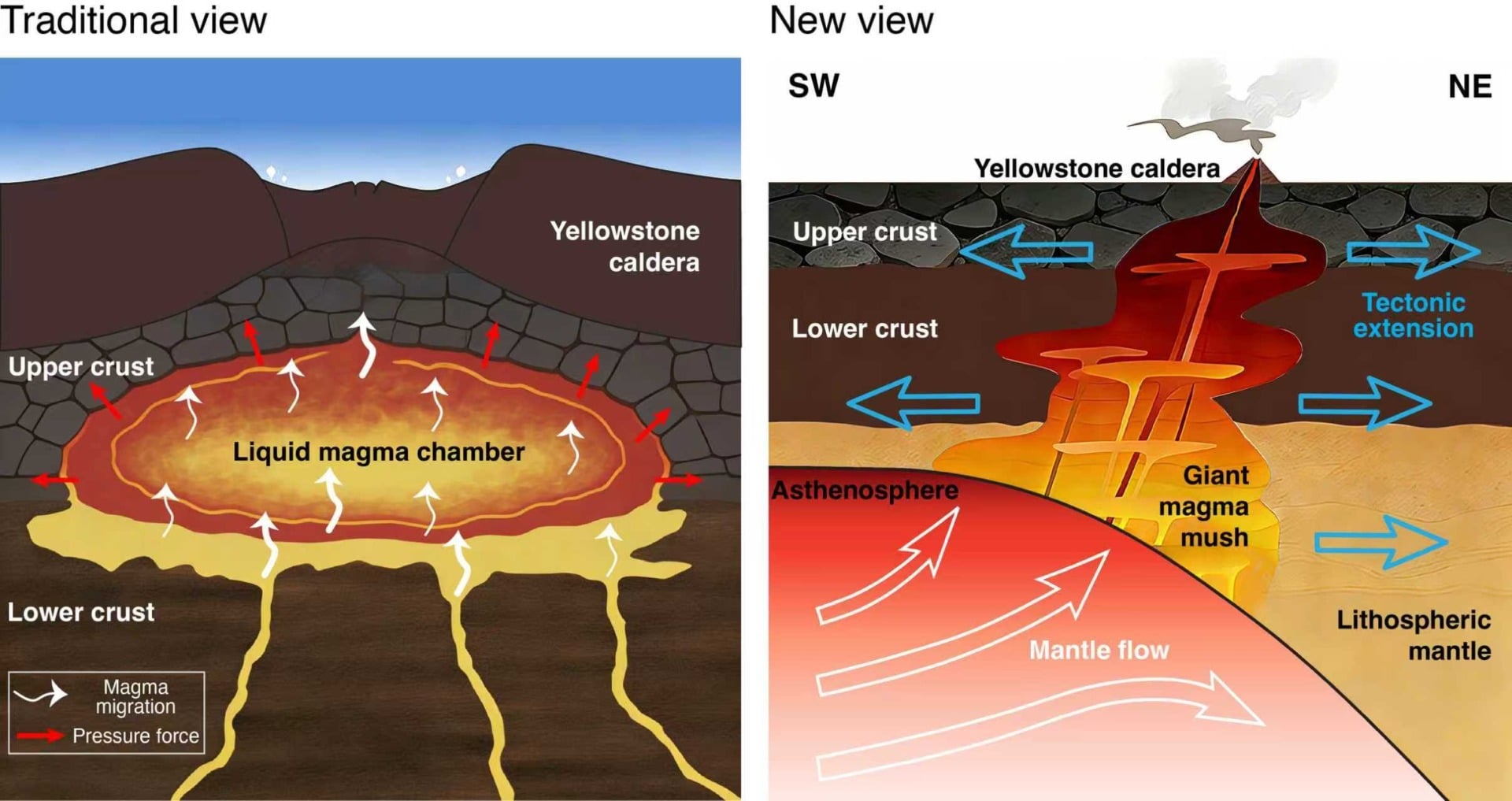
Rather than a single giant chamber, the Yellowstone Caldera is made up of a complex system that includes a shallow magma reservoir and a deeper source that feeds into it. However, how the magma travels through Earth’s rigid outer layer and evolves into volcanism remains unclear.
To help unravel the volcanic mystery, the scientists behind the new study put together a three-dimensional model of the volcanic system and the adjacent Eastern Snake River Plain. The model calculated the dynamics of Earth’s lithosphere, the rigid outer layer, along with the planet’s convective mantle, the thickest layer between the crust and the outer core that behaves as a viscous fluid.
The results showed that Yellowstone’s volcanic system is mainly controlled by tectonic forces in the lithosphere, which drive the generation of magma through excess heat and decompression in Earth’s upper mantle. The new model suggests that magma originates from the shallow mantle (specifically the uppermost asthenosphere) and migrates through a tectonically controlled plumbing system, later evolving in the crust to drive volcanism at the surface.
Volcanic engines
Not all volcanoes are created equally, as volcanic eruptions are driven by different processes.
Volcanism can be caused by the movement of tectonic plates, which can pull apart, collide, or slide past each other, creating a motion that causes rocks to melt. On the other hand, volcanism can also be driven by columns of hot material rising from deep inside the Earth’s mantle, transporting intense heat that causes melting in the lithosphere.
For large calderas with repeated eruptions such as Yellowstone, it is generally believed that their magma is replenished from the asthenosphere, a layer of the upper mantle directly above the lithosphere, before rising vertically toward the surface. The new model, however, reveals a much more complex system beneath Yellowstone due to existing tectonic structures, according to the study.
The model could help provide insights into forecasting volcanic eruptions and provide a better understanding of the hazards associated with those eruptions.