

There are actually 2 rights associated with a recorded song:
1. Master Right, or Phonoright (p) - this is the physical recording of the song. Typically owned by the record label (EMI, in this case).
2. Copyright (c) - this is the music and lyrics . Typically owned by the publisher/song writer (mostly Sony, in this case).
EMI generally doesn't license the Beatles' Master Rights. But...
...this is where it gets tricky.
US law allows for a compulsory mechanical license to be granted without the publisher's explicit consent, provided the royalties are properly paid and accounted for.
In other words, anyone can go out and cover any song that has been released to the public, provided they get a license from the US Copyright Office. The publisher doesn't get to say "no" - it is compulsory on the part of the publisher (they HAVE to grant it) and the rate is statutory (set by Congress - currently $0.091/use).
As an example, look at how many thousands of covers there are of "Come Together". Neither EMI nor Sony nor The Beatles "approved" many of those covers - but they are legal.
An .mp3 is generally considered eligible for a compulsory mechanical license, even though there is no physical media involved. This is where it gets dicey, because there are very specific things you can and can not do with an .mp3 when you license it in this matter. For example, it can't be streamed, it can't be synchronized with moving images, it can't be used for karaoke, etc. In any case...
IF the recordings were truly created by him (i.e., he did not sample the Master Recording but rather used his computer to recreate the recording) then he didn't need a Master Use license from EMI and...
IF all he did with these new recordings were sell them via a physical media or via a non-interactive download and...
IF he paid Sony/ATV (the publisher) the statutory compulsory license rate (currently $0.091 per use)...
THEN he has a case. His defense would argue that is no different than doing a cover, and they would have precedent on their side.
Granted, it's not a case I would want to argue, but it's not like he doesn't have a defense.
OK, that's probably way more than anyone wants to know about US Copyright Law and music licensing. #riaa
@B3ND3R: You have disgraced your namesake by being helpful, polite, and refraining from using any of the following words "Bite" "my" "shiny" "metal" "ass" #riaa
@B3ND3R: Excellent explanation of some of the issues.
I think Hank will lose, as Bertone77 below states, because what he created was a derivative work. There's not even a creativity aspect to what he did - he started with the originals, processed them and developed something new. Classic derivative work.
@B3ND3R: Interesting interpretation actually! The only thing I found an issue with that there is one copyright only, which belongs to the original composers. This is denoted by (c). The publishing rights "(p)" are a part of the intellectual properly law and can be granted to certain parties, and also full ownership can be given to another party. This is done during the copyright registration.
This caveat is also why you may see a song is a registered to the record company or publisher instead of the artist themselves. #riaa
@emorottie: Without getting too far into it... ha ha!
There are 2 rights associated with a song that has been recorded:
1. The copyright is designated as (c) and belongs to the author, which is typically the songwriter(s).
The songwriter(s) assigns a portion of this copyright to a music publisher in return for the publisher exploiting (in a good way) the copyright.
There is always only one (c) per song. Period. But the (c) only covers the words and music, not the Sound Recording (SR) or "Master" recording or phonoright (p).
2. The (p) covers the actual recorded interpretation of the song. It belongs typically to the record label, although artists who are powerful enough can negotiate to own the (p) in their recording contracts. There can be multiple (p) but only one per recording.
I know that sounds confusing, but here is an example:
"Come Together"
writers: John Lennon/Paul McCartney
(c) breakdown:
25% John Lenon (writer)
25% Paul McCartney (writer)
25% EMI Blackwood (*publisher)
25% Sony/ATV Tree (*publisher)
*Don't confuse these parties with EMI Records or Sony Records - for the purposes of this discussion they are different parties. If it helps you to keep it straight, substitute Blackwood Publishing" for EMI Blackwood" and "ATV/Tree" for Sony/ATV Tree.
Every time a copy of that song is sold in a mechanical form (CD, .mp3) $0.091 is split among those 4 parties equally or about $0.023 cents each.
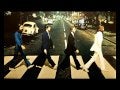
So when The Beatles recorded "Come Together" on the Abbey Road, every time that album sold/sells the 4 parties listed above get about $0.023. But George Harrison gets nothing, nor does Ringo Starr, nor does the record label (EMI Records).
So how do those other parties, who clearly had a hand in making the Sound Recording getting paid?
OK, so hang with me...
Remember the other right associated with the song - (p)?
EMI Records owns the (p). They agree to share the income earned from the (p) with The Beatles.via a record contract.
I won't get into the breakdown, but when a record sells EMI Music is going to packet about $0.60 on the dollar, the distributor is going to pocket about $0.30 on the dollar and The Beatles are going to pocket about the remaining $0.10.
To recap, when Abbey Road sells, the income earned only from the song "Come Together" is:
John Lenon - $0.023 (c) + $0.025 (p) = $0.048
Paul McCartney - $0.023 (c) +$0.025 (p) = $0.048
Blackwood publishing - $0.023 (c) *only
ATV/Tree publishing - $0.023 (c) *only*
EMI Records - $0.025 (p) *only*
George Harrison - $0.025 (p) *only*
Ringo Starr - $0.025 (p) *only*
Multiple these monies out for multiple songs/record.
But what happens when another band, such as Big Mountain does a reggae cover of Come Together?
Well, there is a new (p) involved because Big Mountain re-recorded the song - they didn't use the same tracks as The Beatles for their reggae version - they made new tracks and thus a new (p)... which Big Mountain's record label likely owns.
These parties still get paid, because it is still their (c) - it is just a recorded different interpretation of John Lennon & Paul McCartney's words & music. I.e., it's the same song with a different track. Continuing:
Big Mountain's record label (whomever they may be) - $0.025 (p) *only*
Big Mountain - - $0.10 (p) *only*
Clearer?
Honestly, I come across people every day in the music industry who should know better, but still don't understand the difference between (c) and (p). Look on the back of any CD or at the liner notes and you will see both symbols.
It's why artists lose their shirts signing away publishing and or masters ownership. Because record companies *do* get this and use that knowledge to their advantage.
@B3ND3R: Hrrrm yeah you're right about the use of the (p) and (c) symbol. I am mistaken on that.
Technically, however, all rights including the sound recording and composition can be covered under SR.
This is where copyright law gets a bit murky there (it took me a long while to fully understand the limitations and paperwork involved with obtaining a compulsory license). #riaa
@emorottie: If you are the owner of both the copyright & the phonoright, you can file your ownership for both rights simultaneously using Form SR or Form CO.
Without getting into all the nuances, filing doesn't "give" you copyright it only provides you with prima fascia evidence in a dispute.
Regardless, (c) & (p) are treated differently when it comes to licensing them.
As you can deduce from my explanation above, if you owned both rights (you are both the author of the words & music *and* the author of the master recording) you could license (c) and chose not to license (p).
For example, as the licensor you might choose to do this in authorizing a cover recording. A new (p) is created which you don't own but you do get paid when the licensee uses your (c).
But the inverse wouldn't be true if the licensee were attempting to duplicate the actual Master recording in some manner . As the owner of both (c) & (p) you would have to grant the licensee (c) if you were licensing the (p).
For example, if a TV show wanted to use the actual Beatles Master recording of "Come Together" as background music in a scene, the TV show (licensee) would have to obtain both a Master Use (p) license and a Synchronization (c) license from the licensor... as well as performance license from a PRO, but we won't get into that here.
Don't feel too badly about not understanding all the limitations of music licensing. I have worked for major record labels, music publishers, and songwriters for over 15 years and currently do music industry education for a living and even I have a hard time keeping up.
IMO, the root of the problem centers on the fact that we are operating on a copyright law that hasn't been significantly updated since 1976. And who knew about the internet in '76 (besides Al Gore)?
Congress has been applying poor bandaids to the law since then (AHRA, DPRSRA, DMCA) when the whole law needs rewritten. Nobody has the stones to take it on, though, and the RIAA & MPAA are concerned with maintaining the status quo. #riaa
@B3ND3R: Quick note cause I can't read this atm, but I'm bugging you just BECAUSE you know so much and I'd like to know more!
Thanks for all the info in advance; it'll help me out a lot. The music part of copyright is terribly difficult to comprehend (other parts of copyright law are no issue for me but music = O___o) #riaa
Nice try Hank, but you need to do some more research on copyright infringement before you go "creating music" again.
What Hank created is clearly a "derivative work" as defined by US copyright law. [en.wikipedia.org]
He did not create anythingnew, instead he stood on the shoulders of giants and "altered" it enough so that he could justify it in his mind that it was "original".
Hope he has a good lawyer to at least try to soften the blow of the book that is going to be thrown at him. #riaa
Mike Zuniga: That was Unexpected promoted this comment
Edited by ethanlechcharles at 11/07/09 4:43 PM
ethanlechcharles was starred
ethanlechcharles was unstarred
@pexy: I heard that Michael Jackson bought the rights to the Beatles catalog back in the 90's. Paul got shut out by one of his biggest fans. When Apple corps finally lost the rights to the music, Michael Jackson stepped in with the winning bid to own them.
The new stereo CDs are just remastered, not remixed. NY Times says they sound better than the 1987 stereo CDs because EMI used better A-D converters and took more time (four years?!).
Reading the beyond-obsessive Beatles fans on Amazon forums, some maintain that the bestest knobs-at-11 sound would be to make new stereo mixes of the albums. This sounds like sacrilege, but George and Giles Martin have done it for the Yellow Submarine soundtrack, One album, and Love album. EMI could even consider 5.1 surround mixes on Blu-ray.
That the Beatles cared more about the mono mixes than the stereo ones isn't surprising. It's similar to the way artists care about stereo mixes these days and don't spend much time on the surround mix, and why early 5.1 sounds as goofy and exaggerated as early stereo.
But the world is in stereo. We have two ears. Once engineers realized the second speaker wasn't just where you put the tambourine, creating stereo soundfields made reproduced music come alive.
The mono mixes may be historically important, but I'm betting the stereo remixes will sound way better.
@frigg: As I wrote elsewhere, the stereo CDs haven't been remixed, just remastered. But there have been Beatles remixes on recent compilations and soundtracks, to general approval.
I have been waiting for Mono CDs to come to the States for a long time. I waited too long to preorder it seems, B&N was not able to fulfill my order that I placed August 2nd. I'll have to tough it out in Retail.
If I can't purchase it from a store, I will have NO problem with downloading flac rips.
Why go through all that trouble and then not release it on DVD-A or SACD? Then it might actually be worth the hundreds of $$ they're asking. Otherwise, they offer no reason for me to not just download it in FLAC.
@Chris Churchill: Easy answer: stereo SACD offers absolutely no benefit over CD. There was a very nice study conducted that showed that no "golden-eared" listeners could tell the difference between an SACD source, and the same SACD source passed through a 16-bit/44.1kHz A/D-D/A.
What matters on SACD is the attention to detail and quality of the masters, which are typically much more carefully done. But, once that careful mastering has been performed, a standard CD can reproduce it indistinguishably.
Of course, if you meant surround, then that's a different story, but I would question the benefit of introducing surround to this particular set of recordings.
@MikeK:
It's easy to generate all sorts of results in studies, even nice ones.
My experience is that people can distinguish between 16 and 24 bit resolution, although the difference is less noticeable between 44.1 and 96 kHz. And of course, a better converter at a lower resolution can sound better than a crappy converter at a higher resolution.
Somewhere upstairs, I pulled out of the attic some original copies of the White album, Abbey Road and so on that one of the previous owners of the house left behind. I haven't looked to see if they're mono or stereo.
Anyone know how to unwarp vinyl that's been left in an attic for a generation?
@OMG! Ponies!: That # isn't accurate, there are more than 10,000 being produced. If you REALLY want one, just be on the lookout for the next month or two.
@OMG! Ponies!: I'm actually excited to see what all the hubub is about the mono versions of the tracks. I'm planning on getting the remastered Sgt. Pepper's in stereo, but I'll see if I can "aquire" the mono one to see if it's really as good as they say.
@Matt0505: Here's hoping. I may have to go to a certain bay frequented by pirates to tide me over until my actual copies arrive. It's not like I'm not buying the remasters and mono versions.
I think now the story is why SKY News removed a published story from its website. Does Apple have enough clout to get SKY News, owned by News Corp., to remove a story?
And I don't think it was some little mistake because there really is no way to accidentally report that John Lennon's widow said that the Beatles catalog will be available for download on iTunes.
11/07/09
There are actually 2 rights associated with a recorded song:
1. Master Right, or Phonoright (p) - this is the physical recording of the song. Typically owned by the record label (EMI, in this case).
2. Copyright (c) - this is the music and lyrics . Typically owned by the publisher/song writer (mostly Sony, in this case).
EMI generally doesn't license the Beatles' Master Rights. But...
...this is where it gets tricky.
US law allows for a compulsory mechanical license to be granted without the publisher's explicit consent, provided the royalties are properly paid and accounted for.
In other words, anyone can go out and cover any song that has been released to the public, provided they get a license from the US Copyright Office. The publisher doesn't get to say "no" - it is compulsory on the part of the publisher (they HAVE to grant it) and the rate is statutory (set by Congress - currently $0.091/use).
As an example, look at how many thousands of covers there are of "Come Together". Neither EMI nor Sony nor The Beatles "approved" many of those covers - but they are legal.
An .mp3 is generally considered eligible for a compulsory mechanical license, even though there is no physical media involved. This is where it gets dicey, because there are very specific things you can and can not do with an .mp3 when you license it in this matter. For example, it can't be streamed, it can't be synchronized with moving images, it can't be used for karaoke, etc. In any case...
IF the recordings were truly created by him (i.e., he did not sample the Master Recording but rather used his computer to recreate the recording) then he didn't need a Master Use license from EMI and...
IF all he did with these new recordings were sell them via a physical media or via a non-interactive download and...
IF he paid Sony/ATV (the publisher) the statutory compulsory license rate (currently $0.091 per use)...
THEN he has a case. His defense would argue that is no different than doing a cover, and they would have precedent on their side.
Granted, it's not a case I would want to argue, but it's not like he doesn't have a defense.
OK, that's probably way more than anyone wants to know about US Copyright Law and music licensing. #riaa
11/07/09
11/07/09
Wait, is this the internet I'm used to? Get out of here! :)
Seriously though, thanks for that explanation, that is interesting. Nice to have it laid out in plain english, too. #riaa
11/07/09
11/07/09
I think Hank will lose, as Bertone77 below states, because what he created was a derivative work. There's not even a creativity aspect to what he did - he started with the originals, processed them and developed something new. Classic derivative work.
11/07/09
11/07/09
This caveat is also why you may see a song is a registered to the record company or publisher instead of the artist themselves. #riaa
11/07/09
There are 2 rights associated with a song that has been recorded:
1. The copyright is designated as (c) and belongs to the author, which is typically the songwriter(s).
The songwriter(s) assigns a portion of this copyright to a music publisher in return for the publisher exploiting (in a good way) the copyright.
There is always only one (c) per song. Period. But the (c) only covers the words and music, not the Sound Recording (SR) or "Master" recording or phonoright (p).
2. The (p) covers the actual recorded interpretation of the song. It belongs typically to the record label, although artists who are powerful enough can negotiate to own the (p) in their recording contracts. There can be multiple (p) but only one per recording.
I know that sounds confusing, but here is an example:
"Come Together"
writers: John Lennon/Paul McCartney
(c) breakdown:
25% John Lenon (writer)
25% Paul McCartney (writer)
25% EMI Blackwood (*publisher)
25% Sony/ATV Tree (*publisher)
*Don't confuse these parties with EMI Records or Sony Records - for the purposes of this discussion they are different parties. If it helps you to keep it straight, substitute Blackwood Publishing" for EMI Blackwood" and "ATV/Tree" for Sony/ATV Tree.
Every time a copy of that song is sold in a mechanical form (CD, .mp3) $0.091 is split among those 4 parties equally or about $0.023 cents each.
So when The Beatles recorded "Come Together" on the Abbey Road, every time that album sold/sells the 4 parties listed above get about $0.023. But George Harrison gets nothing, nor does Ringo Starr, nor does the record label (EMI Records).
So how do those other parties, who clearly had a hand in making the Sound Recording getting paid?
OK, so hang with me...
Remember the other right associated with the song - (p)?
EMI Records owns the (p). They agree to share the income earned from the (p) with The Beatles.via a record contract.
I won't get into the breakdown, but when a record sells EMI Music is going to packet about $0.60 on the dollar, the distributor is going to pocket about $0.30 on the dollar and The Beatles are going to pocket about the remaining $0.10.
To recap, when Abbey Road sells, the income earned only from the song "Come Together" is:
John Lenon - $0.023 (c) + $0.025 (p) = $0.048
Paul McCartney - $0.023 (c) +$0.025 (p) = $0.048
Blackwood publishing - $0.023 (c) *only
ATV/Tree publishing - $0.023 (c) *only*
EMI Records - $0.025 (p) *only*
George Harrison - $0.025 (p) *only*
Ringo Starr - $0.025 (p) *only*
Multiple these monies out for multiple songs/record.
But what happens when another band, such as Big Mountain does a reggae cover of Come Together?
Well, there is a new (p) involved because Big Mountain re-recorded the song - they didn't use the same tracks as The Beatles for their reggae version - they made new tracks and thus a new (p)... which Big Mountain's record label likely owns.
What does that breakdown look like?
John Lenon - $0.023 (c) *only*
Paul McCartney - $0.023 (c) *only*
Blackwood publishing - $0.023 (c) *only
ATV/Tree publishing - $0.023 (c) *only*
These parties still get paid, because it is still their (c) - it is just a recorded different interpretation of John Lennon & Paul McCartney's words & music. I.e., it's the same song with a different track. Continuing:
Big Mountain's record label (whomever they may be) - $0.025 (p) *only*
Big Mountain - - $0.10 (p) *only*
Clearer?
Honestly, I come across people every day in the music industry who should know better, but still don't understand the difference between (c) and (p). Look on the back of any CD or at the liner notes and you will see both symbols.
It's why artists lose their shirts signing away publishing and or masters ownership. Because record companies *do* get this and use that knowledge to their advantage.
****** The More You Know ****** #riaa
11/07/09
Technically, however, all rights including the sound recording and composition can be covered under SR.
This is where copyright law gets a bit murky there (it took me a long while to fully understand the limitations and paperwork involved with obtaining a compulsory license). #riaa
11/07/09
Without getting into all the nuances, filing doesn't "give" you copyright it only provides you with prima fascia evidence in a dispute.
Regardless, (c) & (p) are treated differently when it comes to licensing them.
As you can deduce from my explanation above, if you owned both rights (you are both the author of the words & music *and* the author of the master recording) you could license (c) and chose not to license (p).
For example, as the licensor you might choose to do this in authorizing a cover recording. A new (p) is created which you don't own but you do get paid when the licensee uses your (c).
But the inverse wouldn't be true if the licensee were attempting to duplicate the actual Master recording in some manner . As the owner of both (c) & (p) you would have to grant the licensee (c) if you were licensing the (p).
For example, if a TV show wanted to use the actual Beatles Master recording of "Come Together" as background music in a scene, the TV show (licensee) would have to obtain both a Master Use (p) license and a Synchronization (c) license from the licensor... as well as performance license from a PRO, but we won't get into that here.
Don't feel too badly about not understanding all the limitations of music licensing. I have worked for major record labels, music publishers, and songwriters for over 15 years and currently do music industry education for a living and even I have a hard time keeping up.
IMO, the root of the problem centers on the fact that we are operating on a copyright law that hasn't been significantly updated since 1976. And who knew about the internet in '76 (besides Al Gore)?
Congress has been applying poor bandaids to the law since then (AHRA, DPRSRA, DMCA) when the whole law needs rewritten. Nobody has the stones to take it on, though, and the RIAA & MPAA are concerned with maintaining the status quo. #riaa
11/08/09
11/08/09
Thanks for all the info in advance; it'll help me out a lot. The music part of copyright is terribly difficult to comprehend (other parts of copyright law are no issue for me but music = O___o) #riaa
11/07/09
What Hank created is clearly a "derivative work" as defined by US copyright law. [en.wikipedia.org]
He did not create anythingnew, instead he stood on the shoulders of giants and "altered" it enough so that he could justify it in his mind that it was "original".
Hope he has a good lawyer to at least try to soften the blow of the book that is going to be thrown at him. #riaa
11/07/09
11/07/09
09/08/09
09/09/09
09/08/09
Reading the beyond-obsessive Beatles fans on Amazon forums, some maintain that the bestest knobs-at-11 sound would be to make new stereo mixes of the albums. This sounds like sacrilege, but George and Giles Martin have done it for the Yellow Submarine soundtrack, One album, and Love album. EMI could even consider 5.1 surround mixes on Blu-ray.
No doubt for some Beatles anniversary EMI will go for it. Meanwhile I bet fans will remix the Rock Band tracks as they did with Metallica. When people love songs this much, some will go to extreme lengths to get the "master tape" sound.
09/08/09
09/08/09
But the world is in stereo. We have two ears. Once engineers realized the second speaker wasn't just where you put the tambourine, creating stereo soundfields made reproduced music come alive.
The mono mixes may be historically important, but I'm betting the stereo remixes will sound way better.
09/08/09
09/09/09
09/08/09
If I can't purchase it from a store, I will have NO problem with downloading flac rips.
09/08/09
09/08/09
09/08/09
09/08/09
09/08/09
What matters on SACD is the attention to detail and quality of the masters, which are typically much more carefully done. But, once that careful mastering has been performed, a standard CD can reproduce it indistinguishably.
Of course, if you meant surround, then that's a different story, but I would question the benefit of introducing surround to this particular set of recordings.
[theaudiocritic.com]
09/08/09
09/08/09
It's easy to generate all sorts of results in studies, even nice ones.
My experience is that people can distinguish between 16 and 24 bit resolution, although the difference is less noticeable between 44.1 and 96 kHz. And of course, a better converter at a lower resolution can sound better than a crappy converter at a higher resolution.
09/08/09
Anyone know how to unwarp vinyl that's been left in an attic for a generation?
09/08/09
Here are two links, in fact they work for all of your questions.
* [lmgtfy.com]
* [justfuckinggoogleit.com]
09/09/09
The snark is strong in this one.
That was actually an off-hand question because I didn't think it was possible. I fear the person who tried this technique the first.
09/09/09
Furutech will gladly sell you their DVF-1 Record Flattener for $1480.
09/08/09
09/08/09
09/08/09
09/08/09
09/08/09
09/08/09
09/08/09
And I don't think it was some little mistake because there really is no way to accidentally report that John Lennon's widow said that the Beatles catalog will be available for download on iTunes.