Wearables face a lot of hurdles. Not only do they have to be functional, comfortable, and affordable, but they absolutely, positively have to be fashionable, or at least not make you look stupid. That’s just a hard fact when you’re wearing a gadget on your body instead of shoving it in your pocket.
Every wearable contends with the fashion standard a little, but there’s arguably no higher-stakes venue than that of chip-filled glasses; a smartwatch on someone’s wrist you might miss, but if you’re in public, everyone is going to look at your face. If you had any doubt about how important looking stylish is to a pair of smart glasse—in this case, AR glasses, look no further than Snap’s recent unveiling of Specs.
Snap finally showed a $2,200 consumer version of its AR glasses to the public, and it got absolutely roasted.
You’re telling me there’s not a single person at Snap brave enough to tell Evan Spiegel that these glasses look atrocious?
Looks like 3D glasses at an IMAX theater pic.twitter.com/qH8KGYbQhj
— Alex Cohen (@anothercohen) June 17, 2026
Needless to say, Specs are bulky. Snap CEO Evan Spiegel got the brunt of people’s hot takes, and I can’t say I blame the reaction. Few of us (at least anyone who feels shame) would feel entirely comfortable going out into public with glasses that big on our faces even if they’re a whole ass computer—and don’t get it twisted; they absolutely are a whole computer.
Specs are a standalone device unlike almost anything we’ve seen before, at least on a stage this big. They don’t rely on a phone or laptop for compute, and they are meant to run all sorts of spatial apps—games, navigation, educational use cases, and more. To be honest, they’re more like a VR headset than they are a pair of smart glasses.
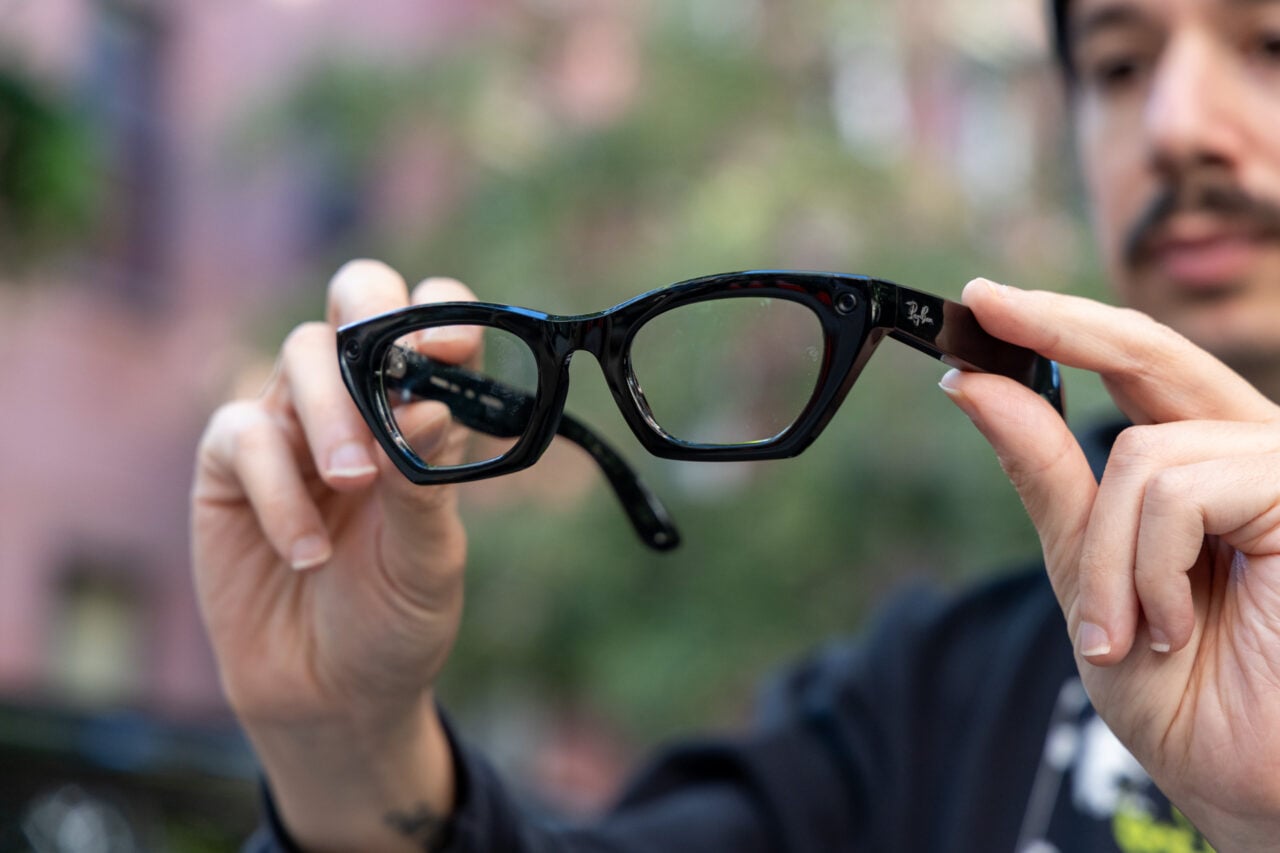
All of those capabilities are their selling point, but they might be the Achilles’ heel, too. Putting that much compute into a form factor as compact as glasses is a difficult feat. Sure, Meta’s recent Starfire Kyle Edition AI glasses might be stylish, but they also do a small fraction of what Specs are promising—Meta’s version doesn’t even have a screen.
In that way, style isn’t just a design problem; it’s a hard engineering one. Can Snap, or any company for that matter, ever really shrink down all the necessary components in a package that people will want to wear on their face? I have my doubts. Just look at Google and Xreal’s Aura glasses, for example.
Even with offloading all of the compute to a separate puck that’s about the size of a battery pack, Aura are a bit bulky. They’re nowhere near the size of smaller, less capable gadgets like Meta’s AI glasses, or even the Meta Ray-Ban Display, which has a display inside. And with the need for tethering (a wire that goes from the smart glasses to a puck), they certainly don’t pass the “regular pair of glasses” test. Something tells me you might get clocked pretty quick wearing a pair of Aura glasses in public. If the random pinching of air doesn’t give you away, the wire and big compute puck around your neck most definitely will.
Some people won’t care, to be sure, but I am going to wager that the segment of people who give zero f*cks about wearing big, obnoxious AR glasses in public is much smaller than the segment who absolutely do. And the thing is, I don’t know that it can ever be solved. Tech isn’t guaranteed to shrink. VR headsets, though they’ve gotten smaller over the years, still aren’t anywhere near a glasses-like form factor, at least without being tethered to a computer, which kind of defeats the appeal of AR glasses like Specs.
It’s clear that AR glasses have a big hill to climb, and as superficial as cool factor might seem, I’m not so sure the memes about Specs and other AR entrants can be laughed off so soon. For AR glasses, size might be everything.