A 35-year-old man’s bloody urine turned out to have an explanation no one could have seen coming: sewing needles jammed into his body.
Doctors in China described the unusual injury in a case report earlier this month. The man, who was intellectually disabled, had multiple needles inside his body, all likely self-inserted. The doctors were able to remove the one closest to his heart, and the man recovered.
“Cardiac foreign bodies associated with presumed self insertion behaviors can be clinically occult and diagnostically challenging, particularly when a definitive history is difficult to obtain,” the authors wrote in their paper, published last week in BMC Cardiovascular Disorders.
A needle surprise
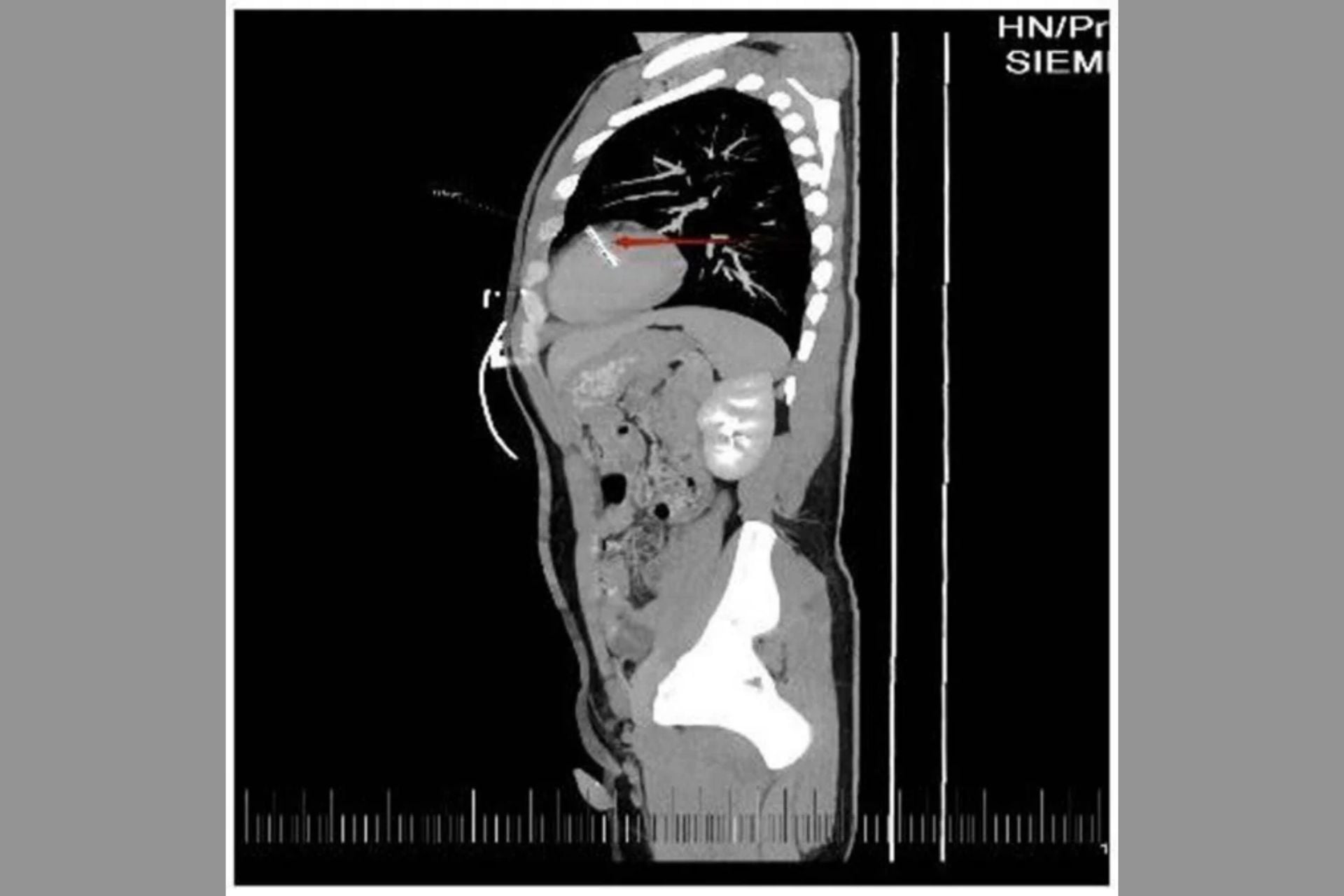
According to the report, the man visited doctors two weeks into having urinary pain and blood in his urine. Though he seemed fine otherwise, an initial imaging test revealed a shadow near his heart.
Additional CT scans then uncovered the presence of multiple “needle-like metallic foreign bodies” throughout his body, including his abdominal wall, pelvis, bladder, and penis. One needle, about 1.4 inches long (36 millimeters), had pierced the pericardium, the fluid-filled sac that protects the heart; it was inside the left ventricle cavity and was found to be moving in sync with the heart chamber.
The man was legally under the care of his father, who gave the doctors written informed consent to discuss the case. Neither the patient nor his family could confirm where the needles had come from, the doctors wrote. Two years earlier, the man visited another hospital, where doctors removed two needle-like objects from his abdomen; however, the medical records from this visit were not available.
Despite the missing information, the doctors say the man had likely inserted all these needles himself. Though rare, people with intellectual disabilities are known to be at higher risk of engaging in this type of behavior, which can also include swallowing foreign objects.
The man’s fate
Though the man had many needles inside his body, some were in locations that carried a high risk of serious complications if doctors tried to surgically remove them. Ultimately, the team only decided to remove the most life-threatening needle near the heart, while planning to keep a close eye on the others for possible removal in the future.
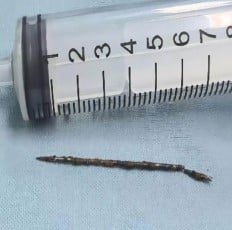
The surgery went well without any major problems, with the doctors removing an intact and black metallic sewing needle. Remarkably, they noted, the man’s chest wall showed no signs of an entry wound or scars, while the needle itself was corroded, both of which suggest that it had been inside the man’s heart cavity for quite a long time.
The man’s heart function did drop significantly after the surgery, likely as a result of the needle’s damage to his body as well as the strain of the surgery. However, he did eventually improve and was discharged safely from the hospital. At a nine-month follow-up visit, the man appeared to be clinically stable.
The doctors say these sorts of cases tend to be very complex, both due to the fact that patients with cognitive impairment might not be able to communicate their medical history well and the fact that such injuries aren’t necessarily easy to outwardly spot. Detecting these cases tends to require a “multimodal imaging strategy,” the doctors wrote.
Needle heart cases in particular are also very rare. A 2024 review uncovered only 34 other cases in the medical literature dating back to the 1960s of people deliberately inserting sewing needles in their heart.