While debates about whether AI could exterminate all of humanity continue to rage across Silicon Valley, a growing number of current and former federal officials are warning lawmakers: Don’t let the companies building the supposedly deadly technology call the shots on how it’s regulated.
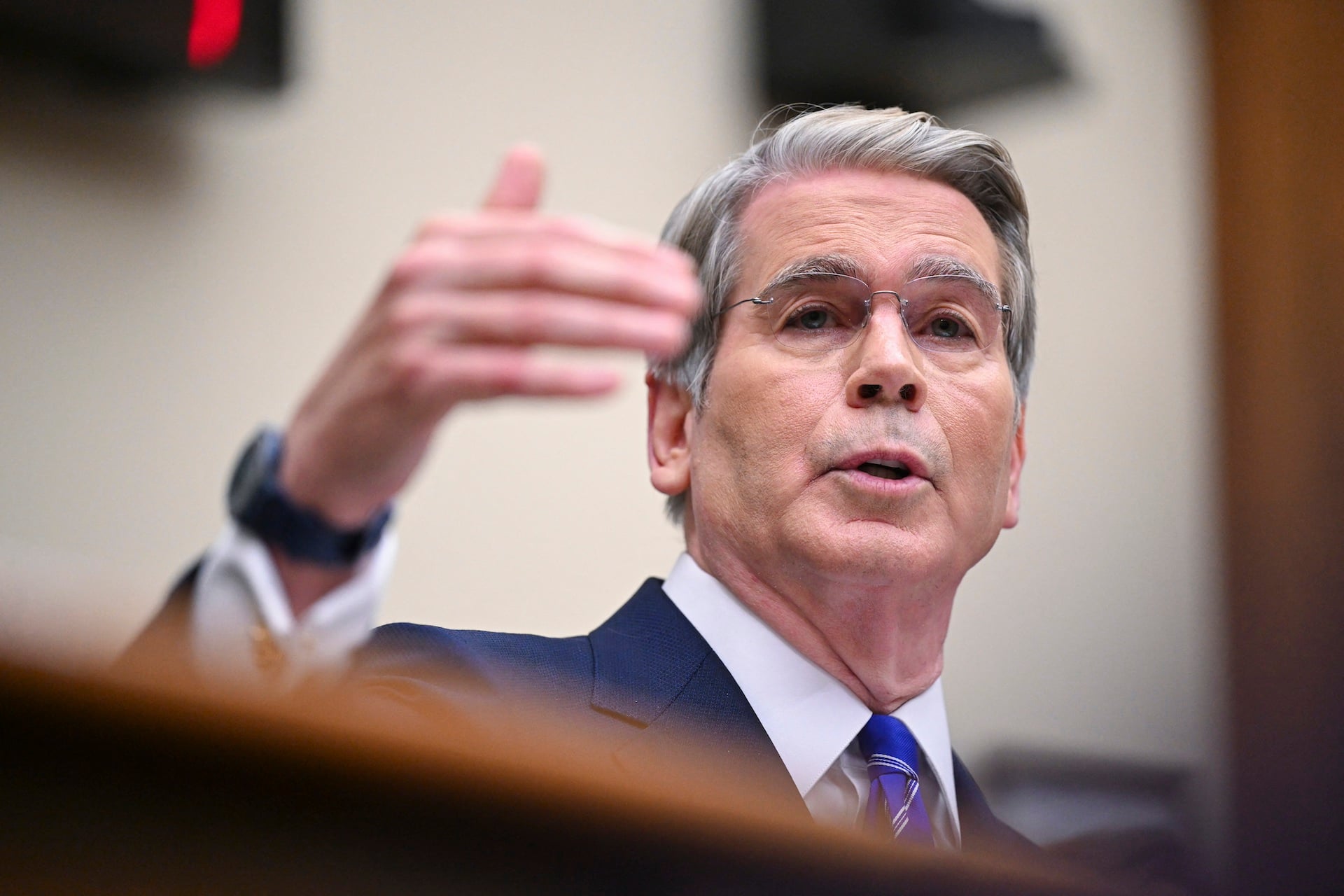
Speaking before the bipartisan House Financial Services Committee in Washington D.C. on Tuesday, U.S. Treasury Secretary Scott Bessent said the federal government should be wary of any calls from AI leaders for any kind of liability exemption. “The best way to guarantee safety is that the creators are liable for what they build and generate,” Bessent reportedly told the committee.
Anthropic CEO Dario Amodei published a nearly 4000-word essay on Saturday titled “We Must Pace the Frontier,” calling for a coordinated slowdown on AI development among the industry’s leading labs. He also suggested that since the current rate of development was far outpacing the speed at which new laws can be passed, top AI companies should be allowed to work together to establish safety standards. “For antitrust reasons,” Amodei wrote, “it’s helpful for the US government to mediate or at least enable these discussions—they don’t need to participate, but do need to issue a narrow waiver for certain kinds of safety conversations.”
In Bessent’s view, such a “narrow waiver” would be a slippery slope towards regulatory capture—i.e. a small group of private entities being allowed to shape policies that directly affect the broader public (a role usually played by government).
OpenAI also supported an Illinois state bill introduced earlier this year which would ensure that AI developers aren’t held liable for “critical harms” caused by their AI models, including the “death or serious injury of 100 or more people,” Wired reported in April. The strategy echoes legal arguments made by social media companies for decades, invoking Section 230 of the 1996 federal Communications Decency Act, that they should not be held accountable for any harmful content that users share on their platforms.
Growing skepticism
Bessent isn’t the only Washington insider wary of the arguments Amodei presented in his essay, which was flatly rejected by President Trump but endorsed by OpenAI’s Sam Altman, SpaceXAI’s Elon Musk, and former Google DeepMind CEO Demis Hassabis.
David Sacks, Trump’s former AI czar and a current cochair of the President’s Council of Advisors on Science and Technology, wrote in a X post on Saturday that companies making demands for their “preferred regulatory framework” to be put in place before they agree to hit the brakes on building a technology which they themselves are warning could wipe out the entire human race “will look like blackmail of the public and the political system.” The next day, Alvaro Bedoya, a former commissioner of the Federal Trade Commission, accused frontier AI companies of stoking fears of an AI-triggered doomsday “to justify what seems to be a call for the creation of a cartel of billionaire AI companies.” And Andrew Ferguson, the current chairman of the FTC, said on Tuesday that “everyone should be deeply suspicious” of calls for an antitrust waiver coming from leading AI companies.
Bloomberg reported yesterday that OpenAI had been working with Anthropic and Google for several weeks to address safety risks posed by AI, and that the company’s global policy chief Chris Lehane said it doesn’t currently believe an antitrust waiver is necessary.