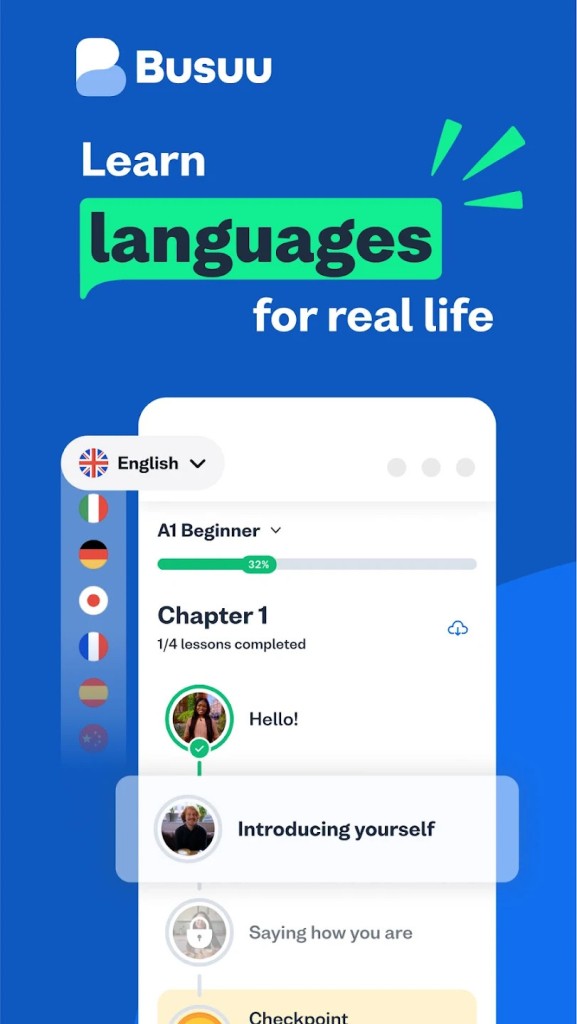
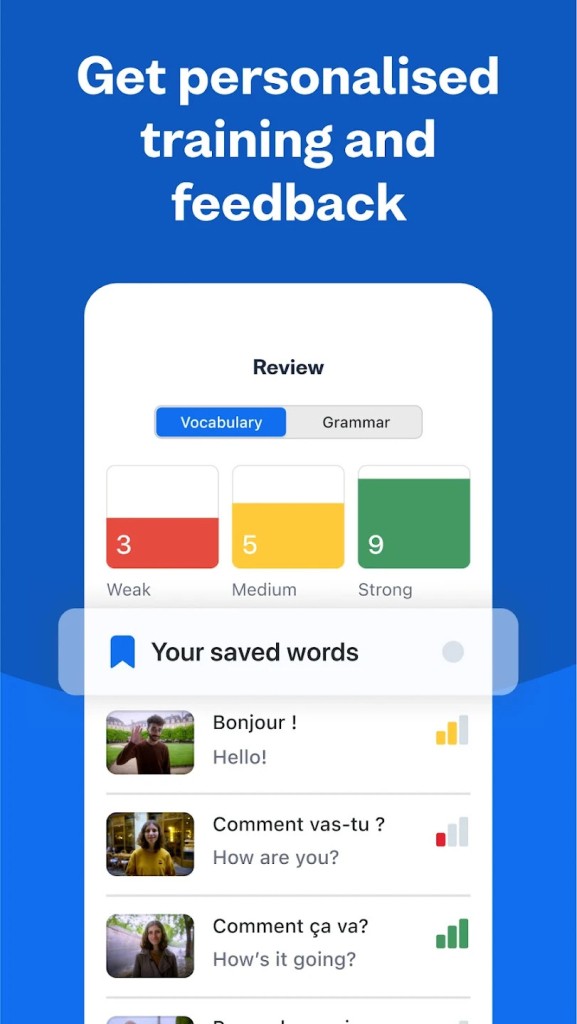
Busuu is a language learning platform designed to help people learn and practice new languages in a way that feels practical and connected to real life. Unlike traditional textbooks that focus mostly on grammar rules and vocabulary lists, Busuu tries to blend those elements with short, structured lessons that fit into your daily routine. The idea is that you can make consistent progress even if you only have ten minutes here and there.
The app covers more than a dozen languages, from widely spoken ones like English, Spanish, and French, to less common options such as Turkish or Polish. Each language course is built with themed lessons that focus on topics you’ll actually use—ordering food, making travel plans, introducing yourself, or handling work conversations.
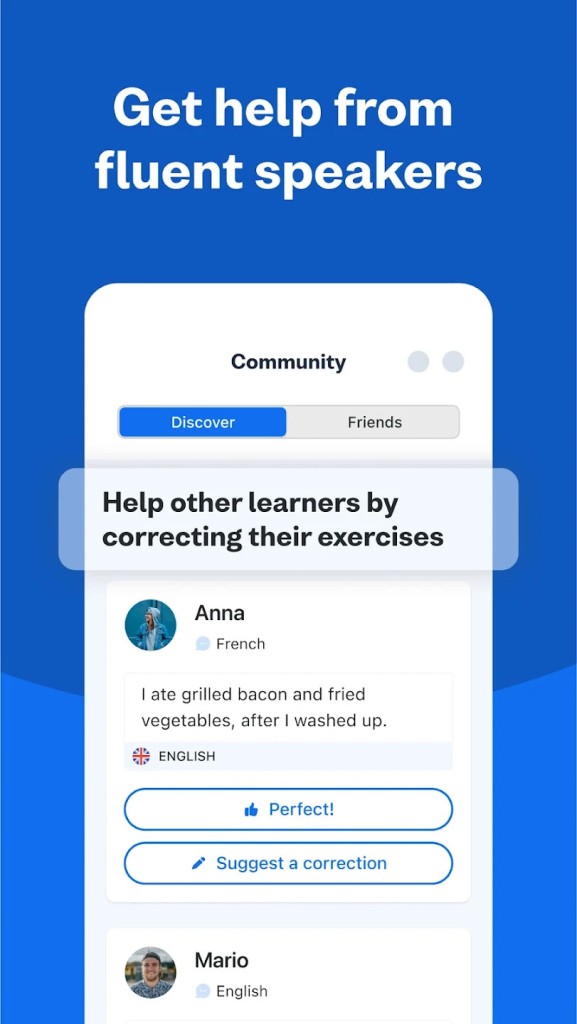
One feature that makes Busuu stand out is its community aspect. You’re not just learning from pre-written exercises. You can interact with native speakers who give feedback on your writing or pronunciation. It feels more like a two-way street compared to apps that only offer automated corrections. That extra layer of human input can make a big difference, especially when you’re trying to sound natural in another language.
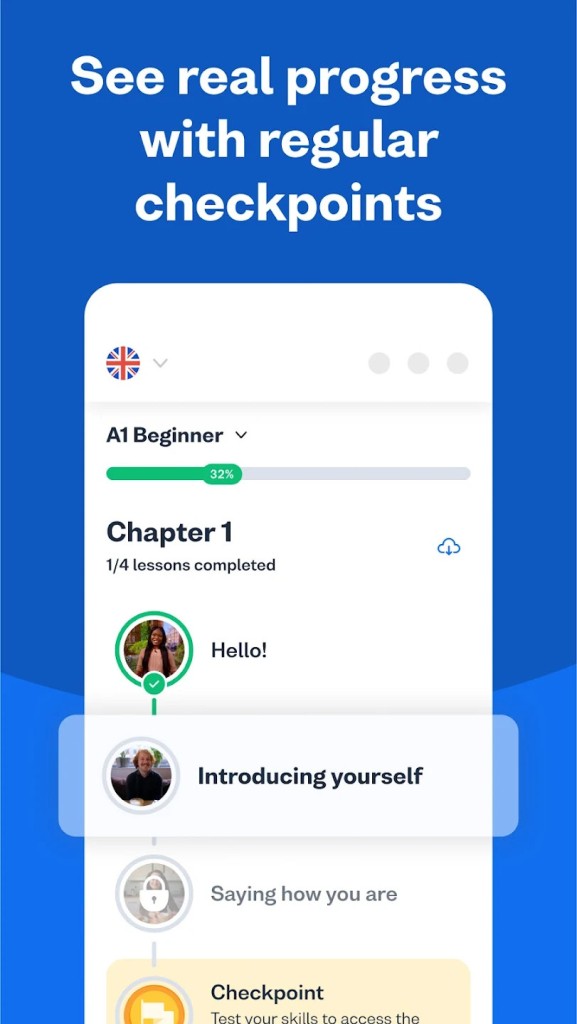
Another detail worth mentioning is how it uses a structured path. You can follow courses step by step, but you’re also free to jump into the areas you need most. For example, if you’re traveling soon, you can skip ahead to lessons on directions, restaurants, or airports. It’s flexible enough to adapt to your goals, whether you’re learning for school, work, or personal interest.
Why should I download Busuu?
The biggest reason is convenience. You don’t need to block off hours to sit in a classroom. You can learn on the bus, during a coffee break, or before bed. Lessons are short and designed to fit around your schedule, rather than demanding that you adjust your life for them.
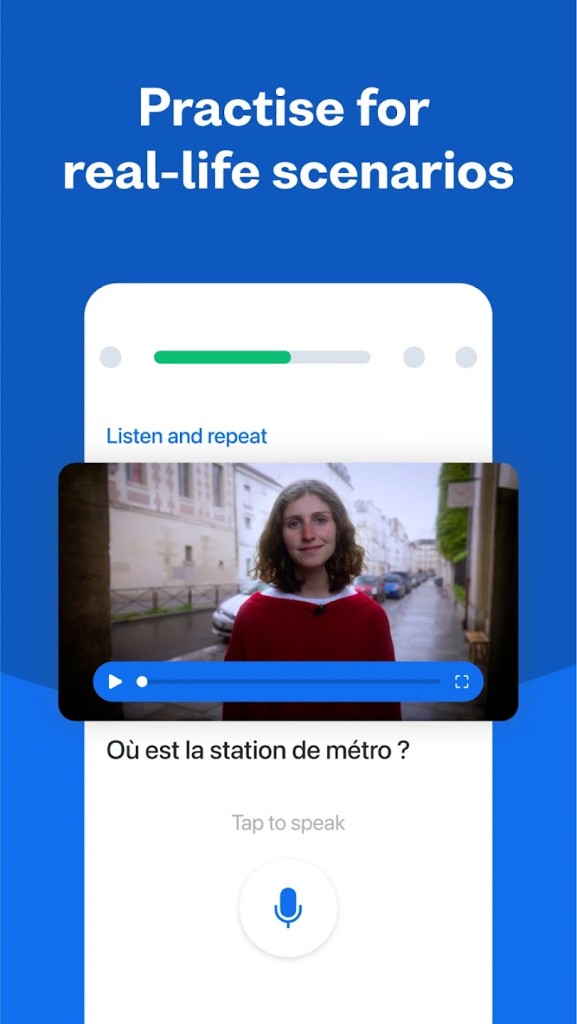
Another reason is that it gives you a balance of reading, writing, listening, and speaking. Some apps lean too heavily on one skill, like vocabulary flashcards, while others overload you with grammar. Busuu tries to balance it all. You’ll learn sentences, practice with short dialogues, and then reinforce what you’ve learned by writing or speaking into the app.
The community feature is another strong selling point. When you complete an exercise, you can submit it for native speakers to review. They’ll point out what sounds good and what could be improved. This type of feedback is something textbooks and many apps just can’t provide. It gives you that extra confidence that you’re not just memorizing phrases—you’re learning to communicate like a real person.
The app also includes personalized study plans. You can tell it how much time you want to spend per day, and it builds a schedule for you. If you miss a session, it adjusts. That keeps you accountable while still being forgiving when life gets busy.
If you’re someone who learns best with structure but still wants flexibility, Busuu hits that sweet spot. It doesn’t feel as casual as some apps, but it’s not as rigid as sitting through a formal course. It sits somewhere in the middle, making it approachable and effective at the same time.
Is Busuu free?
Yes, Busuu offers a free version, but it comes with limitations. With the free plan, you can access a decent chunk of lessons, practice exercises, and some community features. It’s enough to get started and see how the app works, but you’ll quickly notice that some of the more advanced tools are behind a paywall.
The premium subscription unlocks everything: grammar lessons, vocabulary trainers, offline mode, and more detailed feedback. Premium Plus goes a step further, offering personalized study plans, certificates, and access to all languages instead of just one. The pricing is on par with other language apps, and they often run discounts if you commit to a yearly plan.
The good thing is that the free version isn’t just a demo. You can actually make progress with it. But if you want to take full advantage—especially if you’re learning for work or exams—upgrading to premium makes a big difference. Think of the free version as a starter pack and the premium options as the full toolkit.
What operating systems are compatible with Busuu?
Busuu works across several platforms, which makes it easy to pick up wherever you are. On mobile, it’s available for both iOS and Android, so you can download it from the App Store or Google Play. This makes it convenient if you like learning during downtime, like commuting or waiting in line.
For desktop users, Busuu can be accessed through any modern web browser on Windows, macOS, or Linux. The web version offers the same structured courses, community features, and progress tracking as the mobile app. That means you can start a lesson on your laptop, close it, and later continue exactly where you left off on your phone.
The cross-platform syncing is seamless, so your progress is always up-to-date. That’s an underrated feature because it means you don’t have to remember where you stopped—you just log in and keep going.
What are the alternatives to Busuu?
Busuu is good, and not the only language learning tool available. One of these options could be more comfortable to you, depending on your style:
Duolingo is the most popular one, perhaps. Duolingo is a language app that has streaks, leaderboards, and bite-sized lessons. It is entertaining and addictive, but it does not appeal to all learners who consider it too memorization-oriented instead of more in-depth.
Memrise is also vocabulary-oriented, with an emphasis on spaced repetition and video clips of fluent speakers. It is ideal to build your word bank in a short period and to listen to how people really speak in life.
LingoDeer especially works well with Asian languages such as Japanese, Korean, and Chinese. It also covers grammar details and structured lessons in depth that are not typically provided by Duolingo. It is a good option when your target is grammar-intensive languages.