Horror director John Carpenter got it half right: Something alive is hiding in the fog. But it’s not vengeful supernatural beings; it’s not even malicious, really. In fact, we should probably be grateful that this imperceptible biome is up there, floating along.
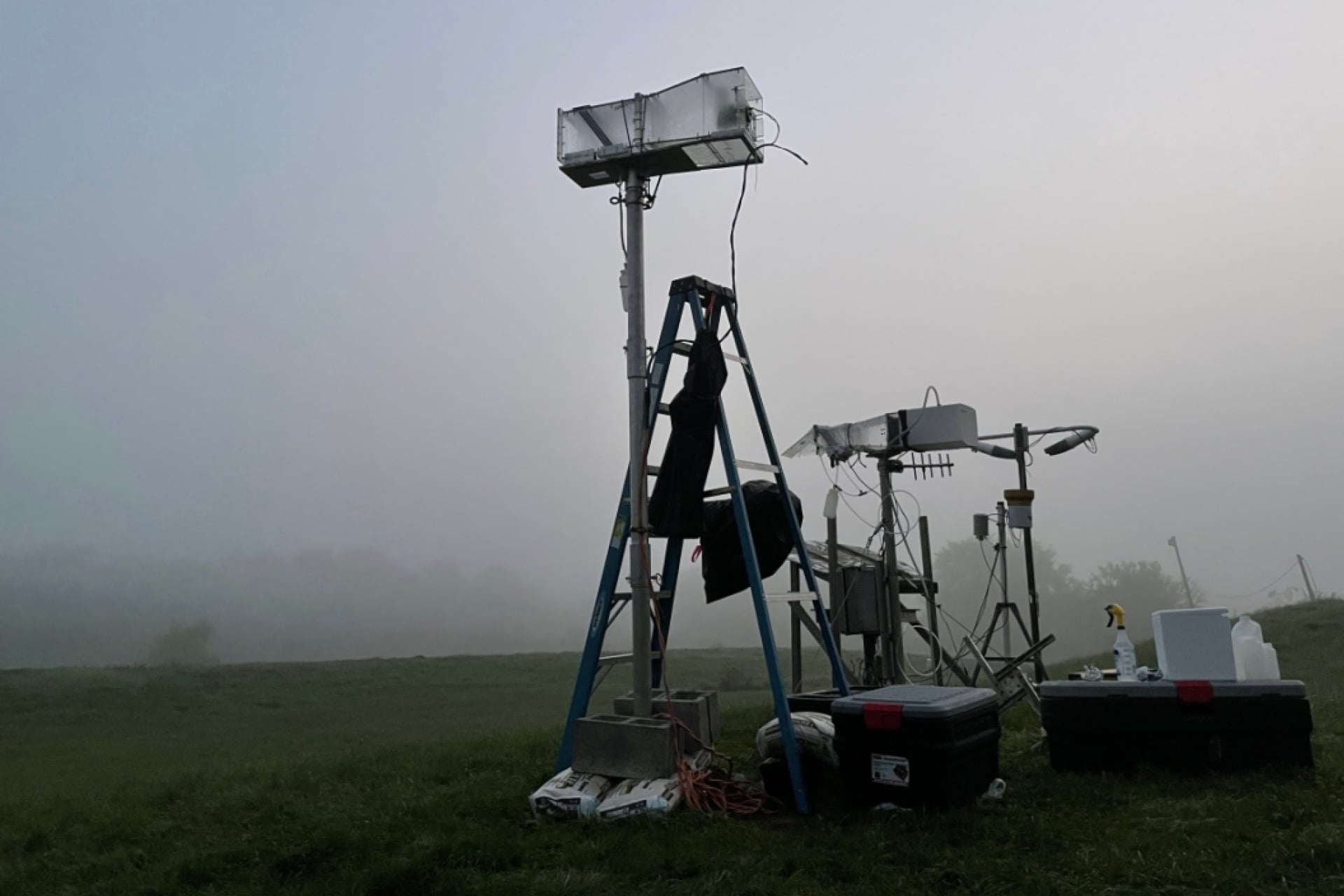
Researchers at Arizona State University (ASU) collected fog water from 32 appearances of the weather phenomenon across two years, tracking the behavior of a sea of microbes floating aloft inside its complex aerobiome. By the team’s estimate, just under 1% of fog droplets serve as bacterial habitat. But, when condensed into even just a small volume of liquid water, that percentage is substantial: ASU researchers found as many as 10 million bacteria thriving in a cup of fog water no bigger than a thimble.
According to a statement from atmospheric science researcher Thi Thuong Thuong Cao, who started the project as a PhD student at ASU, these droplet-riding bacteria were observed eating formaldehyde air pollution “as food to support their growth.”
“[The] bacteria are getting bigger and they’re dividing, so there is growth,” Cao noted.
Foggy bottom-feeders
Two strains of the genus Methylobacterium bacteria present in the fog proved to be exceptionally good at surviving and thriving off formaldehyde—a chemical irritant, air pollutant, and suspected carcinogen that’s regulated by the EPA. These Methylobacterium colonies doubled in size, in fact, at the same rate they would have grown while feasting on pure sugary glucose, the researchers estimated.
“The unprecedented effectiveness of fog bacteria in the biodegradation of volatile contaminants, as exemplified by formaldehyde, may thus be key for atmospheric chemistry,” Cao and her coauthors wrote in their new paper, published last month in the journal mBio.
Methylobacteria are strictly aerobic organisms, which means they’re truly fit for oxygen-rich environments, like (say) the open air that fog hangs in. Previously, hearty strains of the genus Methylobacterium have been seen adapting across nature in fairly hostile conditions: in extreme weather, under intense ultraviolet light, and on the strictly sanitized surfaces of hospitals. Given that history, it makes some sense that these microbes would do well in moderately polluted foggy air.
“There’s very limited knowledge about what kinds of bacteria are present in fogs,” Cao noted.
She and her team collected samples of dry air before the fog events they studied in Pennsylvania, collaborating with local scientists from Susquehanna University. Those samples contained less Methylobacterium than samples collected either during or after the fog, suggesting that these low-lying clouds temporarily spur the colonies’ growth.
Fog advisory
Cao’s ASU team traveled to Pennsylvania because they needed a specific kind of fog, “radiation fog,” which remains stationary long enough to chart developments inside its aerobiome over the course of hours’ worth of sampling. Radiation fog is one of at least six different types of fog according to the Farmers’ Almanac. (What’s “upslope” fog? I dunno. What’s up with you?)
The researchers knew that central Pennsylvania would provide calm, humid valleys in which the still night air is known to produce radiation fog. Nevertheless, the sheer scope of the bacterial biomass they found still surprised them.
“When you take all of the droplets together, the concentration of bacteria is the same as in the ocean,” co-author Ferran Garcia-Pichel, director of ASU’s Biodesign Center for Fundamental and Applied Microbiomics, said in a statement. The bacterial content rivaled even algae-covered eutrophic lakes.
Garcia-Pichel, whose lab oversaw Cao’s work, said the findings suggest that the international groups and government entities who have considered “fog harvesting” as a potential solution to regional droughts might want to think twice. Some of these bacteria, as the researchers phrased it in their paper, might be “opportunistic pathogens,” while others might serve as “a natural, local detoxification hub.”
“If we harvest fog, we are getting rid of our little friends in the air,” Garcia-Pichel said. “We don’t know if that’s going to make a big impact or not, but we should be considering that.”