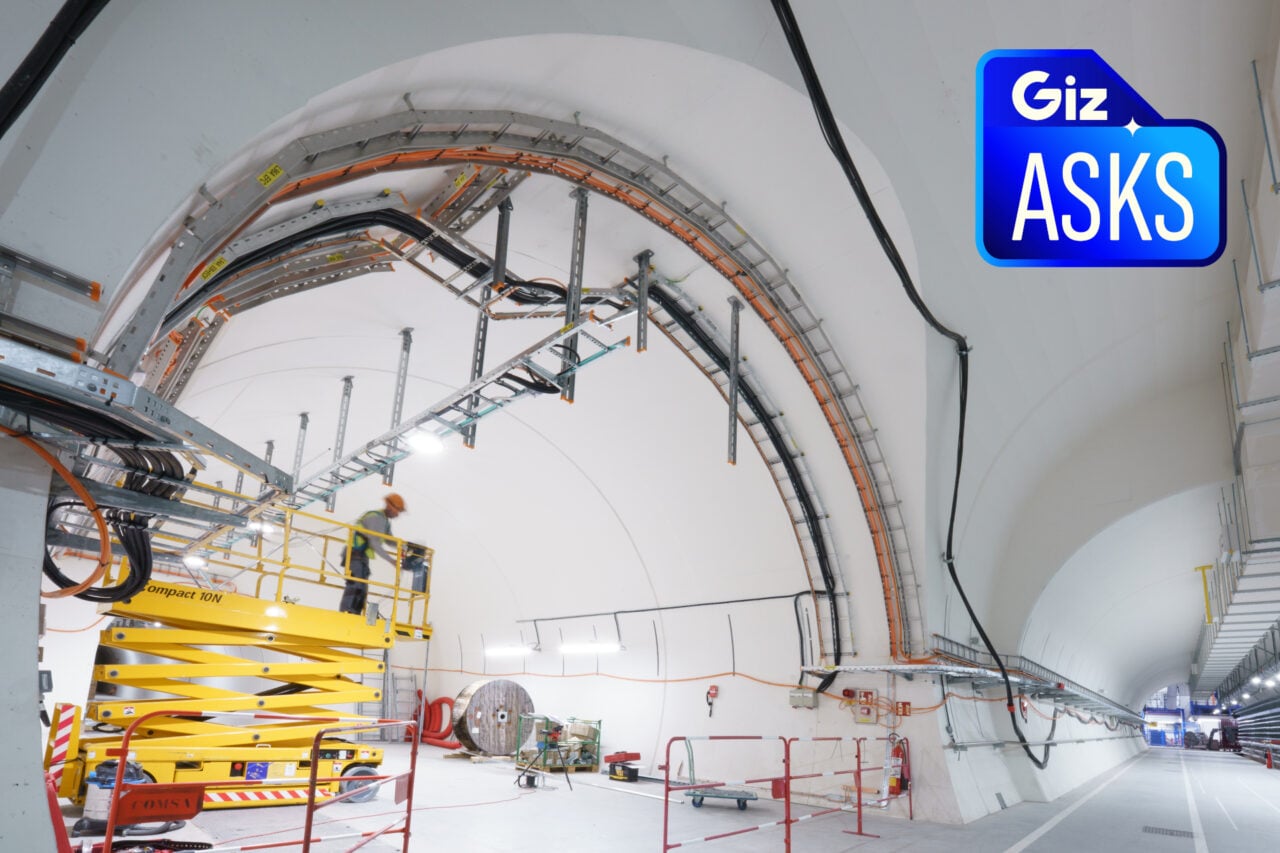
Yes. Looks like we are still alive. The first ignition of the Large Hadron Collider near Geneva, Switzerland, is now underway and nothing has happened yet. But there's a simple reason for that, one that I realized two days ago and I didn't have time to actually write about until today: we got it all wrong. Everyone got it wrong.We knew for sure that today was not the actual End of the World Day. Nothing-nothing according to Stephen Hawking-is going to happen when the the Large Hadron Collider tries to actually make those pesky particles to collide. But the fact is that today, you, my dear hadronmongers, it is not the day the collision was supposed to happen. Today it's just the first beam test, not the actual first collision. That's programmed to happen on October 21, 2008. So all those stupid morons writing to us and CERN scientist will probably keep rambling for two more months. As for the normal people, you can think about it as another extension to your life. In other words: You have two more months to find Uma Thurman/Brad Pitt/Richard Simmons and 1) convince her/him/it that the world is going to end and 2) you are the best lay there is to have before that happens. [Large Hadron Collider in Gizmodo]
DISCUSSION
For all the ignorant people in the world... and I guess there are quite a few...
You may still run across on the Internet examples of people talking about how Mars at this opposition is going to look as big as the Full Moon. Most of the purported problems that are associated with the LHC kind of fall into that same realm of people taking a little bit of knowledge and using it to advance far beyond what might possibly happen.
One of the things that people have talked about is the production of the mini black holes by the particle collisions, and that's not totally out of the realm of possibility. The thing about black holes it that they tend to evaporate over time, and the smallest black holes evaporate the most quickly. Any black hole created by these particle interactions would disappear within a small fraction of a second, something along the order of a billionth of a billionth of a billionth of a second. So any of these black holes would evaporate before they would have a chance to start devouring anything around them.
People have talked about [LHC creating] conditions that have never been created before in the universe, or not since the Big Bang, which is not necessarily true. We have things called ultra high-energy cosmic rays that rain down on Earth's atmosphere and these things, believe it or not, have energies far greater than the energies that we're going to have in these collisions.
Something on the order of a million times stronger; we've seen cosmic rays with those energies. Those cosmic rays run into molecules in Earth's atmosphere and so far haven't created any black holes that have swallowed Earth or created any strange particles that have developed into anything that could threaten Earth. The fact that the universe is creating experiments similar to what the LHC is going to do, just not in a controlled way, is the best proof that we don't have anything to worry about here.
Back when they exploded the first atomic bombs in the 1940s, there were a few scientists that predicted that it could launch a chain reaction that would essentially ignite the atmosphere of Earth and burn out all the oxygen in Earth's atmosphere. That probably had a bigger chance of coming true than this does.
Michio Kaku, a theoretical physicist and someone who has written for Astronomy before, said "These things may be possible, but, technically, so is the fact that the LHC could create a fire-breathing dragon, and they're about equally probable."
Rich Talcott (Astronomy Magazine Senior Editor)
Matt Quandt (Astronomy Magazine)