World Fantasy Award-winning author Lavie Tidhar has already gone to some dark, strange places — but in The Violent
Century, his brilliant Cold War epic, he does the closest thing we’ve seen to Alan Moore’s Watchmen in book form. And along the way, he questions what it means to be a hero.
Some spoilers ahead…
The Violent Century begins with the novel’s two main protagonists reuniting in a London
Bar in the present day; Oblivion is under orders to bring his former partner,
Fogg, in to revisit one of their old missions, back during World War II. They’re
superheroes from a bygone era, who helped to defend the British Empire during the
conflict.
They haven’t aged since the day that they were imbued with powers: The
Change has imparted a sort of immortality to those affected. While the world has
continued forward, they’re a curious relic of the past that persists into the present.
As Fogg
is brought in for a chat, we’re treated to a rapid-fire jump across the century
as Tidhar leaps from 1936 to 1944 to the 1960s, 70s and 80s. There’s a final
loose end that’s eluded everyone at the Retirement Bureau, and it might have
something to do with the state of the world since the Change. The book’s
structure is a bit jarring at first (as is Tidhar’s lack of quotations around
dialogue), but soon, as the format sinks in, it begins to flow along nicely.
The story bounces around as Fogg and Oblivion recount their work and
experiences throughout their service in the name of the United Kingdom, lurking
and assisting from the shadows. They’ve got some pretty interesting powers that
were certainly helpful, and Tidhar likes to play with the names of his
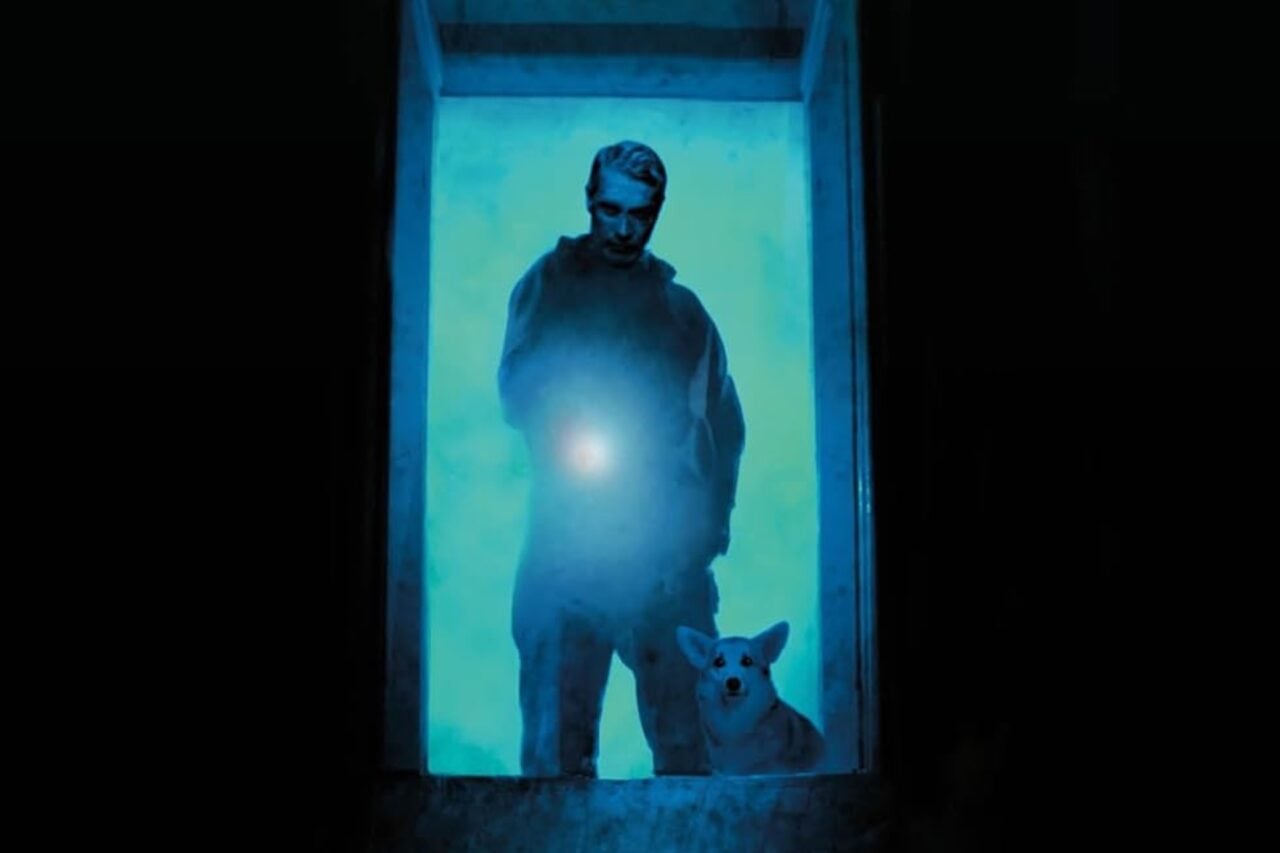
characters. Henry Fogg appropriately can manipulate fog, hiding escapes and
creating cloudy golems. Oblivion has a much more troubling power: he makes
things vanish from this universe.
Along the way, we’re
introduced to a range of American superheroes. And it’s here that we find the
great strength of the book: Tidhar’s examination not of what makes a hero, but
how we perceive our heroes. The
American heroes are an almost parody of the comic heroes that you know and
love: Tigerman, Whirlwind, The Electric Twins, The Green Gunman, Girl Surfer
and Frogman, the League of Defenders. There’s their German and Russian
counterparts as well: Wolkenstein (Wolf Man), and Schneesturm (Snow Storm), and
the Red Sickle. They’re propaganda icons, pumped up,
brightly dressed and there for the show, in a pointed look at their real world
counterparts.
The British heroes are more reserved, while the Germans play into the
iconography of the Third Reich. This alternate Second World War is rife with
superheroes and historical supporting figures, ranging from Alan Turing in
England to Wernher von Braun, who both use the war effort and these supermen help to reach
their own ends and goals.
Eventually, we come to
understand that a Doctor Vomacht, a German scientist, is
responsible for The Change, and it’s the interactions between Fogg and his
daughter, Klara that bring the past violently into the future. It’s Klara and
her unique power that holds a vital key to the entire story, and her
relationship with Germany complicates her dealings with Fogg during the War. Along
the way, we visit horrific concentration camps which Jewish and captured
superheroes are brought, Jewish supermen who are fighting against the Germans
for their very existence, and pulpish action scenes that are both violent and
beautiful to behold. Frequently, Fogg and Oblivion recall their orders while in
the field: “Don’t be a hero.” They’re to observe and report back, working out
of the shadows, something they ignore more than once.
The Violent Century covers a lot of ground: the pre-war years in England, the Second World
War, the Vietnam War, the Eichmann trials, the Soviet War in Afghanistan and
the attacks on the World Trade Center and Pentagon on September 11th.
(Chillingly – It’s a bird, it’s a plane, it’s… a plane.) The book runs out of
order, with the plot teased out of each section, growing as a larger and more
complicated puzzle throughout. It’s a strange reveal, one that slowly draws you
in; first with action and then with some excellent character drama.
While Tidhar looks at the
violent narrative of the twentieth century, he has his eyes firmly planted on
how we’ve interpreted the violence in our own real world. The entire modern
superhero genre comes out of the state of the publishing industry in the 1930s,
from Jerry Siegel and Joe Shuster’s Superman
and Joe Simon and Jack Kirby’s Captain
America. Tidhar’s own Übermensch are an interesting play on the comic book
creations.
Indeed, Stanley Lieber (popularly known as Stan Lee), shows up as a
historian and author of a book titled Le
Dictionnaire Biographique des Surhommes (The Dictionary of Superhuman
Biographies), alongside artist Jerry Siegel and author Joe Shuster, authors of The Super Man: His Myth, his Iconography.
The Violent Century is filled with
small Easter eggs such as these, which ultimately support Tidhar’s main idea here: the superheroes we create are an extension of ourselves:
“Our American heroes are
the wish-fulfilment of immigrants, dazzled by the brashness and the colour of
this new world, by its sheer size. We needed larger-than-life heroes, masked
heroes to show us that they were the fantasy within each and every one of us.
The Vomacht wave did not make them, it released them. Our shared hallucination,
our faith.”
This falls pretty closely to
the character of the comic book heroes that we know and love, they’re more than
simply their own characters; they’re part of a collective psyche from those
they come from. Tidhar’s heroes play into this nicely in this self-aware book.
There’s a wonderfully fantastic scene when one character, doped up on opium,
dreams of the world in with thought bubbles, confined by black borders – the
very medium Tidhar is examining. On top of that, his characters are as ageless
as their Golden/Silver Age counterparts, endlessly playing out the same battles
over and over again.
There’s been a number of fantastic
novels that have drawn on the mythos of the comic book world, ranging from
Michael Chabon’s The Amazing Adventures
of Kavalier and Clay to Austin Grossman’s Soon I Will Be Invincible, but Tidhar’s is probably one of the best
prose examinations to really examine the superhero and what they mean.
Ultimately, The Violent Century is
about legacy and how heroics play into it, a deeper message than defining what
heroics mean: The actions of Fogg and Oblivion have lasting consequences, while
at the same time, we can see the weight of the world they’ve helped to build
grow on their shoulders. By the end of the book, it’s clear that their own
journeys are defined by the actions which they’ve undertaken because it’s what
they felt was right, rather than what
their orders were.