Dozens of conservative leaders seem to be increasingly spooked by AI and are now calling on President Donald Trump to put stronger guardrails around the tech.
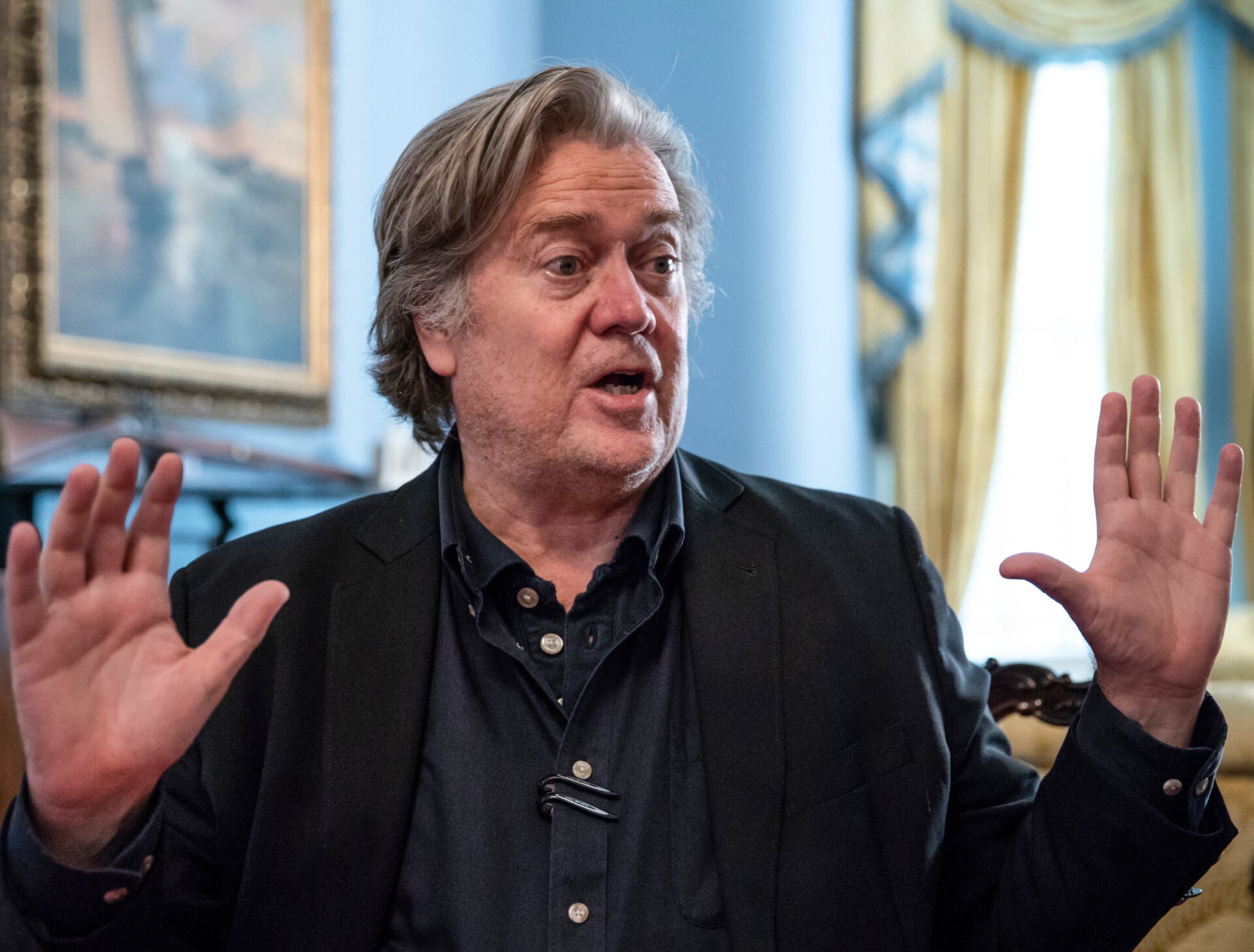
Steve Bannon and more than 60 other Trump allies sent a letter to the president urging him to sign an executive order that would require the federal government to vet what they call “potentially dangerous” frontier AI models before they are released.
The letter was organized by Humans First, a conservative group ostensibly focused on AI policy. Interestingly, a significant portion of the letter’s signers are pastors.
“Artificial intelligence is advancing rapidly and now extends far beyond simple chatbots used for homework help or internet searches. Frontier AI systems are becoming increasingly powerful and could pose serious risks to cybersecurity, critical infrastructure, financial systems, election integrity, biosecurity, and even our military and national defense capabilities if deployed recklessly or without proper safeguards,” the letter reads.
The letter goes on to call for policies requiring mandatory testing and government approval of advanced AI models before deployment.
The group also takes aim at AI companies and the executives behind them.
“No private corporation should have unilateral authority to deploy technologies that could profoundly impact the national security and stability of the United States without meaningful evaluation and safeguards,” the letter says.
It also calls out “unelected elites” who are experimenting on the public without proper guardrails.
The letter comes as the Trump administration has taken a hands-off approach to regulating AI. Trump, an AI and billionaire ally, signed an executive order in December aimed at curbing what his administration describes as overly burdensome state regulations in the name of national and economic security.
The only time the Trump administration took any significant action against an AI company was earlier this year when it designated Anthropic as a supply chain risk after it refused to allow its tech to be used for “any lawful purpose.”
Anthropic, which at the time was the only major AI company working with the Pentagon on classified systems, hit a wall in negotiations with the Department of Defense (DoD). The biggest sticking points involved the Pentagon refusing to rule out the possibility that it would use Anthropic’s products for domestic surveillance or autonomous weapons systems.
Anthropic later filed two lawsuits against the DoD in response. Since then, however, President Donald Trump has said his administration has had “some very good talks” with Anthropic and suggested a future agreement restoring the company’s access to Pentagon work could still be “possible.”
Anthropic’s latest model, Mythos, seems to have complicated things. The company has made Mythos available only to a select group of companies, organizations, and governments through a program meant to help them test and strengthen their cybersecurity.
The limited release caused enough of a stir that it prompted the Trump administration to consider completely dropping its beef with Anthropic while signing agreements with more AI companies to allow the government to review their models before public release.