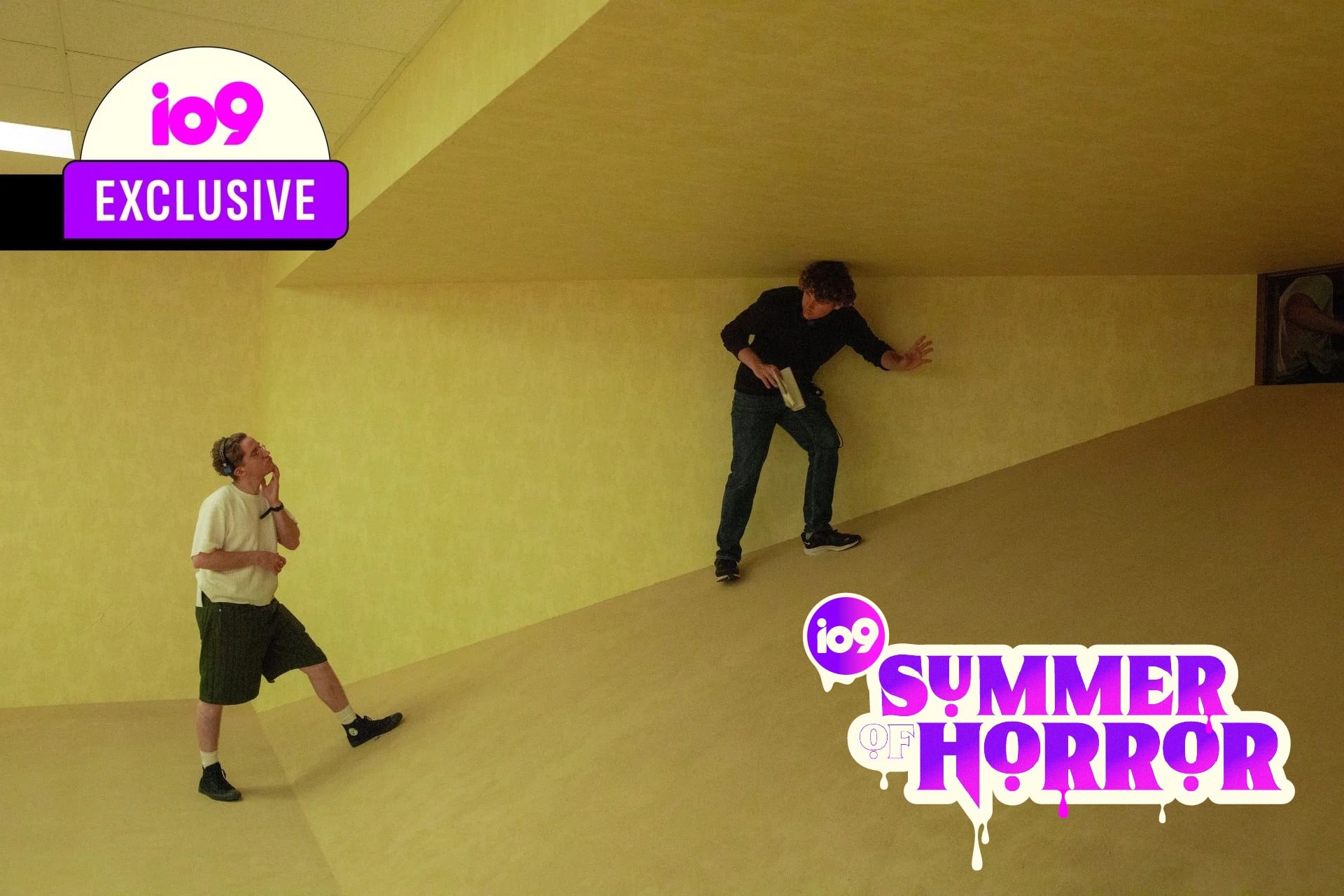
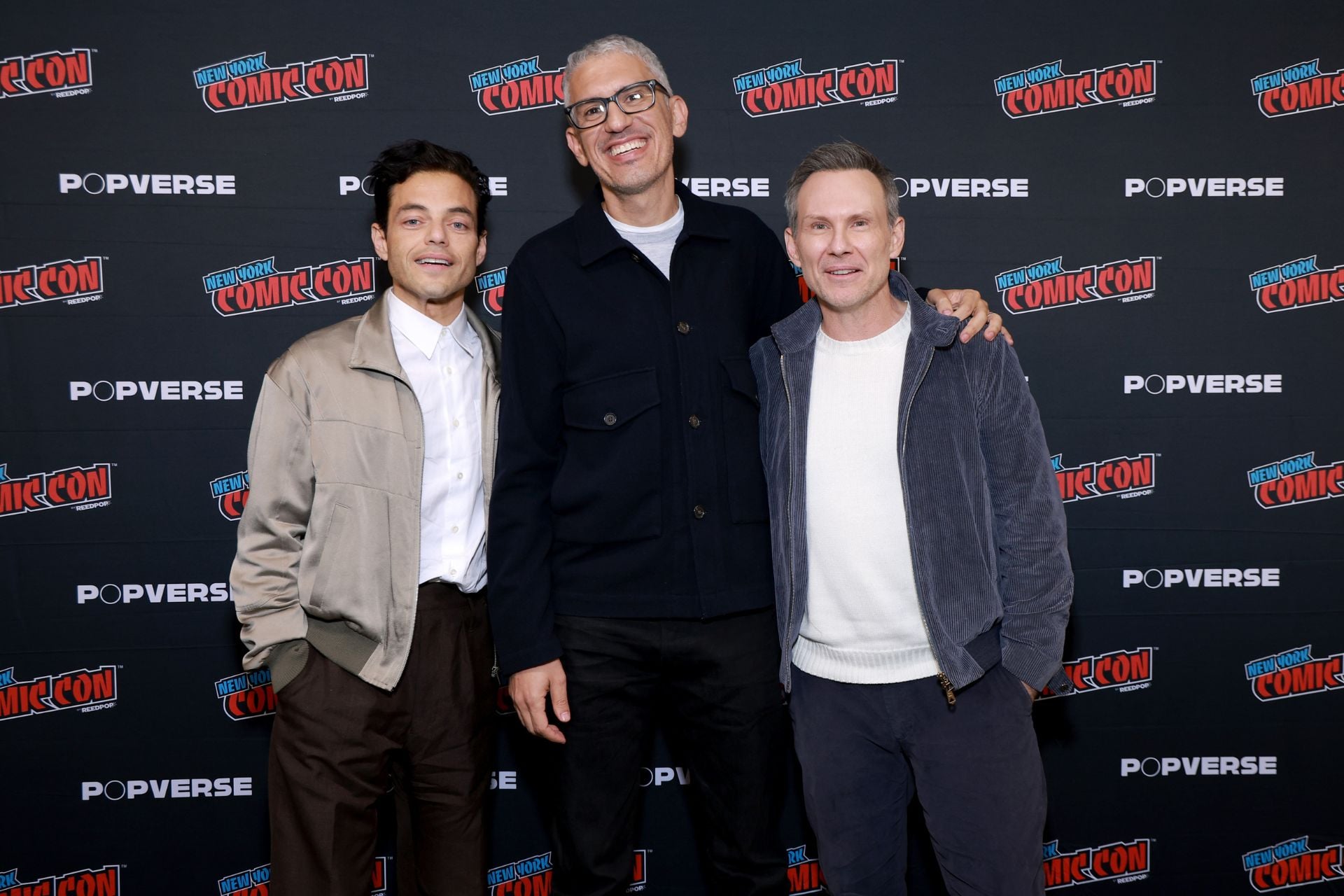
Imagine finding out that your work is the inspiration for the $80 million movie the whole world is talking about. That’s what happened recently when Mr. Robot creator Sam Esmail sat down for a chat with Backrooms director Kane Parsons.
Esmail is like a lot of us. He’s seen and loved the new movie but didn’t know a lot about Parsons, how he became a filmmaker, the origins of Backrooms, and more. And so, when the two sat down, Esmail was very surprised to hear that not only does Parsons love Mr. Robot, he’s watched it at least eight times through in the past five years, and it made him want to make Backrooms.
Below, io9 can exclusively reveal the full transcript of this conversation, where we learn what it was about Mr. Robot that Parsons loved so much, how he got his start, and why he wanted to be a filmmaker. We also learn that his filmmaking aspirations didn’t come from being a fan of movies in a traditional way and ultimately that he sees Backrooms more as a TV series than a film franchise. Though that was before opening weekend.
It’s a fascinating chat between two artists filled with admiration and curiosity. Check it out.
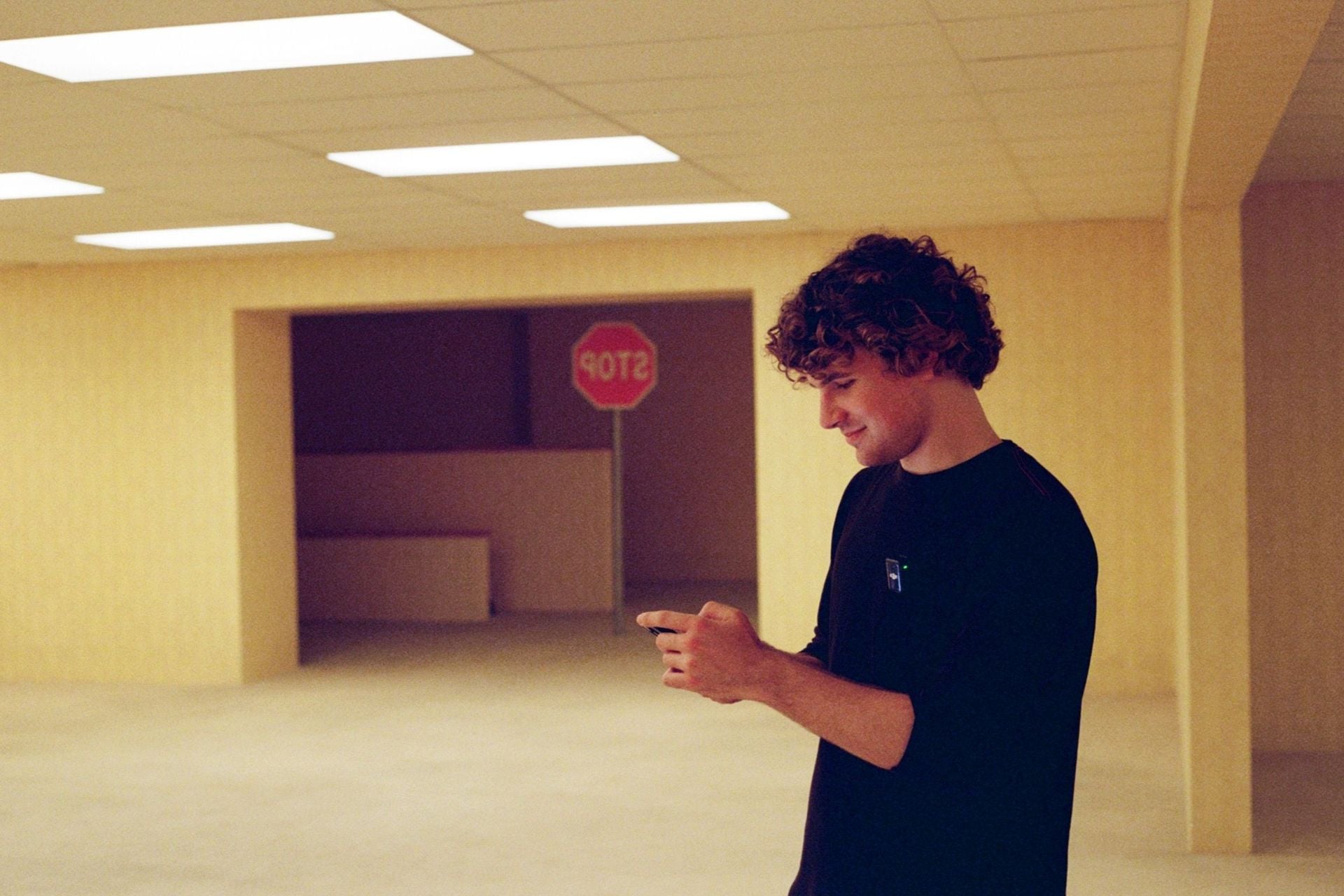
Kane Parsons, director of Backrooms: Do you look back on the entire process of Mr. Robot as a fond one of personal exploration?
Sam Esmail, creator of Mr. Robot: Well, look, it’s obviously near and dear to my heart because it’s the thing that made my career. It made me a legitimate filmmaker, at least one who gets paid. But it was brutal, man. I mean, it’s a TV show which is very different from feature filmmaking because you’re shooting lots of “content” under a short amount of time. And you’re doing it every year for four years. And that’s the big takeaway.
Parsons: That’s sort of what I wanted to know. Not to jump too far ahead, but I’ve always had it in my brain that Backrooms as a series, as a serialized IP. And I hate talking about it in that way, but I do consider it in that way.
Esmail: Of course.
Parsons: I mean, in my mind, from the outside, a series feels like the right way to tackle the bit that I actually care about tackling.
Esmail: So did it feel as…
Parsons: This film feels like a foot in the door that I like, but it doesn’t feel like it gets to the… it feels like to try to get to the meat that I would be really excited about; it just would be too much to spring on an audience for a first film. And that’s maybe a common sentiment of filmmakers trying to adapt to the internet and all that kind of stuff. But I do feel that way a little bit.
Esmail: Would you ever consider making it into a TV series?
Parsons: Well, that’s without a doubt the thing I’ve been trying to campaign for for a few years.
Esmail: Wow, interesting.
Parsons: But…
Esmail: Would you do the crazy thing of directing every episode?
Parsons: Well, that’s what I need to figure out. On paper, I would love to. I had been doing, on this film, like 21-hour work days on and off, alternating, because that’s not sustainable. But like with this film, I can’t imagine things being more insane than it was, because we had a crazy crunch on this one. There was not a minute spent on any day that wasn’t for this film. And I felt fine with that. So I think I would go insane with the way creative control sort of gets dissolved and whatnot. Just being careful with that.
Esmail: I just think, look. Because I’ve had a lot of people in the industry, actually big directors, up-and-coming directors, come to me and ask me, “Should I direct the whole season of television?” And my answer is always “No, no, absolutely not.” Because it is pretty fucking taxing. Just in every way imaginable, physical, mental, emotional.
Parsons: You’re not selling me on this because I was not there. I am not in your brain. But on the outside, I feel it worked out creatively to a degree but it’s always going to be different on the other side.
Esmail: But the thing is, when I was in it, I remember thinking there was no other way to do it. And I love TV as a format, but most television shows are directed by multiple directors. And I just don’t understand how you can keep the consistency of tone and visual language when you do that. I mean, they literally have tone meetings where you spend an hour talking to the incoming director. And I’m like, how are you explaining the tone of a story or television show in an hour to a person that’s just walking in? Now, shows have done that, but I don’t know if there’s a singular sort of identity to a show like I think Mr. Robot had. Just in my mind, I found it to be very hard. Very tricky. And I did it in the first season, and I had lovely directors that came in and did a great job, but it just to me…
Parsons: And, again, I hope I don’t embarrass myself saying this. I have seen Mr. Robot like eight or nine times.
Esmail: Whoa. The whole series?
Parsons: The whole series, all the way through.
Esmail: Wow. OK.
Parsons: You can show me any frame from any episode, and I’ll know what [episode it’s from].
Esmail: You know, that’s probably, well, I’ve seen every episode.
Parsons: I’m an obsessive kind [of person.] I find something I like, and then I really engage with it. But I don’t consume a lot of stuff.
Esmail: By the way, I heard that about you. You don’t really watch a lot of movies, right?
Parsons: Not a lot. No. This summer I’m trying to engage with it a bit more. “Classically”-referred films and whatnot. Stuff that I probably really should be aware of.
Esmail: Yeah. But what was it about Mr. Robot that got you?
Parsons: I don’t even remember my first… I think I probably found a clip on YouTube or something in 2021, which is when I started it.
Esmail: Oh, so you started it after it had already aired.
Parsons: Yeah, it was already done, so I was able to go through the whole thing. So it’s like eight times just since 2021.
Esmail: Wow. OK.
Parsons: Again, I’m embarrassing myself saying that. But I think I enjoy living in the world of it. And like the tone that sort of gets soaked up. It feels very in line with the way that my—this is a thing I’m sure a lot of people say—but it just feels complementary to the way I like to try to feel reality in general.
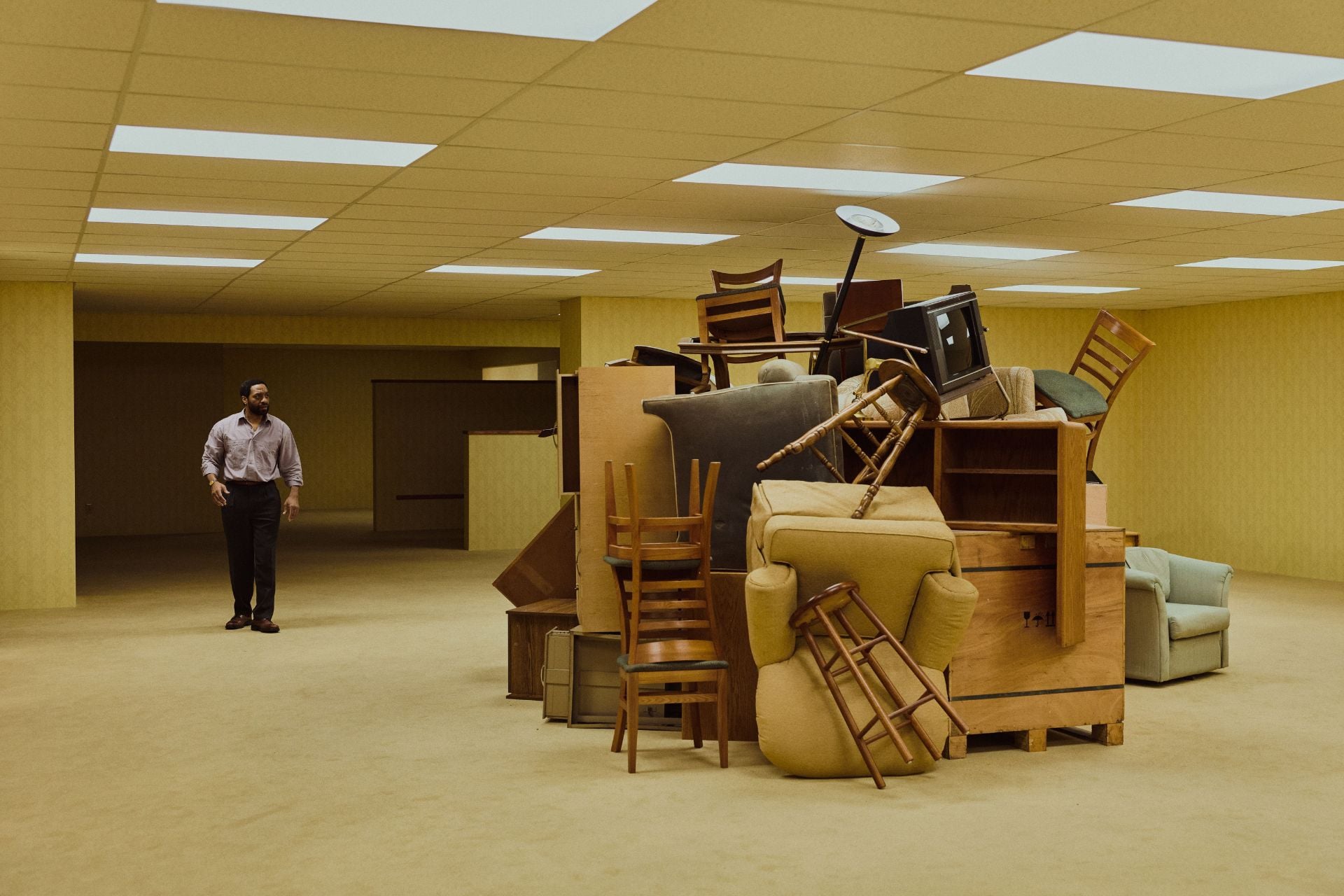
Esmail: So were you were you already making Backrooms while you were watching it, or when you first started watching?
Parsons: No, it kind of made me want to make Backrooms. [Embarrassed chuckle]
Esmail: Are you serious? Oh, that’s so interesting.
Parsons: I was working on the first short film. I don’t know how much of the stuff on YouTube you’re aware of at all.
Esmail: Yeah, I started watching it after. I didn’t know about it until after I saw the film.
Parsons: Yeah, I did like a first short film, which is the one that has, like, all the views and all the everything. I made it as kind of like a tech demo for fun, just kind of playing around with Blender. I don’t mean to undermine it, but it was kind of…
Esmail: That’s pretty impressive, man. I don’t think I could do that. Especially, how old were you when you did that?
Parsons: I was 16. But it’s also like you’re growing up with the software, and the software is really fucking good. But I appreciate it. I have a hard time taking credit for it.
Esmail: So you started playing with it when you were 16. Making it in Blender. And you did one video.
Parsons: Yeah. I had done that video, but I had a little story in my brain for a little bit. I think the three things that I consumed that sort of gelled to propel me to really make the series [were] probably like Channel Four’s Utopia, Mr. Robot, and then Devs.
Esmail: I fucking loved Devs.
Parsons: I have notes about Devs, but I do love Devs.
Esmail: Can I say something? I’ve never seen Utopia.
Parsons: Oh, really?
Esmail: Is it great?
Parsons: Do people bring it up?
Esmail: They have brought it up. Yeah, I have heard that there are similarities stylistically, but I’ve actually never seen it. I did try to watch the remake.
Parsons: No.
Esmail: The one on Amazon.
Parsons: No.
Esmail: Yeah. But I couldn’t get a hold of it for the longest time.
Parsons: It’s all on YouTube. The whole thing’s on YouTube.
Esmail: Now that you’re recommending it, I will watch it. The other one I always get is [Neon Genesis Evangelion]. Do you watch that? I keep hearing that too.
Parsons: I feel so much shame for not having seen it because I feel it’s hailed as a classic, and I’ve seen so much from it that seems compelling, but I’ve [never] actually gone and given it a chance.
Esmail: But wait, so when you made your first video, is that the one that just got like a gazillion…
Parsons: Yeah, that’s the one that got a gazillion. And then the next few ones did really well as well. But very much like a sharp fall off because I think that first one was like 77 million views now. And then the ones behind it are like…
Esmail: And you just uploaded to YouTube?
Parsons: Yeah.
Esmail: It’s not like you had any marketing machine behind it.
Parsons: No marketing, no desire for marketing.
Esmail: How did it take off? Like, when did you notice it started getting really crazy?
Parsons: Within a week.
Esmail: But how?
Parsons: So I had a following on YouTube. I don’t know—are you aware of Attack on Titan as a franchise?
Esmail: That’s another one that they keep saying.
Parsons: That’s a great one. That’s another case of like a pretty consistent, long-standing, like, over a decade or so.
Esmail: OK. I’ve never seen it. So I should see that. I’ve got a lot to see now. Now you’re the one recommending stuff. OK, good. So what did you have to do with that?
Parsons: I was doing those ones when I was like 14 and 15, first getting the hang of Blender. And that’s a series that takes place in sort of like an alternate history.
Esmail: Wait, this is your show?
Parsons: No. No, I do not own Attack on Titan.
Esmail: But what are you saying you did?
Parsons: I did a series of videos on YouTube that were sort of recounting or addressing little moments in that franchise that I found like… It’s an anime property. So the fan base gets a little fixated on hype, treating it like a little more grand and magical than it really is. And I wanted to do stuff that kind of sucked anything but just the realism out of it. And just like this was real, and there are people with cameras on the ground, just miscellaneous.
Esmail: So you recreated scenes?
Parsons: Just like little scenes, like little moments that people would recognize. But from a very different perspective. And so that caught on largely with, like, largely Philippine and Indonesian audiences.
Esmail: [Chuckles] And again, these are just YouTube clips.
Parsons: Yeah, very short videos, and they were only there for Attack on Titan. So I thought if I did anything else, it would flop. But I kind of just exhausted it. I had done so much of it over the course of 2021 that I was done. I wanted to try doing something else.
Esmail: And so you released this to that same following, Backrooms, and within a week it broke out of that.
Parsons: Yeah, because I think there were so many people… like I wasn’t like trying for this. I wasn’t like scratching like the Mr. Beast part of my brain, trying to orchestrate something there. But was aware that the Backrooms was a sort of powder keg… not [a] meme. It was planted. It was very seeded. But like, lots of people were broadly aware of the concept and the kind of aesthetic pool that it was drawing from. But no one had actually gone and given it focus in some way. So I think I can appreciate that that’s sort of what that first short did. Now it’s not just photos and text, little short stories and stuff. It’s an actual visual piece.
Esmail: Did you want to be a filmmaker before this?
Parsons: Oh, yeah. Yeah. I did. I’ve got the normal—I don’t know if it’s “normal”—but like the fairly typical “When I was six, I would grab cameras and stop motion” and do all sorts of stuff. And I’ve just been trying to do better versions of that ever since.
Esmail: So what made you want to be a filmmaker back then?
Parsons: It precedes consciousness.
Esmail: You weren’t watching tons of movies or anything.
Parsons: No, it definitely was not seeing [movies]. I think this is cheesy to say. I just really am… What would it be? I’m trying to find better and better ways to articulate this because I know there’s something to it. I just think it’s a general curiosity. I am a very curious person in general. I think a lot of people are. But I very much enjoy being alive and being curious about things and asking questions. And I think that it just feels like a natural way to try [and use] art to process things. I’m trying to use the technical medium of audio and visual.
Esmail: What was your first camcorder? Was it a phone?
Parsons: No, it wasn’t a phone.
Esmail: You’re pretty young.
Parsons: It would’ve been like a tiny digicam.
Esmail: Like one of those still cameras that records video.
Parsons: Yeah. I don’t remember exactly because I would have been so young. But I went through a few of those.
Esmail: And were you doing narrative? Were you shooting narrative?
Parsons: I probably started calling myself, saying I wanted to be a film director, when I was like 10 or 11 or so. And I was doing short films that were narrative, but like, they wander and they don’t make sense to me.
Esmail: They’re more abstract.
Parsons: Yeah.
Esmail: But you said at 10 you were like, “I want to be a film director,” but you weren’t watching films. So how did you even know?
Parsons: No, I was. I was watching film and television and like animated stuff. Stuff like Doctor Who or something like that. Stuff that I was very into, and I was very into the Valve properties like Portal and Half-Life. And so I was like trying to draw from that and other short films on YouTube based on that.
Esmail: So it was that a lot of YouTube stuff and less going to the movie theater?
Parsons: Yes. I did not go to the movie theater all that much growing up. I enjoy it. It’s one of my favorite things to go do in general, but I don’t really do it very much.
Esmail: Interesting. And that’s not part of the reason why you want to be a filmmaker, is to have your movie play in a theater?
Parsons: No, not at all… but I do think that being aware of the fact that when I make a like an hour-long short film that is made to look like it’s on someone’s iPhone and it’s like uncut found footage but it’s all CGI in reality—I’m not talking about Backrooms, just other projects I did like that—the intention is, I think, the ideal viewing experience is on a phone and with the awareness that they will be able to fast-forward. And ultimately, they will probably be curious enough to go look at another person explain this video. And so I think if you know what the end destination of the delivery device is, then there’s the best, most optimal way to do that as well. So I think, honestly, I was more inspired by and excited by experience curation, like ARGs and stuff.
Esmail: Interesting. We had a lot of ARG for Mr. Robot, but you missed all of it.
Parsons: I missed all of it.
Esmail: Are you going to do that on Backrooms?
Parsons: I don’t think Backrooms makes sense because I feel like I’ve already given up the game, and it’s very clearly a fictional project. And these like to never say it’s anything but nonfiction.
Esmail: I see. So it only works in your mind if you could if you can keep [the illusion].
Parsons: It’s like either you do it or you don’t do it.
Backrooms is now in theaters. Mr. Robot is currently not available to stream anywhere, though it is available for purchase. (Or just contact Kane Parsons; we’re sure he has a copy.)
Want more io9 news? Check out the best movies and TV shows to stream this month and all the upcoming sci-fi, fantasy, and horror books that should be on your radar.